

Whale watching tours for families San Diego offers range from quick two-hour trips to full-day expeditions, but not every tour is built with kids, grandparents, and first-time ocean travelers in mind. Finding a trip that balances comfort, safety, and genuine wildlife encounters matters, especially when you are traveling with children or elderly relatives. This guide breaks down what makes a family-friendly whale watching trip different from a standard charter, what you can expect to see throughout the year, and how to pick the right outfit for your group’s needs along the San Diego coast.
What Is the Best Whale Watching Tour for Families in San Diego?
The best family whale watching trip is a small-group tour, led by a trained naturalist, on a stable Coast Guard-inspected boat that follows low-impact viewing practices. This combination gives children close access to wildlife without the noise, crowding, or long waiting lines common on large commercial vessels.
In addition, families should weigh seasonal timing and trip length. For example, a three-hour gray whale trip in February suits younger children better than a six-hour summer expedition. Therefore, matching the trip style to your family’s energy level matters as much as the species you hope to see.
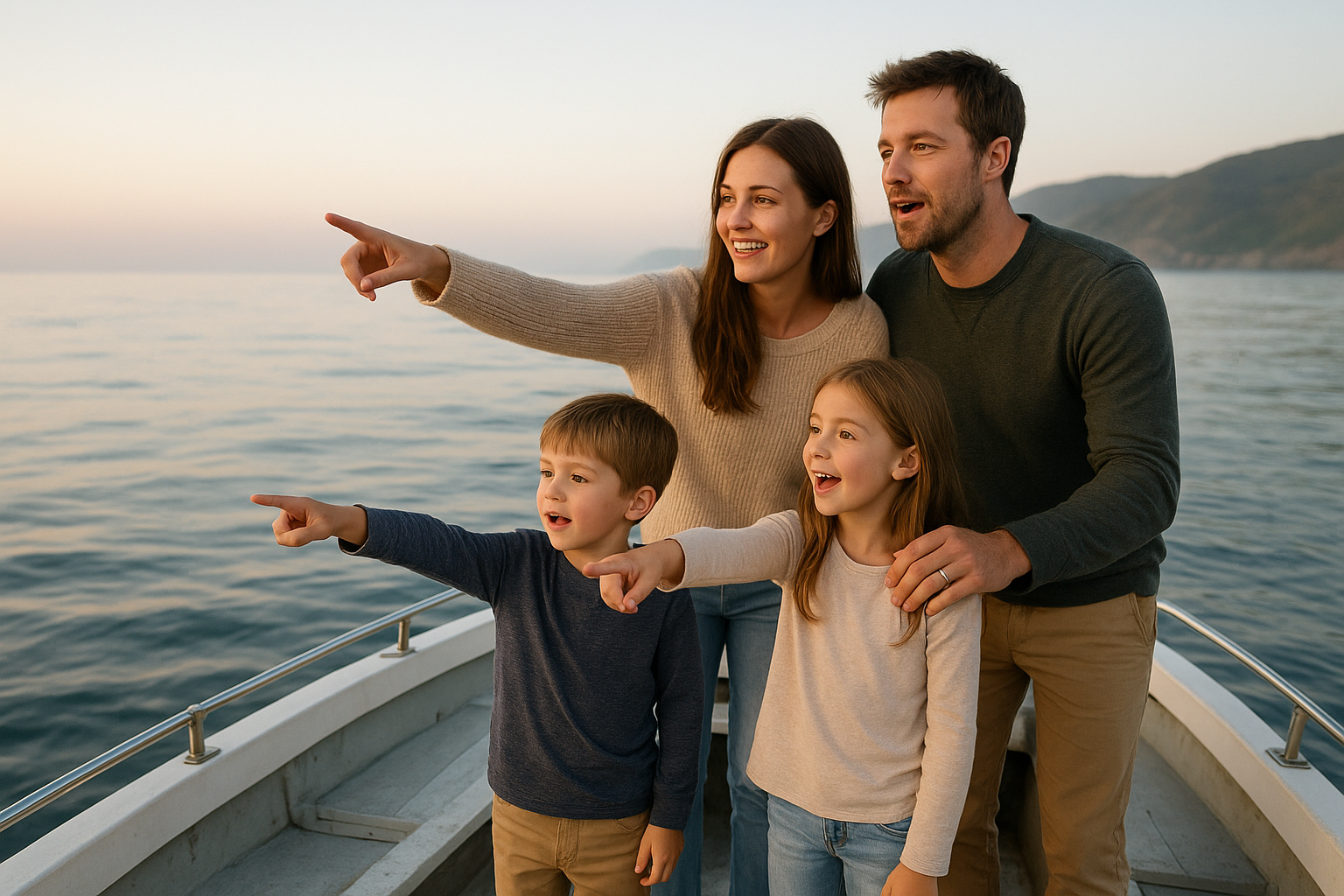
Small-group whale watching tours for families San Diego give kids and parents alike an up-close view of the action.
Whale Watching Tours for Families San Diego: What Makes Them Different
Whale watching tours for families San Diego operators run are typically smaller and slower-paced than the large passenger ferries found at bigger harbors. Specifically, boats capped at six passengers—occasionally extended to twelve for special occasions—allow every seat to have a clear sightline over the rail, not just the front row.
Family-Friendly Whale Watching in San Diego Bay
Quiet outboard engines reduce startling noise, which helps both wildlife and anxious kids stay calmer during the trip. Meanwhile, 360-degree viewing decks mean nobody is stuck watching through a window or crowded behind taller passengers. As a result, families often describe these trips as feeling more like a private outing than a tour bus on water.
This style of tour also tends to attract photographers and filmmakers who need unobstructed camera angles. Crews from outlets such as BBC Earth, National Geographic, and Discovery Channel have used similarly equipped platforms for ocean documentary work, which says something about the stability and visibility these boats provide for everyday passengers too.
Seasonal Whale Sightings San Diego Families Can Expect
San Diego’s whale watching calendar runs nearly year-round, which is part of what makes it such a reliable destination for families planning trips months in advance. Specifically, gray whales migrate along the coast from roughly December through April as they travel between Alaska and Baja California.
According to NOAA Fisheries, the Eastern North Pacific gray whale population numbers in the thousands and migrates along this exact stretch of coastline every winter. In contrast, summer and fall bring blue whales, fin whales, and humpbacks closer to shore as they feed on dense krill and anchovy schools.
The blue whale, the largest animal known to have ever lived, feeds regularly off San Diego and nearby La Jolla Canyon between June and September. Dolphins and sea lions, meanwhile, show up throughout the year, so even a quiet whale day usually still delivers plenty of marine life for kids to watch.
What to Expect Aboard a Small-Group Whale Watching Boat
Before departure, most crews run through basic safety information and explain what species are realistically possible that day. Above all, a good naturalist will set expectations honestly rather than promising guaranteed sightings, since whales are wild animals that move on their own schedule.
Once underway, captains typically use a slow, non-chasing approach, allowing whales to surface and dive naturally nearby rather than pursuing them at speed. This matters for families because it keeps the ride smoother and reduces the chance of motion sickness, particularly for younger children or anyone sensitive to choppy turns.
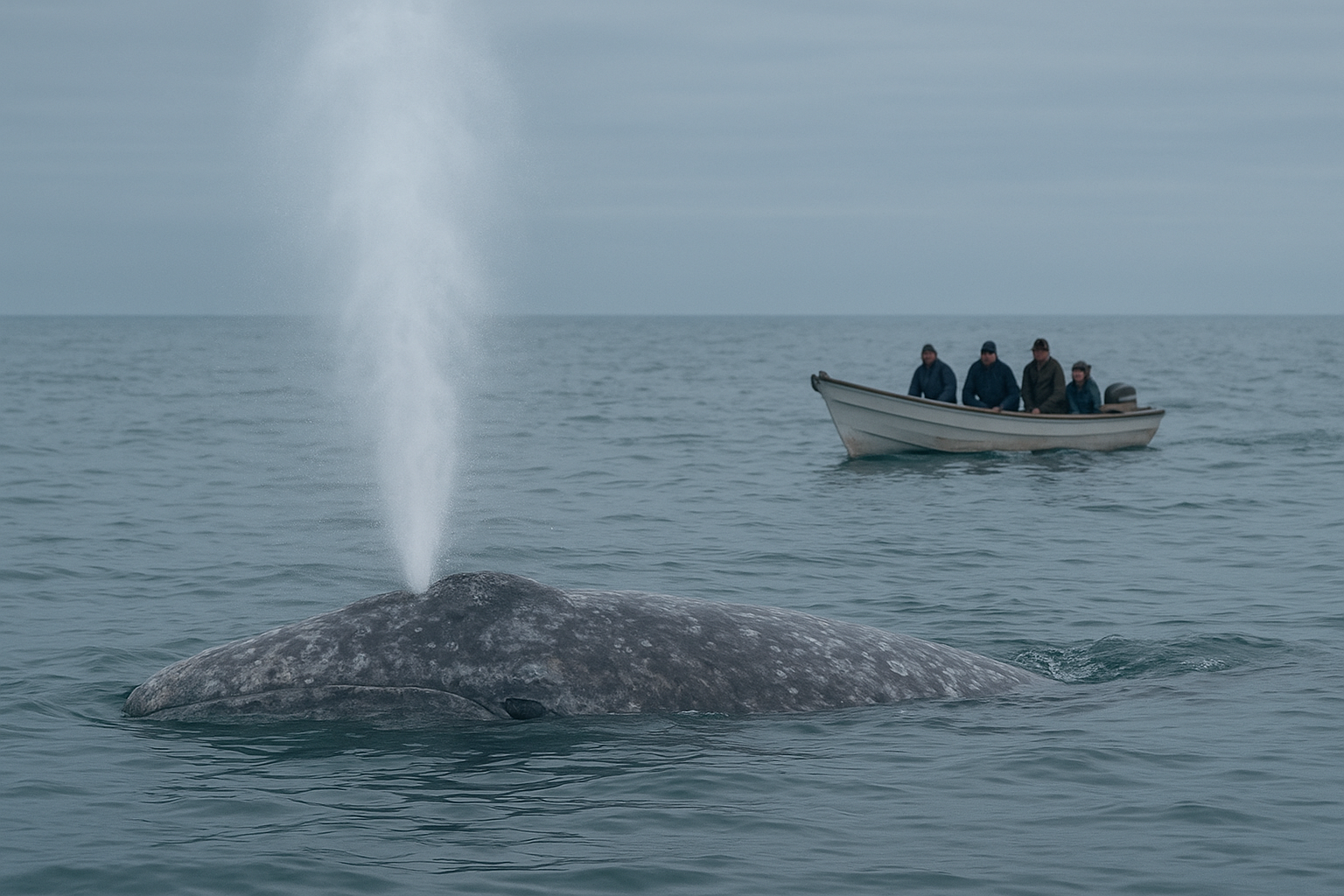
Gray whales are among the most reliable sightings during San Diego’s winter migration season.
Naturalist-Led Narration for Curious Kids
A Scripps Institution of Oceanography-trained marine biologist can translate what’s happening on the water into language kids actually understand—explaining why a whale “spouts,” for instance, in terms of breathing through a blowhole rather than technical jargon alone. Consequently, children tend to stay engaged longer than they would on a silent, narration-free trip.
How to Choose the Right Family Whale Watching Tour
Selecting the right trip takes a few deliberate steps rather than simply booking whatever is cheapest or earliest available. The following process works well for most families planning a San Diego whale watching outing.
- Check the group size. Favor operators capping trips at six to twelve passengers so every family member gets an unobstructed view rather than fighting for rail space.
- Confirm naturalist guidance. A marine biologist or trained naturalist on board turns a sightseeing trip into an educational experience kids remember.
- Match the season to the species. Book gray whale trips from December through April, and target blue whales or humpbacks between June and November.
- Verify the vessel is Coast Guard-inspected. A stable, low-profile hull reduces rocking and makes the trip far easier on children and older relatives.
- Review trip length and departure point. Choose a marina close to your lodging and a duration that fits your family’s patience and comfort level.
Families searching specifically for smaller-group options can compare details on this small-group whale watching tour overview, which outlines how trip size affects the overall experience.
Tips for a Smooth Family Whale Watching Trip
First, dress in layers, since ocean temperatures often run ten to fifteen degrees cooler than inland San Diego. Similarly, sunscreen and polarized sunglasses help cut glare off the water, which makes spotting distant whale spouts noticeably easier for kids.
Second, pack light snacks and water, particularly for longer expeditions. In particular, families prone to motion sickness should consider over-the-counter remedies beforehand, since choppier days are harder to predict than the tide tables suggest.
Finally, bring a camera with a strap, or ask about drone-friendly operations if photography is a priority. Operators that regularly host film crews, such as those detailed on this private whale watching charter page, are generally well set up for both casual family photos and more serious shooting.
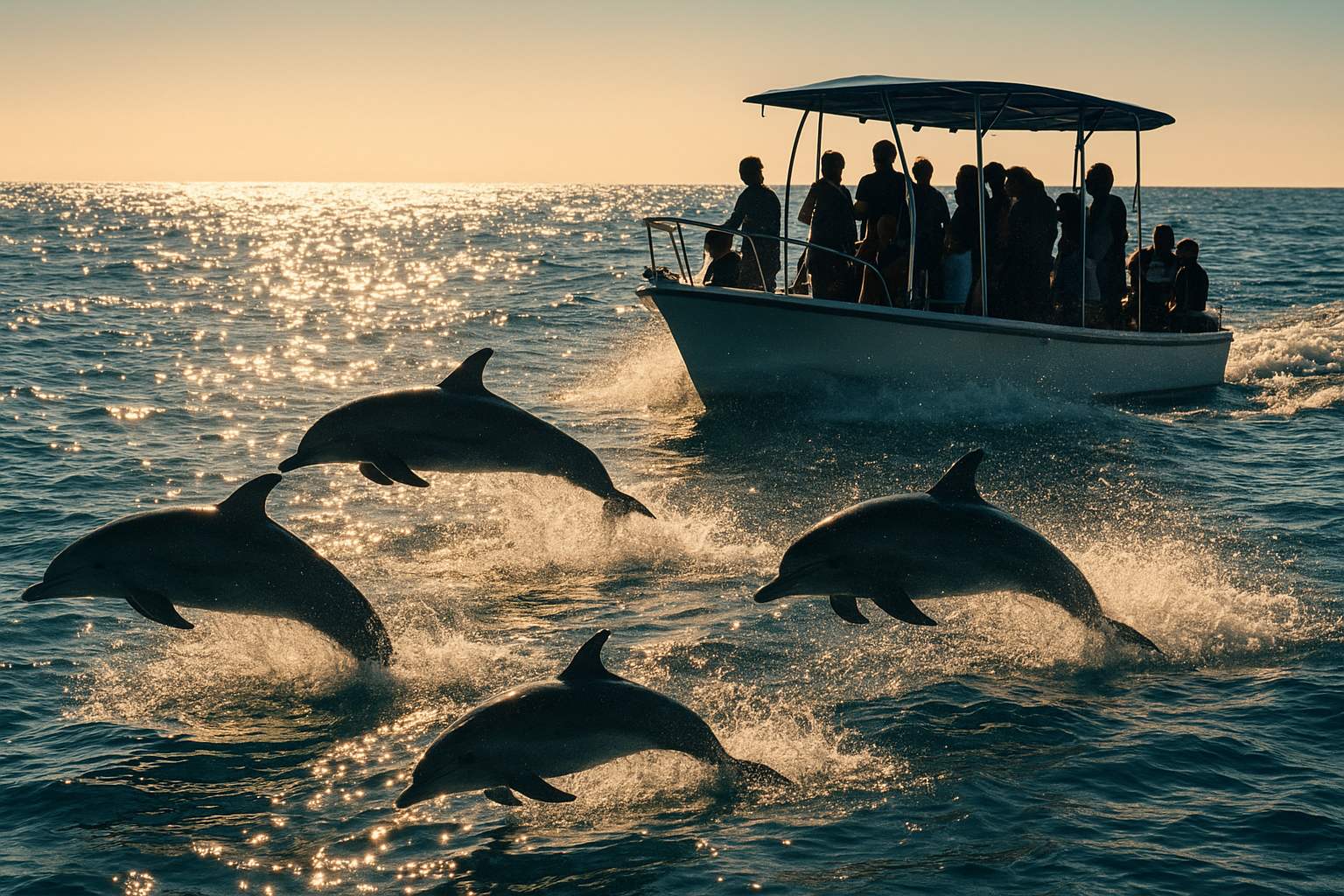
Dolphin pods frequently join whale watching trips along the San Diego coastline.
For families who also want to explore the water themselves, summer trips sometimes combine whale watching with snorkeling near kelp paddies and resident sea lions, as outlined on this small-group wildlife adventure page. Guests are expected to bring their own snorkel gear, so checking equipment requirements ahead of time saves confusion at the dock.
Those researching departure logistics and seasonal schedules in more depth can review the full whale watch tour details before locking in dates. Likewise, the bigbluephotoboat.com homepage lists current seasonal availability for private and semi-private trips departing from Seaforth Marina.
FAQs: Family Whale Watching Trips in San Diego
What are the best whale watching tours for families in San Diego?
The best whale watching tours for families San Diego offers are small-group trips on stable, low-profile boats with a naturalist aboard to explain sightings in kid-friendly terms. Groups capped at six to twelve passengers give children room to move around and see whales from every angle without crowding.
What age is appropriate for a family whale watching trip?
Most small-group whale watching boats welcome children of any age, though kids under five may do better on calmer, shorter trips. Operators can usually advise on sea conditions and trip length before you book.
How long do whale watching tours in San Diego last?
Standard tours typically run three to four hours, while full-day expeditions can last six hours or more. Shorter trips are usually easier for younger children and first-time boaters.
What whales can you see in San Diego and when?
Gray whales migrate past San Diego from December through April, while blue whales, fin whales, and humpbacks are more common from June through November. Dolphins and sea lions are frequently spotted year-round.
Is whale watching safe for kids and seniors?
Yes, whale watching is generally safe for kids and seniors on Coast Guard-inspected vessels with stable hulls and seating. Families should still check with their doctor about motion sickness remedies for anyone prone to seasickness.
How much do family whale watching tours in San Diego cost?
Pricing varies by group size, boat type, and trip length, with private and semi-private charters generally costing more than large group tours. Many operators offer better value per person for small groups because everyone gets closer access to sightings.
What should families bring on a whale watching tour?
Pack layered clothing, sunscreen, polarized sunglasses, a reusable water bottle, and a camera or binoculars. Mornings on the water can feel cooler than expected, even on a warm San Diego day.
Are small-group whale watching tours better than large boats for families?
Small-group tours generally offer better sightlines, less noise, and more personalized narration than large commercial boats carrying 100 or more passengers. Families often find it easier to keep track of children on a smaller, quieter vessel.
Do whale watching boats chase the whales?
Responsible operators follow low-impact, non-chasing guidelines that let whales approach on their own terms rather than pursuing them. This approach is both safer and more respectful of marine wildlife.
Can you snorkel during a family trip in San Diego?
Summer snorkel excursions often feature kelp paddies, sea lions, and ocean sunfish alongside whale sightings, though guests typically need to bring their own snorkel gear. These trips work well for older kids and confident swimmers.
What is the most common mistake families make when booking a whale watching tour?
The most common mistake is booking the cheapest large-group tour without checking boat size, trip length, or cancellation policy. This can lead to crowded decks, rushed viewing time, and limited flexibility if weather changes.
Why do San Diego whale watching tours sometimes get cancelled or rescheduled?
Trips may be rescheduled due to rough sea conditions, fog, or extremely limited recent whale activity in the immediate area. Reputable operators prioritize safety and sighting quality over running a trip regardless of conditions.
Final Thoughts
Choosing among whale watching tours for families San Diego offers comes down to matching group size, season, and vessel type to your family’s comfort level. A smaller boat, a knowledgeable naturalist, and a non-chasing approach to wildlife consistently make for a calmer, more memorable trip than a crowded commercial ferry. The Scripps Institution of Oceanography has long studied the marine life found along this coast, and that same scientific curiosity is what good naturalist-led tours bring to every family trip. Whichever season you choose, booking ahead and checking boat size first will go a long way toward a smooth, whale-filled day on the water.