
Whale and dolphin tours San Diego travelers rank at the top of their trip itinerary pair small, photographer-friendly boats with a real marine biologist on board — not just a captain narrating from memory. Departing from Seaforth Marina, these excursions cap groups at six passengers, or up to twelve for special occasions, so every guest gets a clear view and direct access to a Scripps Institution of Oceanography-trained naturalist. As a result, sightings become learning moments rather than brief, crowded glimpses shared with fifty other passengers on a double-decker cruise boat.
San Diego sits along one of the richest marine migration corridors on the entire Pacific coast. Consequently, visitors can encounter blue whales, gray whales, humpbacks, fin whales, orcas, and dolphins depending on the time of year. Below, this guide covers everything a prospective guest could want to know: how naturalist-led trips work, what you’ll see each season, where boats actually go, how pricing breaks down, and why the combination of real marine science and small-group comfort matters for families, photographers, and filmmakers alike. If you’re ready to book your whale watch tour before reading further, that option is always available too.
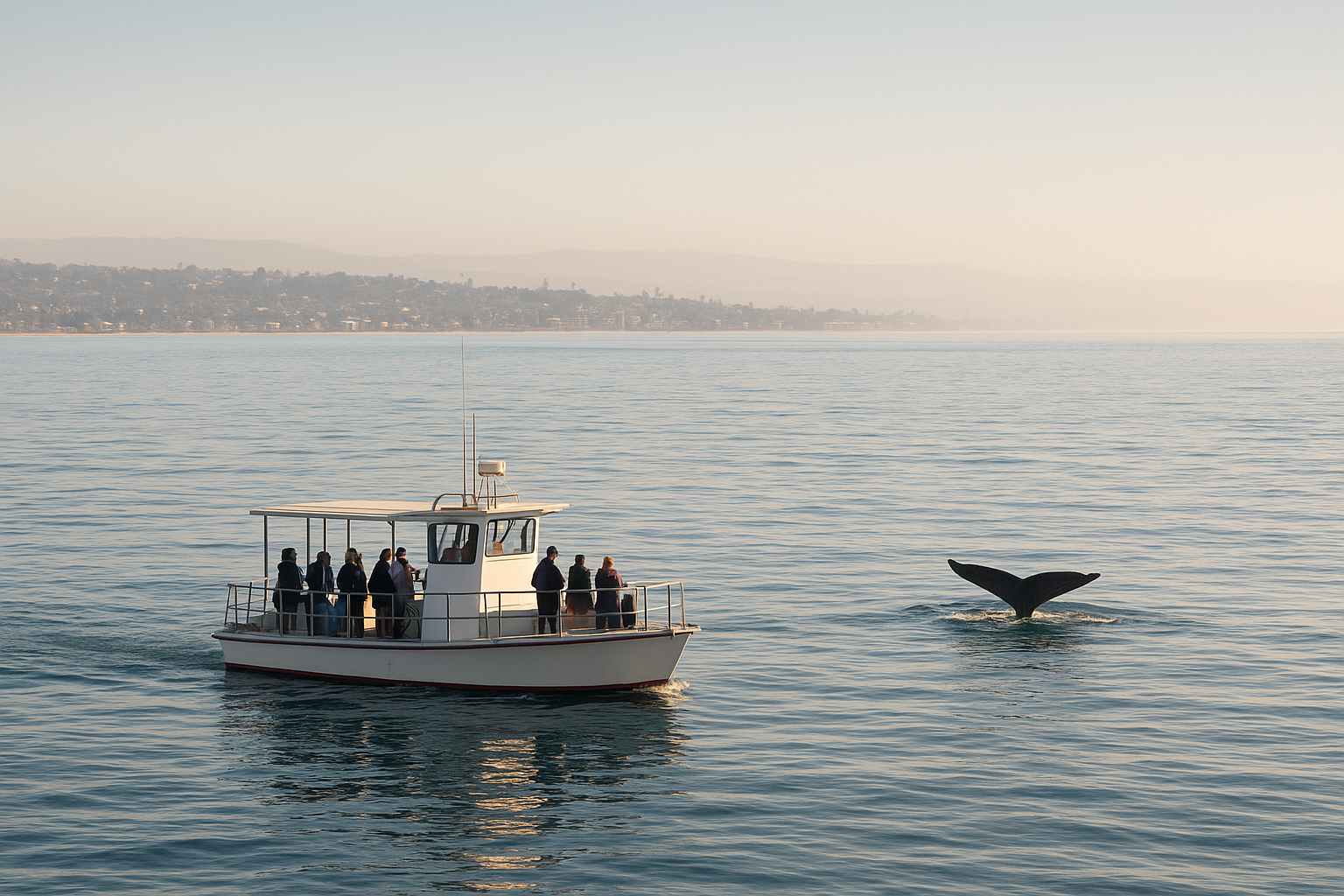
A low-profile charter boat searches San Diego coastal waters during a naturalist-led whale watching excursion.
Whale and Dolphin Tours San Diego: What’s Actually Included
Whale and dolphin tours San Diego operators run are small-group boat excursions where a trained scientist, rather than just a captain, narrates and interprets wildlife behavior in real time. In short, these tours pair scientific expertise with photographer-friendly vessels for a far more informed ocean experience than a standard sightseeing cruise.
Specifically, a marine biologist trained at Scripps Institution of Oceanography joins the crew to identify species, explain feeding and social behavior, and guide the captain toward likely sighting zones using low-impact, non-chasing methods. Meanwhile, the boats themselves are Coast Guard-inspected, with stable, low-profile hulls and quiet outboard engines designed to minimize disturbance to marine life.
For example, during a gray whale migration in winter, the naturalist might point out a mother-calf pair resting near the surface and explain why the pair is pausing before continuing its journey north. This kind of context transforms a simple sighting into a memorable, educational encounter rather than a quick photo and a wave goodbye.
Why San Diego Is One of the Best Places for Whale and Dolphin Watching
Few coastal cities offer the sheer density of marine traffic that San Diego does. In particular, the city sits directly along the gray whale’s coastal migration lane, within range of summer blue whale feeding grounds, and inside year-round dolphin territory all at once. Therefore, almost any month you visit, something worth seeing is swimming offshore.
In addition, the local underwater topography helps. Deep submarine canyons near Point Loma push nutrient-rich water close to shore, which concentrates prey and, in turn, draws whales and dolphins closer to the coastline than in many other regions. As a result, trips often don’t require hours of open-ocean travel before the first sighting.
For a broader overview of what makes San Diego such a strong year-round destination, the San Diego whale and dolphin watching adventure guide walks through the region’s geography and wildlife patterns in more depth.
Why a Scripps-Trained Marine Biologist Changes the Experience
A Scripps-trained naturalist brings academic rigor to an experience that many operators treat as purely recreational. Therefore, guests often leave with a genuine understanding of marine ecology rather than just a handful of photos and a vague memory of “a big splash.”
In particular, these naturalists can explain behaviors such as spy-hopping, breaching, or bubble-net feeding as they happen, which helps guests anticipate photo opportunities before they occur rather than reacting after the fact. According to the NOAA Fisheries blue whale profile, blue whales can reach nearly 90 feet in length, making them the largest animals ever known to have lived on Earth. Having a trained scientist aboard to contextualize facts like this adds depth that standard tour narration rarely matches.
Above all, this scientific approach supports a low-impact philosophy. Rather than chasing animals for a closer look, the naturalist helps the captain predict movement patterns, which reduces stress on wildlife while still delivering strong viewing opportunities. Scripps Institution of Oceanography, part of the University of California San Diego, has studied regional marine mammals for decades, and that research directly informs how these trips are run on the water.
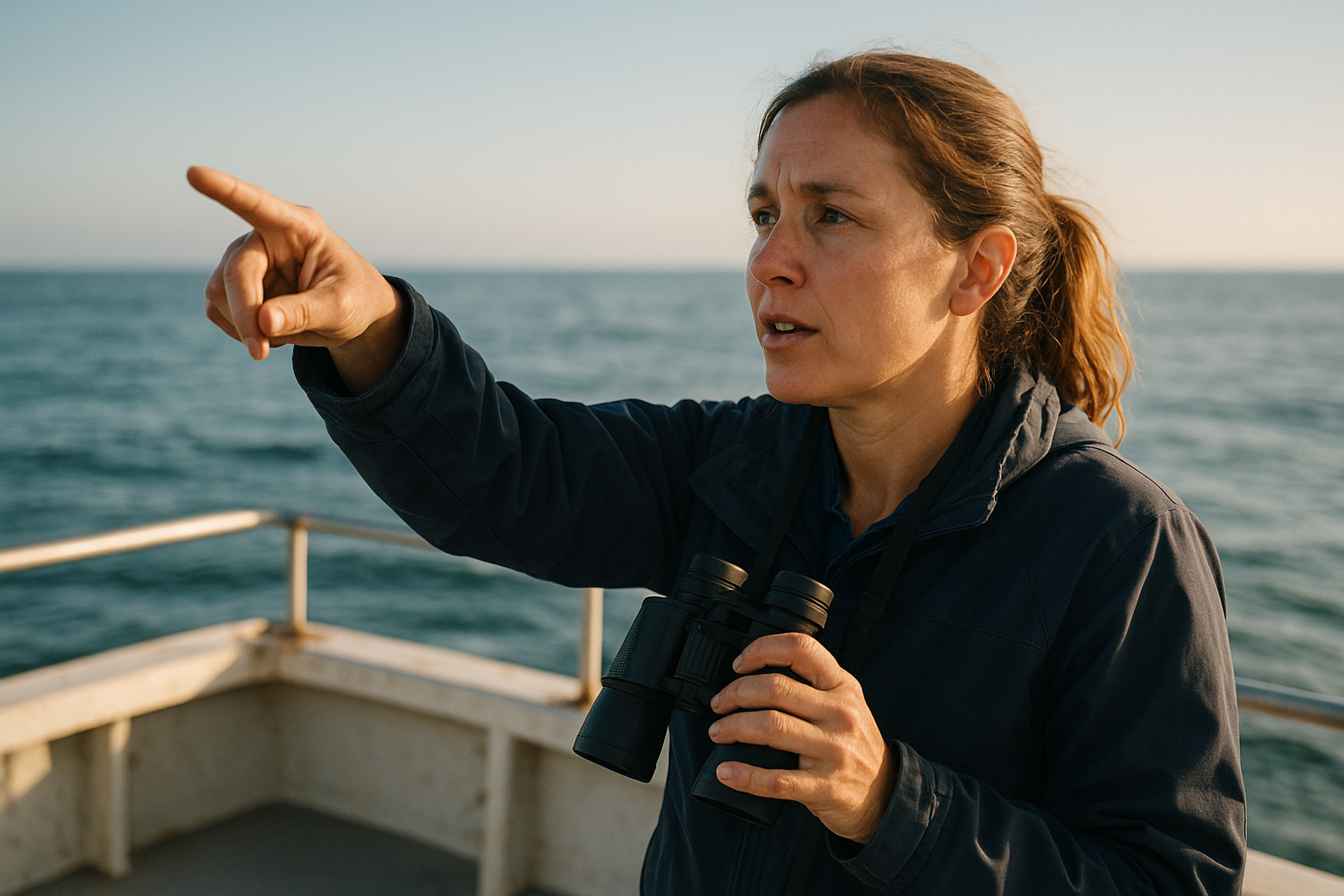
A Scripps-trained naturalist scans the horizon for whale activity off the San Diego coast.
Seasonal Calendar: What You’ll See Month by Month in San Diego
San Diego’s whale watching calendar shifts throughout the year, which is exactly why repeat visitors book more than once. Winter, from December through April, brings California gray whales. The gray whale’s Wikipedia overview notes they migrate roughly 10,000 to 12,000 miles round trip between Alaska and Mexico, passing directly along the Southern California coast — often within a few miles of shore.
By contrast, summer months, typically June through September, bring blue whales, fin whales, and occasional orca sightings as these species follow krill and baitfish concentrations offshore. Dolphins, particularly common and bottlenose species, appear near year-round and often travel in large, active pods numbering in the hundreds.
- December – April: Gray whale migration, including mother-calf pairs traveling close to shore.
- May – June: Transition period with dolphins, sea lions, and early blue whale arrivals.
- June – September: Peak blue whale and fin whale season, plus occasional orca pods.
- July – October: Blue Water Safari snorkel season, featuring mola mola (ocean sunfish), kelp paddies, and resting sea lions.
- Year-round: Common and bottlenose dolphins, frequently in large, acrobatic pods.
For a deeper breakdown of which species show up throughout the year, the whales and dolphins in San Diego guide covers seasonal patterns in far more detail, including migration timing and typical sighting rates by month.
Best Departure Points and Viewing Grounds Along the San Diego Coast
Most naturalist-led boats depart from Seaforth Marina in Mission Bay, which offers quick, sheltered access to open water without the longer transit times some other harbors require. From there, boats typically head toward Point Loma and the kelp beds off La Jolla, since both areas sit near deep submarine canyons that concentrate marine life.
Specifically, the waters off Point Loma mark the edge of the continental shelf, where cold, nutrient-rich water rises toward the surface. Consequently, this zone attracts everything from gray whales during migration to blue whales chasing krill in summer. Coronado’s southern waters, meanwhile, are a reliable spot for year-round dolphin pods.
Rather than sticking to a fixed route, naturalist-led captains adjust their heading daily based on recent reports, water temperature, and bird activity, which often signals feeding below the surface. To compare how different operators approach these waters, the top-rated whale watching tours and charters comparison is a useful next stop.
How Small-Group Whale Watching Charters Work, Step by Step
Booking a naturalist-led charter follows a straightforward process, though the details can vary slightly by tour type. The steps below outline a typical experience from booking to return.
- Choose a tour type and date. Select between a private charter, semi-private group tour, or seasonal snorkel excursion based on group size and preferred season.
- Arrive at Seaforth Marina. Meet the Scripps-trained marine biologist and captain who will lead the small-group excursion out into open water.
- Depart and search coastal waters. The naturalist uses low-impact, non-chasing techniques to locate whales, dolphins, and other marine life nearby.
- Observe wildlife from the deck. Enjoy a 360-degree viewing deck while the naturalist explains behavior, species identification, and ecological context in real time.
- Return with photos and a species log. Head back to the marina with photos, notes, and a logged list of species encountered during the trip.
Consequently, the entire process typically takes three to four hours for standard departures, while full-day expeditions can extend well beyond that window depending on sighting activity and weather conditions.
Small Boats vs. Large Whale Watching Cruises: What’s the Real Difference
Large commercial cruise boats often carry fifty or more passengers at once. As a result, guests end up crowded along one rail, fighting for a view whenever a whale surfaces on the opposite side of the vessel.
- Group size: Six to twelve guests on a small charter versus fifty-plus on a large cruise boat.
- Guide quality: A trained marine biologist versus a crew member reading from a general script.
- Noise and disturbance: Quiet outboard engines versus large diesel engines that can push wildlife farther away.
- Viewing access: 360-degree open deck versus limited rail space shared with dozens of other guests.
- Photography conditions: Stable, low-profile hulls versus taller vessels with more motion and vibration.
In contrast, a small-group charter puts every guest within a few feet of the naturalist, with clear sightlines on every side of the boat. Therefore, the tradeoff of a slightly higher per-seat price typically pays off in sighting quality, photo quality, and overall comfort.
Photography and Filmmaking Aboard These Whale and Dolphin Tours
Photographers and filmmakers face unique challenges on the water, including motion, glare, and limited vantage points. However, boats built with stable, low-profile hulls and quiet outboard engines solve many of these issues by reducing vibration and engine noise that can startle wildlife or shake handheld footage.
Notably, these vessels have supported film crews from BBC Earth, National Geographic, and Discovery Channel, which speaks to their reliability for professional-grade work. Furthermore, 360-degree viewing access means photographers are not locked into a single side of the boat waiting for a shot that may never come.
For travelers planning a trip built around photography specifically, the small-group wildlife adventure tours page outlines vessel specifications and group size options in more depth.
What to Bring and Wear on Your San Diego Whale Watching Trip
Ocean air feels noticeably cooler than air on land, even on a warm San Diego afternoon. Therefore, layered clothing — a light jacket over a t-shirt, for instance — works better than a single heavy coat that can’t be removed if the sun breaks through.
- Layered clothing, a windbreaker, and non-slip shoes for a stable, dry deck.
- Sunscreen, sunglasses, and a hat, since glare off the water is stronger than it feels.
- A telephoto lens, polarizing filter, and weather-sealed camera bag for photographers.
- Motion sickness precautions, taken before boarding rather than after symptoms start.
- Your own snorkel or freedive gear, if booking a seasonal Blue Water Safari trip.
In addition, first-time visitors often bring only a wide-angle lens, which struggles to capture wildlife that may surface fifty yards away. Packing a zoom lens in the 200–400mm range solves this problem for most sightings.
Private vs. Semi-Private Whale Watching Charters: Which Should You Book?
Private charters reserve the entire boat for one group, which works well for proposals, corporate events, or families wanting full control over timing and pace. Semi-private tours, on the other hand, cap groups at six passengers, which keeps the experience intimate while sharing the cost among a small number of guests.
Similarly, special-occasion bookings can expand semi-private capacity to twelve passengers, making them suitable for milestone celebrations without sacrificing too much personal space. Those weighing the tradeoffs between these two formats can review the private whale watching charter details for pricing structure and availability.
To help decide between operators entirely, it’s also worth comparing which companies actually employ trained scientists versus general tour guides, a distinction covered in the guide to marine biologist-led tours.
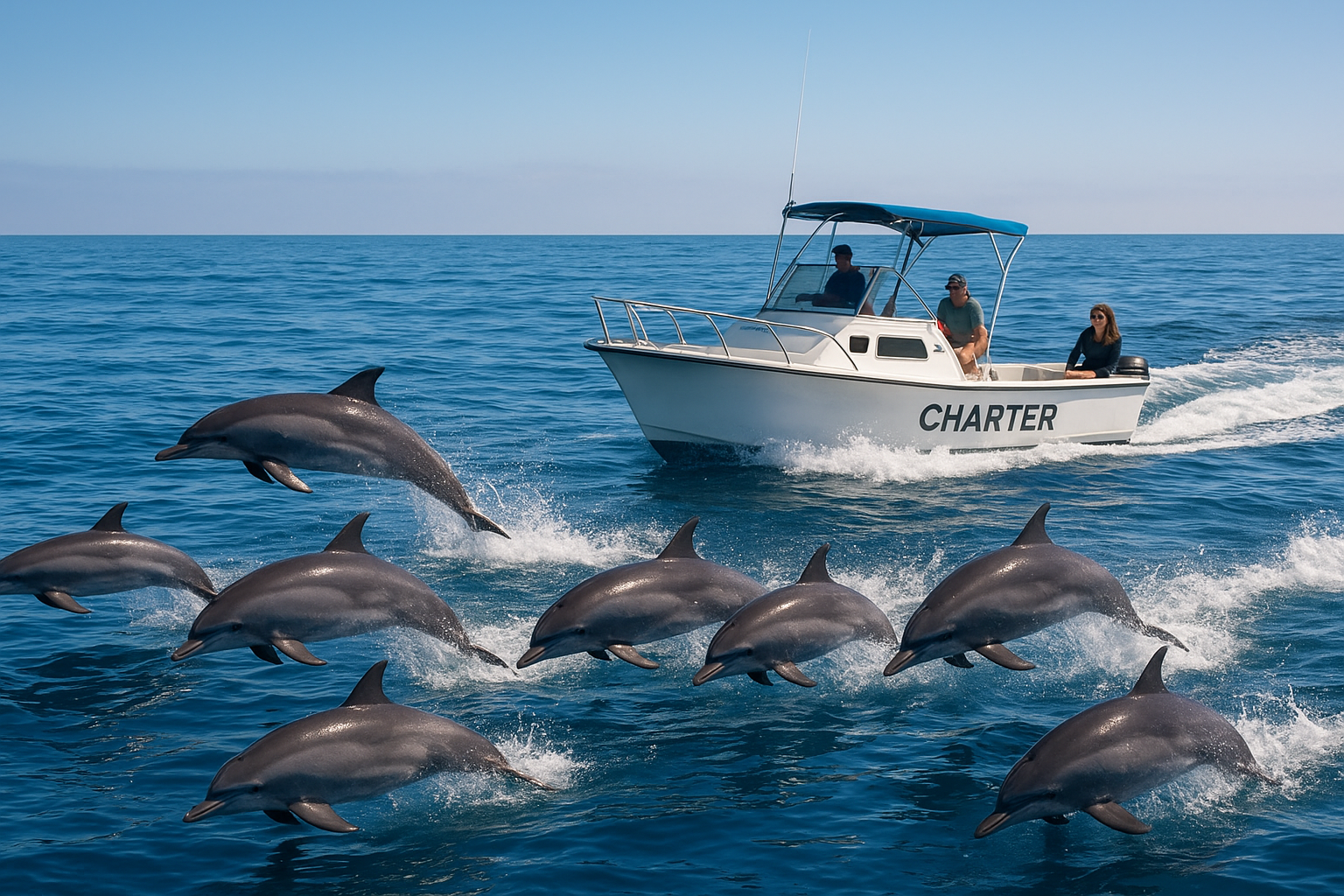
Dolphins ride the bow wave during a semi-private wildlife tour off the San Diego coast.
Low-Impact, Non-Chasing Wildlife Viewing Practices
Responsible wildlife viewing starts with distance and patience rather than aggressive pursuit. In fact, federal guidelines generally recommend keeping vessels at least 100 yards from most whale species to avoid stress or collision risk, a standard reputable operators follow closely. The NOAA marine mammal viewing guidelines lay out these distance rules in full detail for boaters along the entire U.S. coastline.
Instead of chasing animals for a closer look, trained naturalists use behavioral cues, water conditions, and known migration patterns to position the boat in a spot where wildlife is likely to approach on its own terms. As a result, encounters often feel more natural and less intrusive for the animals involved.
This approach also benefits guests directly, since animals that aren’t stressed tend to display more natural behaviors like breaching, spy-hopping, or extended surface resting, all of which make for better photographs and more memorable moments on the water.
Pricing, Booking Timing, and What Affects Your Cost
Pricing for whale and dolphin tours San Diego operators offer varies by tour length, group size, and season, with private charters generally costing more than shared semi-private departures. Peak summer weekends and the winter gray whale migration tend to book out faster, so reserving two to three weeks ahead is a reasonable rule of thumb.
Similarly, full-day expeditions and snorkel-inclusive Blue Water Safari trips typically carry a higher price point than a standard three-hour charter, simply because of added fuel, equipment, and crew time. Contacting the operator directly for current seasonal rates remains the most reliable way to get an accurate quote, since pricing can shift with fuel costs and demand.
Above all, consider what’s included before comparing price alone. A lower fare on a large cruise boat may look appealing, but a higher per-seat price on a small naturalist-led charter often delivers far more viewing time, better photo access, and genuine scientific commentary in return.
Sustainability and Marine Conservation at Sea
Conservation isn’t an afterthought on a well-run charter; it’s built into how the boat operates. Quiet outboard engines, non-chasing navigation, and strict distance guidelines all reduce the cumulative stress that repeated boat traffic can place on migrating whales.
Furthermore, every naturalist-logged sighting contributes informally to a broader understanding of regional wildlife patterns over time. In particular, consistent species logs, collected trip after trip, help identify shifts in migration timing that can reflect larger changes in ocean temperature and prey availability.
Guests who choose operators committed to these practices are, in effect, supporting a model of tourism that prioritizes animal welfare over a guaranteed close-up photo, which is exactly the tradeoff responsible wildlife viewing requires.
Frequently Asked Questions About Whale and Dolphin Tours in San Diego
What is included in whale and dolphin tours with marine biologist San Diego operators offer?
These tours typically include a small-group boat trip led by a trained naturalist who identifies species, explains behavior, and guides the captain toward likely sighting areas. Most packages also include 360-degree viewing access, safety briefings, and photography-friendly vessel positioning.
How long do San Diego whale watching tours typically last?
Standard tours usually run three to four hours, while full-day expeditions can extend six hours or more. The exact length often depends on sighting conditions and the charter package selected.
What whales can I see in San Diego throughout the year?
San Diego waters host gray whales in winter, blue and fin whales in summer, and humpbacks and orcas at various points throughout the year. Dolphins, including common and bottlenose species, are present nearly year-round.
Why book a private charter instead of a large group boat tour?
Private and semi-private charters keep groups capped at six to twelve passengers, which means better viewing angles, quieter engines, and more personalized naturalist commentary. Large group boats often carry fifty or more passengers, limiting space and visibility for everyone aboard.
How much do small-group whale watching tours cost in San Diego?
Pricing varies by tour length, group size, and season, with private charters generally costing more than shared departures. Contacting the operator directly for current seasonal rates remains the most reliable way to get an accurate quote.
What is the best season for blue whale watching in San Diego?
Blue whales are most reliably spotted off San Diego between June and September, when they migrate through Southern California waters to feed. Fin whales and occasional orcas can also appear during this same summer window.
Do I need my own snorkel gear for the Blue Water Safari trips?
Yes, guests are expected to bring their own snorkel or freedive equipment for these seasonal excursions. The crew does not provide gear rental, so arriving prepared helps avoid delays before departure.
How close can boats legally get to whales in California?
Federal guidelines recommend keeping vessels at least 100 yards from most whales to reduce stress and collision risk. Responsible operators follow low-impact, non-chasing practices that prioritize animal welfare over close approaches.
What should photographers bring on a whale watching charter?
A telephoto lens, polarizing filter, and weather-sealed camera bag are essential for capturing wildlife from a moving boat. Layered clothing and lens cloths also help manage ocean spray and changing light conditions.
Are these tours suitable for kids and families?
Yes, small-group tours with stable, low-profile hulls are generally well suited for families, though specific age recommendations can vary by operator. Checking seasonal conditions and tour length in advance helps families choose the right departure.
What common mistakes do first-time whale watchers make?
First-time visitors often forget sun protection, underestimate how cool ocean air feels, or bring only a wide-angle lens unsuitable for distant wildlife. Skipping motion sickness precautions is another frequent oversight that can shorten the trip’s enjoyment.
How do naturalist-led tours differ from standard whale watching cruises?
Naturalist-led tours include a trained marine biologist who interprets behavior and ecology in real time, rather than relying solely on a captain’s general narration. This scientific context often turns a sighting into a deeper learning experience for guests of all ages.
Can I request a custom charter for a special occasion?
Yes, custom private boat charters can be arranged for birthdays, proposals, corporate events, and other personalized ocean adventures. Group size, duration, and itinerary are typically tailored to the occasion during booking.
Are whale sightings guaranteed on San Diego whale and dolphin tours?
No wildlife tour can guarantee a sighting, since these are wild animals in open ocean. However, experienced naturalists who track seasonal patterns and recent reports consistently achieve high sighting rates during peak gray whale and blue whale seasons.
What’s the best departure point for whale and dolphin tours in San Diego?
Seaforth Marina in Mission Bay is a popular departure point because it offers quick, sheltered access to open water near Point Loma and La Jolla, two of the region’s most productive wildlife-viewing areas.
Final Thoughts: Booking the Best Whale and Dolphin Tours in San Diego
Ultimately, whale and dolphin tours San Diego visitors book stand apart because they merge scientific insight with small-group comfort and photographer-friendly vessels. Whether the goal is a quiet family outing, a corporate celebration, or professional film footage, naturalist-led charters departing Seaforth Marina offer a low-impact way to witness blue whales, gray whales, orcas, and dolphins in their natural habitat.
Therefore, travelers planning a Southern California ocean adventure should prioritize operators who combine Coast Guard-inspected vessels with genuine marine science expertise rather than a captain reading from a script. To start planning a trip, visit Big Blue Photo Boat and explore current seasonal availability out of San Diego.