

Southern California offshore whale watching charters give travelers a front-row seat to one of the richest marine migration corridors on Earth, where blue whales, gray whales, humpbacks, and pods of dolphins move through cool Pacific waters just beyond San Diego’s coastline. Because these waters sit along a major feeding and migration route, small-group charters departing from Seaforth Marina can reach prime sighting zones faster than larger commercial boats. This guide explains what to expect from offshore charters, when to book, and how private and semi-private trips differ from standard whale watching tours you might find elsewhere.
What Are Southern California Offshore Whale Watching Charters?
Southern California offshore whale watching charters are private or semi-private boat tours that travel into deeper Pacific waters, away from crowded nearshore routes, to reach feeding and migration zones. Unlike large passenger cruise boats, these charters typically carry six to twelve guests, which allows closer, quieter access to wildlife without disturbing it.
Consequently, guests often describe offshore charters as feeling more like a guided expedition than a tourist cruise. Because San Diego sits near La Jolla Canyon, a deep-water trench that runs unusually close to shore, boats can reach productive offshore habitat faster than in many other coastal cities.
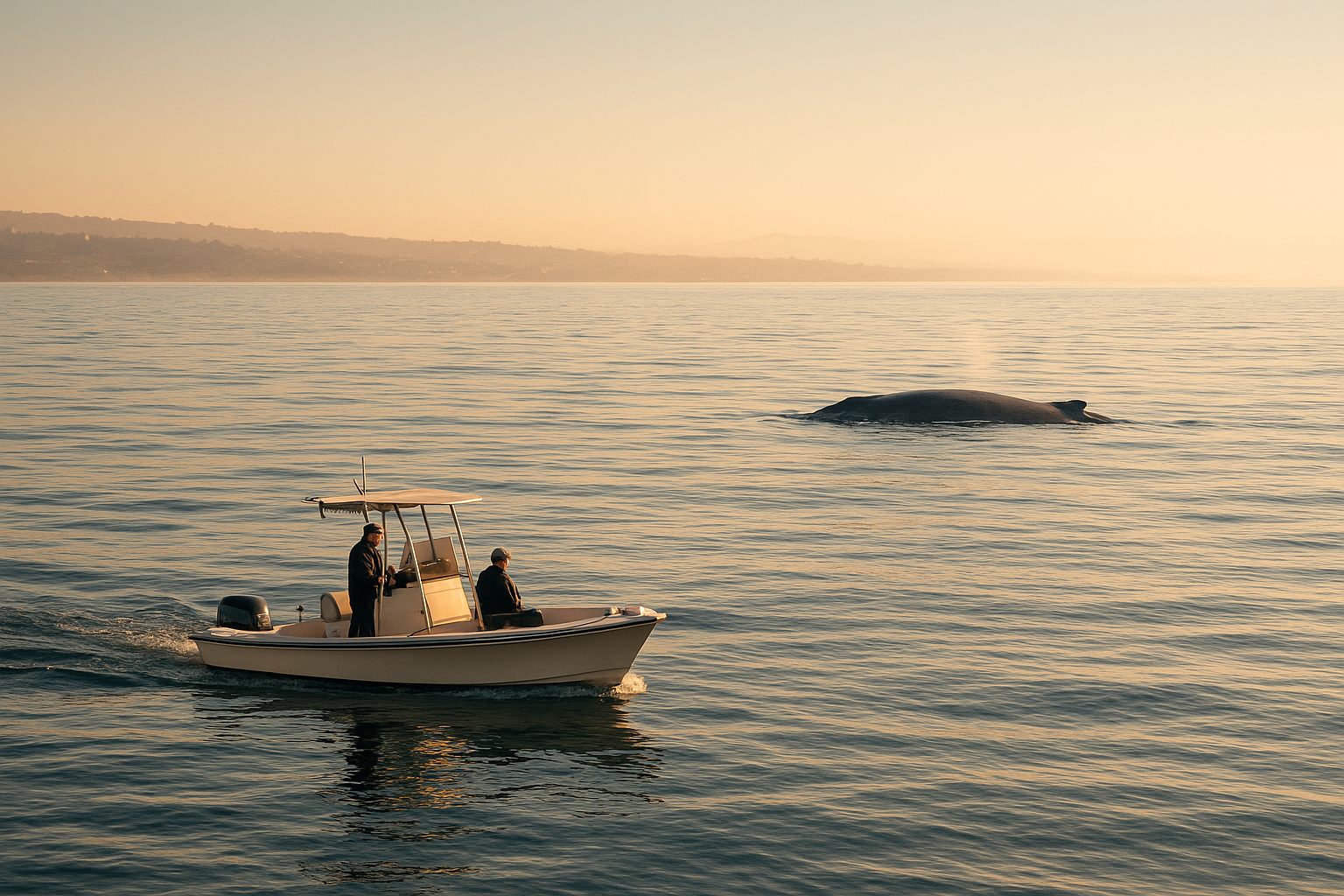
A small-group charter boat approaches a surfacing blue whale during a southern California offshore whale watching trip.
Why San Diego Is a Gateway to Pacific Whale Migration
San Diego sits directly along one of the busiest marine mammal migration corridors on the Pacific coast. Gray whales, for example, travel roughly 12,000 miles round trip between Alaska and Baja California each year, according to NOAA Fisheries, making the waters off San Diego a reliable waypoint during their journey.
In addition, blue whales, the largest animals ever known to exist, gather off the Southern California coast each summer to feed on dense swarms of krill. As a result, offshore charters departing from Seaforth Marina frequently intersect with multiple species within a single trip, rather than requiring separate excursions for each.
Best Seasons for Offshore Whale Watching Trips
Gray whales typically pass through from December through April, with peak sightings in January and February. Meanwhile, blue whales and fin whales are most active from June through September, when krill blooms draw them closer to shore.
Dolphins, on the other hand, are seen on nearly every trip throughout the year, often traveling in large pods of several hundred animals. Orcas appear less predictably, but sightings do occur, particularly during winter months when gray whale calves are present.
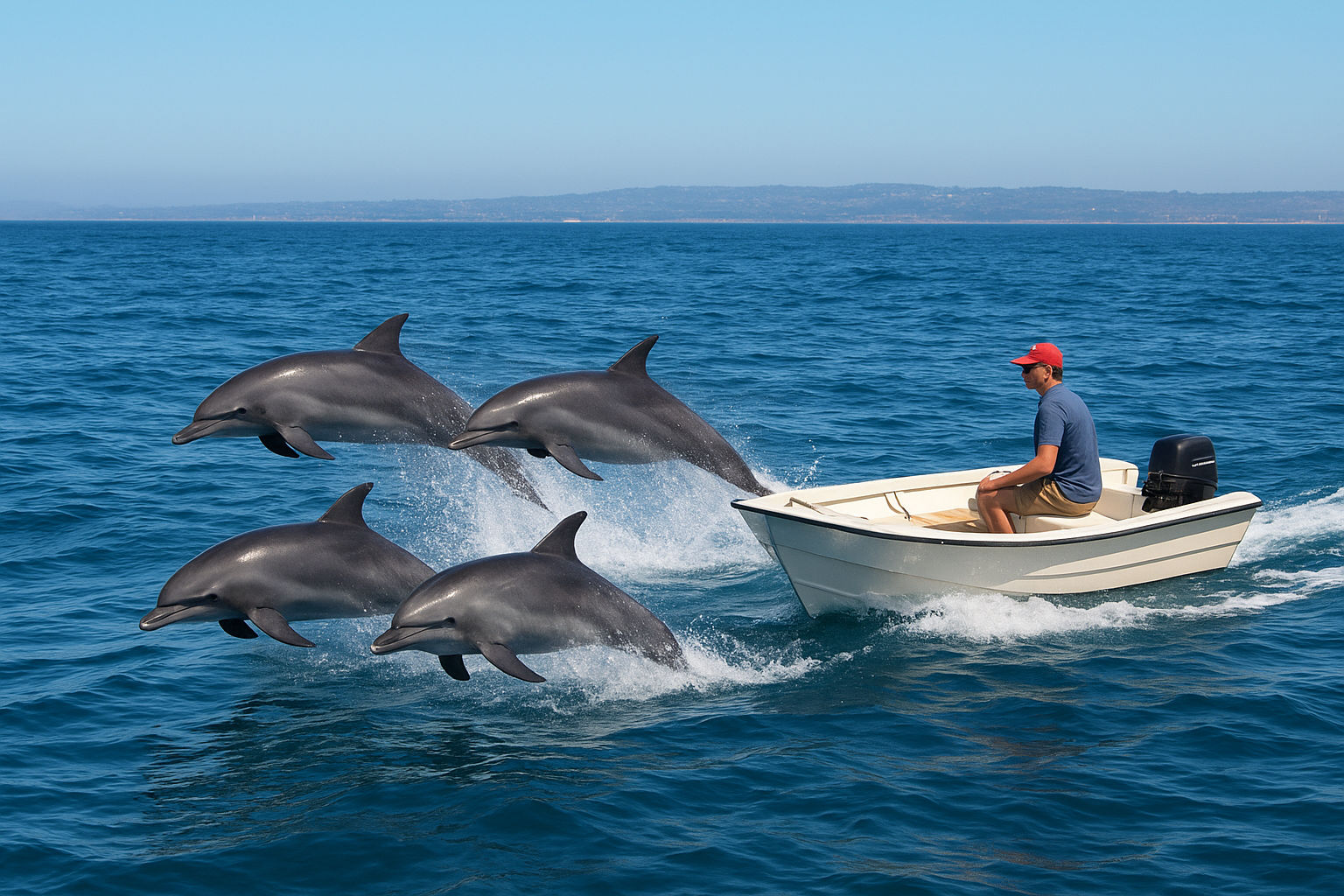
Dolphins frequently accompany offshore whale watching trips along the San Diego coastline.
How to Book an Offshore Whale Watching Charter in San Diego
Booking an offshore charter is straightforward once you understand the seasonal patterns and group options available. The steps below outline a practical process for securing the right trip.
- Check seasonal sighting patterns. Review which species are active during your travel dates, since gray whales peak from December to April while blue and fin whales dominate the summer months.
- Choose a private or semi-private format. Decide whether you want the whole boat reserved privately or prefer a semi-private trip shared with a small, capped group of other guests.
- Confirm vessel type and group size. Ask about hull stability, 360-degree viewing access, and maximum passenger capacity, especially if you plan to bring camera gear.
- Reserve your departure date and time. Book several weeks ahead during peak migration months, since morning departures from Seaforth Marina often bring calmer water.
- Prepare your gear. Pack layered clothing, sunscreen, non-slip shoes, and a camera, then arrive early for a safety and viewing briefing from your captain and naturalist.
For a detailed look at pricing across trip types, the private whale watching charter cost guide breaks down what affects the final rate.
What Makes a Charter Photographer- and Filmmaker-Friendly?
Photography-friendly charters rely on stable, low-profile hulls that minimize rocking and vibration, which matters greatly for long-lens shots and video stabilization. Quiet outboard engines also reduce noise that might otherwise startle wildlife or interfere with audio recordings.
Furthermore, 360-degree viewing decks let photographers reposition quickly as whales surface in different directions. Some operators have supported film crews from BBC Earth, National Geographic, and Discovery Channel, which reflects the level of platform stability and wildlife access these boats can provide. For a closer look at how small-group formats support this kind of access, see this guide to small-group wildlife adventures in San Diego.
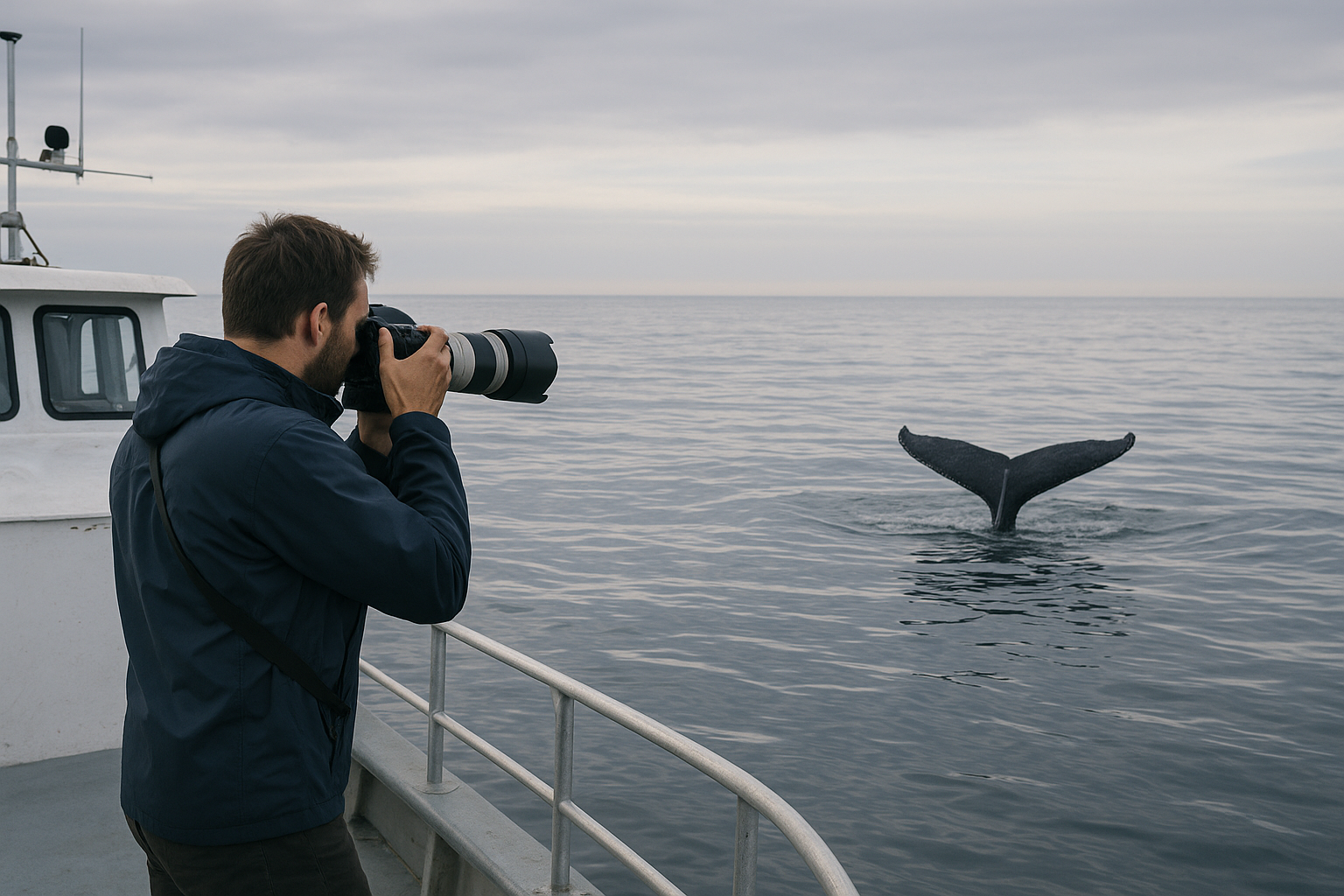
A photographer documents a humpback whale tail fluke from the open deck of a small charter boat.
Private vs. Semi-Private Whale Watching Tours
A private tour reserves the entire boat for one group, which suits photographers, filmmakers, or families who want full control over timing and positioning. In contrast, a semi-private tour shares the small vessel with a limited number of other guests, usually capped around six passengers, which keeps costs lower while still avoiding large-crowd cruises.
Both formats differ sharply from standard commercial whale watching boats that may carry dozens of passengers. Those interested in the private option can review specifics on the private whale watching charter page for details on availability and group customization.
Low-Impact Wildlife Viewing Practices Offshore
Responsible charters follow non-chasing viewing practices, which means the boat approaches slowly, holds a respectful distance, and lets the whale dictate how close the encounter gets. This approach aligns with guidance from NOAA Fisheries on safely viewing marine mammals, which recommends maintaining distance and minimizing engine noise near active wildlife.
Above all, these practices protect the animals while still giving guests meaningful, close viewing opportunities. Captains working alongside a trained naturalist, such as one educated at the Scripps Institution of Oceanography, are generally better equipped to read whale behavior and adjust course accordingly.
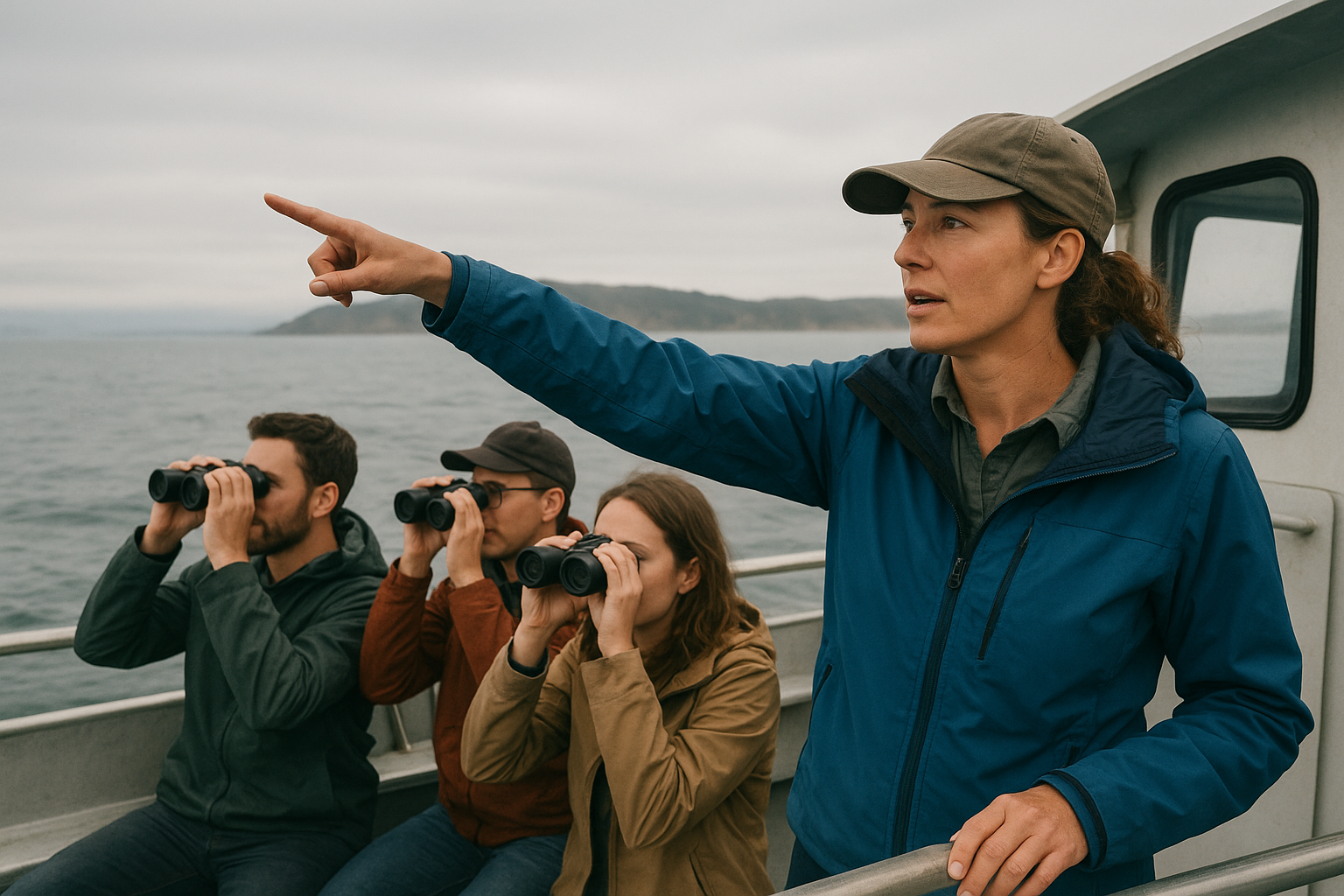
A naturalist guides guests through a low-impact offshore whale watching expedition.
Comparing Charter Options Along the Southern California Coast
Not every charter is built the same way, so it helps to compare a few practical factors before booking. Group size caps, naturalist credentials, vessel stability, and seasonal route knowledge all affect the quality of a trip.
Operators based out of Seaforth Marina in San Diego, for instance, combine small-group capacity with Scripps-trained naturalist guidance and coast guard-inspected vessels. Those exploring broader comparisons may also find it useful to read this roundup of the best whale watching tours in San Diego, or to review general offerings directly at bigbluephotoboat.com before selecting a trip date.
Frequently Asked Questions About Southern California Offshore Whale Watching Charters
What are southern California offshore whale watching charters?
Southern California offshore whale watching charters are private or semi-private boat tours that travel into deeper Pacific waters beyond the shoreline to reach feeding and migration zones. They typically carry small groups of up to six or twelve passengers for a closer, quieter wildlife experience than large commercial cruise boats.
How much does a private whale watching charter cost in San Diego?
Pricing varies based on group size, trip length, and season. A detailed cost breakdown is available on the dedicated pricing guide for private whale watching charters.
What whales can you see off the coast of San Diego?
San Diego’s offshore waters host blue whales, gray whales, humpback whales, fin whales, and occasional orcas, depending on the season. Dolphins are seen year-round, often in large traveling pods.
When is the best time of year for whale watching in Southern California?
Gray whales migrate past San Diego from December through April, while blue and fin whales are most common from June through September. Dolphins can appear during any offshore trip throughout the year.
How long do offshore whale watching tours last?
Most offshore whale watching tours run between three and five hours, though full-day expeditions are available for travelers who want extended time in deeper water. Trip length often depends on how far the boat must travel to reach active feeding areas.
What is the difference between private and semi-private whale watching tours?
A private tour reserves the entire boat for one group, while a semi-private tour shares the small vessel with a limited number of other guests, usually capped around six passengers. Both formats avoid the large crowds typical of commercial whale watching cruises.
Are southern California offshore whale watching charters good for photographers?
Yes, charters built for photography use stable, low-profile hulls, quiet outboard engines, and 360-degree viewing decks. These features reduce vibration and obstruction, which matters for long-lens and drone work.
What should I bring on a whale watching charter?
Guests should bring layered clothing, polarized sunglasses, sunscreen, and a camera or binoculars. Non-slip shoes are recommended since boat decks can become wet during the trip.
Do whale watching boats get too close to the whales?
Responsible operators follow low-impact, non-chasing viewing practices that keep a respectful distance and let whales set the pace of the encounter. This approach aligns with NOAA guidance on safely viewing marine mammals in the wild.
Can I book a whale watching charter for a special occasion or corporate event?
Yes, many charter operators offer customized packages for birthdays, proposals, corporate outings, and other special occasions, sometimes with expanded capacity for larger groups. These trips can combine wildlife viewing with a more personalized onboard experience.
What is the best way to book an offshore whale watching charter?
The best way to book is to check seasonal sighting patterns first, then choose between a private or semi-private format based on group size. Reserving several weeks ahead during peak migration months helps secure preferred dates.
How many passengers can join a whale watching charter?
Small-group charters commonly cap at six passengers for standard trips, with some operators allowing up to twelve for special occasions. This limit keeps the boat quiet and gives every guest unobstructed viewing space.
What mistakes should I avoid when booking a whale watching tour?
A common mistake is booking without checking the season, which can mean missing peak gray whale or blue whale activity. Another is choosing a large crowded boat when a smaller charter would offer better viewing and photography access.
Is snorkeling included in whale watching charters?
Snorkeling is typically offered as a separate seasonal excursion rather than part of a standard whale watching trip. Summer snorkel tours often focus on kelp paddies, sea lions, and ocean sunfish instead of whale migration routes.
Who leads the whale watching tours at Big Blue Photo Boat?
Tours are led by a Scripps Institution of Oceanography-trained marine biologist and naturalist alongside experienced captains. This pairing provides both safe navigation and informed, educational commentary during the trip.
In summary, southern California offshore whale watching charters offer a quieter, closer, and more flexible alternative to large commercial cruises, whether you’re chasing migrating gray whales in winter or photographing blue whales in summer. Choosing the right trip comes down to matching your group size, timing, and photography needs to a charter’s vessel type and naturalist expertise. For current departures, seasonal updates, and booking details, visit bigbluephotoboat.com directly.