
A San Diego whale & dolphin watching adventure is one of the few wildlife experiences on the West Coast where you can watch the largest animal that has ever lived surface just yards from a small boat. Unlike crowded double-decker cruises, these trips typically cap groups at six passengers, pairing a Scripps-trained marine biologist with an experienced captain. As a result, guests get closer views, quieter engines, and far more one-on-one narration about the animals they encounter.
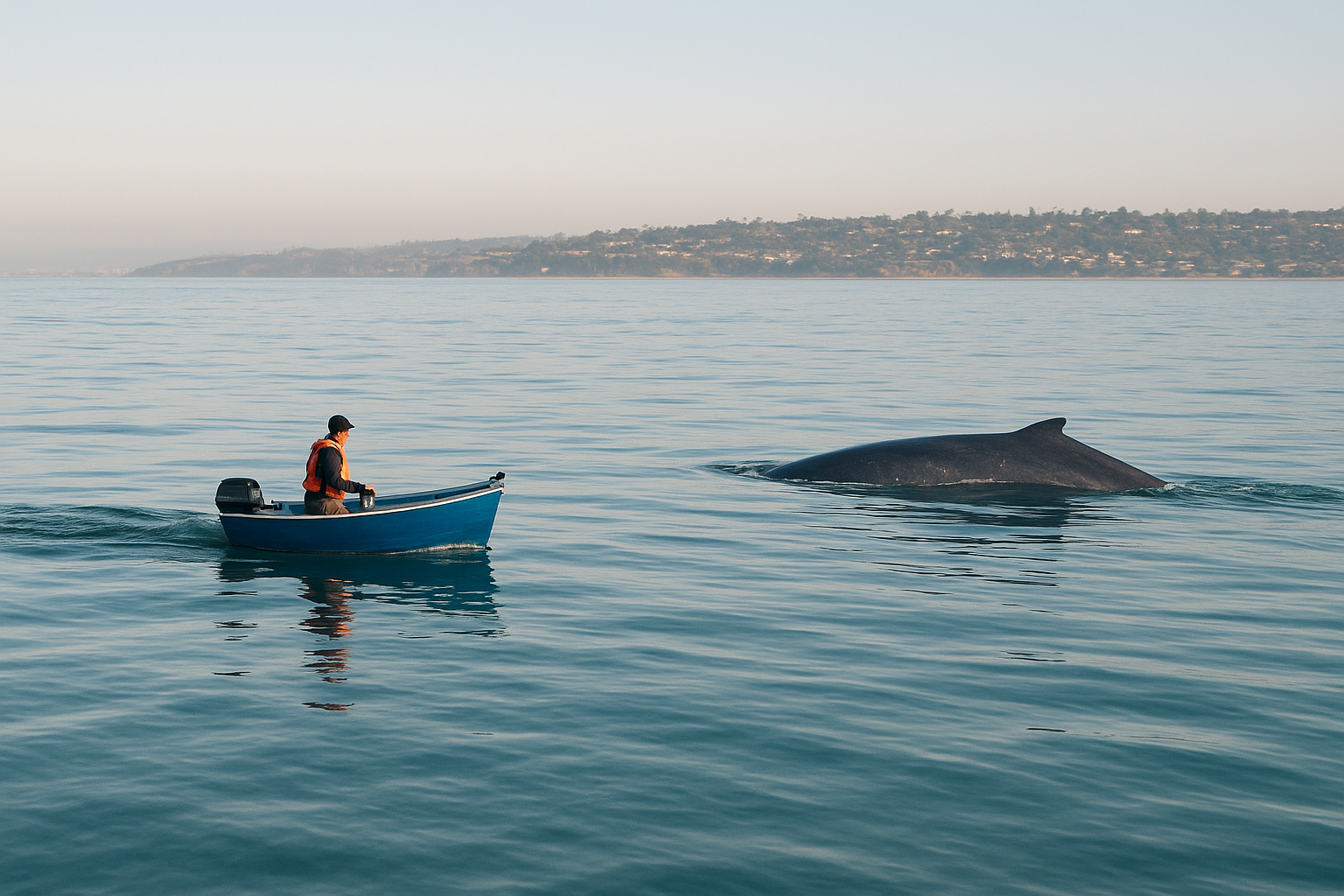
A low-profile charter boat during a San Diego whale & dolphin watching adventure, positioned for a respectful, non-chasing view.
What Is a San Diego Whale & Dolphin Watching Adventure?
In short, a San Diego whale & dolphin watching adventure is a guided ocean excursion that focuses on close, respectful encounters with marine mammals rather than covering the largest possible distance. Groups are intentionally kept small, often six passengers standard and up to twelve for special occasions, which keeps the boat quiet and stable. Because a marine biologist trained at the Scripps Institution of Oceanography narrates the trip, guests also leave with real context about whale behavior, not just photos.
Furthermore, these tours differ from mass-market operations because they follow low-impact, non-chasing viewing practices. Instead of racing toward a sighting, the captain positions the boat to let animals approach on their own terms. This approach protects the wildlife and, in practice, often produces calmer, more natural behavior for photography and filming.
Best Season for a San Diego Whale Watching Tour
Timing matters a great deal for any whale watching tour in San Diego, since different species move through the region at different times of year. Blue whales and fin whales are most reliably spotted between June and September, when they feed on dense krill blooms offshore. In contrast, gray whales pass by from roughly December through April as they migrate along one of the longest known mammal migrations, traveling about 12,000 miles round trip between Alaska and Mexico, according to NOAA Fisheries.
Meanwhile, dolphins, sea lions, and occasional orcas can turn up in any season, which is why year-round scheduling still makes sense. Blue whales, in particular, are worth planning around; they are recognized by Wikipedia’s overview of the species as the largest animal known to have existed, sometimes reaching close to 100 feet in length. Consequently, summer trips out of San Diego offer a rare, relatively accessible chance to see one of these giants in the wild.
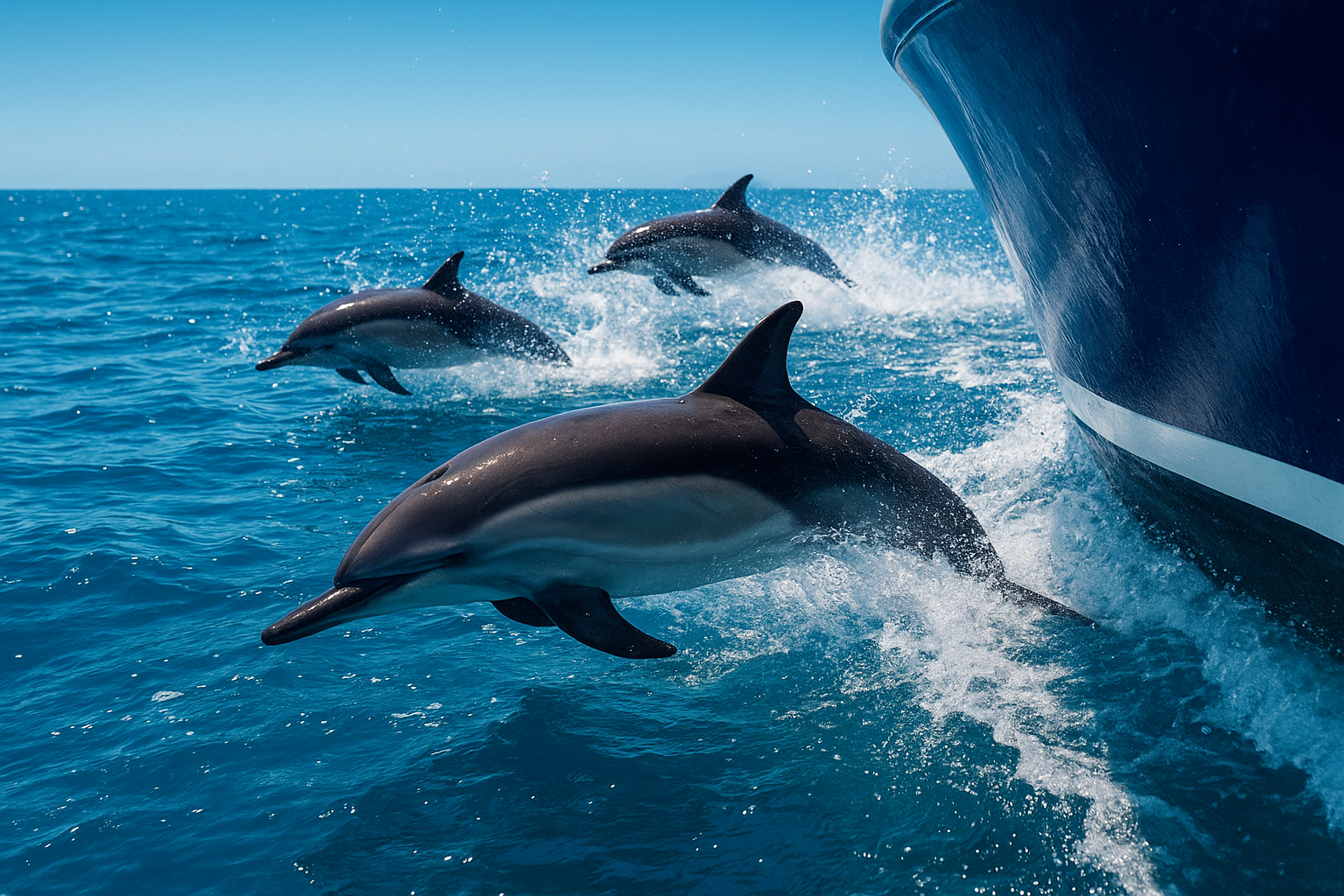
Dolphins often ride the bow wave during a San Diego dolphin watching excursion in the coastal waters near La Jolla.
Why Small-Group Dolphin Watching Excursions Beat Big Boats
Large public whale watching boats can carry over a hundred passengers, which means limited rail space and long waits for a good angle. Small-group dolphin watching excursions solve that problem by design. With only a handful of guests aboard, everyone gets 360-degree viewing access instead of fighting for a spot at the front.
In addition, quieter outboard engines reduce underwater noise, which tends to keep dolphins and whales more relaxed near the boat. This matters especially for photographers and filmmakers; the same style of stable, low-profile vessels used on these trips has supported crews from BBC Earth, National Geographic, and Discovery Channel productions filming along the San Diego coast. For travelers researching options, the small-group wildlife adventure tours page breaks down how group size affects the overall experience.
How to Book Your Whale Watching Adventure at Seaforth Marina
Booking a trip is straightforward once you know your priorities. The following steps outline a practical process for planning a private or semi-private whale watching adventure out of Seaforth Marina.
- Choose your trip type. Decide whether you want a fully private charter, a semi-private small-group tour capped at six guests, or a full-day expedition, based on your budget, schedule, and photography goals.
- Check the seasonal sighting calendar. Review which species are most active each month, such as blue whales in summer or gray whales in winter, then pick travel dates that match the wildlife you most want to see.
- Contact the crew to confirm details. Reach out directly to confirm departure times from Seaforth Marina, group size limits, and any special requests such as drone use or corporate event add-ons before finalizing payment.
- Prepare your personal gear. Pack warm layers, sun protection, and your own snorkel or freediving equipment if you plan to join a summer snorkel excursion, since rental gear is not provided on board.
- Arrive early for the safety briefing. Get to the marina at least twenty minutes before departure so the naturalist and captain can complete a short safety briefing before heading out into open water.
For specific availability, the private charter booking page lists current package options, while the whale watch tours overview covers standard semi-private departures.
What to Expect During Your San Diego Whale Watching Charter
Most trips begin with a brief orientation at the dock, followed by a slow, quiet cruise out of the harbor toward known feeding and migration corridors near La Jolla Canyon. Once on the water, the naturalist typically explains what signs the crew is watching for, such as blows, fins, or bird activity that often signals feeding whales below. Because groups stay small, questions can be answered in real time rather than through a loudspeaker.
Sightings are never guaranteed, since wildlife tours depend on natural animal movement rather than a fixed schedule. However, operators that track seasonal patterns closely tend to report strong success rates during peak blue whale and gray whale months, which is one reason experienced naturalist guidance matters so much.
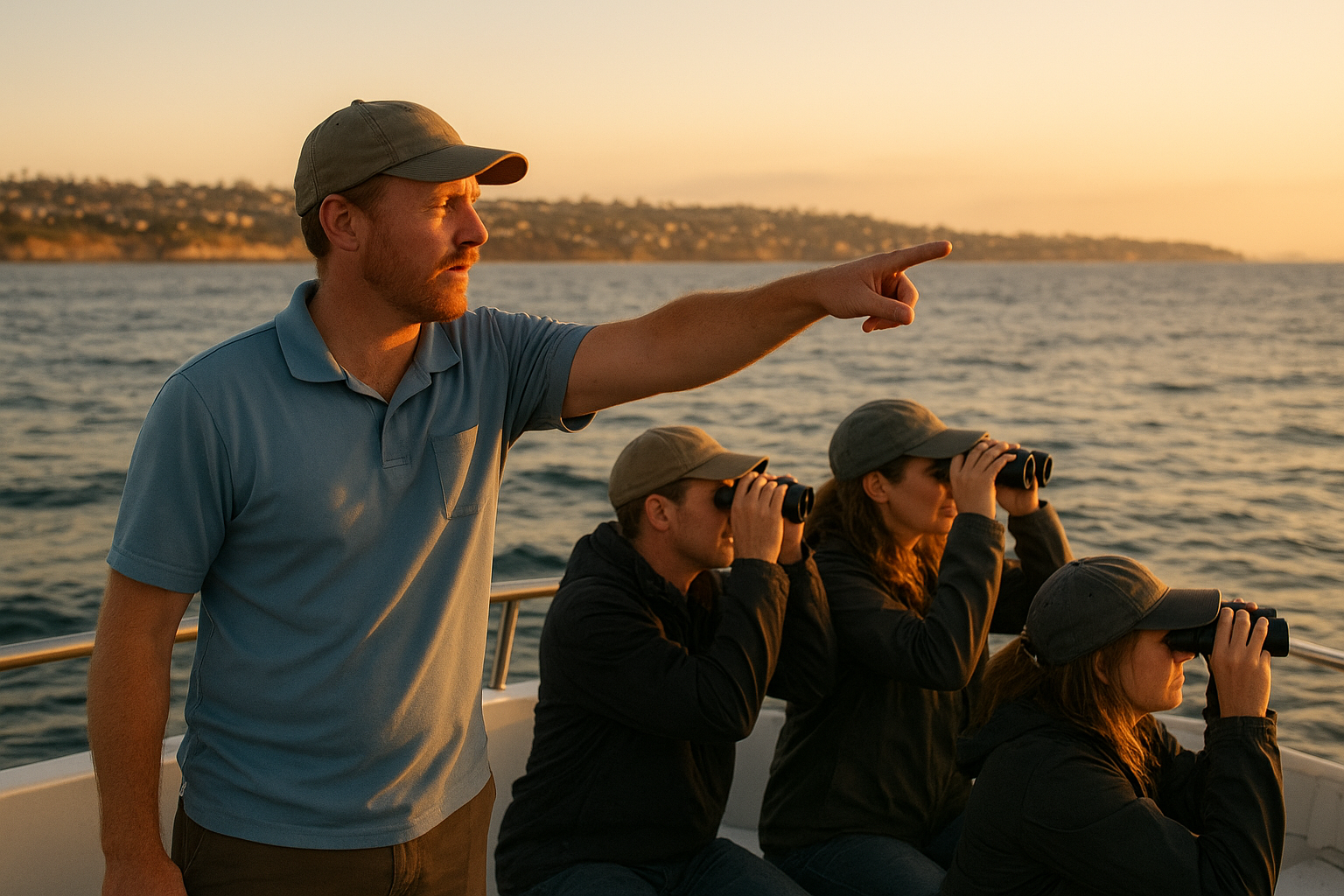
A Scripps-trained naturalist points out a distant blow during a San Diego whale watching charter.
Photography, Film, and Snorkel Add-Ons for Ocean Adventurers
Photographers and filmmakers often need more than a good sighting; they need a stable platform, unobstructed sightlines, and a crew that understands lighting and positioning. Vessels built for this kind of work feature low-profile hulls, quiet engines, and open 360-degree access, which explains why some have supported film crews from major nature documentary productions.
During summer months, many operators also add Blue Water Safari-style snorkel trips featuring ocean sunfish, kelp paddies, and resting sea lions. Guests should note that snorkel and freediving gear is not provided, so bringing a properly fitted mask, snorkel, and fins ahead of time is essential. Inflatable paddle boards can sometimes be requested as well, adding another way to interact with calm coastal waters between sightings.
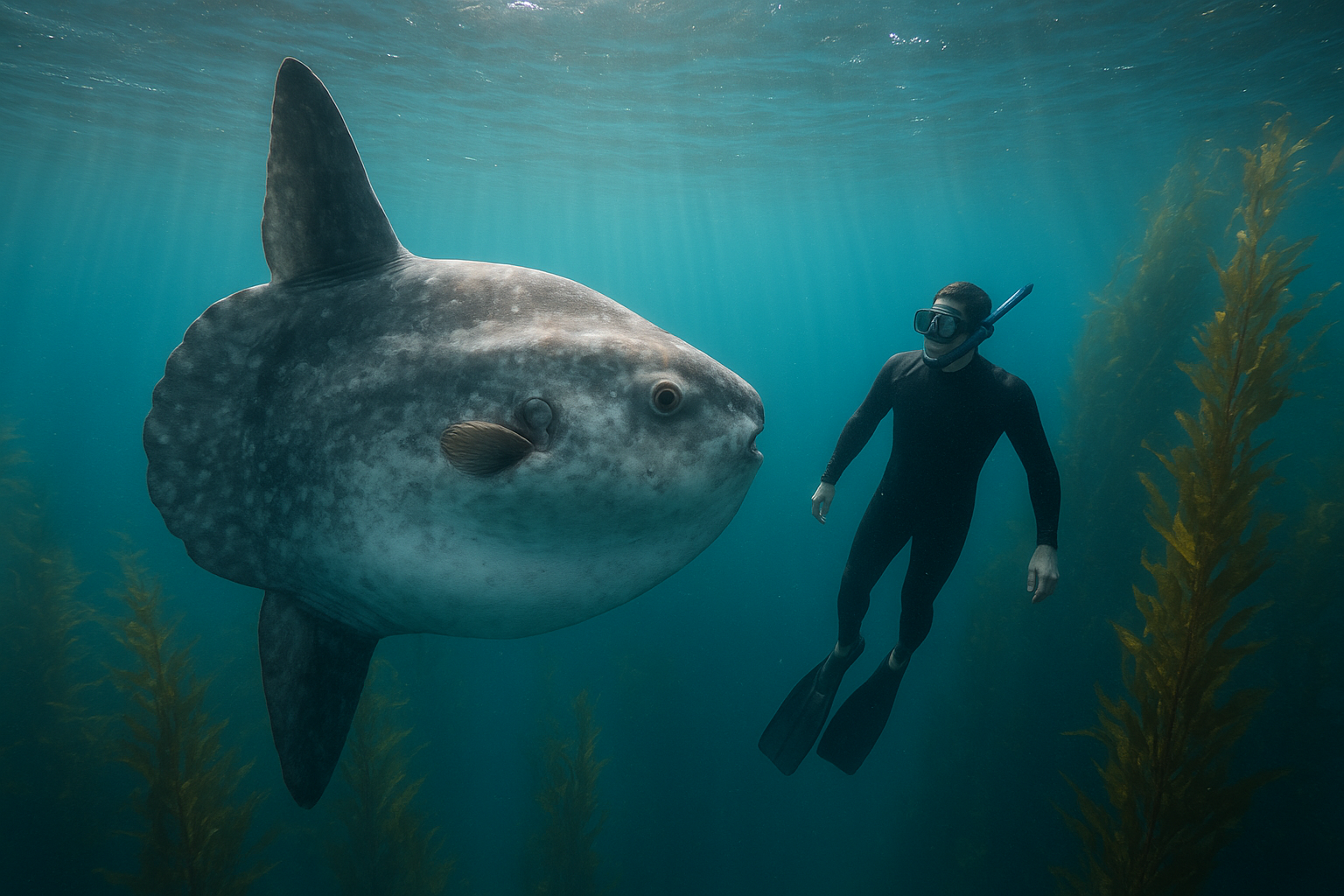
Summer snorkel excursions near San Diego kelp paddies often include sightings of ocean sunfish, or molas.
Choosing the Right Whale Watching Company in San Diego
Not every whale watching company offers the same experience, so it helps to compare group size, vessel type, and guide credentials before booking. Some operators run large multi-deck boats built for volume, while others, such as Big Blue Photo Boat operating out of Seaforth Marina, focus specifically on small groups capped at six passengers, Coast Guard-inspected vessels, and Scripps-trained naturalist guidance.
For families weighing options, the best small-group whale watching tour comparison outlines how these factors affect the day-to-day experience on the water. Corporate groups and special-occasion bookings, meanwhile, may prefer a fully custom charter rather than a fixed public schedule, since routes and timing can be tailored to the event. You can review full service details directly at bigbluephotoboat.com before deciding which package fits your group.
Frequently Asked Questions About the San Diego Whale & Dolphin Watching Adventure
What is a San Diego whale & dolphin watching adventure?
A San Diego whale & dolphin watching adventure is a small-group boat excursion, usually capped at six guests, that pairs a trained naturalist with an experienced captain to find whales, dolphins, and other marine life along the Southern California coast. Trips depart from Seaforth Marina and follow low-impact, non-chasing viewing practices.
How long does a San Diego whale watching tour last?
Standard tours typically run three to four hours, while full-day expeditions can extend six hours or more. Length depends on the season, target species, and whether you book a private, semi-private, or full-day charter.
What is the best time of year to see whales in San Diego?
Blue and fin whales are most common from June through September, while gray whales migrate past San Diego from December through April. Humpbacks, orcas, and dolphins can appear throughout the year, which is why year-round tours remain popular.
How much does a private whale watching charter cost in San Diego?
Pricing varies by group size, trip length, and season, with private and semi-private charters generally costing more per person than large public boats because groups stay small. Contacting the operator directly for a current quote is the most accurate way to budget.
What whales and dolphins can you see near San Diego?
Common sightings include blue whales, gray whales, humpback whales, fin whales, orcas, and several dolphin species such as common and bottlenose dolphins. Sighting frequency shifts with the season, so timing your trip matters.
Do I need to bring my own snorkel gear?
Yes, guests joining summer snorkel excursions are expected to bring their own snorkel or freediving equipment, since gear rental is not included. Packing your own well-fitted mask and fins ahead of time helps avoid last-minute scrambling at the marina.
Is whale watching safe for kids and families?
Whale watching is generally safe for families when trips run on Coast Guard-inspected vessels with stable, low-profile hulls and experienced crews. Small group sizes also make it easier for naturalists to keep an eye on younger passengers.
What makes a small-group whale watching tour better than a big boat?
Small-group tours offer closer viewing angles, quieter engines, and more personalized narration compared to crowded double-decker boats. Fewer passengers also mean better photo positioning and less waiting for a turn at the rail.
Can photographers and filmmakers bring professional equipment aboard?
Yes, the vessels are designed with photographer- and filmmaker-friendly platforms, 360-degree access, and quiet outboard engines that reduce vibration for long lenses. The boats have supported crews from major nature documentary productions.
What should I wear on a whale watching boat?
Layered clothing, a windproof jacket, sunscreen, and non-slip shoes are recommended, since ocean conditions can change quickly even on sunny days. Bringing polarized sunglasses also helps reduce glare when scanning the water for fins and spouts.
Are the tour boats Coast Guard inspected?
Yes, the vessels used for these excursions are Coast Guard-inspected and built with stable, low-profile hulls suited for wildlife viewing. This inspection standard helps ensure the boats meet safety requirements for paying passengers.
How do I book a semi-private or private charter?
Booking usually involves choosing your trip type, checking the seasonal sighting calendar, and confirming a departure time directly with the operator at Seaforth Marina. Special requests like drone use or corporate events can typically be arranged during booking.
What is a common mistake people make when planning this trip?
A common mistake is booking a large public boat expecting an intimate experience, then feeling crowded during peak whale season. Choosing a small-group option in advance avoids this disappointment, especially during summer weekends.
Can I customize a boat tour for a special occasion?
Yes, custom charters can be arranged for birthdays, proposals, corporate events, and other special occasions, sometimes allowing slightly larger groups of up to twelve guests. Working with the crew ahead of time helps tailor the route and timing to the occasion.
Final Thoughts
Ultimately, a San Diego whale & dolphin watching adventure works best when the boat, the guide, and the season all line up. Choosing a small-group trip led by a Scripps-trained naturalist, timing your visit around blue whale or gray whale season, and packing your own snorkel gear when needed will make the day run smoothly. Whether you are planning a family outing, a photography expedition, or a custom corporate charter, San Diego’s coastal waters continue to offer some of the most reliable and intimate whale and dolphin encounters on the West Coast.