

San Diego full-day whale watch expeditions give ocean lovers extended time offshore to find blue whales, humpbacks, dolphins, and more without rushing back to the dock. Unlike a standard two or three-hour cruise, a full-day trip follows the wildlife wherever it leads, often reaching deeper water near La Jolla Canyon where whales feed. For families, photographers, and filmmakers alike, that extra time on the water usually means more sightings and better light for photos.
Quick answer: A full-day whale watch expedition in San Diego is a six to eight hour boat trip that travels farther offshore than typical tours, led by a naturalist, to maximize the chance of seeing blue whales, humpbacks, gray whales, or dolphins depending on the season.
Consequently, operators that run these longer trips tend to attract a different kind of traveler, one who wants depth over speed. In particular, photographers and researchers often prefer this format because it allows the captain to reposition around wildlife multiple times rather than settling for a single pass. For a closer look at what a day like this actually involves, see this detailed breakdown of a full-day whale watching expedition in San Diego.
What Are San Diego Full-Day Whale Watch Expeditions?
San Diego full-day whale watch expeditions are extended marine wildlife tours, generally lasting six to eight hours, designed to cover more ocean than a standard trip. As a result, boats can travel to offshore banks, canyons, and feeding zones that shorter charters simply cannot reach in the time allowed.
Unlike large commercial whale watching boats that carry dozens of passengers, many full-day expeditions run in small groups, sometimes capped at six guests. Because of that smaller footprint, the vessel can move quietly and reposition quickly once wildlife is spotted, which matters for both comfort and photography.
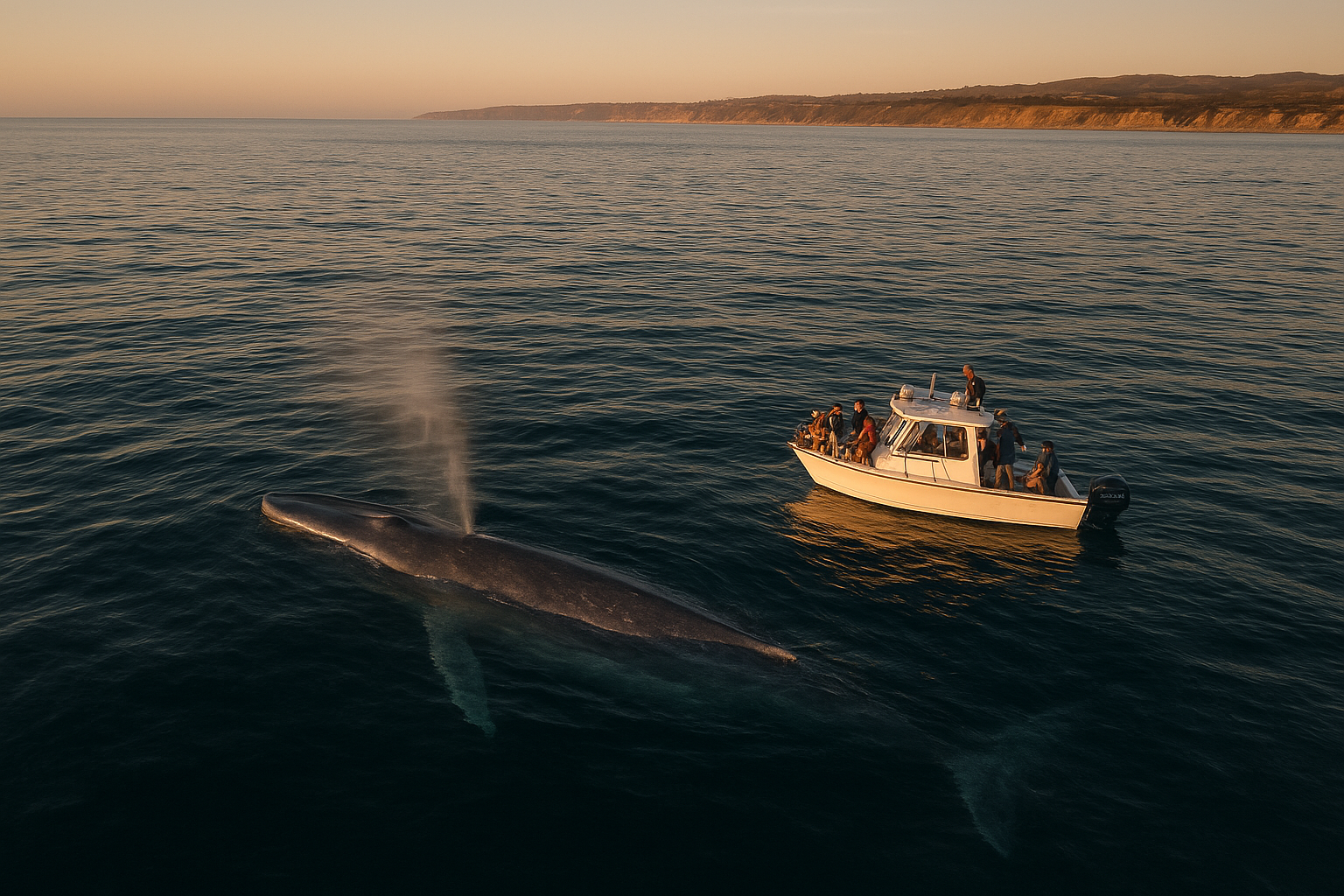
San Diego full-day whale watch expeditions often travel farther offshore to reach active blue whale feeding grounds.
Why Choose a Full-Day Whale Watching Trip in San Diego
In contrast to a quick two-hour outing, a full-day trip gives the captain and naturalist room to adjust the route as reports come in from other boats or spotters. Therefore, guests on longer trips often see a wider variety of species in a single outing, from gray whales migrating along the coast to dolphins riding the bow wake.
Above all, extended trips reduce the pressure of a ticking clock. For example, if whales are found an hour into the trip but move offshore, a full-day schedule allows the crew to follow at a respectful distance rather than turning back immediately. Families booking a small-group wildlife adventure in San Diego often cite this flexibility as the main reason they chose a longer format.
Additionally, full-day trips tend to suit groups celebrating something specific. Couples, corporate teams, and multigenerational families frequently use these longer charters for private whale watching charters built around special occasions, since the extra hours allow time for celebration alongside wildlife viewing.
What You Might See: Seasonal Marine Life Near San Diego
San Diego’s coastal waters support a surprising range of marine mammals throughout the year. Specifically, gray whales pass by from December through March during their migration between Alaska and Baja California, a round trip that NOAA Fisheries estimates can stretch over 10,000 miles for some individuals.
From late spring into early fall, blue whales and humpback whales feed in the nutrient-rich waters offshore, drawn by dense concentrations of krill. Meanwhile, fin whales and pods of common or bottlenose dolphins can appear at almost any time of year, and orca sightings, while rarer, do occur. For readers curious about the broader picture, the Wikipedia overview of whale watching explains how seasonal migration patterns shape sighting odds worldwide.
How a Full-Day Whale Watch Expedition Works
Understanding the flow of a full-day trip helps set expectations before booking. Below is the typical sequence most San Diego operators follow, from reservation to return.
- Book the expedition and confirm group size. Guests reserve a date in advance, choosing between a private, semi-private, or shared full-day trip based on group size and budget preferences.
- Check in at the marina and board the vessel. On departure morning, guests check in, receive a safety briefing from the captain, and board a stable, Coast Guard-inspected boat.
- Travel offshore while the naturalist shares guidance. The captain heads toward recent whale activity while an onboard naturalist explains what species to expect and how to spot blows or fins.
- Observe wildlife using low-impact viewing practices. When whales or dolphins are located, the crew approaches slowly and respectfully, maintaining safe distances for everyone’s benefit.
- Return to the marina with time for questions. After several hours on the water, the boat heads back, giving guests a chance to ask follow-up questions about what they observed.
San Diego Whale Watching Seasons at a Glance
Because sighting patterns shift throughout the year, timing a trip around the right season matters. Winter months favor gray whale migration, while summer and early fall bring the best odds for blue whales and humpbacks.
In between, spring and late fall can still produce dolphin encounters and the occasional fin whale sighting, even when the headline species are less predictable. For that reason, guests hoping for a specific species should check recent trip reports before booking a San Diego whale watch and ask the operator which months tend to produce the sightings they want most.
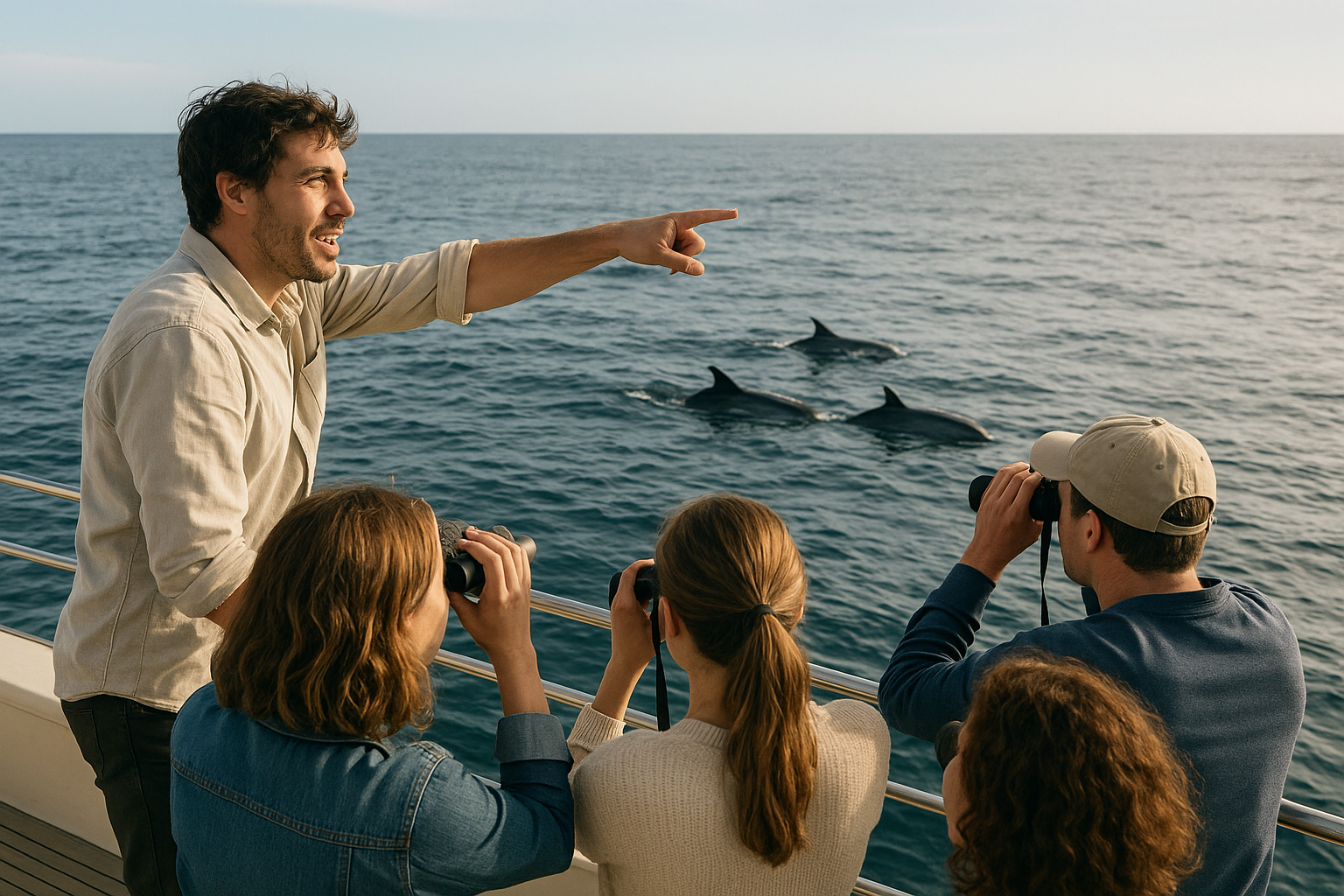
A Scripps-trained naturalist helps guests identify species throughout the trip.
Photography and Filmmaking Aboard a Full-Day Expedition
For photographers, extra hours on the water translate directly into more opportunities to compose a shot. Low-profile, stable hulls with 360-degree access make it easier to track a moving subject without fighting for space, which matters whether someone is shooting with a long lens or flying a drone.
Similarly, filmmakers benefit from quiet outboard engines that reduce vibration and disturbance, both of which affect footage quality and wildlife behavior. Crews from major nature documentary productions have relied on exactly this kind of platform when filming whales off the Southern California coast, since minimal disruption tends to produce more natural footage.
Choosing the Right San Diego Whale Watch Tour
With several tour styles available, choosing the right fit depends on group size, schedule, and whether photography is a priority. A large commercial boat may suit a quick, affordable outing, while a smaller private charter suits guests who want more personalized attention and flexibility.
Before booking, it helps to compare options directly. This roundup of top-rated whale watching tours and charters in San Diego outlines the differences between shared, semi-private, and fully private experiences. Operators like Big Blue Photo Boat, based at Seaforth Marina, structure their full-day and private charter options around small groups and naturalist-led guidance, which tends to appeal to photographers and families who want a quieter, more flexible day on the water.
Federal guidelines also play a role in how responsible operators run these trips. NOAA’s marine mammal viewing guidelines, available through the NOAA Fisheries viewing guidelines, set recommended distances and behaviors intended to keep both wildlife and passengers safe. Similarly, the educational framework behind many naturalist programs traces back to institutions like the Scripps Institution of Oceanography, which trains many of the marine biologists who lead these tours.
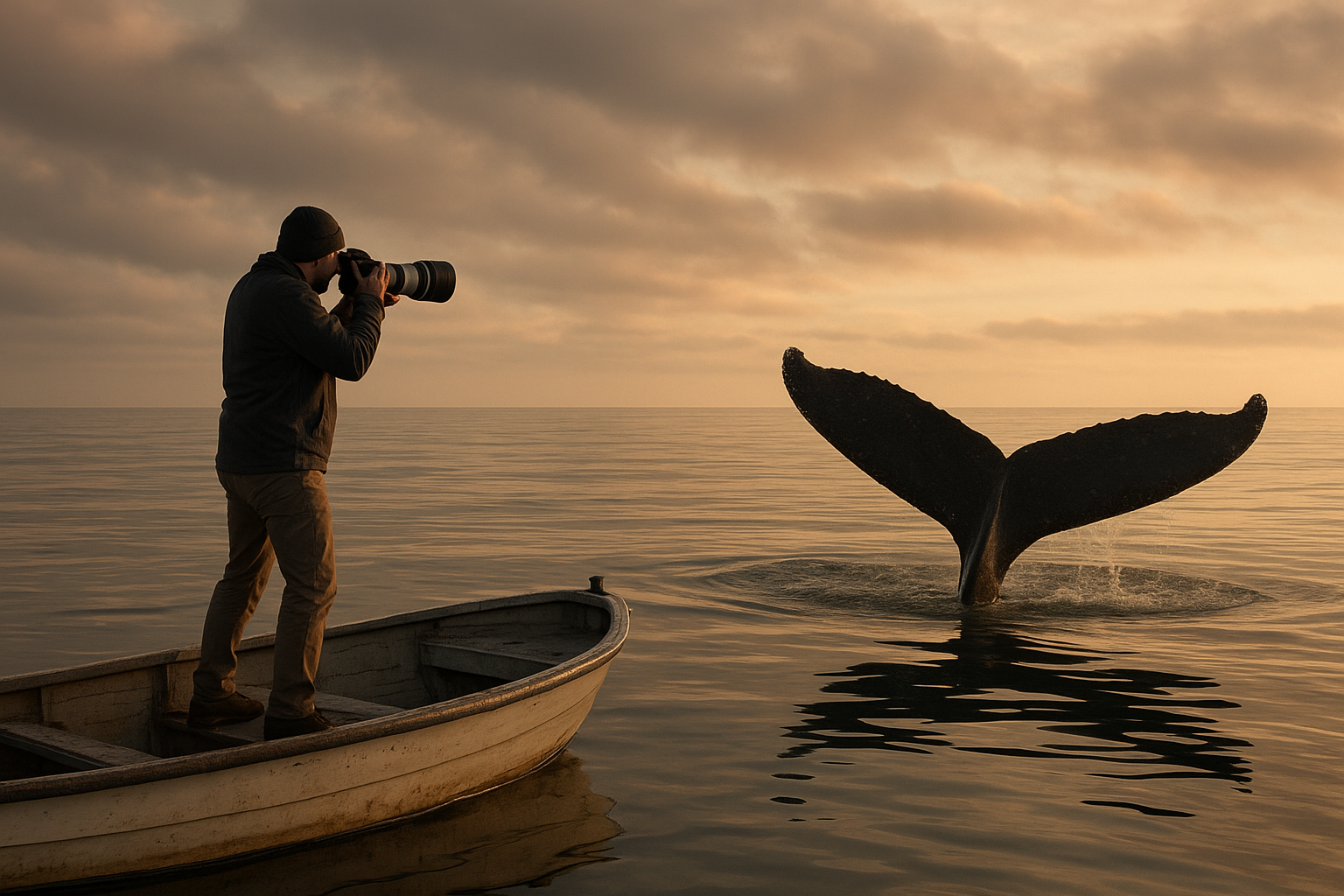
Stable, low-profile boats give photographers steady platforms for capturing moments like this.
Frequently Asked Questions About San Diego Full-Day Whale Watch Expeditions
What are San Diego full-day whale watch expeditions?
San Diego full-day whale watch expeditions are extended boat trips, typically six to eight hours, that travel farther offshore than standard tours to search for blue whales, humpbacks, gray whales, and dolphins. They give guests more time to locate wildlife and often include naturalist commentary along the way.
How long does a full-day whale watching trip in San Diego last?
Most full-day trips run between six and eight hours, departing in the morning and returning in the afternoon. The exact duration depends on weather, sea conditions, and how far the boat must travel to reach active feeding areas.
What whales can you see on a full-day expedition out of San Diego?
Depending on the season, guests may see blue whales, gray whales, humpback whales, fin whales, and occasionally orcas, along with dolphins. Blue whale and humpback sightings are most common from late spring through early fall.
How much do full-day whale watching expeditions cost in San Diego?
Pricing varies based on group size, vessel type, and whether the trip is private or shared. Because these are longer, small-group trips rather than large commercial boats, rates are typically higher than a standard two-hour public cruise.
Is a full-day whale watch better than a half-day tour?
A full-day trip generally offers more time to travel farther offshore, which increases the chance of finding whales during slower seasons. However, a half-day tour can still be productive during peak migration months when whales are closer to shore.
What should I bring on a San Diego whale watching expedition?
Guests should bring layered clothing, sun protection, a reusable water bottle, and motion sickness remedies if needed. Photographers should pack extra camera batteries and memory cards, since a full day on the water often means more shooting opportunities.
Are full-day whale watching trips good for photographers and filmmakers?
Yes, full-day trips suit photographers and filmmakers because extended time on the water allows for better positioning around wildlife and more favorable light throughout the day. Stable, low-profile boats with 360-degree access further support clean shooting angles.
What is the best time of year for San Diego whale watching?
San Diego offers whale watching year-round, with gray whale migration peaking from December through March and blue whales and humpbacks most active from June through September. Each season brings different species and sighting patterns.
How far offshore do full-day whale watching boats travel?
Full-day expeditions can travel well beyond the range of shorter tours, sometimes reaching areas near La Jolla Canyon or farther offshore banks where deep-water feeding occurs. The exact distance depends on recent wildlife reports and sea conditions that day.
Do small group sizes make a difference on whale watching tours?
Small groups allow for quieter, more flexible boat movement, which tends to keep wildlife calmer and gives every guest better viewing access. Larger commercial boats often carry dozens of passengers, which can limit space and visibility during sightings.
What safety measures are used during whale watching expeditions?
Reputable operators use Coast Guard-inspected vessels, follow low-impact, non-chasing wildlife viewing practices, and maintain safe distances from marine mammals as guided by federal wildlife protection standards. Captains and naturalists also monitor weather and sea conditions throughout the trip.
Can full-day whale watching trips be booked as private charters?
Yes, many operators offer private or semi-private full-day charters for families, photographers, or special occasions, often capping groups at a small passenger limit for a more personalized experience. Some providers also allow larger groups for events by special arrangement.
What is the biggest mistake people make when booking a whale watch tour?
A common mistake is choosing a short, crowded tour during a slow wildlife season and expecting guaranteed close encounters. Booking a full-day trip, or checking recent sighting reports before choosing a date, generally improves the odds of a memorable outing.
Final Thoughts on Full-Day Whale Watching in San Diego
In summary, San Diego full-day whale watch expeditions offer a slower, more thorough way to experience the region’s marine wildlife than a quick two-hour cruise. Because these trips travel farther and allow more time to follow wildlife, they tend to reward patience with richer sightings and better photo opportunities.
Ultimately, whether the goal is a family memory, a documentary-quality photo, or a quiet day offshore, a full-day expedition gives guests room to let the ocean set the pace. For those ready to plan a trip, reviewing seasonal patterns and comparing small-group options is a practical first step toward a successful day on the water.