

San Diego blue whale watching tours offer one of the most remarkable wildlife encounters in North America, placing small groups of travelers within respectful viewing distance of the largest animal ever known to exist. Because these massive marine mammals migrate along the Southern California coast for several months each year, local operators such as Big Blue Photo Boat run seasonal trips out of Seaforth Marina to help families, photographers, and ocean adventurers witness them safely. In addition, a Scripps Institution of Oceanography-trained marine biologist joins many departures, adding scientific context that turns a sightseeing trip into a genuine learning experience.
Quick Answer: San Diego blue whale watching tours typically run from June through September, when blue whales feed on dense krill blooms just offshore. Small-group departures from Seaforth Marina, led by trained naturalists on stable, quiet boats, generally offer the best mix of sighting odds and low-impact wildlife viewing.
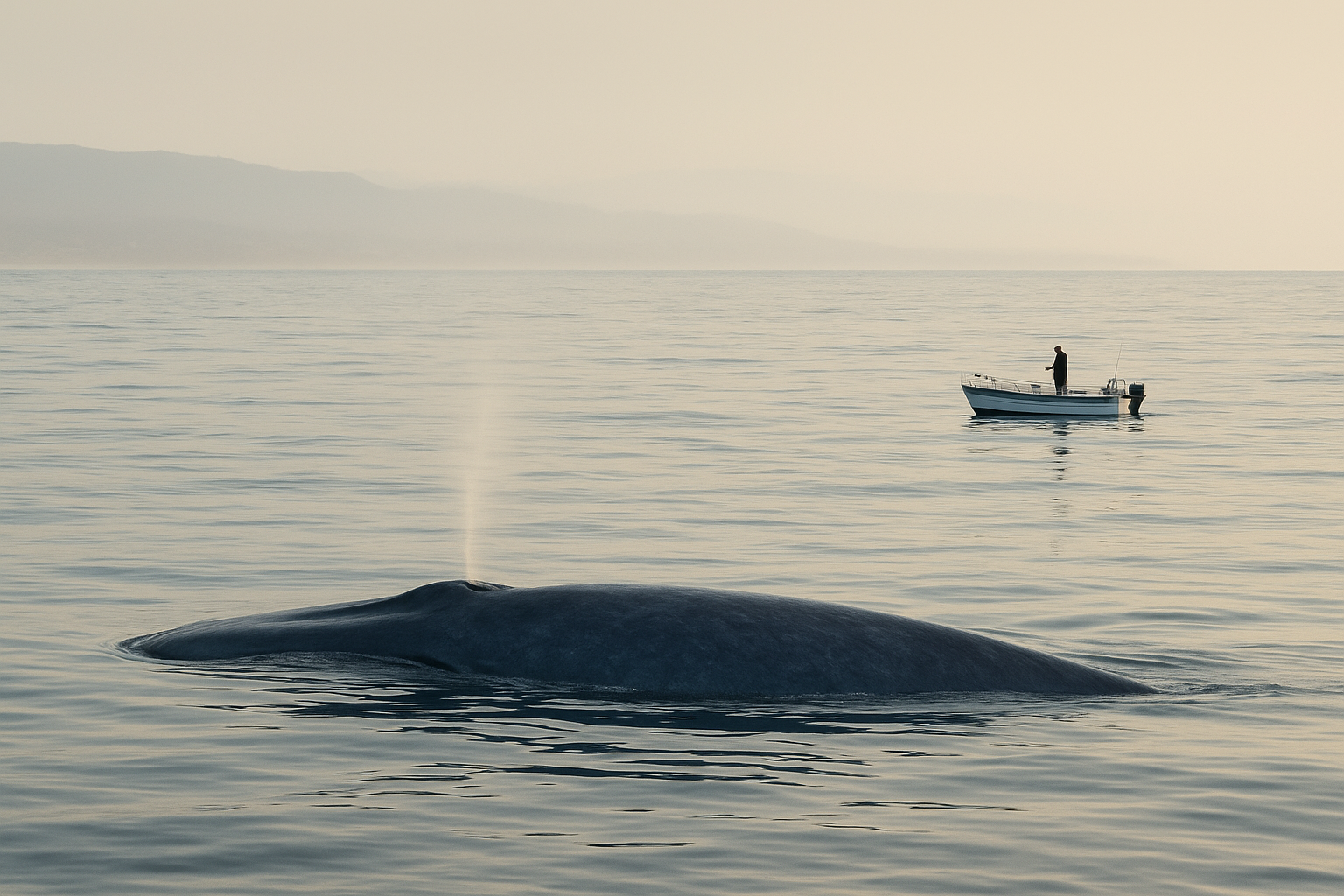
A blue whale surfaces close to a small vessel during San Diego blue whale watching tours.
What Is a Blue Whale Watching Tour in San Diego?
A blue whale watching tour in San Diego is a guided boat excursion that searches coastal and offshore waters for blue whales, along with dolphins, gray whales, and other marine life. Most trips depart from a local marina, cruise toward recent feeding activity, and stay on the water for several hours while a captain and often a naturalist track whale behavior.
Unlike a general sightseeing cruise, these tours focus specifically on locating and safely observing whales without disturbing their natural feeding or resting patterns. As a result, boat size, engine noise, and crew experience all play a direct role in how close and how often guests actually see whales.
When Is San Diego’s Whale Watching Season at Its Best?
San Diego’s whale watching season shifts throughout the year, and timing matters for anyone hoping to see a blue whale specifically. Blue whales are most consistently spotted from June through September, when they follow krill concentrations along the coast and near La Jolla Canyon.
In contrast, gray whales pass through San Diego waters primarily from December through March during their long migration between Alaska and Mexico. Humpback and fin whales tend to appear in transitional months, while dolphins can be seen year-round in large pods. Consequently, travelers who want blue whales specifically should plan trips for peak summer months rather than winter.
According to NOAA Fisheries, the eastern North Pacific blue whale population is estimated at roughly 1,900 individuals, many of which feed seasonally off the California coast. This relatively small population makes responsible, low-impact viewing especially important during peak season.
Why Choose Small-Group San Diego Blue Whale Watching Tours
Small-group san diego blue whale watching tours differ significantly from large public whale watching boats that can carry over a hundred passengers. With a group capped at six passengers, or up to twelve for special occasions, guests get closer access to rails, unobstructed 360-degree viewing, and more direct conversation with the naturalist aboard.
Furthermore, smaller vessels with stable, low-profile hulls and quiet outboard engines tend to approach wildlife more calmly than larger boats. This matters for photographers and filmmakers in particular, since engine noise and wake can affect whale behavior and image stability alike. Big Blue Photo Boat’s platforms have supported film crews from BBC Earth, National Geographic, and Discovery Channel for exactly this reason.
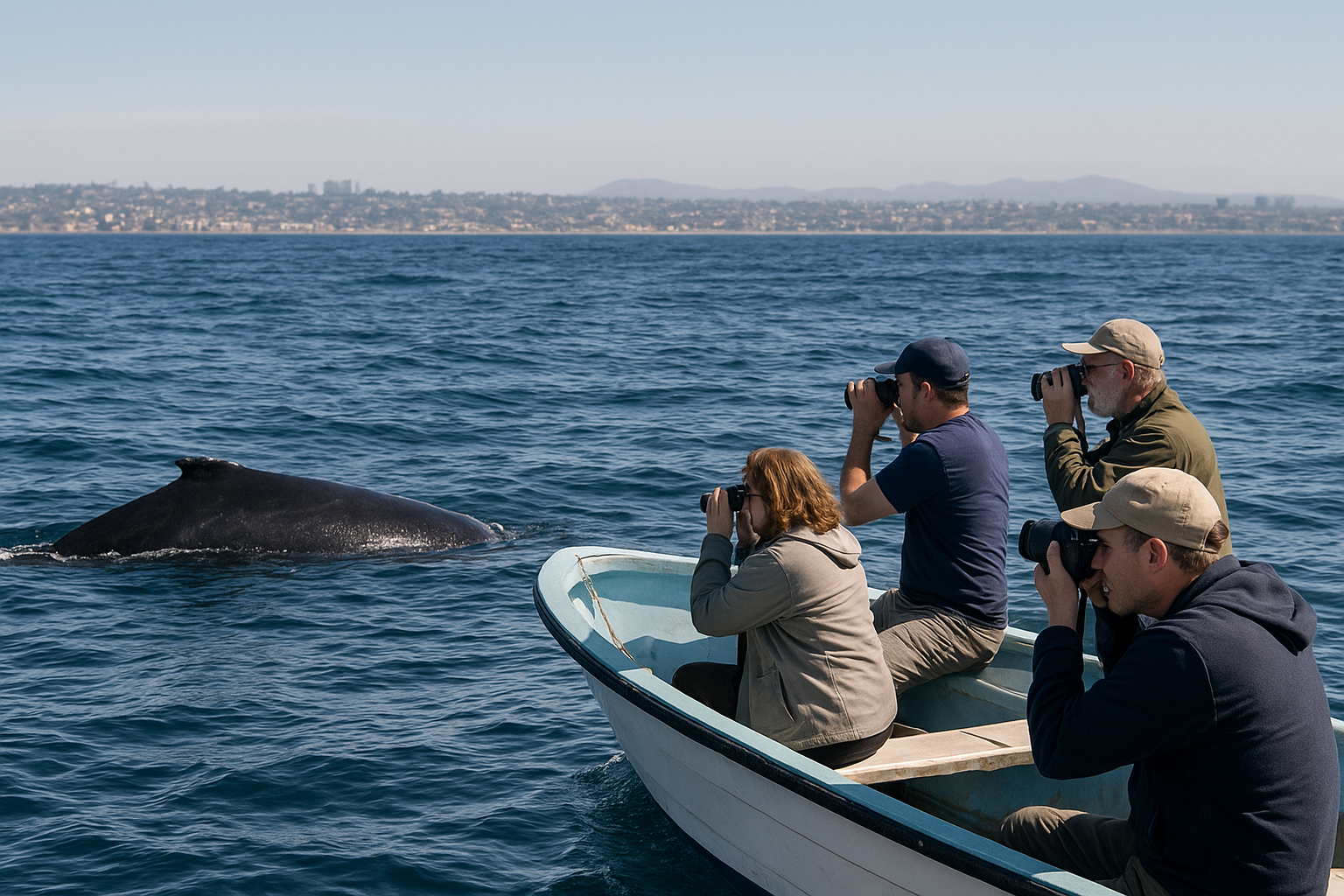
A small group enjoys unobstructed viewing aboard a photographer-friendly boat.
How a Marine Biologist Naturalist Improves the Experience
A naturalist-led whale tour includes a trained expert aboard who identifies species, explains feeding behavior, and shares research context that a general tour guide might miss. Specifically, a Scripps Institution of Oceanography-trained marine biologist can interpret subtle cues, such as a whale’s dive pattern or blow shape, to help predict where it will surface next.
This kind of expertise also supports educational goals for families and school groups, since children and adults alike leave with a clearer understanding of marine ecosystems. For readers curious about which operators offer this specific credential, our guide on San Diego whale watching tours led by marine biologists breaks down the differences in more detail.
How to Book a San Diego Blue Whale Watching Tour
Booking a whale watching trip becomes far easier when approached as a short sequence of decisions rather than one big choice. The following steps outline a practical process for planning a trip around peak blue whale season.
- Check the whale watching season. Review current sighting reports, since blue whales are most reliable from June through September while gray whales appear mainly in winter.
- Choose a tour type. Decide between a private charter, a semi-private small-group departure, or a full-day expedition based on group size and how much time you want offshore.
- Confirm departure details. Verify the marina location, boarding time, and trip duration, then plan to arrive at Seaforth Marina with time to spare before boarding.
- Prepare for the water. Pack layered clothing, sunscreen, a charged camera, and motion sickness remedies, since ocean conditions can shift quickly during a multi-hour trip.
- Follow the crew’s guidance. Listen closely to the captain and onboard naturalist, since their instructions on positioning and viewing etiquette directly improve both safety and sighting quality.
Readers planning a trip can review full departure options directly through the San Diego whale watch tour page, which lists current seasonal availability.
Photography, Filmmaking, and Summer Snorkeling
Beyond whale sightings, many guests book trips specifically for photography and filmmaking opportunities. Stable, low-profile hulls and quiet engines reduce vibration and startle behavior, which matters greatly for long-lens wildlife photography. Drone-friendly operations further expand creative options for aerial shots of whales and coastline.
During summer months, snorkel-focused excursions add another dimension to the season, with sightings of ocean sunfish, or molas, along kelp paddies that attract curious sea lions. Guests should note that snorkel and freedive equipment is not provided, so bringing personal gear is required for these seasonal trips. Those interested in comparing small-group formats can review the details on the best small-group whale watching tour in San Diego.
Low-Impact Whale Watching Practices in San Diego Waters
Responsible operators follow low-impact, non-chasing viewing practices that keep a respectful distance and avoid cutting across a whale’s travel path. This approach mirrors marine mammal viewing guidelines published by federal agencies and aligns with research standards used at institutions like Scripps Institution of Oceanography.
According to background published on Wikipedia’s blue whale entry, these animals can weigh up to 200 tons, making thoughtful boat positioning essential for both safety and animal welfare. As a result, patient, distance-respecting captains often produce better long-term sighting outcomes than boats that chase or crowd wildlife. Travelers wondering whether trips operate consistently throughout the year can also read more on year-round whale watching tour availability.
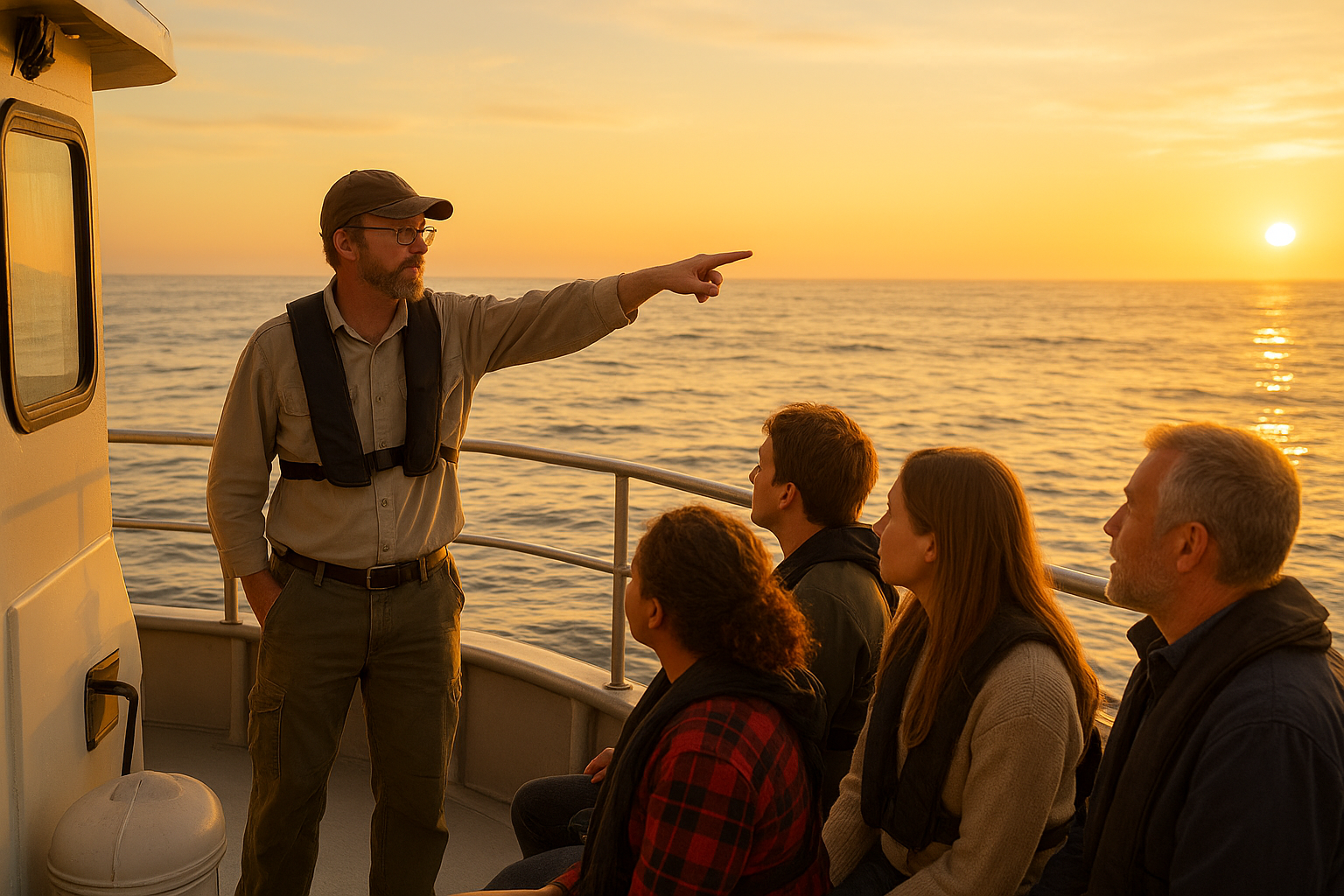
An onboard naturalist points out whale activity during a golden-hour departure.
Frequently Asked Questions About San Diego Blue Whale Watching Tours
What are San Diego blue whale watching tours?
San Diego blue whale watching tours are guided boat trips that search coastal and offshore waters for blue whales and other marine wildlife. They are usually led by naturalists or marine biologists who explain whale behavior and migration patterns along the way.
When is the best time for blue whale watching in San Diego?
The best time is generally June through September, when blue whales feed on krill along the Southern California coast. Sightings can occasionally extend into early October depending on ocean conditions.
How long does a whale watching tour in San Diego last?
Most private and semi-private tours run three to four hours, while full-day expeditions can last six hours or longer. Tour length often depends on how far offshore the whales are feeding that particular week.
Are blue whale sightings guaranteed on San Diego whale watching tours?
No wildlife tour can guarantee sightings, since blue whales are wild animals that move with food sources. However, small, experienced operators who track feeding activity daily tend to report higher sighting rates during peak season.
What other marine life might I see besides blue whales?
Guests often see common dolphins, gray whales, humpback whales, fin whales, sea lions, and occasionally orcas depending on the season. Summer trips may also encounter ocean sunfish and kelp paddy ecosystems.
How much do San Diego blue whale watching tours cost?
Pricing varies by tour type, with private and semi-private small-group charters typically costing more per person than large public boats due to the limited passenger count. Exact rates depend on trip length, group size, and the season booked.
Why choose a small-group whale watching tour over a large boat?
Small groups, often capped at six passengers, allow closer naturalist interaction, quieter engines, and unobstructed 360-degree viewing for photography. Large public boats can carry over a hundred passengers, which limits movement and viewing angles considerably.
Is it safe to bring young children on a whale watching tour?
Yes, family-friendly operators run Coast Guard-inspected vessels with stable, low-profile hulls suited to children and first-time boaters. It is still wise to check age recommendations and motion sensitivity before booking.
Do whale watching boats disturb the whales?
Responsible operators follow low-impact, non-chasing viewing practices that keep respectful distances and avoid cutting off a whale’s path. This approach aligns with marine mammal viewing guidelines designed to reduce stress on the animals.
What should I bring on a San Diego whale watching tour?
Bring layered clothing, sunscreen, polarized sunglasses, and a camera or phone with a full battery. Motion sickness medication is also recommended for guests unfamiliar with boat travel.
Can photographers and filmmakers book specialized whale watching trips?
Yes, several San Diego operators offer photographer- and filmmaker-friendly platforms with stable hulls, quiet outboard engines, and unobstructed viewing rails. Some vessels have supported documentary crews filming blue whales and other marine wildlife.
What is a naturalist-led whale watching tour?
A naturalist-led tour includes a trained marine biologist or naturalist aboard who identifies species, explains behavior, and shares research context in real time. This adds an educational layer that self-guided or narration-only tours typically lack.
How far offshore do blue whale watching tours in San Diego travel?
Distance varies daily based on where blue whales are feeding, ranging from a few miles off the coast to well beyond La Jolla Canyon. Captains typically use recent sighting reports and ocean temperature data to plan the route.
Final Thoughts on Planning Your Trip
Ultimately, San Diego blue whale watching tours reward travelers who plan around peak season, choose smaller vessels, and value naturalist expertise over sheer boat size. Whether the goal is a family outing, a photography expedition, or a private charter for a special occasion, matching the tour type to the season and group size makes a meaningful difference in the outcome. For anyone ready to plan a trip, exploring current departures through Big Blue Photo Boat is a practical next step toward experiencing blue whales up close along the Southern California coast.