
San Diego blue whale viewing tours offer one of the most thrilling wildlife experiences on the California coast, giving travelers a rare chance to see the largest animal ever known to have lived on Earth. Each summer, these giants migrate through the nutrient-rich waters off San Diego, drawn by dense swarms of krill. Consequently, local operators such as Big Blue Photo Boat run small-group excursions from Seaforth Marina, pairing experienced captains with Scripps-trained naturalists. As a result, guests get both an exciting encounter and a deeper understanding of marine life. This guide explains when to go, what to expect, and how to choose the right tour.
Quick answer: San Diego blue whale viewing tours run primarily from late May through September, when blue whales feed on krill off the Southern California coast. Small-group boats departing from Seaforth Marina offer the best chance to see these 80-to-100-foot giants up close while following responsible, non-chasing wildlife guidelines.
What Are San Diego Blue Whale Viewing Tours?
San Diego blue whale viewing tours are guided boat excursions that take small groups of passengers into Southern California’s offshore waters to observe blue whales in their natural habitat. Unlike large commercial whale watching boats that can carry a hundred or more guests, these trips usually cap the group at around six people, though some operators allow up to twelve for special occasions.
In addition to whale sightings, most tours include narration from a marine biologist who explains feeding behavior, migration routes, and ocean ecology along the way. For example, a naturalist trained at the Scripps Institution of Oceanography can help guests understand why blue whales, which can reach nearly 100 feet in length according to the Wikipedia entry on blue whales, gather in San Diego’s coastal waters each summer.
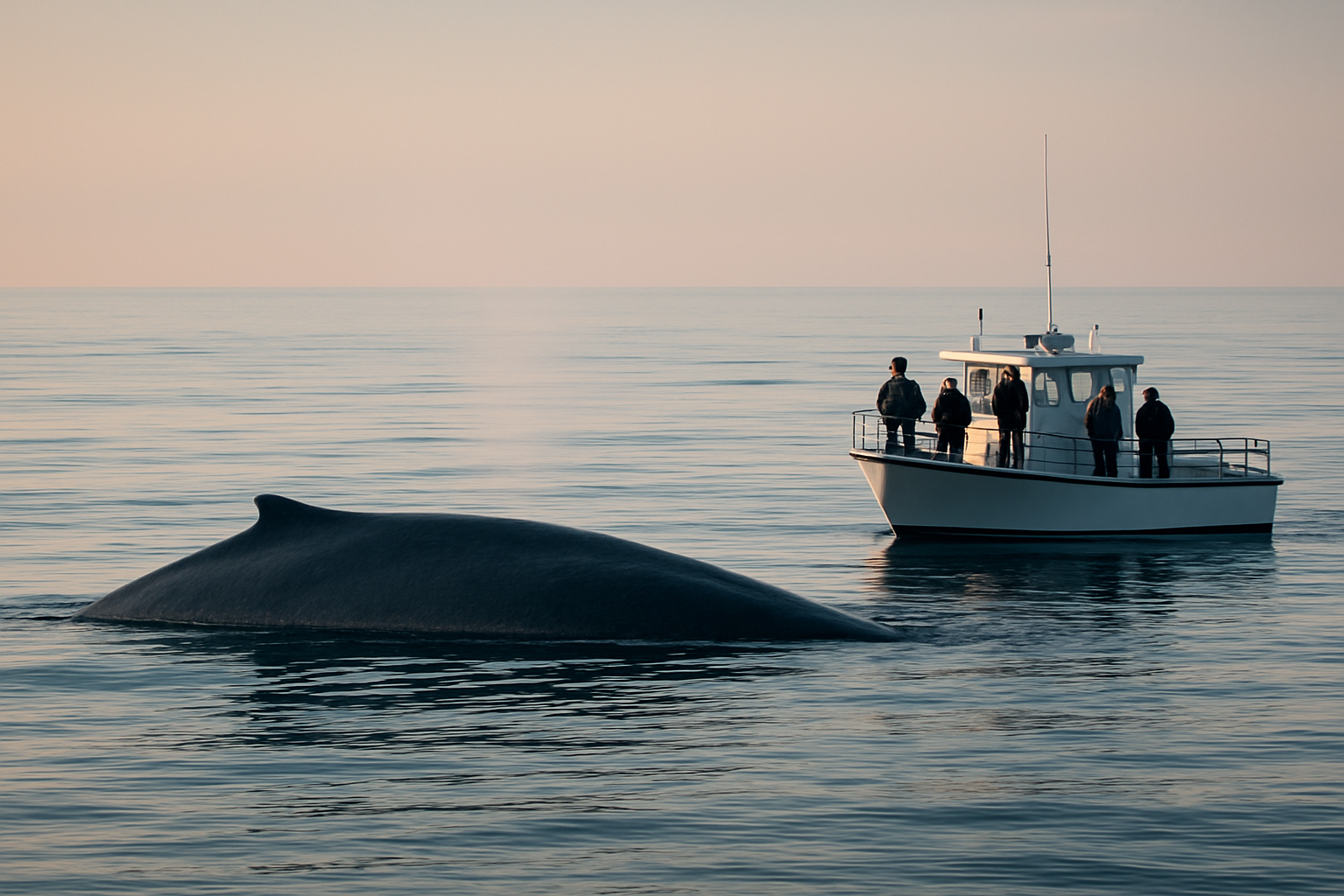
San Diego blue whale viewing tours use small, stable boats to bring guests close to these massive animals safely.
When Is the Best Time for Blue Whale Watching in San Diego?
Blue whale watching in San Diego peaks between late May and September, with June through August typically producing the most consistent sightings. During this stretch, upwelling currents push nutrients toward the surface, triggering krill blooms that draw whales close to shore. Therefore, booking during these peak months generally offers the strongest odds of an encounter.
However, San Diego’s waters stay active year-round. Gray whales pass through from December to April, while dolphins, sea lions, and seasonal visitors such as humpback and fin whales can appear at various points throughout the year. Similarly, orcas occasionally show up off the coast, though sightings are far less predictable than the reliable summer blue whale season.
According to NOAA Fisheries, blue whale populations in the Eastern North Pacific have shown signs of recovery in recent decades, though they remain listed as endangered. Specifically, researchers estimate the eastern Pacific population at roughly 1,500 to 2,000 individuals, many of which pass through or near Southern California waters each feeding season.
Why Choose a Small-Group Whale Watching Tour in San Diego?
Choosing a small-group operator makes a noticeable difference in the quality of a whale watching trip. For instance, small-group whale watching tours keep passenger counts low, which means more deck space, better viewing angles, and more personal attention from the naturalist on board.
Big Blue Photo Boat operates private and semi-private charters from Seaforth Marina with Coast Guard-inspected vessels featuring quiet outboard engines and 360-degree viewing access. In particular, this setup suits photographers and filmmakers, since the boats have supported crews from BBC Earth, National Geographic, and Discovery Channel. Guests can also review the top-rated whale watching tours and charters available before booking a date.
Beyond blue whale season, the same operator runs a small-group wildlife adventure tour that covers year-round sightings, along with summer Blue Water Safari snorkel trips featuring molas, kelp paddies, and sea lions.
What to Expect on a San Diego Blue Whale Viewing Tour
Most San Diego blue whale viewing tours follow a similar general sequence from dock to open water. The steps below outline what a typical half-day charter looks like from booking through return.
- Reserve your charter. Contact the operator to book a private or semi-private whale watching charter departing from Seaforth Marina, choosing a date during peak blue whale season for the best odds of a sighting.
- Arrive at the marina. Meet your captain and naturalist at the dock at least fifteen minutes before departure so the crew can brief guests on safety and viewing etiquette.
- Head offshore. Your naturalist helps the captain navigate toward recent whale activity reports, explaining feeding behavior and migration patterns as the boat moves through open water.
- Watch for spouts. Crew members and guests scan the horizon for the tall, heart-shaped blows that signal a surfacing whale, then the captain approaches slowly and respectfully.
- Observe and photograph. Guests use the 360-degree viewing deck and stable, low-profile hull to photograph or film the whales up close while following non-chasing guidelines.
- Learn on the return trip. The naturalist answers questions and shares details about blue whale biology, conservation status, and the local ecosystem on the way back.
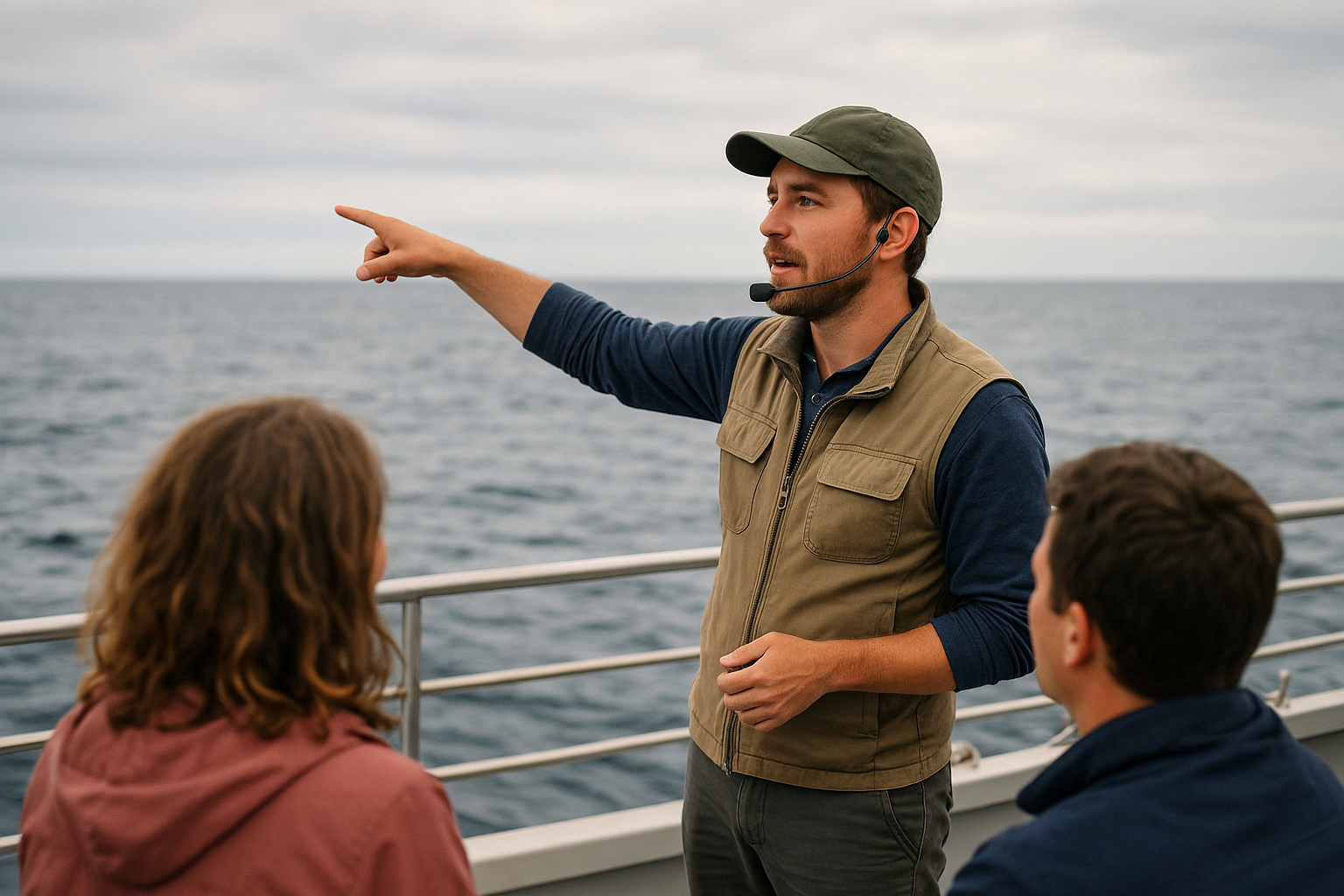
A Scripps-trained naturalist narrates each San Diego blue whale viewing tour, adding context to every sighting.
Blue Whale Facts Worth Knowing Before You Go
Blue whales are the largest animals known to have ever lived, surpassing even the biggest dinosaurs in size. A single adult can stretch close to 100 feet long and weigh nearly 200 tons, feeding almost exclusively on tiny shrimp-like krill. In particular, a blue whale can consume several tons of krill in a single day during peak feeding season, which explains why they linger off San Diego when blooms are strong.
Despite their size, blue whales remain difficult to spot without local knowledge of current feeding patterns. That is why experienced crews track recent activity reports daily, rather than guessing where whales might appear. As a result, working with a dedicated naturalist noticeably improves the odds of a meaningful encounter compared to a generic sightseeing cruise.
Photography and Filmmaking Aboard San Diego Whale Watching Boats
Photographers and filmmakers have specific needs that standard tour boats rarely accommodate. Low railings, engine noise, and crowded decks can all ruin a shot of a surfacing whale. In contrast, photographer-friendly vessels use quiet outboard engines, stable low-profile hulls, and open 360-degree access so camera operators can move freely without obstruction.
These platforms have supported professional film crews from organizations such as BBC Earth, National Geographic, and Discovery Channel, which speaks to their reliability for serious visual work. Furthermore, drone-friendly operations and optional inflatable paddle board access give content creators additional creative options beyond standard deck shots. Visitors planning a dedicated photo trip can review the whale watch tour details to confirm current equipment policies.
Low-Impact Whale Watching Practices Along the California Coast
Responsible operators follow low-impact, non-chasing viewing guidelines that protect both the whales and the long-term quality of the experience. Specifically, this means approaching slowly, keeping a respectful distance, and letting whales choose whether to come closer rather than pursuing them directly.
The NOAA Fisheries blue whale species page outlines federal protections for the species, which remains listed under the Endangered Species Act. Consequently, operators who train captains and naturalists on these guidelines help ensure San Diego’s whale populations stay healthy for future seasons, while still giving guests an unforgettable, respectful encounter.
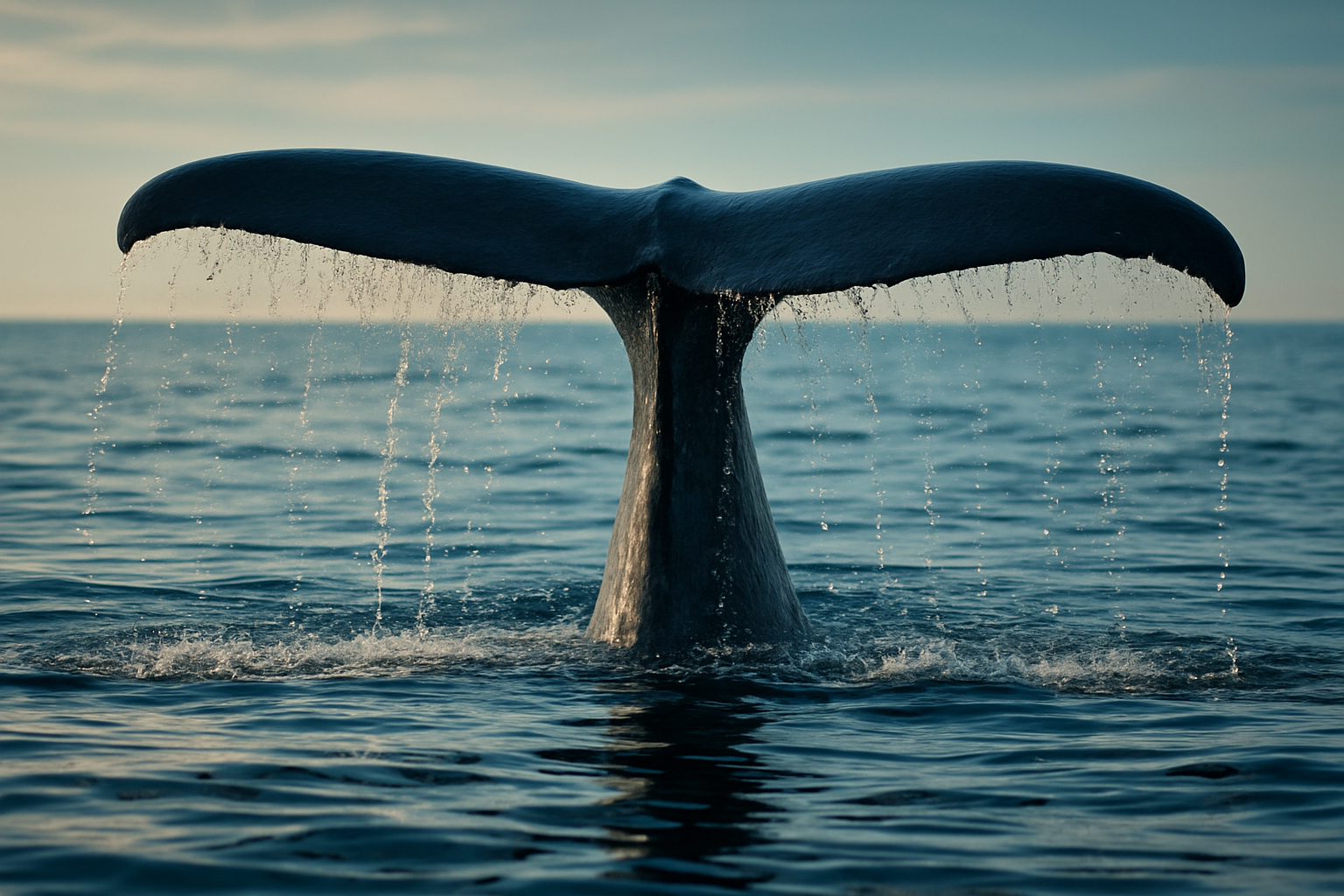
A deep dive like this often signals the whale is heading toward another nearby krill patch.
Frequently Asked Questions About San Diego Blue Whale Viewing Tours
What are San Diego blue whale viewing tours?
San Diego blue whale viewing tours are small, guided boat excursions that take passengers into offshore Southern California waters to observe blue whales feeding and migrating. They are typically led by a naturalist and an experienced captain aboard a Coast Guard-inspected vessel.
When is the best time to see blue whales in San Diego?
Blue whales are most reliably spotted off San Diego between late May and September, with June through August generally offering the strongest sightings. This window lines up with the krill blooms the whales follow north along the coast.
How long do whale watching tours typically last?
Standard whale watching trips usually run three to four hours, while full-day expeditions can last six hours or more. Tour length often depends on how far offshore the whales are feeding that day.
How much do San Diego blue whale viewing tours cost?
Pricing varies by group size and tour type, with private and semi-private charters generally costing more than large group boats because of the smaller passenger count. Contacting the operator directly is the best way to get an accurate quote for specific dates.
What is the difference between a private and semi-private whale watching tour?
A private tour is booked exclusively for one group, while a semi-private tour is shared among a small number of unrelated passengers, usually capped around six guests. Both formats keep groups far smaller than typical large commercial whale watching boats.
Can I bring a camera or drone on a whale watching boat?
Yes, many San Diego operators run photographer- and filmmaker-friendly boats with stable, low-profile hulls and 360-degree viewing access. Drone-friendly operations are also common, though guests should confirm current drone policies before departure.
What other marine animals might I see besides blue whales?
Depending on the season, guests often see dolphins, sea lions, gray whales, humpback whales, fin whales, and occasionally orcas. Summer trips may also include ocean sunfish, known as molas, and kelp paddies full of marine life.
Is whale watching safe and enjoyable for kids?
Whale watching is generally family-friendly, especially on smaller boats where naturalists can tailor explanations for younger guests. Parents should check age and health recommendations with the operator, since open-water conditions vary by day.
What should I bring on a San Diego whale watching tour?
Layered clothing, a windproof jacket, sunscreen, and motion sickness remedies are commonly recommended for boat tours off the California coast. Binoculars and a fully charged camera are also useful for capturing distant spouts and breaches.
How close do boats get to blue whales?
Responsible operators follow low-impact, non-chasing viewing guidelines that keep a respectful distance and let whales approach on their own terms. Federal guidelines discourage boats from pursuing or crowding whales to protect both animals and passengers.
What is the biggest mistake people make when booking a whale tour?
The most common mistake is booking a large, crowded boat during peak season, which can limit viewing angles and photo opportunities. Choosing a small-group charter instead usually results in closer, less obstructed encounters.
Do San Diego whale watching tours guarantee sightings?
No reputable operator can guarantee a wildlife sighting, since whales are wild animals that move unpredictably. However, experienced naturalists who track recent activity reports significantly improve the odds of a successful trip.
How many people typically go on a small-group whale tour?
Small-group tours are often capped at around six passengers, with some operators allowing up to twelve for special occasions. This keeps the experience intimate compared to large commercial boats carrying dozens of guests.
Final Thoughts on Planning Your Trip
Ultimately, San Diego blue whale viewing tours reward visitors who plan around peak season and choose an operator that prioritizes small groups and responsible viewing practices. Above all, pairing an experienced captain with a trained naturalist turns a simple boat ride into a genuine learning experience, whether the goal is a family outing, a photography expedition, or a special-occasion charter. For travelers ready to book, exploring options like small-group wildlife adventure tours or visiting Big Blue Photo Boat directly is a practical next step toward seeing these massive animals up close this season.
