
Photographer wildlife boat tours san diego attract shooters who want more than a quick glimpse of a fin breaking the surface. These trips are built around camera-friendly boats, patient captains, and a marine biologist who understands both animal behavior and shooting angles. In this guide, you will learn what separates a true photography charter from a standard whale watch, which gear works best offshore, and how to time your trip around San Diego’s shifting wildlife seasons.
Photographer Wildlife Boat Tours San Diego: What to Expect
Photographer wildlife boat tours san diego are small-group boat charters designed specifically for photographers and filmmakers who need stable platforms, quiet engines, and unobstructed 360-degree access to whales, dolphins, and other marine life. Unlike standard whale-watching cruises, these trips cap passenger counts at six, or up to twelve for special charters, and prioritize non-chasing approaches that keep animals calm and images sharp.
Consequently, a good photography charter feels less like a crowded ferry ride and more like a working shoot. For example, the naturalist onboard often calls out behavior cues, such as a whale about to surface, so photographers can pre-focus instead of reacting late. As a result, keeper shots come more often, even for guests using consumer-grade cameras rather than professional rigs.
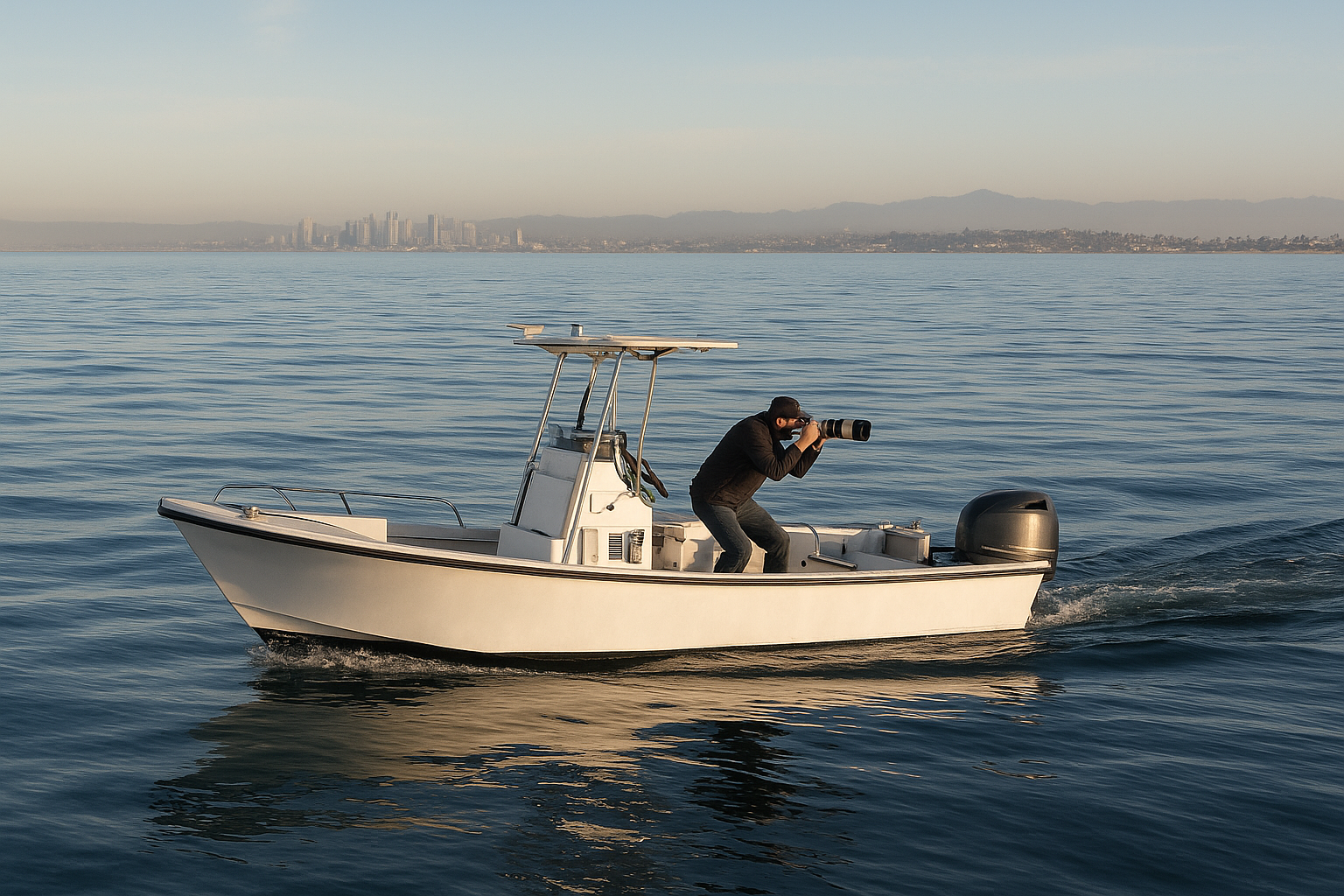
Open, low-profile decks give photographers room to move during photographer wildlife boat tours san diego. For a deeper walkthrough, see our Filmmaker Friendly Wildlife Tours San Diego Boat Guide.
Why Vessel Design Matters for Wildlife Photography Charters
Boat design shapes almost everything about a photo shoot at sea. Specifically, hull height, engine noise, and railing layout all determine whether a photographer gets a clean angle or a blocked, bouncy view. In particular, San Diego’s offshore conditions can shift quickly, so a boat’s stability matters as much as its speed.
Low-Profile Hulls and 360-Degree Viewing
A low-profile hull sits closer to the waterline, which reduces the vertical distance between a camera and the subject. This matters because shooting down at a steep angle often flattens a whale’s back or a dolphin’s dorsal fin in photos. In addition, 360-degree walk-around access lets photographers reposition as an animal moves, rather than shooting through a single fixed window.
Quiet Engines and Non-Chasing Approaches
Loud engines can startle marine mammals into diving early, which cuts a shoot short before anyone gets the shot. Quiet outboard engines, however, allow a boat to idle near a pod without triggering a fast retreat. Furthermore, a slow, non-chasing approach gives animals time to acclimate, which typically results in longer surface time and calmer behavior for photographers to capture. According to NOAA Fisheries viewing guidelines, maintaining a respectful distance and avoiding sudden movements around marine mammals also reduces stress on wild populations.
Best Camera Gear for San Diego Wildlife Photo Tours
Choosing the right gear before boarding matters more than most photographers expect. Above all, a weather-sealed camera body handles salt spray and humidity better than an unsealed one. A telephoto zoom in the 100-400mm range covers both distant blows and closer breaches without needing a lens swap mid-shoot.
In addition, a polarizing filter cuts glare off the water’s surface, which helps reveal a whale’s shape just below the surface rather than a sheet of white reflection. Similarly, packing extra batteries is wise because cold ocean air and constant continuous-autofocus tracking drain power faster than typical land photography. A dry bag, meanwhile, protects gear during spray or the occasional wave over the bow.
If you plan to shoot summer snorkel trips featuring ocean sunfish or kelp paddies, note that guests are expected to bring their own snorkel or freefall equipment, since gear rental is not part of these excursions. Preparing your own well-fitted mask and fins ahead of time avoids delays once the boat reaches a sighting.
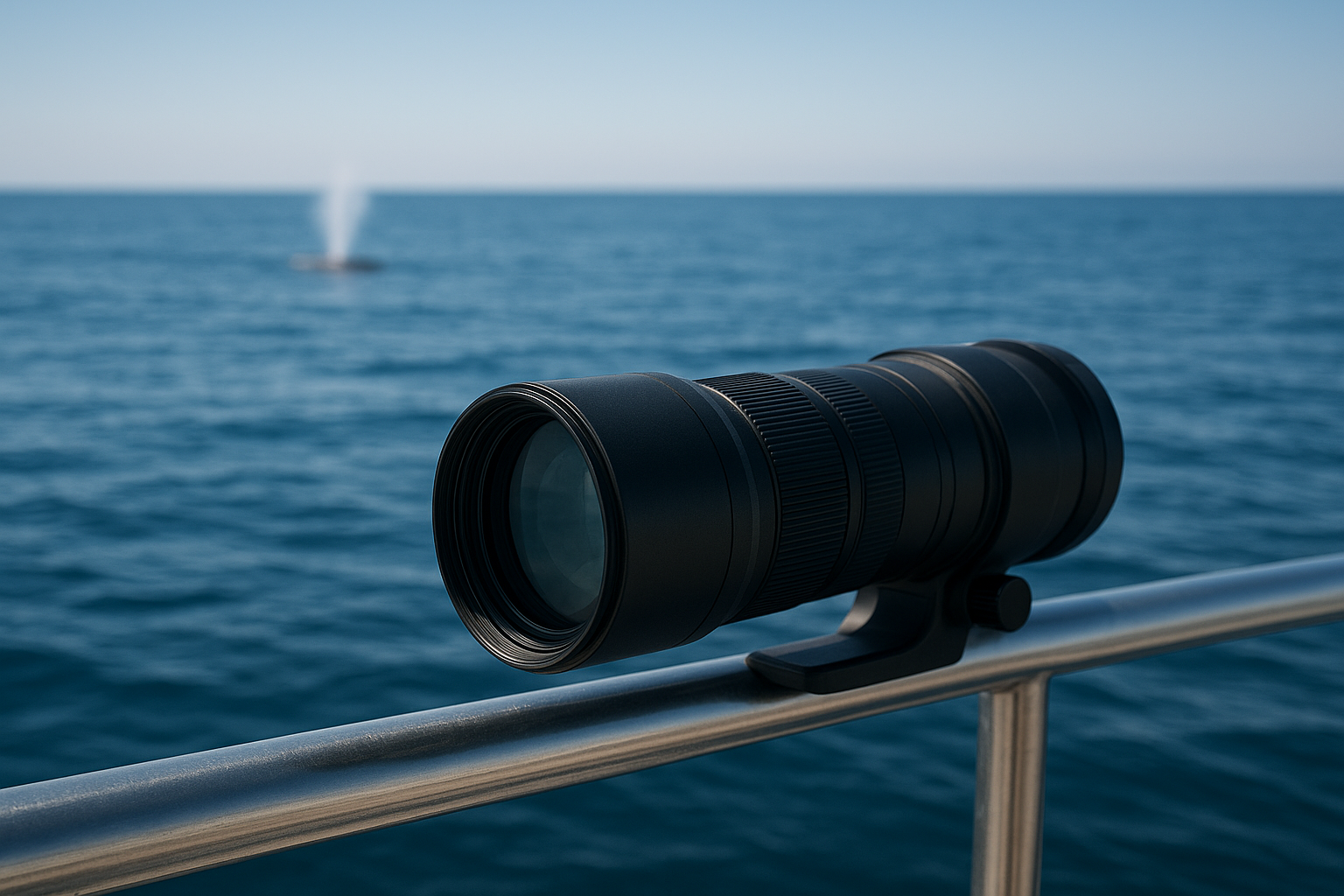
A telephoto zoom stays ready for the next surfacing during a San Diego wildlife photo tour.
Seasonal Wildlife Calendar for Marine Wildlife Photography Trips
Timing shapes the outcome of any marine wildlife photography trip more than almost any other factor. From roughly June through October, blue whales and humpbacks feed offshore near San Diego, offering some of the largest animals on the planet for wide-angle compositions. The blue whale, in fact, can reach lengths over 80 feet, according to the Wikipedia entry on blue whales, making them one of the most striking subjects a photographer can frame.
By contrast, gray whales migrate along the coast from December through April, traveling closer to shore and often surfacing in more predictable patterns. Dolphins and sea lions, on the other hand, appear throughout the year, which means even a slower whale season can still deliver strong wildlife images. Consequently, a flexible photographer can plan a productive shoot in almost any month.
How to Prepare for a Photography-Focused Boat Charter
Preparation separates a frustrating trip from a rewarding one. The following steps outline a practical routine before boarding a photographer-focused charter out of Seaforth Marina.
- Check the seasonal calendar and book a private or semi-private slot early, since small-group departures fill quickly during peak whale season.
- Pack a weather-sealed camera body, a telephoto zoom around 100-400mm, extra batteries, a polarizing filter, and a dry bag to protect equipment from spray.
- Arrive early at the marina so the naturalist and captain can walk you through the boat’s shooting positions and explain the low-impact approach.
- Set your camera to a fast shutter speed and continuous autofocus before departure so you are ready the instant an animal surfaces.
- Follow the naturalist’s positioning cues during the approach, then move calmly around the open deck to frame the strongest composition.
Following this sequence, a photographer can often capture usable frames within the first hour of a trip. The Scripps Institution of Oceanography, whose training informs many San Diego marine naturalists, notes that understanding animal behavior improves both safety and photo timing, as explained on the Scripps Institution of Oceanography website.
Private, Semi-Private, or Full-Day: Choosing the Right Photo Tour Boats
Not every photographer needs the same trip length or group size. A private charter, for instance, suits a filmmaker who needs full control over positioning and timing. A semi-private tour, capped around six guests, works well for a small group of photographers who want to split costs while keeping shooting space intact.
Full-day expeditions, meanwhile, suit photographers chasing a specific species or hoping to reach offshore feeding grounds farther from the marina. In addition, custom charters can be arranged for special occasions or corporate events that still want strong photo opportunities built into the itinerary. Whichever format you choose, confirming coast guard-inspected vessel status and a stated non-chasing policy remains a smart step before booking, as detailed on the Big Blue Photo Boat site.
For a closer look at how vessel choice affects image quality, the comparison in this guide to the best boat tour for wildlife photographers in San Diego breaks down specific features worth requesting when you call an operator.
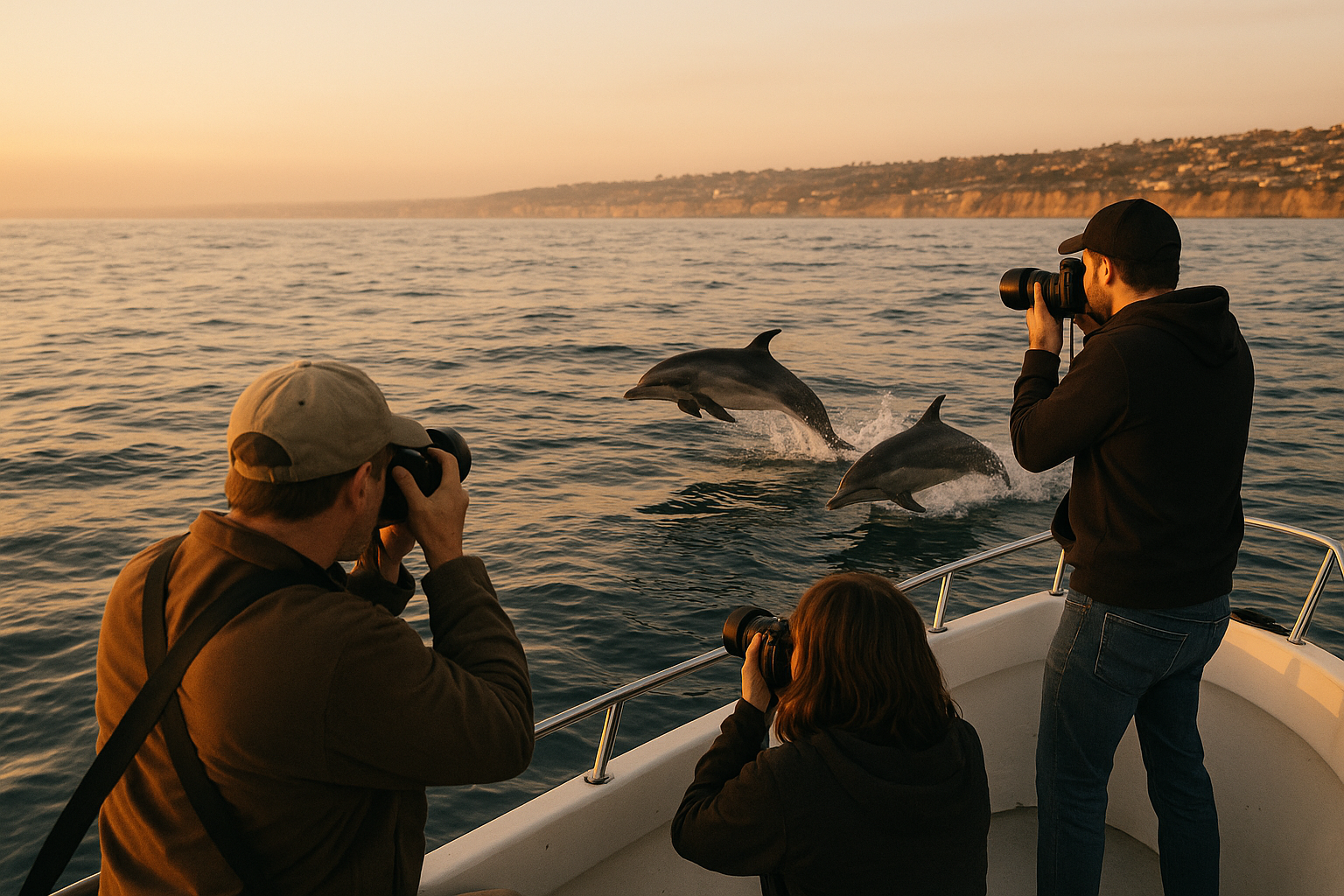
Small groups on quiet boats give photographers time to react before dolphins move on.
Choosing an Operator for Wildlife Photography Charters
Not every whale-watch company treats photographers the same way. Some operators run large passenger boats that prioritize volume over positioning, while others build their entire trip structure around camera access. If image quality matters to you, ask specifically about hull height, engine type, group size limits, and whether a naturalist directs the approach.
For a detailed breakdown of these differences, the article on what makes certain photo boat tours unique in San Diego covers the specific features that separate a photography-first operation from a general tourism cruise. Likewise, the overview at this wildlife photography tours page outlines available trip formats in more detail. If small-group whale encounters are your priority, the write-up on small-group whale tour adventures in San Diego offers a complementary angle focused on the overall guest experience rather than gear and technique.
Frequently Asked Questions About Photographer Wildlife Boat Tours San Diego
What are photographer wildlife boat tours san diego?
Photographer wildlife boat tours san diego are small-group boat charters built specifically for camera users, featuring stable low-profile hulls, quiet engines, and 360-degree access to whales, dolphins, and other marine life. They typically cap groups at six passengers to give every shooter room to compose a shot.
How do photography boat charters differ from regular whale watching tours?
Standard whale watching boats often carry dozens of passengers and prioritize quick sightings over positioning. Photography-focused charters instead limit group size, slow their approach, and let a naturalist guide the captain toward better light and angles.
What camera gear should I bring on a San Diego wildlife photo tour?
A weather-resistant camera body, a telephoto zoom in the 100-400mm range, spare batteries, and a polarizing filter cover most situations. A dry bag and lens cloths are also essential because sea spray is common offshore.
When is the best time of year for whale and dolphin photography in San Diego?
Blue and humpback whales are most reliable from June through October, while gray whales migrate past San Diego from December through April. Dolphins and sea lions can appear year-round, making the region productive in nearly every season.
How much do private wildlife photography charters cost?
Pricing varies by group size, trip length, and season, with private and semi-private charters generally costing more than large public boats because of the smaller passenger cap. Contacting the operator directly for current rates is the most accurate way to plan a budget.
How long do photographer-focused boat tours typically last?
Most trips run three to four hours, though full-day expeditions are available for photographers who want extended time searching for specific species. Longer trips increase the odds of reaching offshore feeding grounds.
What common mistakes do photographers make on wildlife boat tours?
Many photographers set shutter speeds too slow for moving water and wildlife, or they stand in one spot instead of using the boat’s full viewing deck. Skipping a lens check before departure also leads to missed shots during brief surfacing windows.
Why do boat design and engine noise matter for wildlife photography?
Loud engines and abrupt movements can startle marine mammals, causing them to dive early and cutting a shoot short. Quiet outboards and slow, non-chasing approaches keep animals relaxed longer, which results in calmer surface behavior and cleaner images.
Can I bring a drone on a San Diego wildlife photography charter?
Drone-friendly operations exist, but airspace rules near marinas and wildlife disturbance regulations still apply. It is best to confirm drone policies with the specific charter before booking.
What wildlife can I expect to photograph in San Diego waters?
Seasonal sightings include blue whales, gray whales, humpbacks, fin whales, orcas, and multiple dolphin species. Summer trips can also add ocean sunfish, sea lions, and kelp paddy ecosystems to the shot list.
Do I need my own snorkel gear for a wildlife photo tour?
Yes, guests joining summer snorkel and photo excursions are expected to bring their own snorkel or freedive equipment. This keeps gear fitted correctly and ready before reaching kelp paddies or sunfish sightings.
What safety and low-impact practices should photographers look for?
Look for coast guard-inspected vessels, licensed captains, and a stated non-chasing approach to wildlife. A trained naturalist onboard also helps ensure the boat maintains safe, respectful distances from animals.
How many people are allowed on a photography charter?
Most photography-focused charters cap groups at six passengers to preserve shooting space, though some operators allow up to twelve for special occasions. Smaller groups generally mean more time and better angles for each photographer.
Final Thoughts on Photographer Wildlife Boat Tours San Diego
In the end, photographer wildlife boat tours san diego succeed or fail based on details that have nothing to do with luck. Vessel design, engine noise, group size, and a naturalist’s guidance all shape whether a whale, dolphin, or sunfish turns into a usable frame. Therefore, choosing an operator that treats photography as a core part of the trip, rather than an afterthought, tends to produce far better results than a generic whale watch.
Above all, preparation matters just as much as the boat itself. Packing the right lens, setting your camera before departure, and following the crew’s positioning cues all stack the odds in your favor. With the seasonal calendar, gear checklist, and charter comparisons covered in this guide, you now have a practical framework for planning a San Diego wildlife photography trip that matches your goals, whether that means a quiet private outing or a full-day search for blue whales offshore.
One Response