
A drone friendly whale watching charter san diego trip gives photographers and filmmakers a rare chance to capture whales, dolphins, and sea lions from above while staying inside federal wildlife protection rules. Unlike a typical sightseeing cruise, this type of charter is chosen specifically for how well its boat, crew, and schedule support a safe drone launch and recovery. Consequently, not every whale watching operator in San Diego qualifies, even if the scenery looks the same from the dock.
Direct answer: A drone friendly whale watching charter san diego is a small private or semi-private boat tour, usually capped at six to twelve guests, with a stable low-profile hull, quiet outboard engine, and open deck space that allows a pilot to launch, fly, and land a drone safely near migrating whales.
What Is a Drone Friendly Whale Watching Charter San Diego?
In short, a drone friendly whale watching charter san diego is built around aerial photography, not just passenger sightseeing. The boat’s design, crew experience, and trip pacing are all shaped by what a drone pilot needs to get a clean shot.
These charters typically limit group size so there is open deck room for takeoff and landing. Because the engines run quieter than large commercial tour boats, pilots can also hear propeller feedback and communicate with the captain mid-flight. For example, at Big Blue Photo Boat, vessels operating out of Seaforth Marina are specifically built with 360-degree viewing access and low, stable platforms that support this kind of filming work.
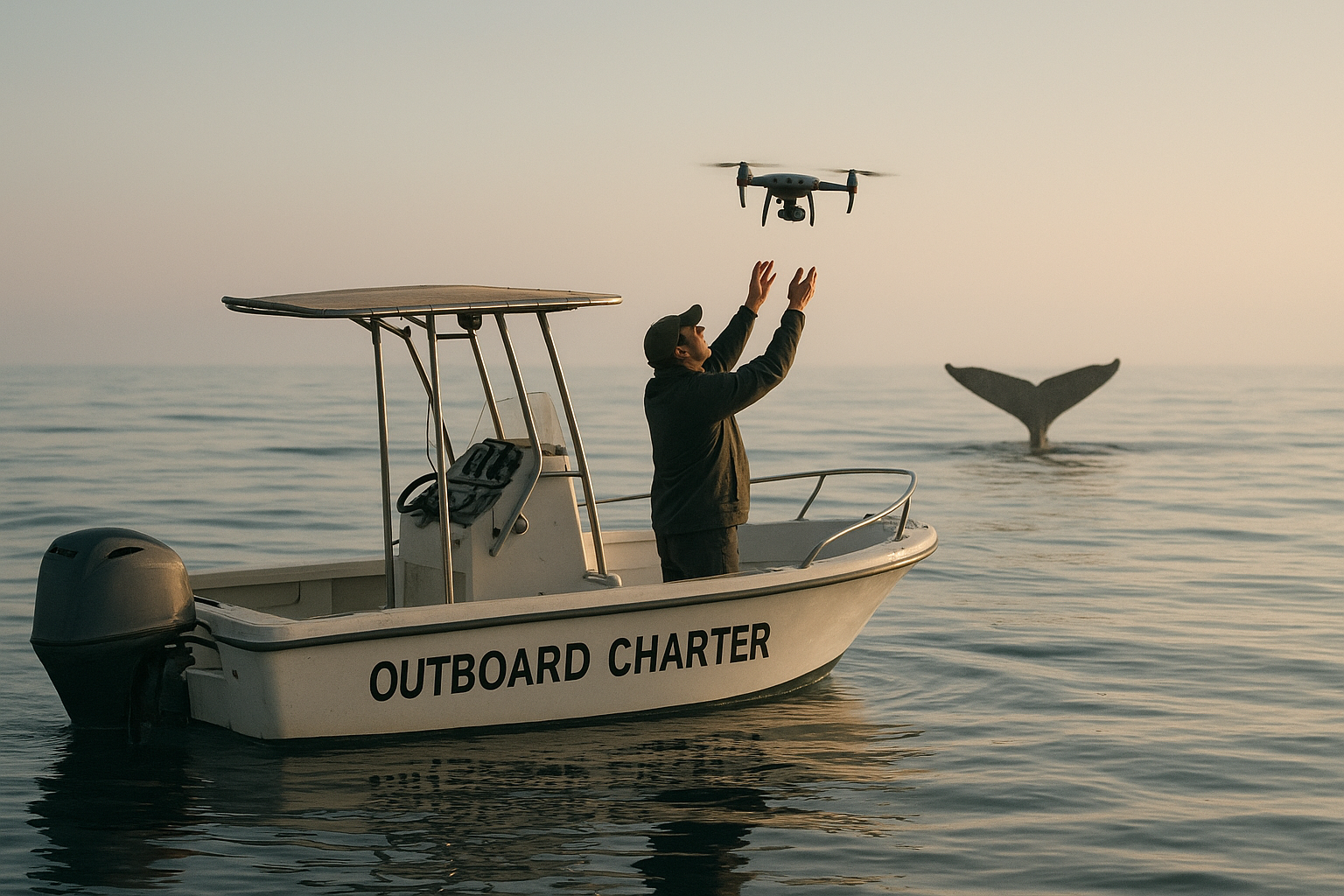
Launching a drone from a small, stable charter gives pilots room and control that larger tour boats cannot offer.
Why Most Whale Watching Boats Aren’t Drone Friendly
Many standard whale watching boats in San Diego carry fifty or more passengers. As a result, deck space is crowded, sightlines are blocked, and there is rarely a safe open area for a drone to take off or land.
Engine Noise and Vibration
Large diesel tour boats are loud, which makes it difficult for a pilot to hear a drone’s motor feedback or warning tones. In contrast, quiet four-stroke outboards reduce interference and let pilots react faster if something goes wrong mid-flight.
Deck Space and Passenger Crowding
High passenger counts also mean more foot traffic near a launch zone, raising the risk of a collision during takeoff or landing. Small charters, on the other hand, keep groups intentionally limited so a pilot has a clear, predictable workspace throughout the trip.
FAA and NOAA Rules Every Aerial Whale Watching Tour Pilot Should Know
Before booking any aerial whale watching tour, it helps to understand the two main regulatory layers that apply: aviation rules and wildlife protection rules. Both exist for good reason, and both apply on the water just as they would on land.
FAA Part 107 and Recreational Drone Rules
According to the Federal Aviation Administration, commercial drone pilots, including anyone shooting footage for sale or client work, must hold a Part 107 Remote Pilot Certificate. Recreational flyers instead operate under a separate exception, but both groups must register their aircraft and respect local airspace restrictions near San Diego’s coastline.
NOAA Marine Mammal Viewing Guidelines
Meanwhile, NOAA Fisheries recommends staying at least 100 yards from large whales and 50 yards from dolphins, a buffer that applies to aircraft as well as boats. Specifically, this means a drone should approach from a wide angle and moderate altitude rather than hovering directly above an animal. Some nearby marine protected waters, including areas close to La Jolla, also restrict where drones can legally launch or land, so it is worth confirming current boundaries with your captain beforehand.
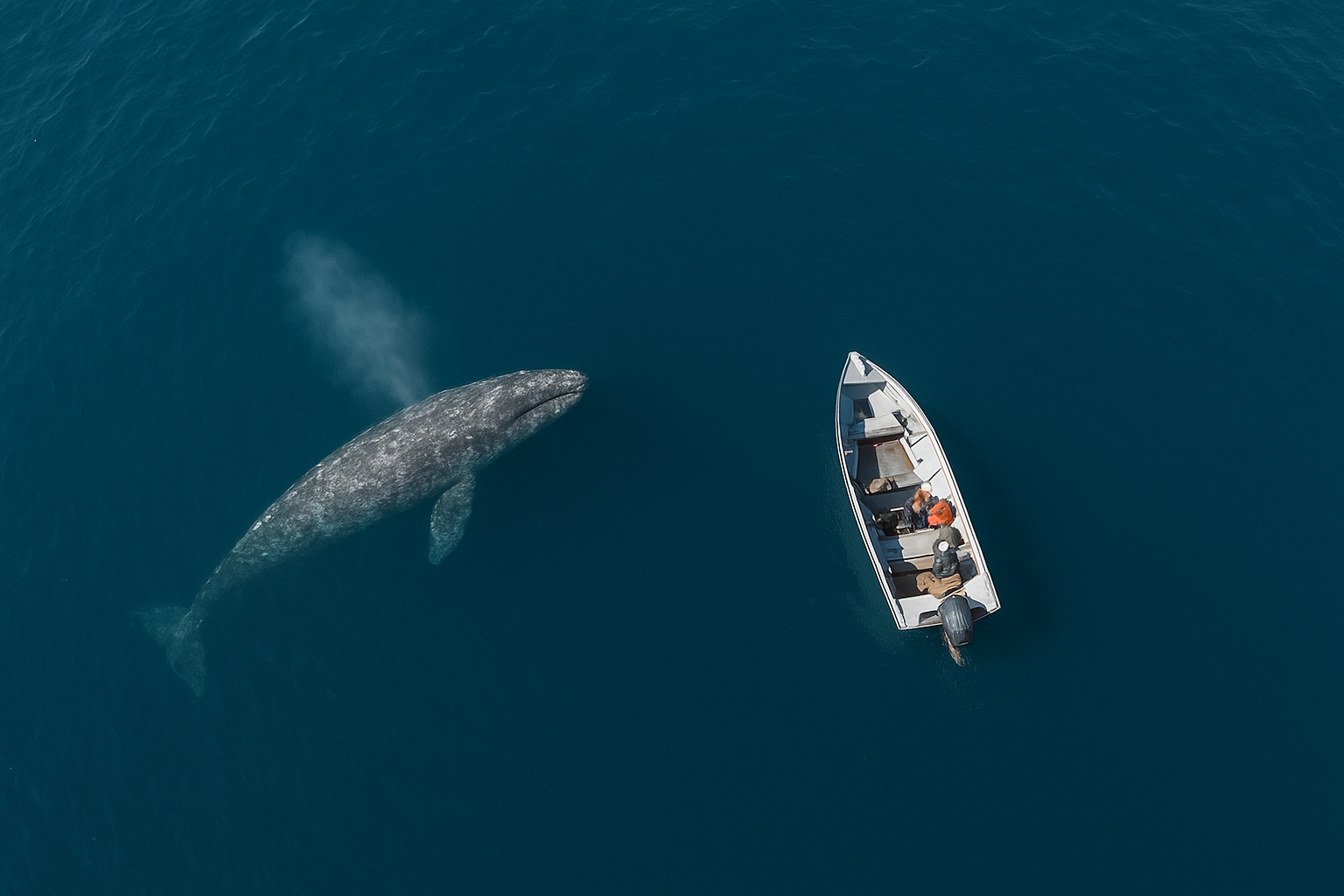
Wide framing at a respectful distance produces compelling footage without disturbing natural whale behavior.
What Makes a Boat Truly Drone Friendly for Whale Watching
Beyond passenger limits, a handful of specific vessel features separate a genuinely drone friendly whale watching charter san diego from a standard tour boat. Above all, stability matters most, since a rocking hull makes both launch and landing riskier.
Low-profile hulls reduce wind turbulence around the launch pad, while quiet outboard engines limit vibration interference with onboard electronics. Additionally, 360-degree open viewing areas, rather than enclosed cabins, give a pilot full visual tracking of the drone throughout the flight. Crews experienced with photography and film work, including teams that have supported productions for BBC Earth, National Geographic, and Discovery Channel, also tend to understand flight timing far better than a general sightseeing crew.
How to Plan a Drone Flight on a San Diego Whale Watching Charter
Planning ahead reduces risk and improves footage quality. The following sequence works well for most private and semi-private trips.
- Check airspace and restricted zones. Review FAA airspace maps and any marine protected area boundaries near your planned route.
- Confirm the charter’s drone policy. Call ahead to verify the operator allows drone flights and ask whether the captain will idle the engine for takeoff.
- Pack redundant gear. Bring extra batteries, spare propellers, a floating case, and a dry bag since there is no charging access at sea.
- Brief the captain on timing. Coordinate so the boat can pause at the right moment once whales are sighted.
- Launch from open deck space. Take off from the widest clear area, away from other guests and rigging.
- Maintain safe wildlife distance. Fly wide and slightly higher rather than hovering directly over the animal.
- Recover with crew support. Signal before landing and approach slowly to avoid dropping the drone overboard.
Best Seasons and Species for a Whale Watching Photography Charter
Timing matters as much as equipment when planning a whale watching photography charter. Each season in San Diego tends to favor different species and, therefore, different aerial compositions.
Winter through spring brings the gray whale migration close to shore, offering reliable surfacing patterns for tracking shots. Summer, in contrast, draws blue whales and humpbacks further offshore, along with seasonal snorkel sightings of ocean sunfish and sea lions around kelp paddies. Fin whales and orcas appear less predictably throughout the year, so flexible scheduling helps pilots chasing a specific species.
Private Charter vs. Large Tour Boat for Drone Footage
When comparing options, the trade-off usually comes down to control versus cost. A large public tour boat is cheaper per seat, yet crowded decks and strict no-drone policies often rule it out entirely for aerial work.
A private or semi-private charter costs more but gives a pilot dedicated deck space, a cooperative captain, and flexible timing around wildlife behavior. For a closer look at group size options and seasonal booking, the small-group wildlife adventure tours page outlines how capacity limits affect the on-water experience. Pricing details, meanwhile, are broken down on the private charter cost guide.
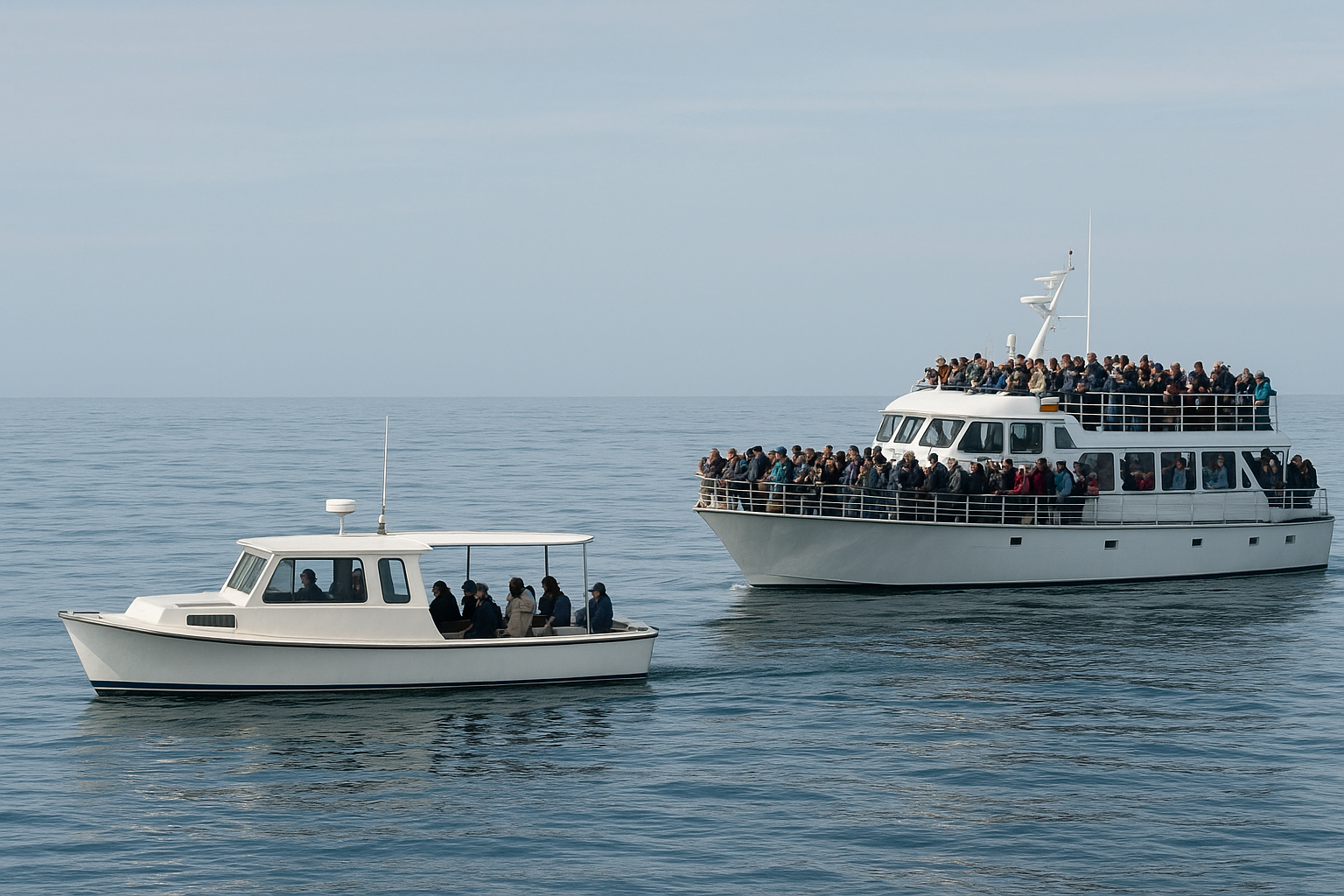
Smaller charters give drone pilots the open space and flexibility that large tour boats typically cannot match.
Booking a San Diego Whale Watching Drone Charter
Once the rules and vessel requirements make sense, booking becomes the easier part. Reputable operators, including teams detailed on the private whale watching charter page, can confirm drone policies directly before the trip date. For a broader comparison of operators across the region, the best whale watching tour roundup is a useful starting point, and the operator’s own San Diego charter homepage lists current seasonal availability.
As a final note, always confirm policies directly with the operator, since drone rules can change with local wildlife activity or temporary flight restrictions near the coast.
Frequently Asked Questions
What is a drone friendly whale watching charter san diego?
A drone friendly whale watching charter san diego is a small private or semi-private boat tour built to support safe drone launches and recoveries while viewing whales. It typically uses a stable, low-profile hull, a quiet engine, and limited passengers so a pilot has room to fly without disturbing wildlife or other guests.
Do I need an FAA license to fly a drone on a whale watching tour?
If you are flying for business purposes, such as selling footage or working for a film crew, the FAA requires a Part 107 Remote Pilot Certificate. Recreational flyers can operate under the Exception for Limited Recreational Operations instead, but both groups must follow airspace and registration rules.
How far must drones stay from whales in San Diego waters?
NOAA Fisheries recommends keeping at least 100 yards from large whales and 50 yards from dolphins, and the same buffer applies to any aircraft, including drones, used to view them. Flying higher and wider, rather than hovering directly overhead, reduces the chance of disturbing natural behavior.
Why are most large whale watching boats not drone friendly?
Large tour boats often carry fifty or more passengers, which leaves little open deck space for a safe launch pad. Their loud diesel engines and high gunwales also make it harder to track a drone visually and recover it without risking a drop into the water.
What size boat works best for drone launches?
Small charter vessels capped around six to twelve passengers work best because they offer open deck space, lower freeboard, and quieter outboard engines. These features let a pilot maintain line of sight and land the drone safely by hand if needed.
How much does a private drone-friendly whale watching charter cost?
Pricing varies by group size, season, and trip length, with private charters generally costing more than shared seats on a large boat. Exact rates and seasonal packages are detailed on the linked charter cost guide above.
What is the best season for drone whale photography in San Diego?
Winter through spring is best for gray whale migration footage, while blue whales and humpbacks are more common offshore in summer. Each season offers a distinct aerial shot, so matching the trip date to the target species matters.
Can I fly a drone over the La Jolla Ecological Reserve?
California state regulations restrict launching or landing drones within certain marine protected areas, including portions near La Jolla. A knowledgeable captain can confirm current boundaries and recommend launching from open water outside restricted zones.
What’s the biggest mistake new drone pilots make on whale tours?
The most common mistake is flying too low and too close while chasing a whale’s movement, which risks violating distance guidelines and spooking the animal. Patience, wider framing, and letting the whale surface naturally produce better and safer footage.
How long does a typical drone-friendly whale watching charter last?
Most private charters run three to four hours, though full-day expeditions are available for pilots chasing offshore species like blue whales. Longer trips allow more battery cycles and more flexibility around sighting conditions.
Is it legal to fly a drone from a moving boat?
Yes, but it is safer and more reliable to launch and land while the vessel is idling or drifting rather than underway. Most experienced captains will slow or stop the boat briefly to give a pilot a stable platform for takeoff and landing.
What whale species can I photograph by drone in San Diego?
Depending on the season, pilots may capture gray whales, blue whales, humpbacks, fin whales, orcas, and various dolphin species. Blue whales, the largest animals on Earth, are a particular highlight during summer offshore trips.
Do charter operators provide drone equipment?
No, pilots are expected to bring and operate their own registered drone, batteries, and controller. Charter crews support the flight logistics, such as timing and positioning, but do not supply aerial equipment.
What backup gear should I bring for a drone whale watching trip?
Bring extra charged batteries, spare propellers, a floating drone case, and a dry bag for electronics since sea spray is constant. A polarizing filter also helps reduce glare when shooting over open water.
Final Thoughts
In summary, a drone friendly whale watching charter san diego combines the right boat, the right crew, and a clear understanding of FAA and NOAA rules. Small, stable vessels with quiet engines and open decks consistently outperform large tour boats for aerial photography work. Therefore, pilots planning a serious shoot should prioritize operators who are experienced with photography and filmmaking rather than general sightseeing alone. With the right preparation, a well-timed trip off the San Diego coast can produce aerial footage of gray whales, blue whales, and dolphins that few other charters can match.