

If you’re wondering what to wear whale watching San Diego trips call for, the short answer is simple: dress in warm layers, add a windproof shell, and choose closed-toe shoes with good grip. San Diego’s coastal waters stay cooler than the sunny skies above suggest, and ocean breezes can catch first-time passengers off guard. Whether you’re joining a small-group tour with Big Blue Photo Boat or heading out with family for a first whale watching adventure, the right clothing keeps you comfortable enough to focus on the blue whales, dolphins, and coastline views instead of shivering at the rail.
Quick Answer: Wear breathable layers topped with a windproof, water-resistant jacket, closed-toe non-slip shoes, a secured hat, and polarized sunglasses. Ocean air runs cooler than land temperatures year-round, so even summer tours call for a light layer.
What to Wear Whale Watching San Diego?
What to wear whale watching San Diego trips require comes down to three items: a wind-blocking outer layer, warm mid layers underneath, and shoes that grip a wet deck. Because Coast Guard–inspected boats stay low-profile for stable, 360-degree viewing, passengers sit close to the water where ocean air is more noticeable than on land. As a result, temperatures on board often feel five to ten degrees cooler than the forecast for downtown San Diego.
In addition, sun exposure is constant once you leave the harbor at Seaforth Marina. Therefore, sunscreen, a hat, and sunglasses belong on your packing list alongside your jacket. Together, these choices let you stay outside on deck the entire tour rather than retreating indoors when the wind picks up.
Why Layering Matters on San Diego Boat Tours
San Diego’s coastal waters typically range from about 58°F to 68°F year-round, according to NOAA’s ocean data. Consequently, the air just above the surface stays noticeably cooler than inland neighborhoods, even during a warm afternoon. Furthermore, a moving boat generates apparent wind, which can make conditions feel ten to fifteen degrees colder than a stationary reading suggests.
This effect is sometimes intensified by San Diego’s marine layer, a band of cool, moist air that frequently blankets the coast in the morning. For more detail on this local weather pattern, see the Wikipedia entry on the marine layer. Because conditions shift throughout a tour, layering allows you to adjust as the sun climbs or clouds roll in, rather than committing to one heavy coat or a single t-shirt for the whole trip.
The Best Clothing Layers for Whale and Dolphin Watching
A reliable three-layer system works well for nearly any San Diego charter:
- Base layer: a moisture-wicking long-sleeve top made of synthetic fabric or merino wool.
- Mid layer: a fleece pullover or lightweight insulated jacket for warmth.
- Outer layer: a windproof, water-resistant shell or rain jacket to block spray and wind chill.
Meanwhile, avoid all-cotton clothing since it holds moisture once splashed and dries slowly. Instead, quick-dry fabrics keep you warmer if sea spray reaches the deck during a semi-private or full-day tour.
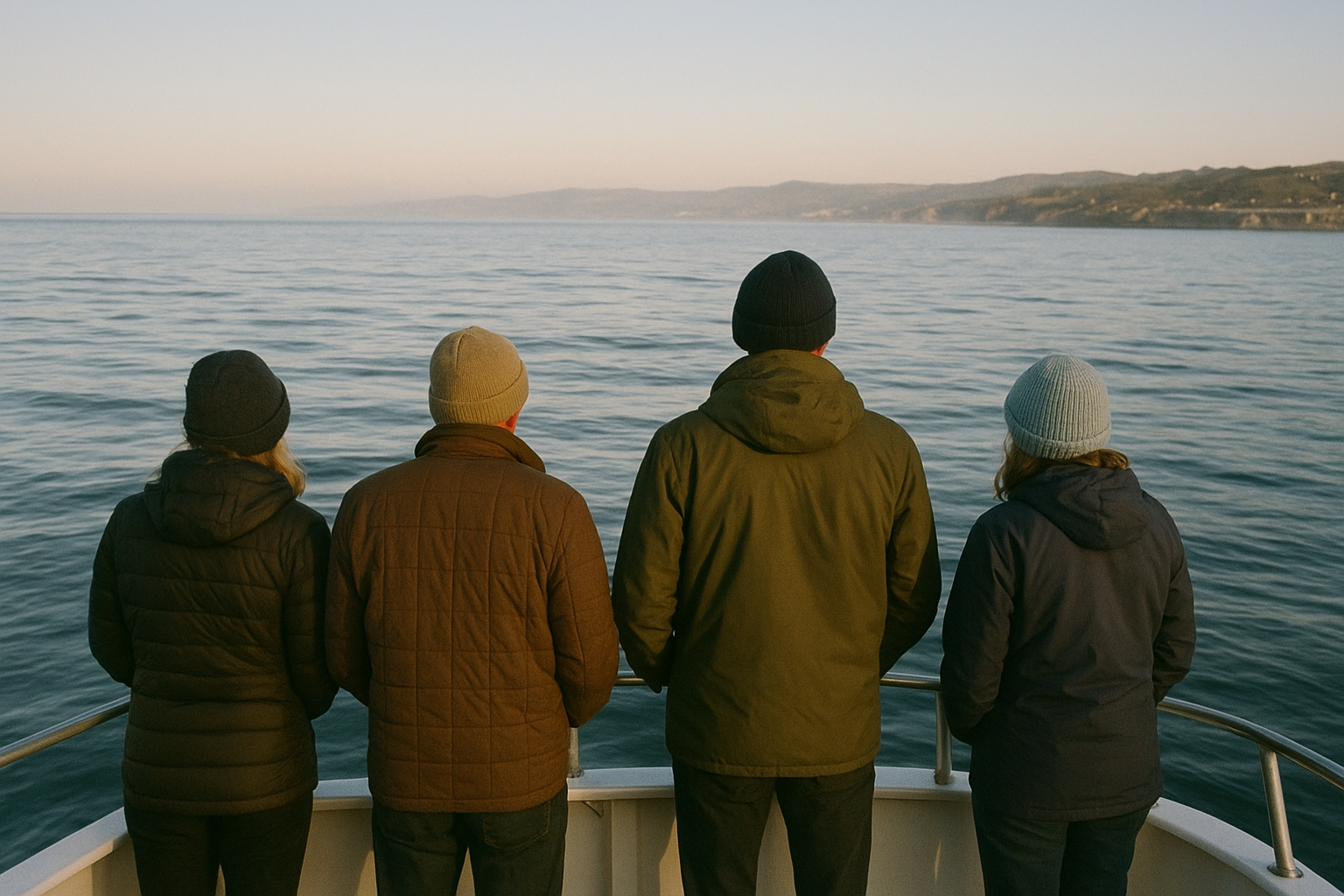
Layered clothing helps answer the question of what to wear whale watching San Diego tours year-round.
Footwear Tips for a Whale Watching Excursion
Closed-toe shoes with rubber, non-slip soles are the safest choice for any whale watching excursion. Boat decks can get wet from spray or condensation, and a stable low-profile vessel still moves with the swells. Above all, avoid flip-flops, sandals, or brand-new shoes you have not broken in, since blisters are uncomfortable on a multi-hour trip.
Boat shoes, trail sneakers, or lightweight hiking shoes generally perform best. If rain or heavier spray is expected, waterproof shoes add an extra layer of comfort without sacrificing grip on a wet deck.
What to Pack Besides Clothing
Clothing is only part of the equation. In particular, sunscreen and lip balm with SPF protect skin during hours of sun exposure over open water, since reflection off the ocean intensifies UV rays. Similarly, polarized sunglasses reduce glare and make it easier to spot fins and spouts near the surface.
If you experience motion sickness, consider an over-the-counter remedy taken before departure. For guidance on marine forecasts and conditions before your trip, the National Weather Service publishes local marine forecasts that are worth checking the night before. Finally, a small dry bag protects phones, extra layers, or snacks from spray, and a reusable water bottle keeps you hydrated during a full-day expedition.
First time on a tour? This first whale watching trip guide walks through exactly what to expect from arrival to departure.
Seasonal Whale Watching Attire: Summer vs. Winter in San Diego
During summer, mornings often start with the marine layer mentioned earlier, so a light jacket over a t-shirt usually works well once the sun burns through. However, wind on the open water can still surprise guests who dressed for a warm beach day on land.
Winter tours, by contrast, call for heavier layers: a warm base layer, fleece, gloves, and a hat that covers your ears. Since blue whale and other seasonal sightings can occur across different months, checking a current San Diego whale watching guide before booking helps you plan both timing and wardrobe together.
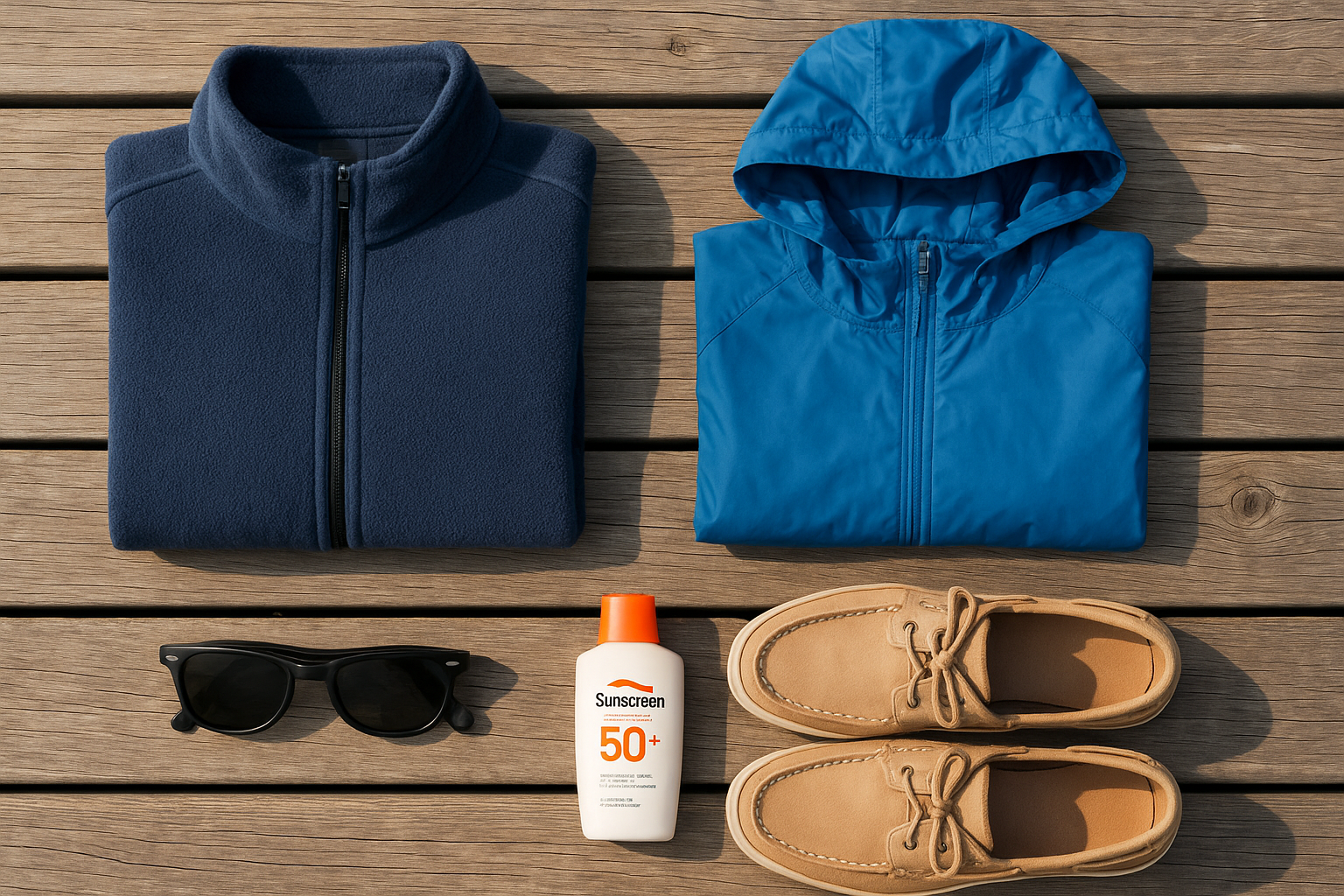
A simple packing list of layers, footwear, and accessories for any season.
Tips for Photographers and Filmmakers Joining a Tour
Photographers face a slightly different packing challenge. Specifically, a fitted, non-flapping jacket prevents fabric from catching in the wind or drifting into frame while shooting. Similarly, pockets that zip closed keep lens caps and memory cards secure on a moving deck.
Because drone-friendly and photographer-friendly platforms are part of what a good charter offers, a padded dry bag for camera bodies and lenses is worth the extra space in your luggage. For tours built specifically around photography and small groups, the small-group whale watching tour option keeps deck space open for tripods and gear.
How to Layer for Your Whale Watching Trip: Step-by-Step
- Start with a base layer: Choose a moisture-wicking, synthetic or merino wool long-sleeve top that pulls sweat and spray away from your skin instead of trapping it against your body.
- Add a warm mid-layer: Slip on a fleece pullover or lightweight insulated jacket over the base layer to trap body heat once the boat leaves the harbor and picks up speed.
- Top with a windproof shell: Finish with a windproof, water-resistant outer layer to block ocean spray and cutting wind, which can make conditions feel far colder than they appear from shore.
- Secure your accessories: Put on closed-toe, non-slip shoes, strap down your hat, and add polarized sunglasses so nothing blows overboard while you scan the horizon for whales and dolphins.
Common Mistakes to Avoid When Dressing for Whale Watching
One frequent mistake is checking only the land forecast and assuming the boat will feel the same. In reality, wind chill from boat speed changes everything, so it helps to plan for cooler conditions than the app on your phone suggests.
Another common error is wearing open-toe sandals, which offer no traction on a wet deck. Likewise, skipping sun protection because the day looks cloudy is risky, since UV rays reflect strongly off open water. Before booking, browsing the best whale watching spots in San Diego can also help you set expectations for trip length and conditions.
Frequently Asked Questions
What should I wear whale watching in San Diego?
The key to knowing what to wear whale watching San Diego trips require is layering: a moisture-wicking base, a warm mid-layer like fleece, and a windproof, water-resistant outer shell. Pair this with closed-toe shoes, sunglasses, and a hat with a strap.
How cold is it on a whale watching boat in San Diego?
Ocean water off San Diego typically ranges from 58°F to 68°F, and wind generated by boat speed can make it feel 10 to 15 degrees cooler than air temperature on shore. That is why layers matter even on sunny days.
Should I bring a rain jacket for whale watching?
Yes, a lightweight, packable rain jacket or windbreaker is one of the most useful items you can bring. It blocks sea spray and wind chill without adding bulk to your bag.
What shoes are best for a whale watching tour?
Closed-toe, rubber-soled shoes with good traction are best because boat decks can get wet and slippery. Avoid flip-flops, sandals, or new shoes you have not broken in yet.
Can I wear sunglasses and a hat on the boat?
Absolutely, polarized sunglasses cut glare off the water and make spotting whales easier. Choose a hat with a chin strap or drawstring so wind does not blow it overboard.
Do I need seasickness medication for a whale watching trip?
If you are prone to motion sickness, taking an over-the-counter remedy about an hour before departure is a smart precaution. Consult a pharmacist or physician for guidance on dosage and options.
How should I dress differently for summer versus winter tours?
Summer trips still call for a light jacket because ocean air stays cooler than land temperatures. Winter tours require heavier layers, gloves, and a warm hat since wind chill is more noticeable.
How much does a whale watching tour in San Diego cost?
Pricing varies by tour type, group size, and season, with private and semi-private charters typically priced differently than large group boats. Contacting the operator directly, such as through the whale watch booking page, is the best way to get accurate, current rates.
How long does a whale watching tour last?
Most whale watching tours in San Diego run between two and four hours, while full-day expeditions can last longer. Dress accordingly since you will be exposed to sun and wind the entire time.
What common mistakes do people make when dressing for whale watching?
The most common mistake is underestimating how cold the wind feels once the boat is moving. Another frequent error is wearing open-toe shoes, which offer no grip or protection on wet decks.
Should photographers dress differently for whale watching tours?
Photographers benefit from clothing with secure pockets, a fitted jacket that will not flap in front of the lens, and non-slip shoes for stability. Bringing a lens cloth and dry bag for gear is also wise on a photographer-friendly boat.
Is it windy on the water in San Diego?
Yes, wind speed increases noticeably once a boat leaves the harbor, even on calm-looking days. This apparent wind is why a windproof layer is essential regardless of the season.
Can I bring a change of clothes on the boat?
Bringing a small dry bag with an extra layer or towel is a good idea in case sea spray reaches you. Many guests also pack a change of clothes for after the tour.
What should I not wear whale watching?
Avoid cotton clothing that stays wet once soaked, open-toe shoes, heavy perfume that can attract insects, and loose scarves or hats without a securing strap. These items reduce comfort and safety on deck.
Final Thoughts
In the end, what to wear whale watching San Diego trips demand is not complicated once you understand the basics: layer for changing wind and temperature, choose non-slip closed-toe shoes, and protect your skin and eyes from constant sun exposure. Because conditions can shift from a calm morning to a breezy afternoon, packing adjustable layers keeps you comfortable no matter what the ocean does.
Ready to put this list to use? Explore the naturalist-led tours and small-group charters at Big Blue Photo Boat departing from Seaforth Marina, and dress for a comfortable, memorable day among San Diego’s whales and dolphins.