

Small group dolphin watching tours San Diego travelers book most often trade giant, crowded boats for a close, personal encounter with wild dolphin pods just offshore. Instead of jostling for a rail spot among a hundred strangers, you share the deck with five or six other guests and a trained naturalist. As a result, the trip feels less like a shuttle ride and more like a guided wildlife expedition.
Direct answer: Small group dolphin watching tours in San Diego are boat trips limited to about six guests (up to twelve for special occasions). They are led by a Scripps-trained naturalist and a licensed captain aboard stable, Coast Guard-inspected boats. Dolphins appear year-round, so you can book in any season. Families, couples, solo travelers, and photographers are all welcome.
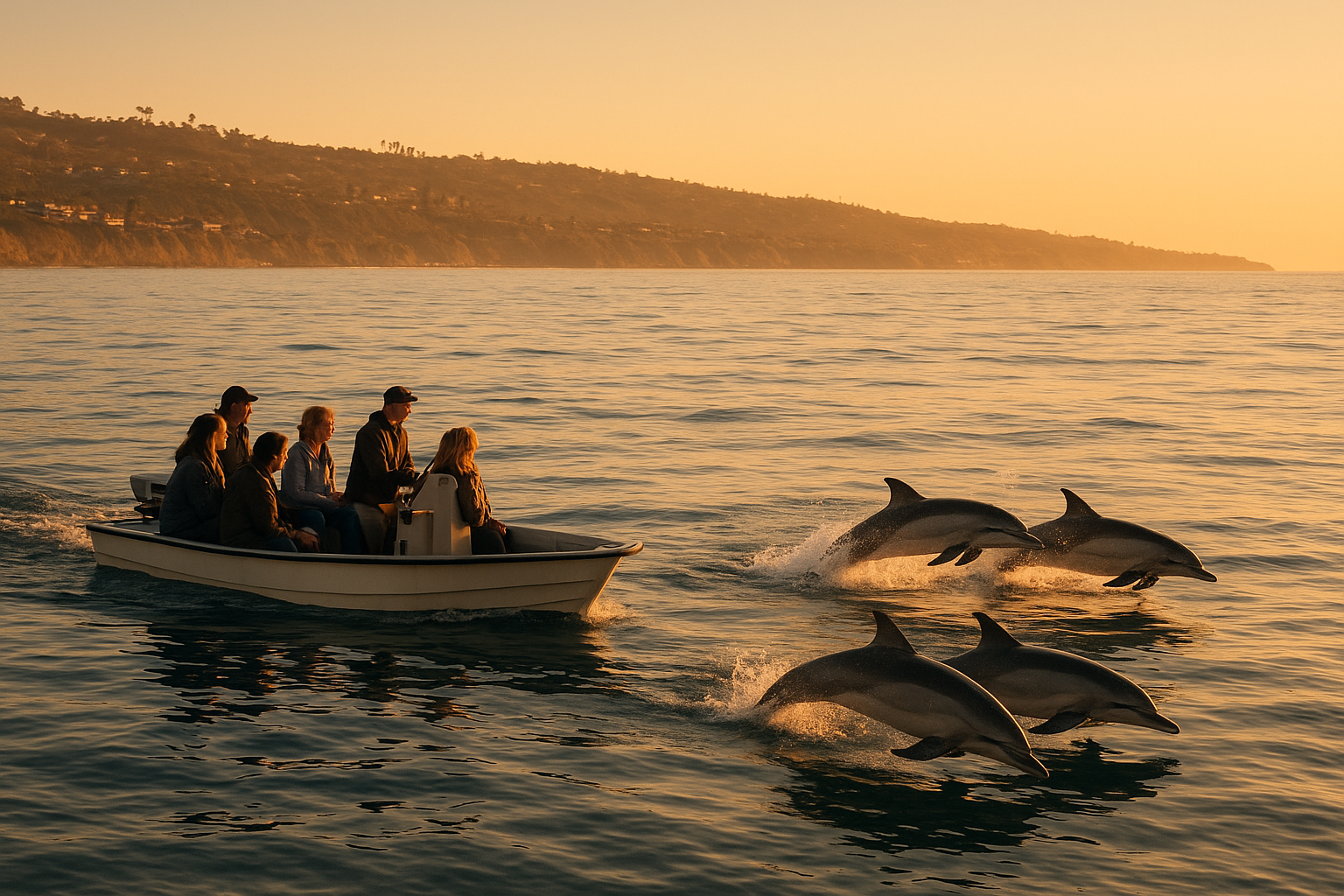
A small group dolphin watching tour San Diego style, kept close to the action without crowding the pod.
In short, these tours swap a double-decker sightseeing boat for a nimble vessel that holds a handful of guests. Because the boat is smaller, the captain can position it quietly near a pod without the engine noise or wake that scatters wildlife. Consequently, guests spend more time watching behavior and less time waiting for a crowded deck to clear.
Common dolphins are the species most often seen off San Diego. According to NOAA Fisheries, their pods can number in the hundreds. Therefore, even a small boat can find itself surrounded by animals riding the bow wake. For a broader look at seasonal sightings, the San Diego whale and dolphin watching adventure guide explains what to expect month by month.
Large commercial boats can carry 50 to 150 passengers. However, they trade intimacy for volume. Narration is broadcast over a loudspeaker, railside space is limited, and the boat usually follows a fixed schedule whatever the wildlife is doing.
In contrast, a semi-private or private charter keeps the group small. As a result, everyone gets a clear view, and the naturalist can talk with each guest and adjust the route as sightings develop. Additionally, smaller boats tend to run quieter outboard engines, which matters because loud engines can push wildlife away. For a deeper comparison, see this guide to the best small group whale watching tour in San Diego.
Large boats can cost less per person. Therefore, travelers on a tight budget who care less about closeness may still prefer them. Most visitors who want photos, conversation, and calm water find the small format worth the difference.
Not every traveler needs the same format. For that reason, this comparison helps you match a tour to your group size, schedule, and budget.
A private tour reserves the whole boat for one group. A semi-private tour fills the same boat with a few unrelated guests, which lowers the cost per person. To see how private charters work for celebrations, check out these private charter options for special occasions. You can also read about private whale watching tours with a naturalist guide.
Families are welcome. The boat never fills with strangers, life jackets are sized for kids and adults, and the naturalist adjusts explanations for toddlers or teenagers. Moreover, the stable hull and quiet engines reduce the bounce and noise that can unsettle young passengers. Parents can read more in this guide to whale watching tours for families in San Diego.
The semi-private format sits between a shared public cruise and a full boat buyout. Consequently, you get a conversational, personal experience without paying for the entire boat. Solo guests simply book one seat.
Teams planning outings or client events can request custom bookings. Likewise, groups of up to twelve can sometimes be accommodated for birthdays and anniversaries.
Expect a stable, low-profile boat with 360-degree viewing, so you can move around the deck instead of staying in one section. Specifically, this layout helps photographers reposition quickly as a pod moves. In fact, vessels built this way have supported film crews from BBC Earth, National Geographic, and Discovery Channel.
Furthermore, every tour follows low-impact, non-chasing practices. The boat lets wildlife approach on its own terms. This is more respectful to the animals and, frankly, produces better photos because the dolphins stay relaxed.
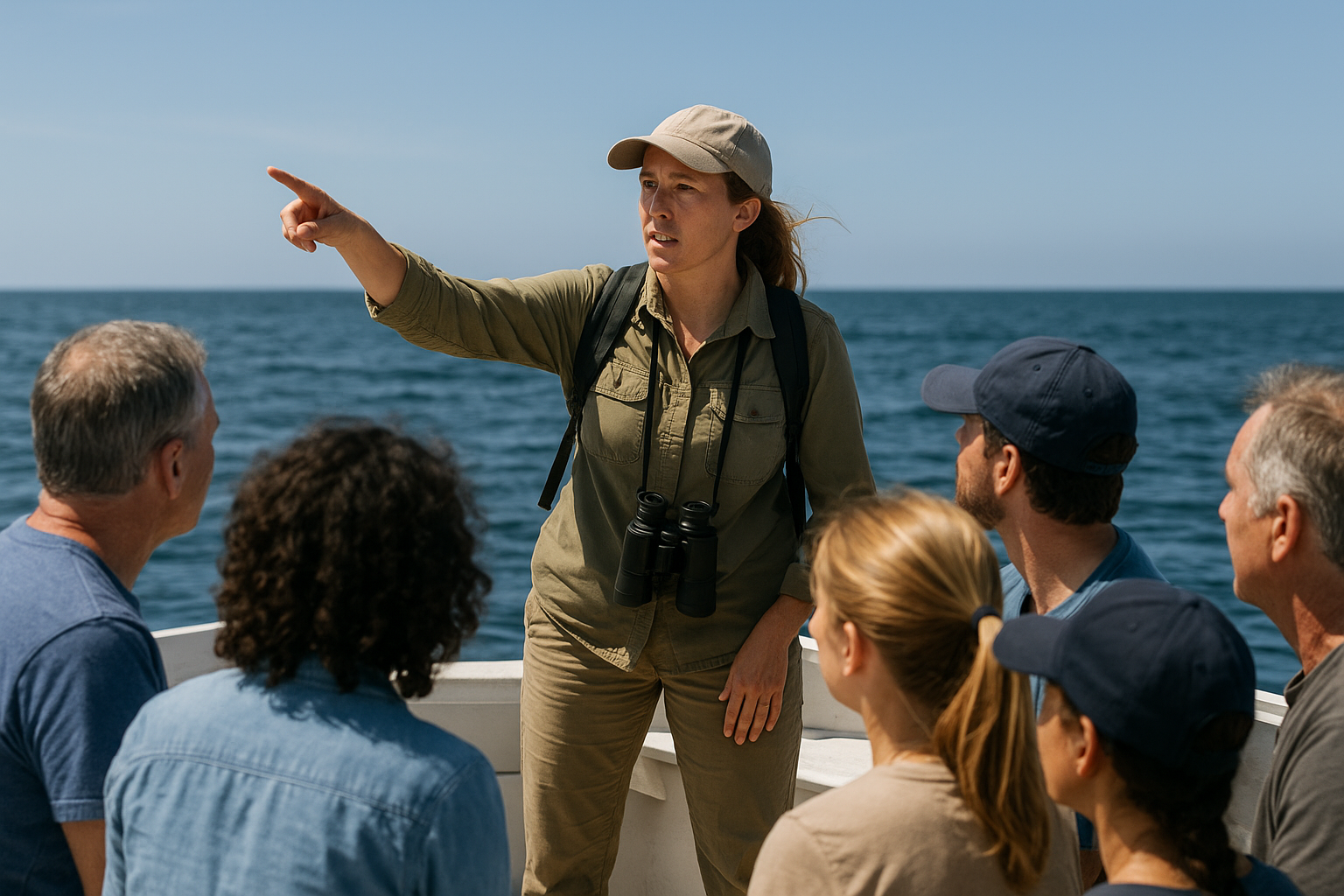
A Scripps-trained naturalist narrates dolphin behavior in real time for a small, attentive group.
Common dolphins are among the most frequently seen marine mammals along the Southern California coast. As a result, guests rarely return to the dock without seeing at least one pod. Because the boat rides low and quiet, close encounters are more common than on large, loud vessels. Even so, sightings are never guaranteed, since these are wild, free-ranging animals.
Pods often ride the bow wake, and a mother and calf may surface beside the rail. Importantly, the captain never chases. The animals set the pace, which keeps encounters natural and respectful.
Dolphins are present off San Diego all year, though whale species rotate. Gray whales migrate past the coast in winter and early spring. Blue whales, fin whales, and humpbacks are more common from late spring through fall. Meanwhile, orcas appear less predictably.
Summer also brings the Blue Water Safari season, with kelp paddy snorkeling, ocean sunfish, and curious sea lions. Note that guests bring their own snorkel or freedive gear, because rental is not offered. The small group wildlife adventures guide covers timing in more detail. In addition, Scripps Institution of Oceanography, whose researchers study these migration patterns, offers background on regional marine science.
Booking is straightforward once you know the sequence. Here is a simple process for trips out of Seaforth Marina.
For current departure times, pricing, and availability, visit the operator’s site directly or review the whale watch tour page for specific trip options.
Every vessel is inspected under U.S. Coast Guard safety standards. You can review the agency’s boating guidance at the U.S. Coast Guard. In addition, the low hull and quiet engines tend to reduce rocking compared with larger, faster boats. Even so, anyone prone to motion sickness may want an over-the-counter remedy before departure.
Furthermore, the non-chasing approach means the boat moves gently alongside wildlife. As a result, the ride stays smoother for everyone aboard.
A naturalist is a guide trained to identify and explain wildlife behavior. Specifically, a Scripps-trained marine biologist can tell species apart at a glance, read feeding behavior, and explain why dolphins ride a bow wake. Consequently, guests leave with real understanding, not just photos.
Moreover, an experienced captain works alongside the naturalist to position the boat safely. This two-person approach helps small group trips produce calmer, more natural wildlife behavior.
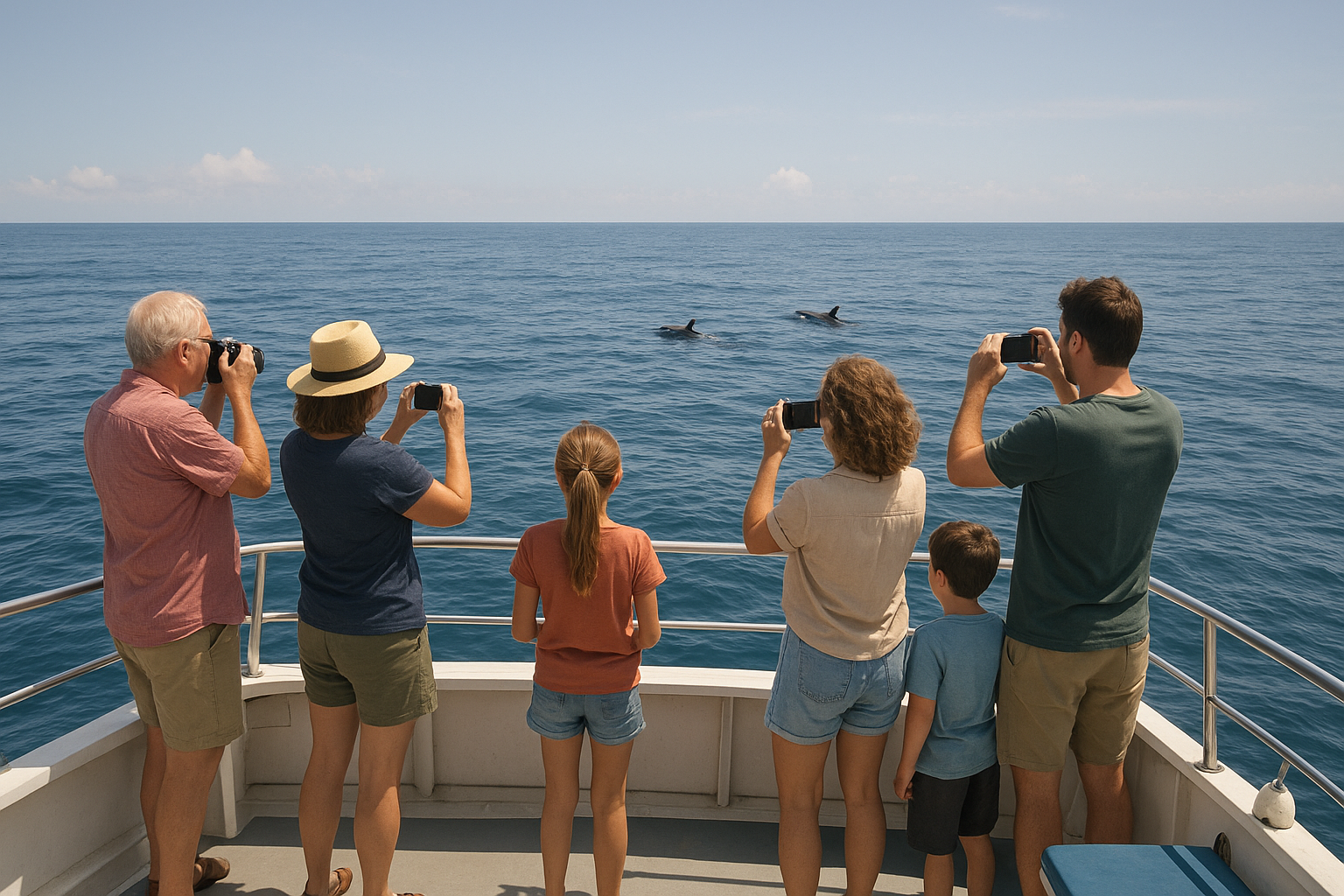
Capacity capped at six keeps every passenger close to the rail during the tour.
For photographers, a stable hull matters as much as the wildlife. In particular, a boat that rocks less produces sharper images, especially with a telephoto lens. Quiet engines also help, since loud motors can disturb wildlife and drown out the naturalist.
These are the same requirements that attracted crews from BBC Earth, National Geographic, and Discovery Channel. Drone-friendly operations are available on request, though local airspace and wildlife regulations still apply. If photography is your main goal, the small group whale watching tour comparison explains which setups work best.
The ocean feels cooler than the shore. Therefore, dress in layers and bring a windbreaker, sunscreen, polarized sunglasses, and non-slip shoes. A camera with a zoom lens and binoculars are also worth packing.
Small group dolphin watching tours San Diego operators run are boat trips capped at about six to twelve guests instead of fifty or more. This means more time near active pods, better photo angles, and a guide who can answer your questions.
Yes. Life jackets are sized for children, and the naturalist adapts explanations for younger guests. Parents should still confirm age recommendations with the operator.
Standard trips cap passengers at six. Some special-occasion bookings allow up to twelve.
Dolphins are seen year-round, so no single month is best. Whale species vary: gray whales in winter and early spring, and blue whales, fin whales, and humpbacks from late spring through fall.
Standard tours run three to four hours. Full-day expeditions of six to eight hours are available for extended offshore searches.
Pricing varies by season, boat, tour length, and group size. Private charters generally cost more than shared semi-private seats, so check current rates with the operator.
A private tour reserves the whole boat for one group. A semi-private tour fills the same boat with a few unrelated guests, lowering the cost per person.
Yes to cameras. Drone-friendly operations exist on request, though local wildlife and airspace regulations always apply.
Yes, for summer snorkel trips. Gear rental is not offered. Dolphin and whale watching trips require no snorkel gear.
It can be for sensitive travelers. The low, stable hull tends to reduce rocking, but an over-the-counter remedy before departure is still wise.
Seats are limited, so book a few weeks ahead, especially for weekends, holidays, and peak whale season.
Depending on the season, you may see gray whales, blue whales, humpbacks, fin whales, orcas, sea lions, and ocean sunfish. Sightings are never guaranteed.
They usually offer closer, quieter encounters. However, large boats can be cheaper, so the right choice depends on your priorities.
No. The captain handles navigation while the naturalist handles wildlife spotting and the safety briefing.
In the end, small group dolphin watching tours San Diego visitors choose deliver what a crowded boat cannot: closeness, quiet, and real-time expertise from a Scripps-trained naturalist. Dolphins appear year-round, groups stay at six guests, and the stable boats suit families, couples, and photographers. Whether you pick a semi-private seat or a private charter, the smaller format brings better views and calmer wildlife. Explore the full San Diego whale and dolphin watching adventure guide and plan your trip today.
