
A San Diego whale watching adventure is one of the few wildlife experiences on the West Coast where you can watch the largest animal that has ever lived surface just yards from a small boat. Unlike crowded double-decker cruises, our trips typically cap groups at six passengers. Each one pairs a Scripps-trained marine biologist with an experienced captain. As a result, guests get closer views, quieter engines, and far more one-on-one narration. Whales and dolphins come to you, we don’t chase.
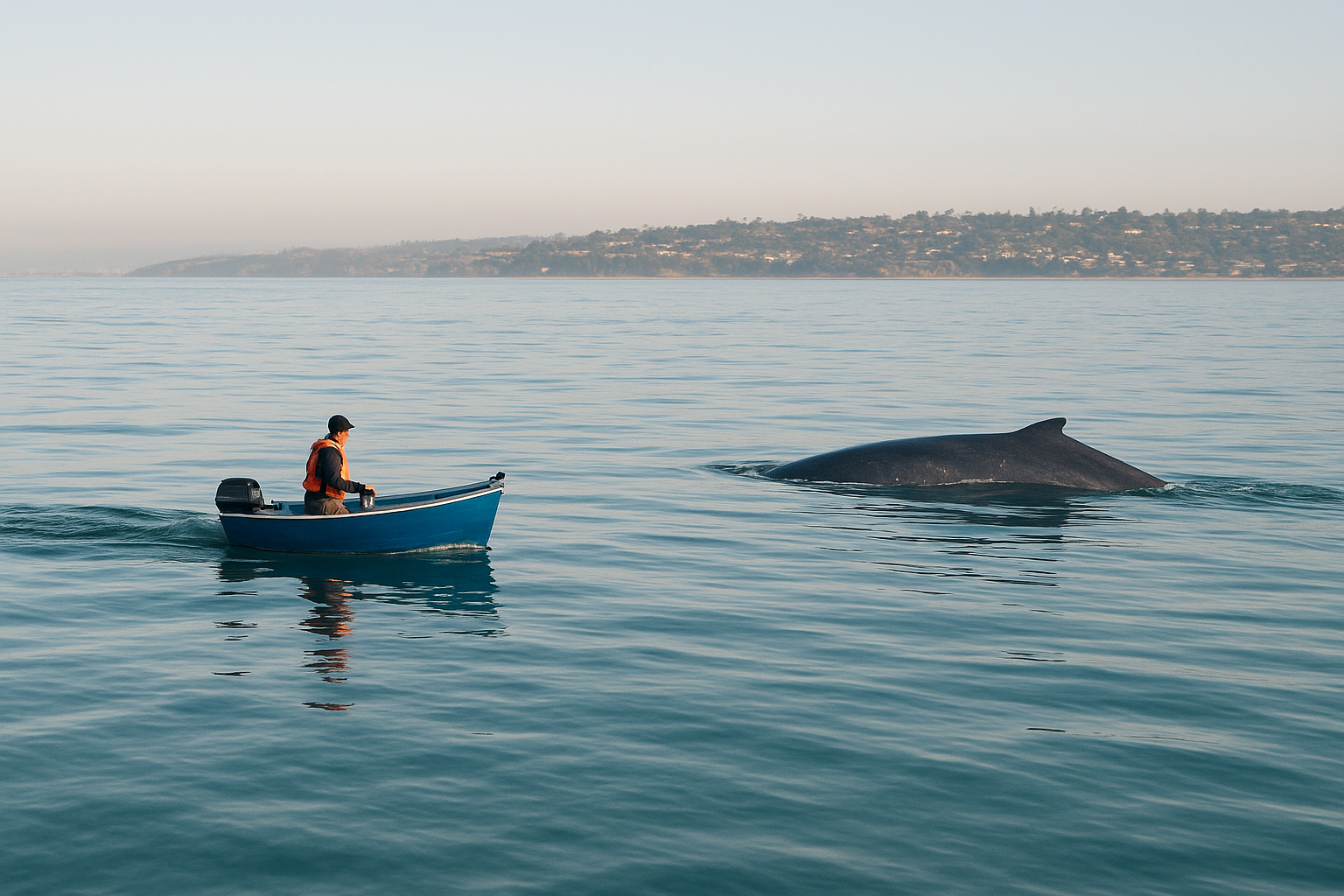
A low-profile charter boat during a San Diego whale & dolphin watching adventure, positioned for a respectful, non-chasing view.
What Is a San Diego Whale & Dolphin Watching Adventure?
In short, it is a guided ocean excursion built around close, respectful encounters with marine mammals. Distance covered is not the goal. Groups stay small, often six guests as standard and up to twelve for special occasions. This keeps the boat quiet and stable.
Furthermore, a marine biologist trained at the Scripps Institution of Oceanography narrates the trip. Guests therefore leave with real context about whale behavior, not just photos. Low-impact, safe, and fun wildlife observation is our first priority.
How Non-Chasing Wildlife Viewing Works
Instead of racing toward a sighting, the captain positions the boat and lets animals approach on their own terms. This protects the wildlife. In practice, it also tends to produce calmer, more natural behavior for photography and filming.
Best Season for a San Diego Whale Watching Tour
Timing matters, since different species move through the region at different times of year. Blue whales and fin whales are most reliably spotted between June and September, when they feed on dense krill blooms offshore. In contrast, gray whales pass by from roughly December through April. They travel about 12,000 miles round trip between Alaska and Mexico, one of the longest known mammal migrations, according to NOAA Fisheries.
Meanwhile, dolphins, sea lions, and occasional orcas can turn up in any season. Blue whales are worth planning around. They are recognized by Wikipedia’s overview of the species as the largest animal known to have existed, sometimes reaching close to 100 feet in length. Consequently, summer trips offer a rare, relatively accessible chance to see one of these giants in the wild.
Month-by-Month Sighting Guide
- December to April: gray whales migrating past the coast, plus year-round dolphins.
- May: a transition month, with late migrants and early summer feeders possible.
- June to September: blue whales and fin whales feeding offshore, with snorkel add-ons available.
- October to November: fewer predictable species, but dolphins, sea lions, and the occasional humpback or orca remain possible.
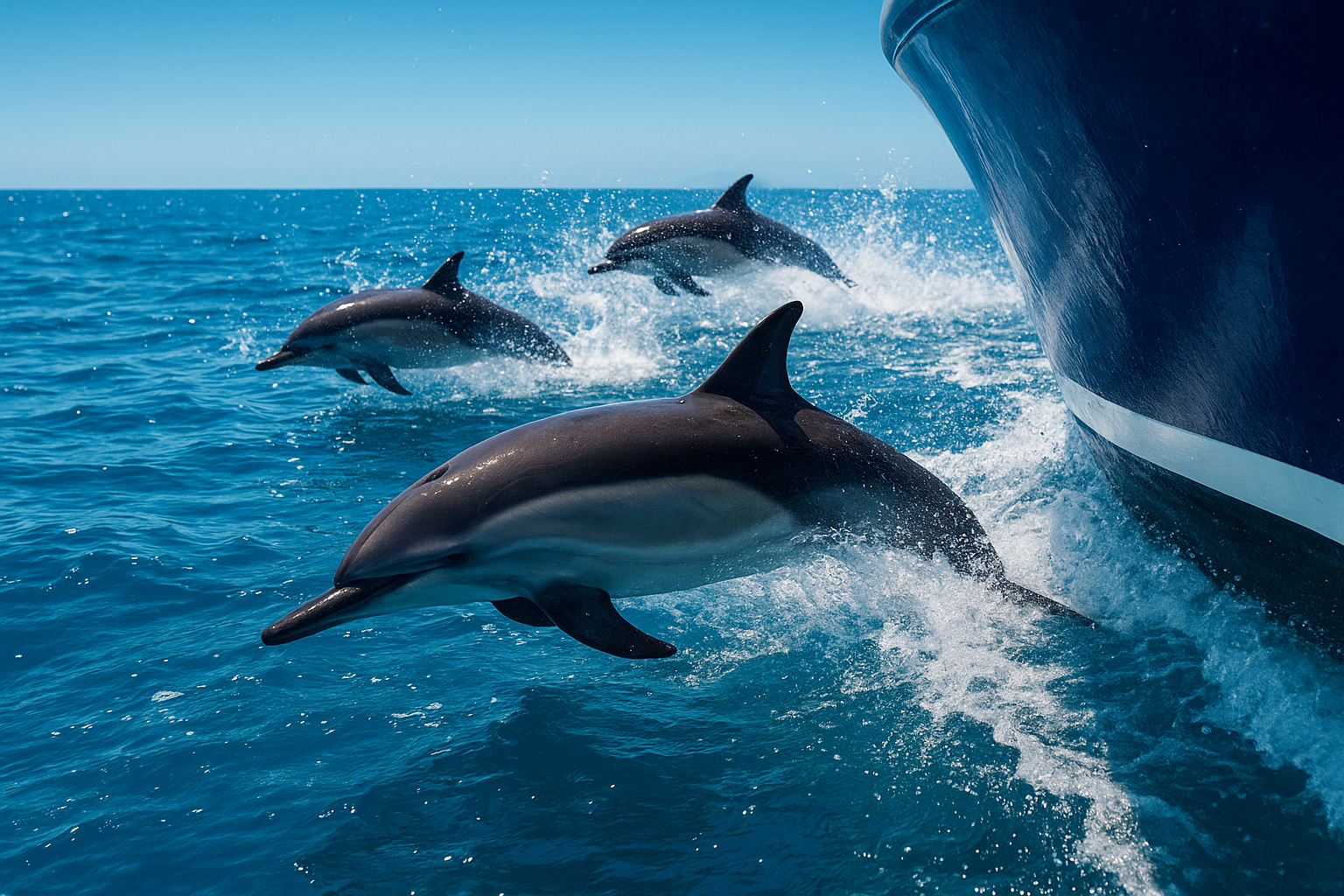
Dolphins often ride the bow wave during a San Diego dolphin watching excursion in the coastal waters near La Jolla.
Why Small-Group Dolphin Watching Excursions Beat Big Boats
Large public boats can carry over a hundred passengers. That means limited rail space and long waits for a good angle. Small-group dolphin watching excursions solve that problem by design. With only a handful of guests aboard, everyone gets 360-degree viewing access.
In addition, quieter outboard engines reduce underwater noise, which tends to keep dolphins and whales more relaxed. This matters for photographers and filmmakers. The same style of stable, low-profile vessel has supported crews from BBC Earth, National Geographic, and Discovery Channel productions filming along the San Diego coast. For a deeper look at how group size shapes the day, see our small-group wildlife adventure tours page.
How to Book Your Whale Watching Adventure at Seaforth Marina
Booking is straightforward once you know your priorities. These steps outline a practical process for a private or semi-private trip out of Seaforth Marina.
- Choose your trip type. Decide whether you want a fully private charter, a semi-private small-group tour capped at six guests, or a full-day expedition, based on your budget, schedule, and photography goals.
- Check the seasonal sighting calendar. Review which species are most active each month, such as blue whales in summer or gray whales in winter, then pick dates that match the wildlife you most want to see.
- Contact the crew to confirm details. Confirm departure times, group size limits, and special requests such as drone use or corporate add-ons before finalizing payment.
- Prepare your personal gear. Pack warm layers, sun protection, and your own snorkel or freediving equipment if you plan to join a summer snorkel excursion, since rental gear is not provided on board.
- Arrive early for the safety briefing. Get to the marina at least twenty minutes before departure so the naturalist and captain can complete a short safety briefing before heading into open water.
For current availability, the private charter booking page lists package options. Meanwhile, the whale watch tours overview covers standard semi-private departures. You can also compare formats in our guide to private and semi-private whale watching tours.
What to Expect During Your San Diego Whale Watching Charter
Most trips begin with a brief orientation at the dock. Next comes a slow, quiet cruise out of the harbor toward feeding and migration corridors near La Jolla Canyon. Once on the water, the naturalist explains what the crew watches for, such as blows, fins, or bird activity that often signals feeding whales below. Because groups stay small, questions get answered in real time rather than through a loudspeaker.
Sightings are never guaranteed, since wildlife depends on natural animal movement. However, operators who track seasonal patterns closely tend to report strong success during peak blue whale and gray whale months. That is one reason experienced naturalist guidance matters so much.
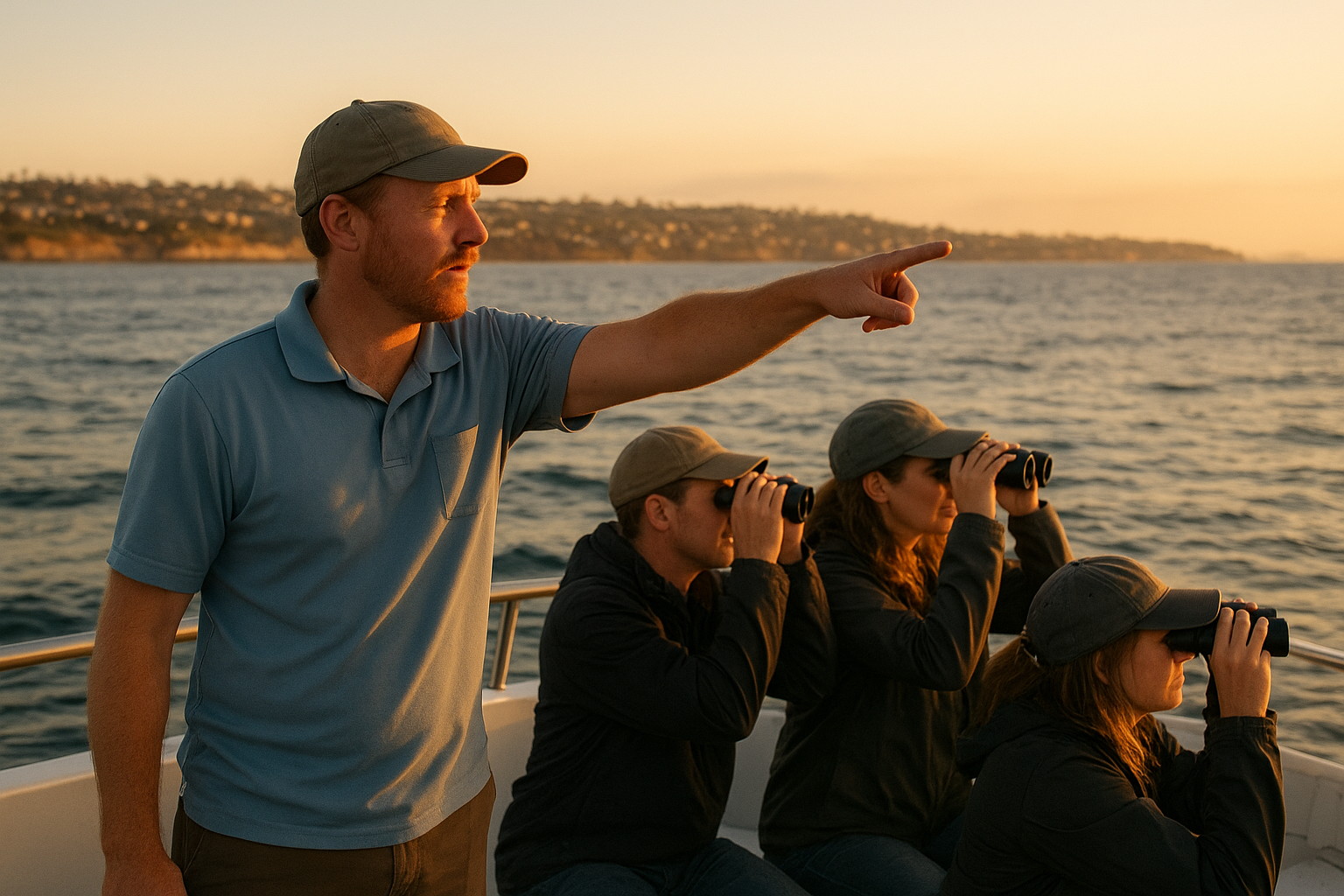
A Scripps-trained naturalist points out a distant blow during a San Diego whale watching charter.
What to Bring on a Whale Watching Tour
Coming prepared makes the day far more comfortable. The ocean is cooler and windier than the shore, even when San Diego is sunny.
- Layers and a windproof jacket: temperatures drop quickly once the boat is moving.
- Sunscreen and polarized sunglasses: they protect your skin and cut glare while you scan for spouts.
- Non-slip shoes: decks can be damp.
- Camera or smartphone: a zoom lens helps, and binoculars bring distant animals closer.
- Water and a snack: staying hydrated keeps you alert.
- Motion-sickness remedy: if you are prone to seasickness, take it before departure.
Photography, Film, and Snorkel Add-Ons for Ocean Adventurers
Photographers and filmmakers need more than a good sighting. They need a stable platform, clear sightlines, and a crew that understands lighting and positioning. Low-profile hulls, quiet engines, and open 360-degree access deliver exactly that.
During summer, many operators also add Blue Water Safari-style snorkel trips featuring ocean sunfish, kelp paddies, and resting sea lions. Snorkel and freediving gear is not provided, so bring a properly fitted mask, snorkel, and fins. Inflatable paddle boards can sometimes be requested as well.
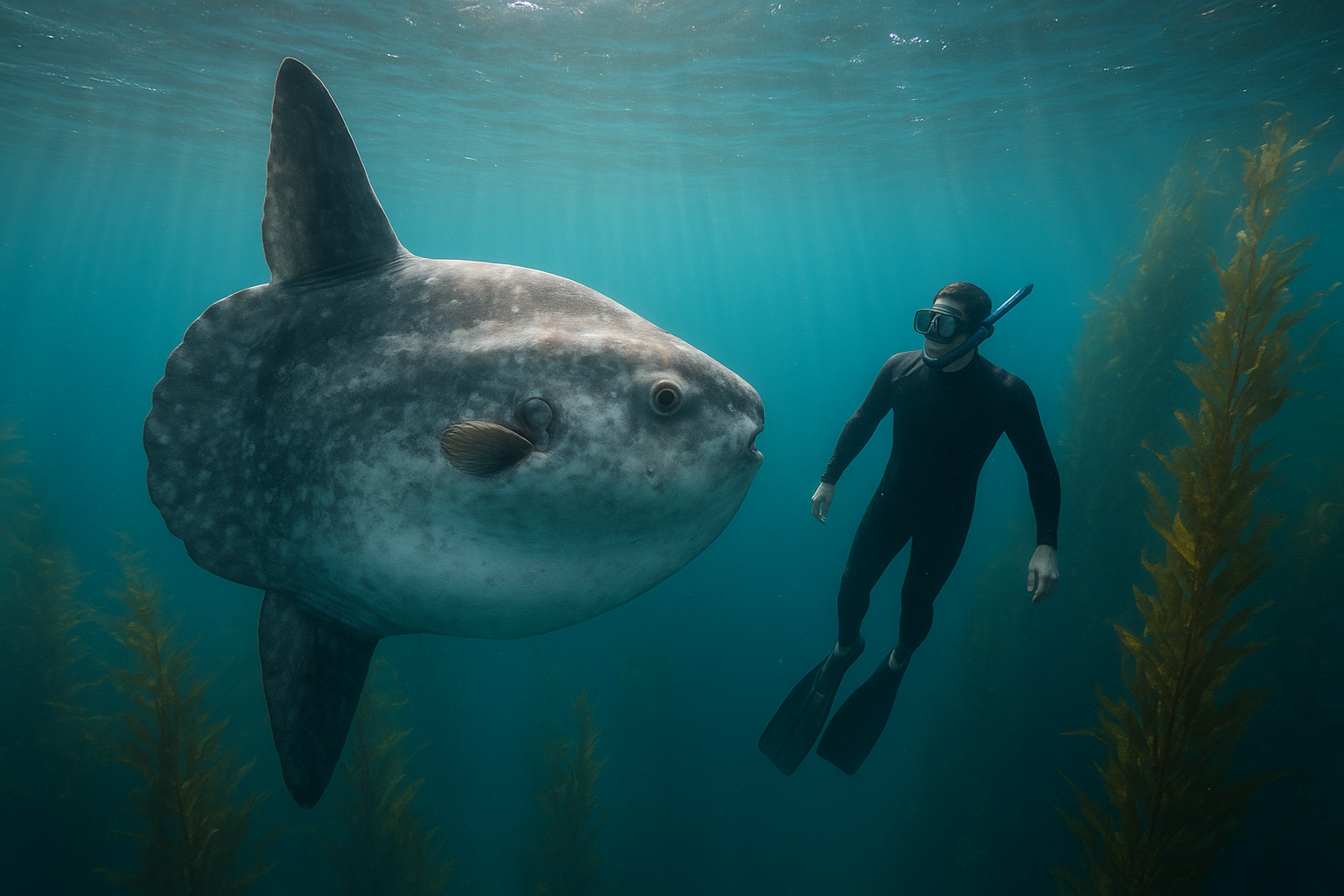
Summer snorkel excursions near San Diego kelp paddies often include sightings of ocean sunfish, or molas.
Choosing the Right Whale Watching Company in San Diego
Not every company offers the same experience, so compare group size, vessel type, and guide credentials before booking. Some operators run large multi-deck boats built for volume. Others, such as Big Blue Photo Boat at Seaforth Marina, focus on groups capped at six, Coast Guard-inspected vessels, and Scripps-trained naturalist guidance.
Questions to Ask Before You Book
- How many passengers does the boat carry?
- Who guides the trip, and what are their credentials?
- Is the vessel Coast Guard-inspected?
- Does the crew follow non-chasing, low-impact viewing practices?
- What is the policy if animals are not sighted or weather turns?
For families weighing options, the best small-group whale watching tour comparison shows how these factors change the day on the water. You can also read our roundup of top-rated whale watching tours and charters in San Diego and learn which marine biologist-led tours operate in San Diego. Corporate and special-occasion groups may prefer a custom charter, since routes and timing can be tailored. Review full service details at bigbluephotoboat.com.
Responsible Whale Watching and Ocean Stewardship
Respect for wildlife shapes every trip. In the United States, marine mammals are protected under the Marine Mammal Protection Act, which NOAA Fisheries marine life viewing guidelines help boaters follow. Keeping a respectful distance, avoiding sudden course changes, and never chasing animals all reduce stress on whales and dolphins.
Please note: While we will do our best to give you a photo-worthy encounter, we can’t guarantee a close whale approach.
Frequently Asked Questions About the San Diego Whale Watching Adventure
What is a San Diego whale watching adventure?
It is a small-group boat excursion, usually capped at six guests, that pairs a trained naturalist with an experienced captain to find whales, dolphins, and other marine life. Trips depart from Seaforth Marina and follow low-impact, non-chasing practices.
How long does a San Diego whale watching tour last?
Standard tours typically run three to four hours. Full-day expeditions can extend six hours or more, depending on season, target species, and charter type.
What is the best time of year to see whales in San Diego?
Blue and fin whales are most common from June through September. Gray whales migrate past from December through April. Humpbacks, orcas, and dolphins can appear year-round.
How much does a private whale watching charter cost in San Diego?
Pricing varies by group size, trip length, and season. Private and semi-private charters generally cost more per person than large public boats because groups stay small. Contact the operator for a current quote.
What whales and dolphins can you see near San Diego?
Common sightings include blue, gray, humpback, and fin whales, orcas, and dolphins such as common and bottlenose dolphins. Frequency shifts with the season.
Do I need to bring my own snorkel gear?
Yes. Guests joining summer snorkel excursions bring their own snorkel or freediving equipment, since rental gear is not included.
Is whale watching safe for kids and families?
Generally yes, when trips run on Coast Guard-inspected vessels with stable hulls and experienced crews. Small groups also make it easier for naturalists to keep an eye on younger passengers.
What makes a small-group tour better than a big boat?
Small groups offer closer viewing angles, quieter engines, and more personal narration. Fewer passengers also mean better photo positioning and no waiting for a turn at the rail.
Can photographers and filmmakers bring professional equipment aboard?
Yes. The vessels offer photographer-friendly platforms, 360-degree access, and quiet outboard engines that reduce vibration for long lenses.
What should I wear on a whale watching boat?
Wear layers, a windproof jacket, sunscreen, and non-slip shoes. Polarized sunglasses help reduce glare while you scan for fins and spouts.
Are the tour boats Coast Guard inspected?
Yes. The vessels are Coast Guard-inspected and built with stable, low-profile hulls suited for wildlife viewing.
How do I book a semi-private or private charter?
Choose your trip type, check the seasonal sighting calendar, and confirm a departure time with the operator at Seaforth Marina. Requests like drone use or corporate events can typically be arranged during booking.
What is a common mistake people make when planning this trip?
Booking a large public boat while expecting an intimate experience. Choosing a small-group option in advance avoids crowding, especially on summer weekends.
Can I customize a boat tour for a special occasion?
Yes. Custom charters suit birthdays, proposals, and corporate events, sometimes with groups of up to twelve guests. Working with the crew ahead of time helps tailor the route and timing.
Final Thoughts
Ultimately, a San Diego whale watching adventure works best when the boat, the guide, and the season all line up. Choose a small-group trip led by a Scripps-trained naturalist, time your visit around blue whale or gray whale season, and pack your own snorkel gear when needed. Above all, respect for the animals makes every encounter better. Whether you plan a family outing, a photography expedition, or a custom charter, San Diego’s coastal waters offer some of the most intimate whale and dolphin encounters on the West Coast.
