
San Diego Snorkel Excursions With Marine Biologist Tours San Diego snorkel excursions with marine biologist guides give snorkelers a rare chance to explore the Pacific Ocean alongside someone who truly understands marine life behavior. Rather than a generic boat ride, these small-group trips pair hands-in-the-water adventure with science-backed narration from a Scripps Institution of Oceanography-trained naturalist. As a result, guests often spot ocean sunfish, sea lions, and kelp paddy residents while learning exactly why these creatures gather where they do. Because the vessels run low-impact, non-chasing routes out of Seaforth Marina, wildlife tends to stay relaxed and visible longer. In short, this is marine science meeting open-water adventure, one summer swim at a time.
Quick answer: San Diego snorkel excursions with marine biologist guides are small-group, seasonal ocean tours where a trained naturalist narrates sightings of ocean sunfish, sea lions, and kelp-forest wildlife from a stable, Coast Guard-inspected boat. Most trips run through the summer Blue Water Safari season out of Seaforth Marina and combine real marine biology insight with a hands-on swimming adventure.
San Diego snorkel excursions with marine biologist guides combine open-water swimming with live scientific narration. Unlike drop-and-go snorkel boats, these trips are typically capped at six guests, occasionally expanding to twelve for special occasions, so everyone gets real face time with the naturalist. Specifically, the Blue Water Safari trips run during the warmer months when kelp paddies drift just offshore San Diego and La Jolla Canyon. During this window, conditions often align for sightings of ocean sunfish (also called molas), curious sea lions, and the small fish communities that cluster beneath floating kelp mats.
Because the naturalist aboard trained at Scripps Institution of Oceanography, a leading marine research center, guests receive context that a standard tour guide usually can’t offer. For example, instead of simply pointing at a mola, the naturalist can explain how these giant sunfish regulate body temperature by basking near the surface. Similarly, when sea lions approach the boat, guests learn about local rookery patterns rather than just watching silently.
In addition, the vessels themselves are built with photographers and filmmakers in mind. Low-profile hulls, quiet outboard engines, and 360-degree viewing access mean snorkelers can enter and exit the water smoothly. Consequently, wildlife tends to stay calmer and closer for longer stretches, which benefits both casual swimmers and anyone hoping to capture underwater footage.
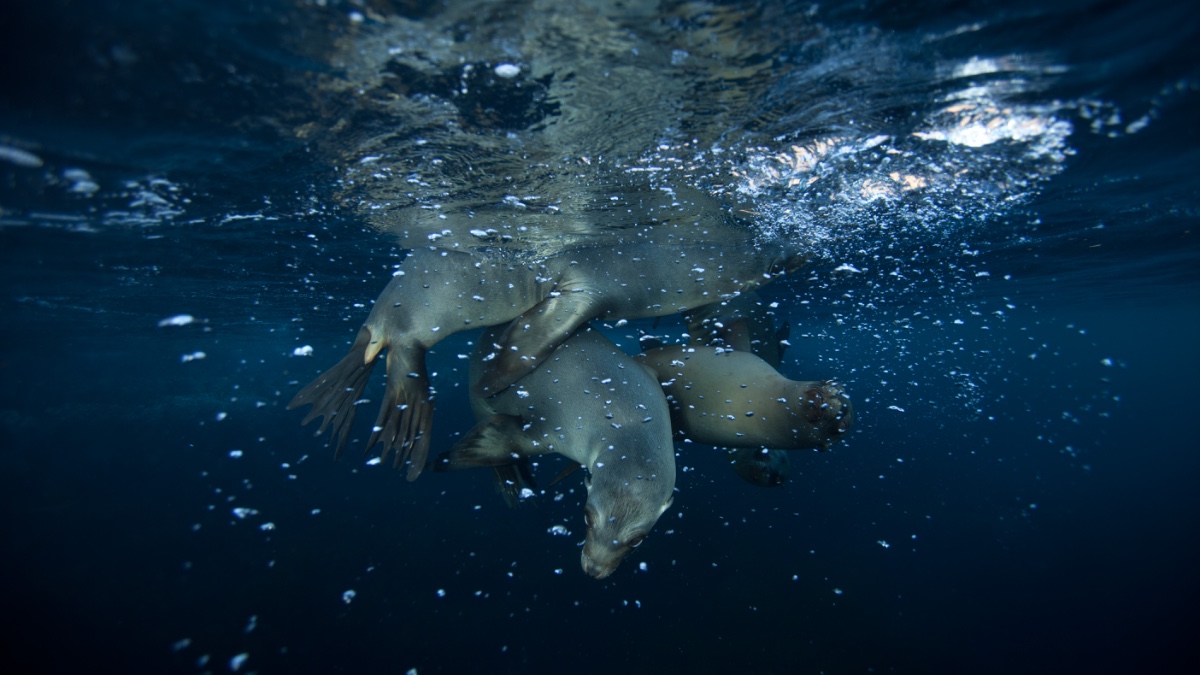 Snorkelers get an up-close, low-impact view of an ocean sunfish during a seasonal Blue Water Safari trip.
A marine biologist-led snorkel trip changes the entire rhythm of the day. Rather than racing between sightings, the naturalist slows the pace to explain what’s actually happening beneath the surface. Therefore, guests leave with more than photos; they leave with context they can repeat to friends and family.
Above all, safety and wildlife welfare guide every decision on the water. The team follows low-impact, non-chasing viewing practices, which means boats approach marine mammals slowly and never corner or pursue them. As a result, encounters feel natural rather than staged, and animals are free to disengage whenever they choose.
Furthermore, this scientific approach has attracted attention well beyond recreational travelers. Film crews from BBC Earth, National Geographic, and Discovery Channel have worked with the same naturalist-and-captain teams, largely because the stable platforms and quiet engines suit documentary-style filming. Consequently, everyday guests get access to the same vantage points and expertise that professional crews rely on.
In contrast to large commercial snorkel operators that cycle dozens of guests through quick stops, these smaller excursions prioritize depth over volume. Specifically, each trip is capped at six passengers under standard booking, which keeps the water calmer and the narration personal.
The Blue Water Safari season is built around whatever the summer ocean delivers, though a few highlights appear consistently. Kelp paddies, loose mats of floating kelp, often drift offshore and attract small fish, which in turn draw larger visitors.
Ocean sunfish, or molas, are one of the signature sightings. These enormous, flat-bodied fish can grow quite large, yet they spend much of their time drifting near the surface, which makes them surprisingly approachable for snorkelers. In addition, California sea lions frequently investigate boats and swimmers out of curiosity; if that’s your main goal, a dedicated snorkel tour with sea lions may suit you best.
Beyond the marquee species, the under-kelp world stays busy, too. Small schooling fish, nudibranchs, and the occasional harbor seal round out a typical outing. Meanwhile, dolphins sometimes appear en route to or from the snorkel site, giving guests a bonus wildlife moment before anyone even enters the water. However, because every excursion depends on current ocean conditions, the naturalist adjusts the route in real time, which tends to improve the odds of a memorable sighting.
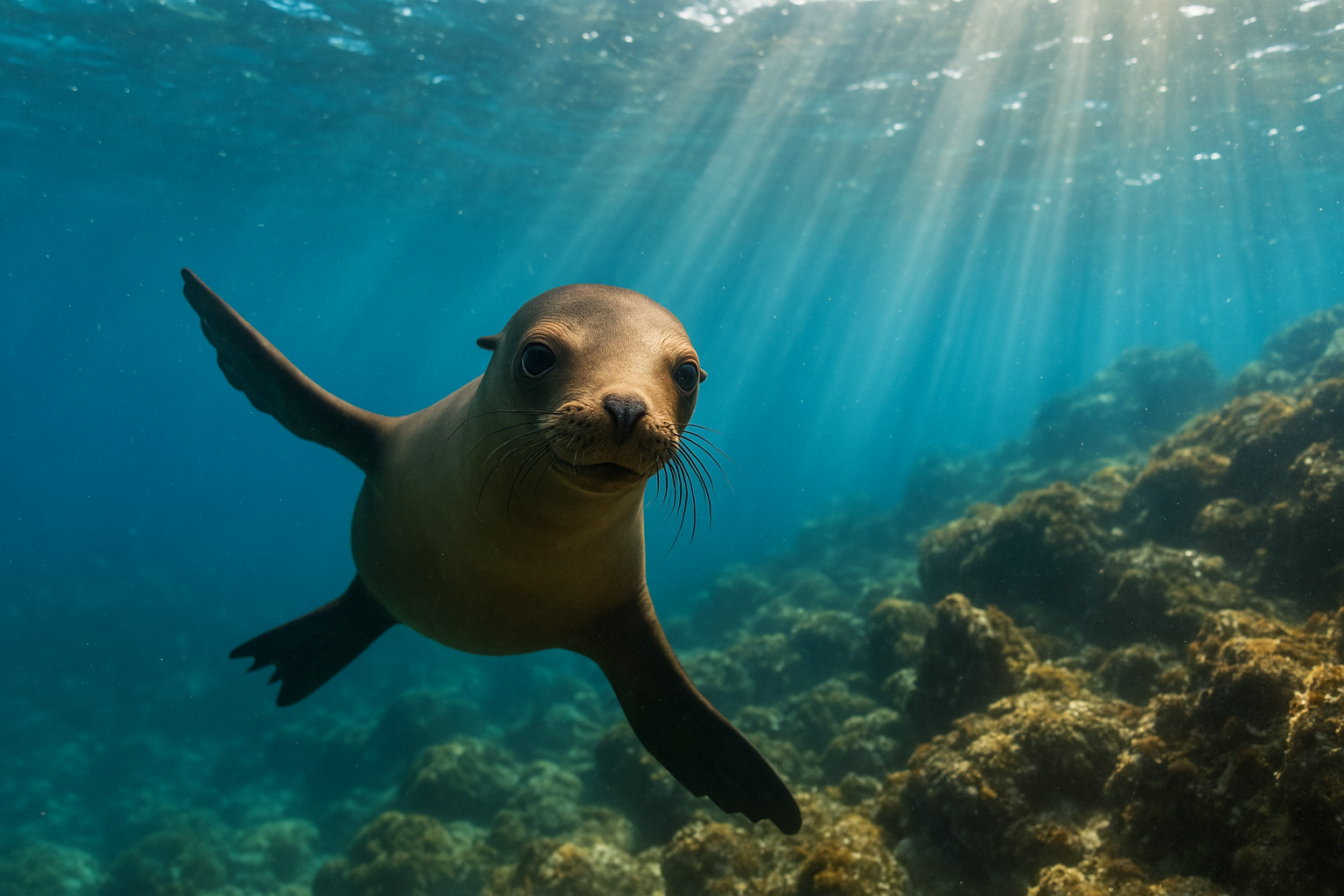 Curious sea lions are among the most common sightings during San Diego snorkel season.
Booking a marine biologist-guided snorkel trip is straightforward, but a little planning helps you secure the right date and group size. Below is the general process guests follow when reserving a spot.
Not every group wants the same experience, which is why charter options vary by size and occasion. Standard semi-private trips cap at six passengers, keeping the water calm and the narration personal. For celebrations, corporate outings, or larger families, however, groups can expand to twelve guests for special-occasion private charters.
Similarly, anyone drawn to whale watching alongside snorkeling can explore small-group whale watching adventures that run on a similar naturalist-led model year-round. Since the same captains and biologist often rotate between snorkel and whale trips, guests frequently ask which outings include a trained scientist aboard; a full breakdown lives on the page covering San Diego whale watching tours led by marine biologists.
In contrast to one-size-fits-all boat tours, this flexible structure lets photographers request specific routes, lets families keep young swimmers close to the naturalist, and lets corporate groups customize the day around team-building. Above all, the goal stays consistent across every charter type: calm water, informed narration, and respectful wildlife viewing.
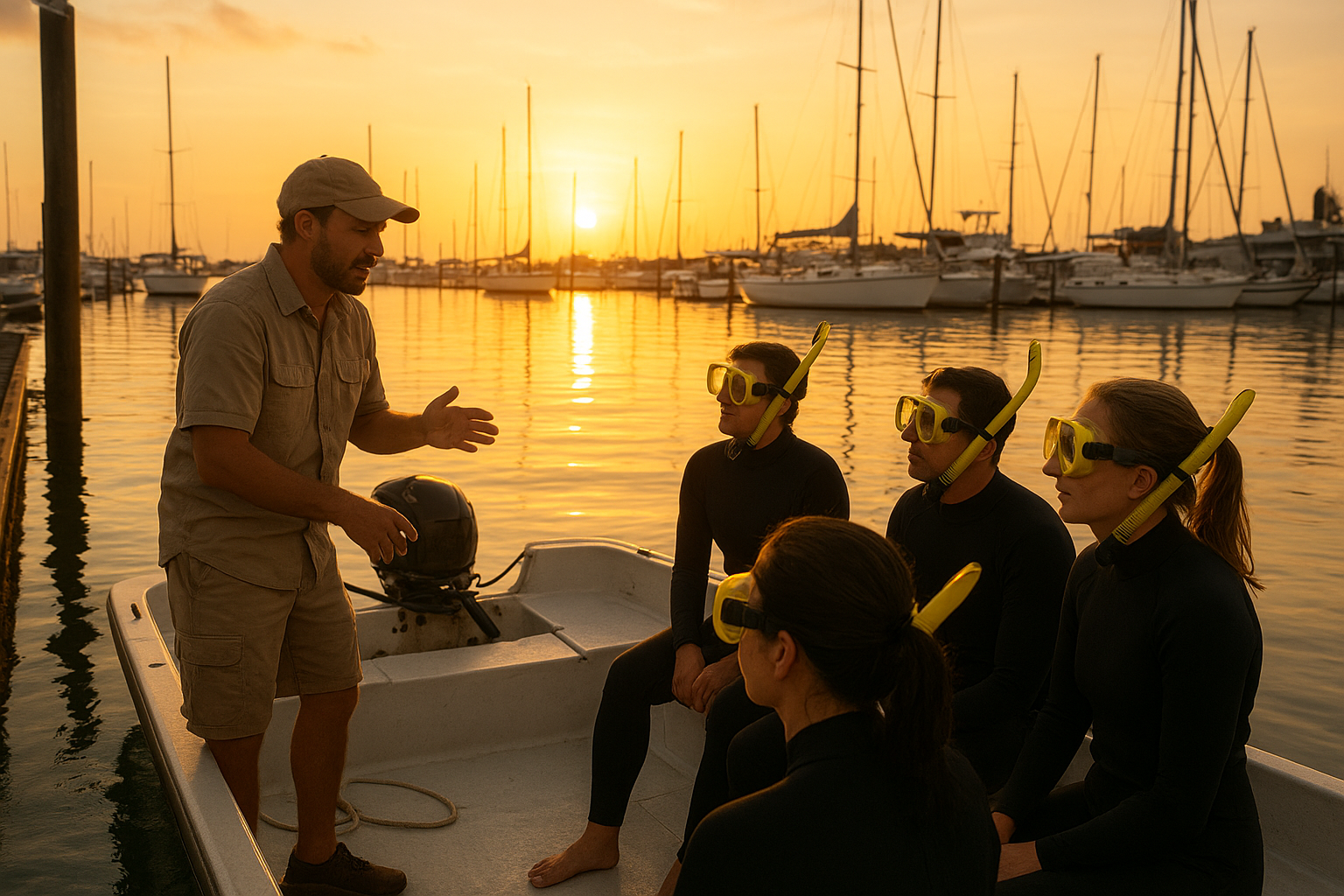 Guests gather at Seaforth Marina for a naturalist briefing before heading out to the kelp paddies.
Protecting marine wildlife isn’t an afterthought; it shapes how the boats operate every single day. Specifically, captains maintain legally required distances from whales and dolphins under the Marine Mammal Protection Act, a federal law enforced by NOAA Fisheries. Therefore, the crew never chases, surrounds, or forces an encounter with any animal.
Quiet outboard engines also reduce underwater noise, which matters because many marine mammals rely on sound to communicate and navigate. Consequently, a quieter approach tends to keep animals calmer and, somewhat counterintuitively, often results in longer, closer encounters than a loud, fast approach would.
For snorkelers specifically, guides brief guests before entry on how to float calmly, avoid sudden splashing, and give animals space to approach on their own terms. As a result, both the wildlife and the swimmers tend to have a safer, lower-stress experience in the water.
San Diego snorkel excursions with marine biologist guides are small-group boat trips where a Scripps-trained naturalist narrates sightings of ocean sunfish, sea lions, and kelp-forest wildlife while guests swim nearby. They typically run during the summer Blue Water Safari season out of Seaforth Marina.
Most snorkel excursions run several hours round trip, including travel time to kelp paddies and time in the water. Exact duration depends on conditions and whether you book a standard or full-day trip.
Semi-private trips cap at six guests who may share the boat with other small parties, while private charters reserve the entire vessel for your group. Private charters also allow more flexibility over route and timing.
Pricing depends on group size, trip length, and whether you choose a semi-private or private charter. Because rates can shift by season, it’s best to check current availability directly on the website.
Ocean sunfish and kelp paddy wildlife are most reliably spotted during the summer Blue Water Safari season, when warmer surface water pushes closer to shore. However, exact sightings still depend on daily ocean conditions.
Yes, guests are expected to bring their own snorkel mask, fins, and wetsuit, since gear rental isn’t offered. Packing your own well-fitted gear in advance helps avoid last-minute scrambling at the marina.
Sea lions are common but not guaranteed, since every sighting depends on wild animal behavior that day. That said, naturalists adjust the route based on recent reports to improve the odds.
A Scripps Institution of Oceanography-trained marine biologist and naturalist leads the educational portion of each trip, working alongside an experienced captain. This pairing is a key reason the tours differ from standard commercial snorkel outings.
Yes, the boats are Coast Guard-inspected and built with stable, low-profile hulls and 360-degree viewing access, which suits nervous first-time swimmers and photographers alike. Small group sizes also make it easier for guides to keep an eye on everyone.
First-timers should confirm basic swimming comfort, bring their own well-fitted gear, and expect open-water conditions rather than a calm pool. Listening closely to the naturalist’s pre-swim briefing also makes the experience smoother and safer.
Many guests pair a snorkel trip with a separate whale watching outing, since both run on a similar small-group, naturalist-led model. Some full-day expeditions may also include additional wildlife viewing opportunities depending on the season.
A marine biologist-guided tour adds real scientific context, low-impact wildlife practices, and smaller group sizes that standard commercial operators rarely match. For many guests, that combination turns a simple swim into a genuinely educational ocean adventure.
Ultimately, San Diego snorkel excursions with marine biologist guides offer something most commercial snorkel trips can’t: real scientific context paired with calm, low-impact wildlife viewing. Whether you’re chasing a close encounter with an ocean sunfish, hoping to photograph curious sea lions, or simply want a smaller, quieter boat experience, this naturalist-led model tends to deliver more memorable, informative days on the water. Because trips run seasonally and group sizes stay small, early planning matters. If you’re ready to book, explore current Blue Water Safari dates and private charter options directly through the Big Blue Photo Boat website and start planning your own ocean adventure out of Seaforth Marina.
