

An inflatable paddle board whale watching tour San Diego travelers can book is not a paddleboard-only trip. Instead, it is a small-group, naturalist-led whale and dolphin cruise from Seaforth Marina with inflatable paddle board access you request in advance. Below, you will find what the trip includes, when to go, what to expect on the water, how safety works, and how to avoid the most common booking mistake.
Quick answer: You cannot launch a paddle board next to a surfacing whale. The tour is a small-group boat trip with a marine biologist and captain. When conditions allow, the crew sets up inflatable paddle boards in calm water away from active animals. You should request the add-on when you book, because it is never guaranteed.
Inflatable Paddle Board Whale Watching Tour San Diego: What to Expect
First, it helps to understand how the day works. The core of the trip is a guided whale and dolphin watching cruise on a coast guard-inspected boat. The vessel has a low-profile hull and 360-degree viewing, so every guest has a clear sightline.
In addition, guests can request inflatable paddle board access. An inflatable board is a lightweight board filled with air. It is stable, easy to store on a small boat, and gentle if you fall off. Once the captain finds a calm, sheltered stretch of water, the crew sets up the boards. As a result, one outing blends scenic wildlife viewing with a short paddle session.
A Typical Timeline
- Arrival and safety briefing: You meet the crew at Seaforth Marina and review safety rules.
- Search for wildlife: The captain and naturalist look for whales, dolphins, and sea lions.
- Wildlife viewing: The boat lets animals set the pace instead of chasing them.
- Calm-water paddle stop: If conditions allow, requested boards come out, well away from animals.
- Return to the marina: Most trips last three to four hours in total.
Why Small-Group Whale Watching Charters Include Paddle Board Access
Small groups make the paddle stop practical. Standard tours are capped at six passengers, and special-occasion charters allow up to twelve. Consequently, the crew can supervise every guest closely and nobody feels crowded.
Furthermore, a Scripps Institution of Oceanography-trained marine biologist guides the trip. The naturalist can point out kelp paddies, explain local marine ecology, and help you understand what you see in the water. For families booking a small-group whale watching tour, this mix of education and hands-on access is often the deciding factor.
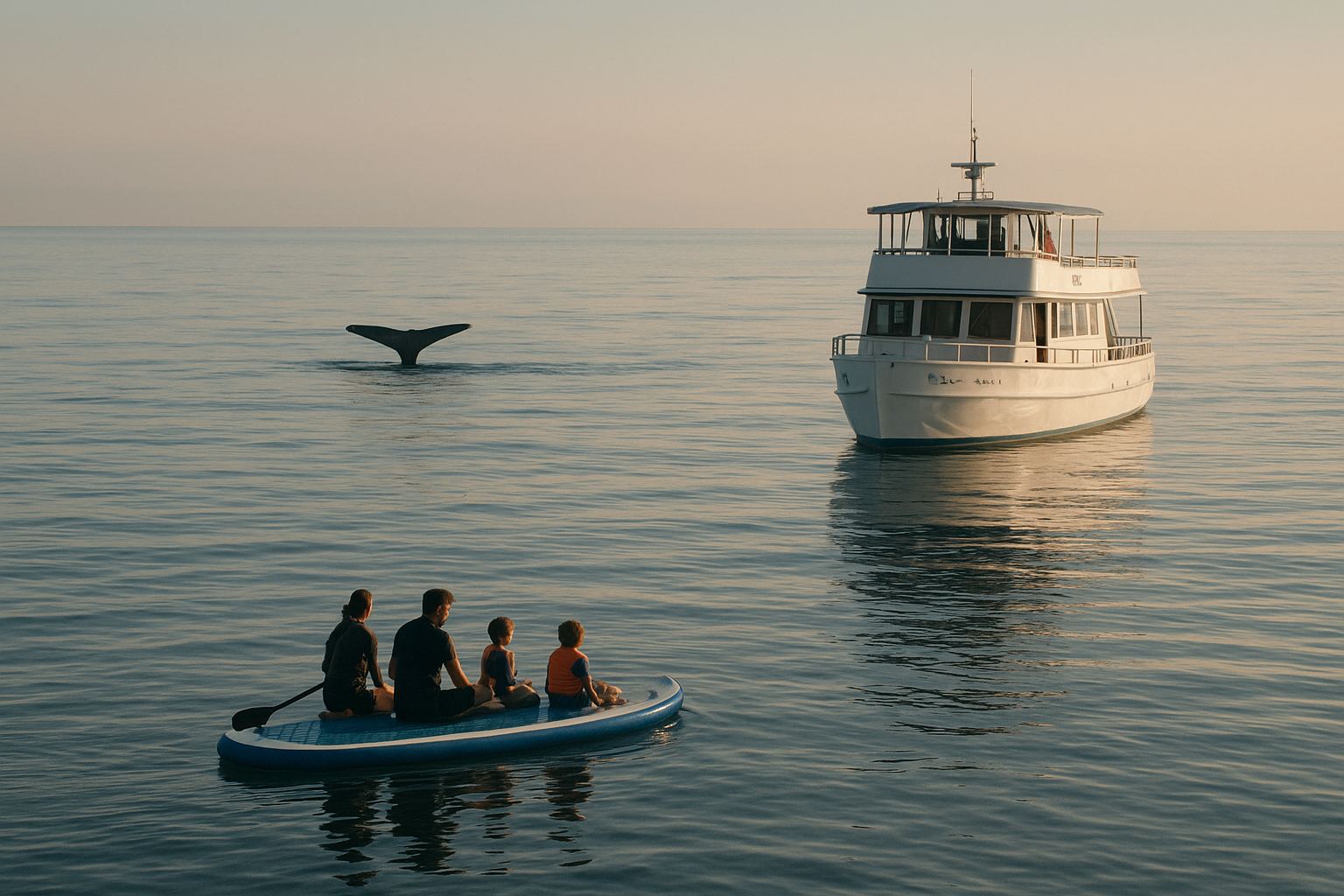
Guests enjoy calm-water paddle boarding during an inflatable paddle board whale watching tour San Diego trip.
Private vs. Semi-Private vs. Large Cruise: Which Format Fits?
Not every whale watch offers the same experience. Large cruise boats carry many passengers and are priced per person. Small-boat charters trade crowd size for flexibility. For this reason, the format you choose matters more than most guests expect.
Private Charter
A private charter gives your group the whole boat. The route, pace, and paddle timing are built around you. A private whale watching charter suits families, birthdays, and photographers. You can also compare options in this guide to private whale watching charters for special occasions.
Semi-Private Tour
A semi-private tour is capped at six passengers who may not know each other. It costs less than a full charter while keeping the group small. Our breakdown of private and semi-private whale watching tours in San Diego explains the trade-offs in detail.
Why Naturalist Guidance Matters
A guide who explains behavior and ecology turns sightings into understanding. If that appeals to you, read about private whale watching tours with a naturalist guide. For a wider look at the market, see these top-rated whale watching tours and charters in San Diego.
Best Time for a San Diego Whale and Dolphin Watching Adventure
Timing shapes what you will see. Gray whale migration along the Southern California coast generally peaks from December through April. The whales travel between Alaska and the Baja California breeding lagoons. According to background on gray whale migration, this round trip can exceed 10,000 miles. That makes it one of the longest mammal migrations on Earth.
Meanwhile, blue whales and humpbacks are more common from summer into early fall. Summer also brings warmer water, which suits the paddle board add-on better. In contrast, winter paddle sessions depend more heavily on sea conditions that day. Checking the operator’s seasonal whale watch schedule helps set realistic expectations.
Season-by-Season Snapshot
- Winter (December to February): Gray whales are heading south. Paddling depends on sea state and cold water.
- Spring (March to May): Gray whales travel north, often with calves. Dolphins are common.
- Summer (June to August): Blue whales and humpbacks appear. Warm, calm water is best for paddling.
- Fall (September to November): Humpbacks and dolphins remain. Conditions are often mild.
Because patterns shift each year, treat this as a guide rather than a promise. Wildlife is wild.
Marine Life You May Encounter
Beyond whales, San Diego’s offshore waters support dolphins, sea lions, and seasonal visitors like ocean sunfish near kelp paddies. NOAA Fisheries notes that blue whales, the largest animals known to have lived, can reach roughly 90 feet. That scale is hard to grasp until one surfaces near a small boat.
How to Book Your San Diego Paddle Board and Whale Watching Trip
Booking a hybrid trip takes a little more planning than a standard whale watch. The paddle board portion is an add-on, not a guaranteed feature. These steps keep the process simple.
- Choose your tour format, such as a private charter, semi-private small-group tour, or full-day expedition, based on group size and flexibility.
- Check seasonal sighting trends and pick a travel date that matches the whale species you most want to see.
- Request inflatable paddle board access when booking, since it depends on sea conditions and crew availability that day.
- Confirm your meeting point, arrival time, and parking at Seaforth Marina so the group boards without delay.
- Pack layered clothing, sun protection, and swim gear, then arrive early for the safety briefing before departure.
Families and small groups wanting more flexibility can build the whole day around their goals. A custom private boat charter lets you set timing for paddling and photos.
What to Bring and Wear
Weather on the water is cooler and windier than on shore. Therefore, dress in layers. Bring a windproof jacket, sunglasses, sunscreen, a hat, a reusable water bottle, and a camera. If you plan to paddle, also pack a swimsuit, a towel, and a dry change of clothes.
Wear flat, non-marking shoes or sandals that can get wet. Moreover, if you get seasick easily, take motion sickness medication before boarding, not after you feel unwell. Check with your doctor first.
Safety, Low-Impact Viewing, and Coast Guard-Inspected Vessels
Safety sits at the center of how these tours operate. Vessels are coast guard-inspected, with stable, low-profile hulls and quiet outboard engines that reduce disturbance to marine life. As a result, both the whale watching and paddle portions happen under conditions meant to keep guests steady and animals undisturbed.
Moreover, the operator follows non-chasing viewing practices. The boat lets whales and dolphins set the pace. In the United States, federal rules under the Marine Mammal Protection Act also protect these animals from harassment. The naturalist and captain decide together when paddling is appropriate, usually in calm water well away from active animals.
Who Should Skip the Paddle Add-On
The paddle stop is optional. If you have mobility limits, are uncomfortable in open water, or the sea is rough, you can stay aboard. You still get the full naturalist-led whale watch.
Photography and Filmmaking Opportunities Aboard
For photographers, shooting from water level offers angles a deck seat cannot. The vessels have supported film crews from BBC Earth, National Geographic, and Discovery Channel. Stable footing, 360-degree access, and quiet engines make that possible.
In addition, drone-friendly operations can capture aerial footage of paddlers on the right day. Mention your goals at booking so the route and timing can be adjusted around specific shots.
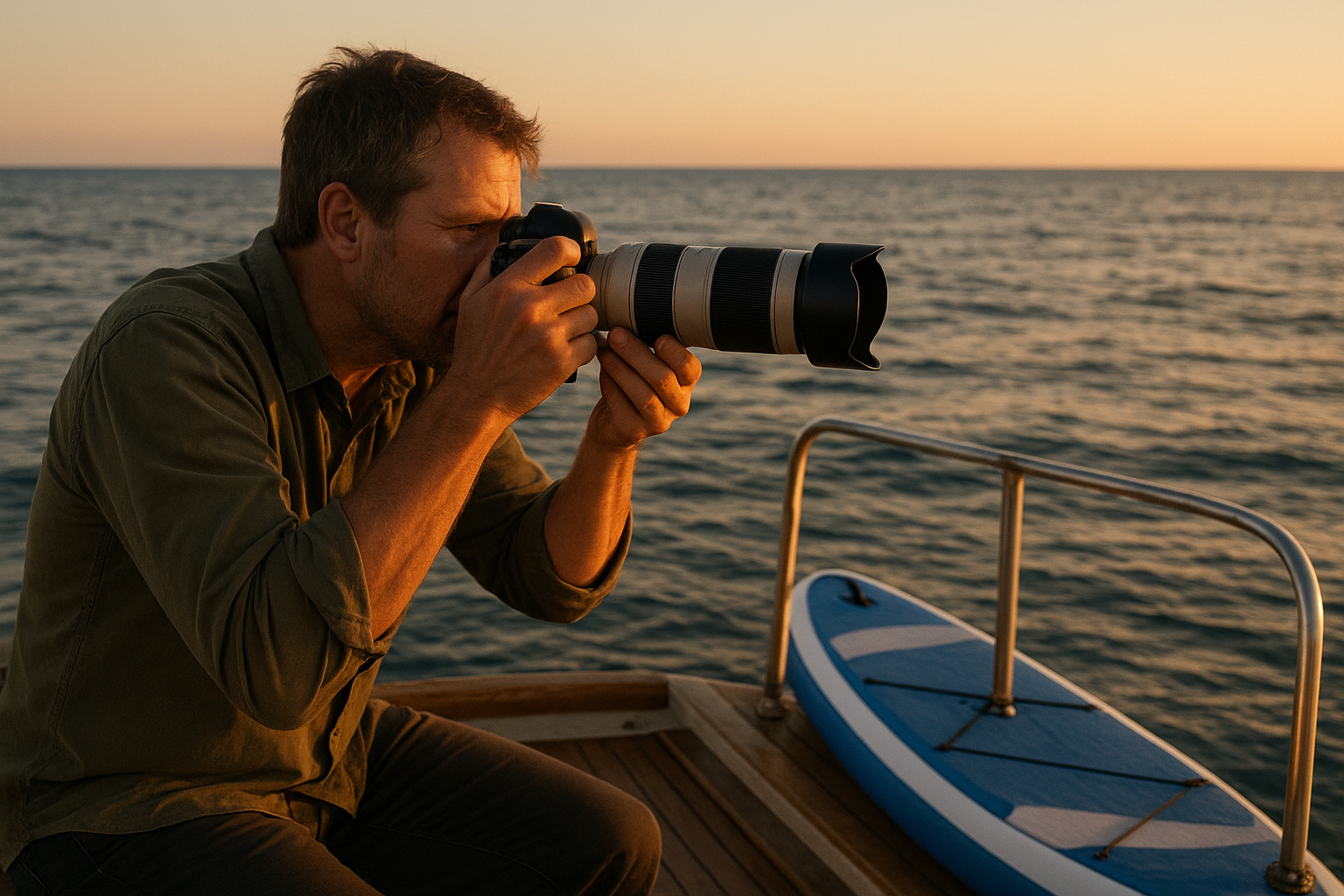
A photographer captures wildlife during a San Diego whale watching trip with paddle board gear ready on deck.
Who This Experience Suits Best
Families appreciate the small group and educational framing. Photographers value the stable platform and water-level angles. Similarly, ocean adventurers who want more than passive viewing choose the paddle add-on to get closer to the environment.
On the other hand, guests who want a relaxed, deck-based trip can skip the add-on entirely. Either way, booking through a single operator such as Big Blue Photo Boat keeps planning simple, since all formats run from the same marina and crew.
Frequently Asked Questions About Inflatable Paddle Board Whale Watching Tour San Diego
What is an inflatable paddle board whale watching tour in San Diego?
It is a small-group boat excursion led by a marine biologist and captain, with optional inflatable paddle board access. Guests experience the whale habitat from the water as well as the deck. It is not a paddleboard-only trip.
How much does an inflatable paddle board whale watching tour in San Diego cost?
Pricing depends on whether you book a private, semi-private, or full-day charter. Paddle board access is an on-request add-on, not a separate line item. Contact the operator for a current quote for your group.
How long does a typical tour last?
Most whale watching tours run three to four hours. Full-day expeditions can last six hours or longer. Paddle time is usually a calm-water portion, not the whole trip.
What whales and marine life might I see?
Depending on season, guests may see blue whales, gray whales, humpbacks, fin whales, orcas, and several dolphin species. Summer trips sometimes add ocean sunfish and sea lions near kelp paddies.
How does the paddle board add-on work during the tour?
Once the captain finds safe, calm water away from active wildlife, guests who requested boards can paddle under crew guidance. It depends on sea conditions that day.
Do I need to bring my own paddle board?
No. Inflatable paddle board access is arranged through the boat when requested in advance. Confirm it at booking, since availability depends on conditions and group size.
Is the paddle board experience safe for beginners?
Yes. Paddle time is offered in calm, sheltered water under crew and naturalist supervision. First-timers should mention their experience level when booking.
What is the best time of year for whale watching in San Diego?
Gray whale migration generally peaks from December through April. Blue and humpback whales are more common from summer into fall. Check current seasonal trends before booking.
What is the difference between a private and semi-private tour?
A private tour is booked for one party only. A semi-private tour is capped at six passengers who may not know each other. Both are naturalist-led and can include the paddle add-on.
How many people can join a tour?
Standard tours are capped at six passengers. Special-occasion charters accommodate up to twelve. The small size keeps viewing comfortable and limits disturbance to wildlife.
What should I bring on the trip?
Bring layered clothing, sun protection, a reusable water bottle, and a camera. Paddlers should also bring a swimsuit and towel.
What happens if weather or sea conditions are rough?
Captains monitor marine forecasts. They may adjust the route, postpone the paddle portion, or reschedule the trip. Safety always comes before completing every planned activity.
What’s a common mistake first-time guests make when booking?
The most common mistake is assuming paddle access is automatically included. Request it ahead of time and confirm add-ons directly with the operator.
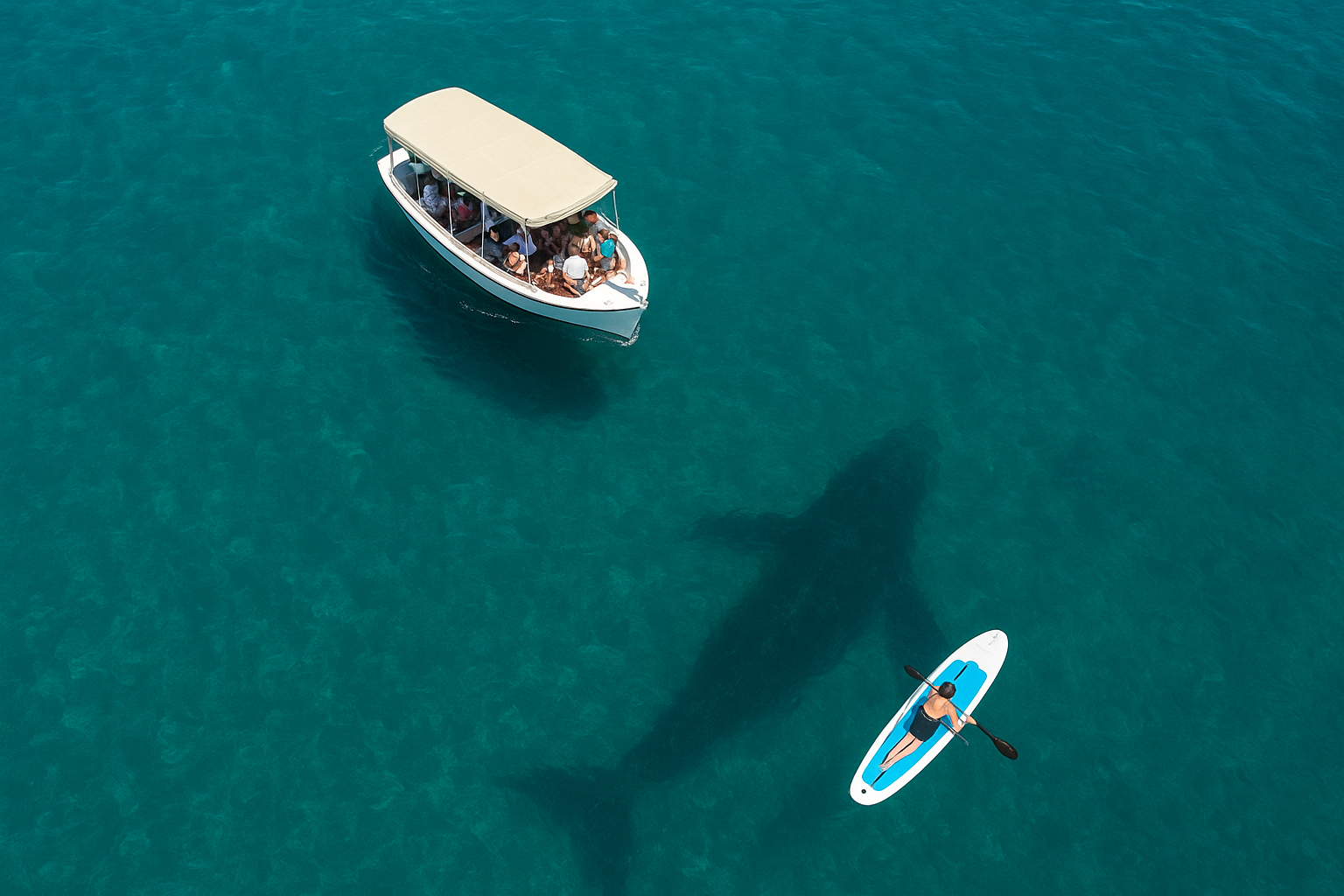
An aerial view captures the scale of a San Diego whale watching excursion with paddle board access included. For a deeper walkthrough, see our Is Paddle Board Access Available On Whale Watching Tours In San Diego.
Final Thoughts on Booking This Trip
Ultimately, an inflatable paddle board whale watching tour San Diego trip works best when you treat the paddle board as a flexible, request-based add-on. Season, conditions, and group size all affect what is possible on a given day. Therefore, book a small-group or private charter, mention your paddle interest upfront, and let the naturalist and captain decide when it is safe. With Scripps-trained guidance, coast guard-inspected vessels, and low-impact viewing, you get education, photography, and hands-on water time in one well-planned outing.
