
Humpback whale tours San Diego visitors book most often run out of Seaforth Marina, where small boats head offshore to find these acrobatic giants as they migrate along the Southern California coast. Because humpbacks are famous for breaching, fin-slapping, and spy-hopping, they’re often the most photogenic whale species encountered on a single trip. In addition, San Diego’s deep offshore canyons and nutrient-rich waters make it one of the more reliable places on the West Coast to look for them.
Quick Answer: Humpback whale tours in San Diego are small-boat excursions, typically three to four hours, that run mainly from late spring through fall and are led by a trained naturalist. The best sightings generally happen on small, quiet vessels that follow low-impact viewing guidelines rather than chasing the animals.
What Are Humpback Whale Tours in San Diego?
Humpback whale tours in San Diego are guided boat trips designed to find and observe humpback whales (Megaptera novaeangliae), a large baleen whale known for its long pectoral fins and dramatic breaching behavior. Unlike generic sightseeing cruises, a dedicated whale watching trip is staffed by naturalists or marine biologists who track recent sighting reports and read ocean conditions to improve the odds of an encounter.
On the water, humpbacks often travel in small pods or alone, surfacing to breathe every few minutes before diving again. As a result, patient crews who know local feeding grounds tend to produce more consistent sightings than boats simply cruising at random. According to the NOAA Fisheries humpback whale profile, these animals can migrate thousands of miles between feeding and breeding grounds, which is part of why their appearance off San Diego shifts from year to year.
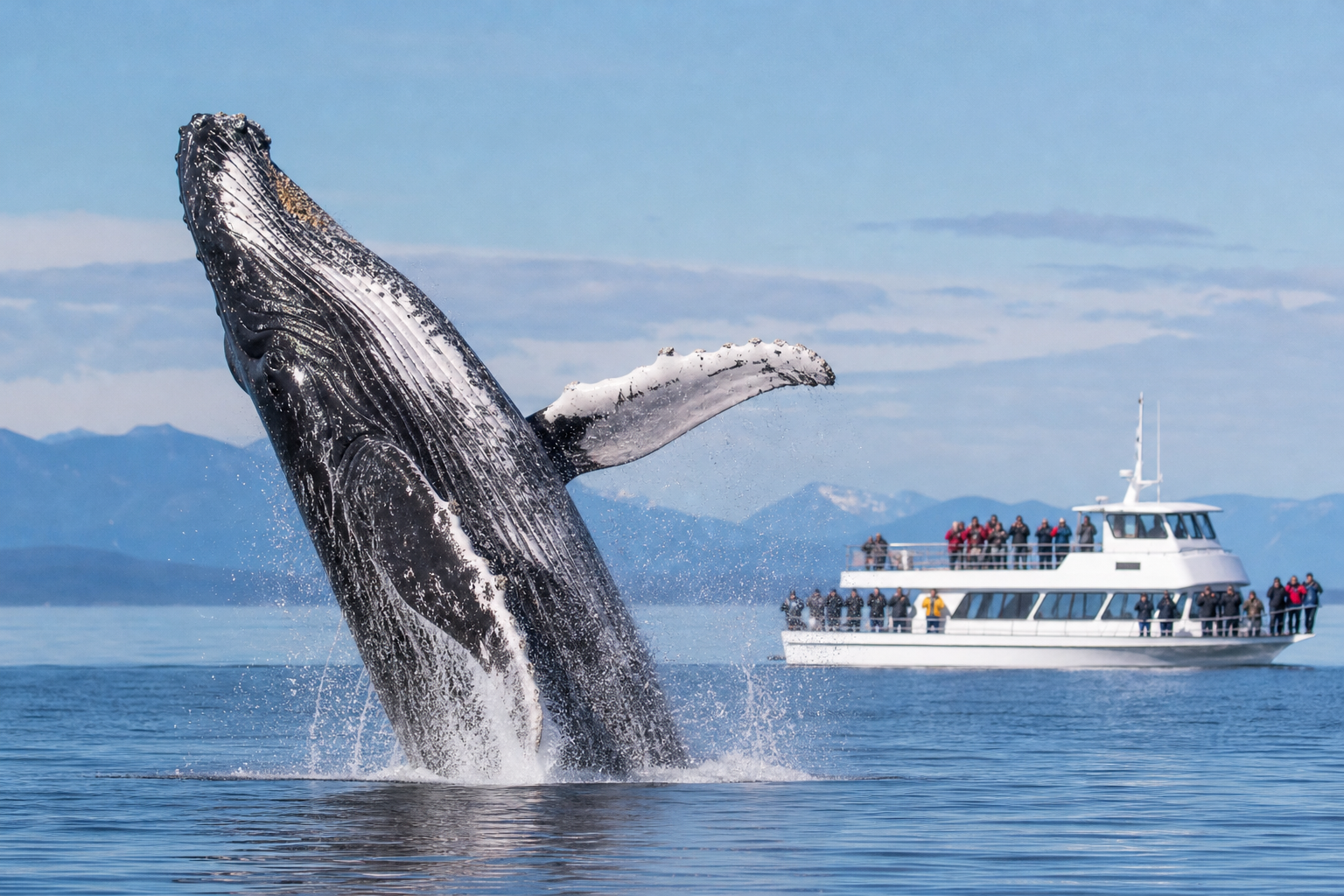
Humpback whale tours San Diego travelers book often feature breaching behavior like this, especially during peak migration months.
When Is the Best Season for San Diego Whale Watching?
San Diego whale watching follows a loose seasonal pattern tied to migration routes and feeding behavior. Gray whales pass through mainly in winter, while blue whales and humpbacks tend to appear more often from late spring into fall, when regional waters warm and small fish and krill become abundant. Consequently, summer and early fall are often considered strong windows for humpback encounters, though exact timing can shift year to year.
Because wildlife sightings are never guaranteed, operators who log daily sightings and adjust routes accordingly tend to produce better results than boats following a fixed, unchanging path. For a deeper look at how feeding patterns influence sightings, see this detailed breakdown of a recent humpback whale feeding event off San Diego.
Other Marine Life You Might See
Whale watching trips rarely focus on a single species. In particular, common dolphins frequently ride a boat’s bow wake, and sea lions are a near-daily sighting near the harbor entrance. Furthermore, summer snorkel trips sometimes encounter ocean sunfish, or molas, drifting near kelp paddies, along with other small schooling fish that gather in the same nutrient-rich water that attracts whales.
Choosing Between Private, Semi-Private, and Full-Day Tours
Not every whale watching trip suits every traveler, so matching the tour format to your goals matters. A semi-private tour, usually capped around six passengers, works well for small families or photography groups who still want to share costs. In contrast, a fully private charter gives total control over timing, route, and pace, which photographers and filmmakers often prefer for uninterrupted shooting access.
Full-day expeditions, meanwhile, extend the search area further offshore, which can be worthwhile during slower sighting periods or for travelers hoping to see multiple species in one outing. For special occasions such as anniversaries or small corporate gatherings, many guests prefer a fully customized private charter instead of a standard scheduled trip; this guide to private whale watching charters for special occasions covers how those trips are typically arranged.
Why Small-Group San Diego Whale Watching Trips Perform Better
Large passenger boats can hold well over a hundred people, which often means crowded rails and limited time near any single animal. Small-group whale watching, by comparison, allows quieter engines, slower approaches, and better sightlines for every passenger. Above all, a lower passenger count tends to reduce stress on wildlife, since quiet outboard engines and careful positioning disturb whales far less than a large, loud vessel. A detailed comparison of boat sizes and group dynamics is available in this review of the best small-group whale watching tour options in San Diego.
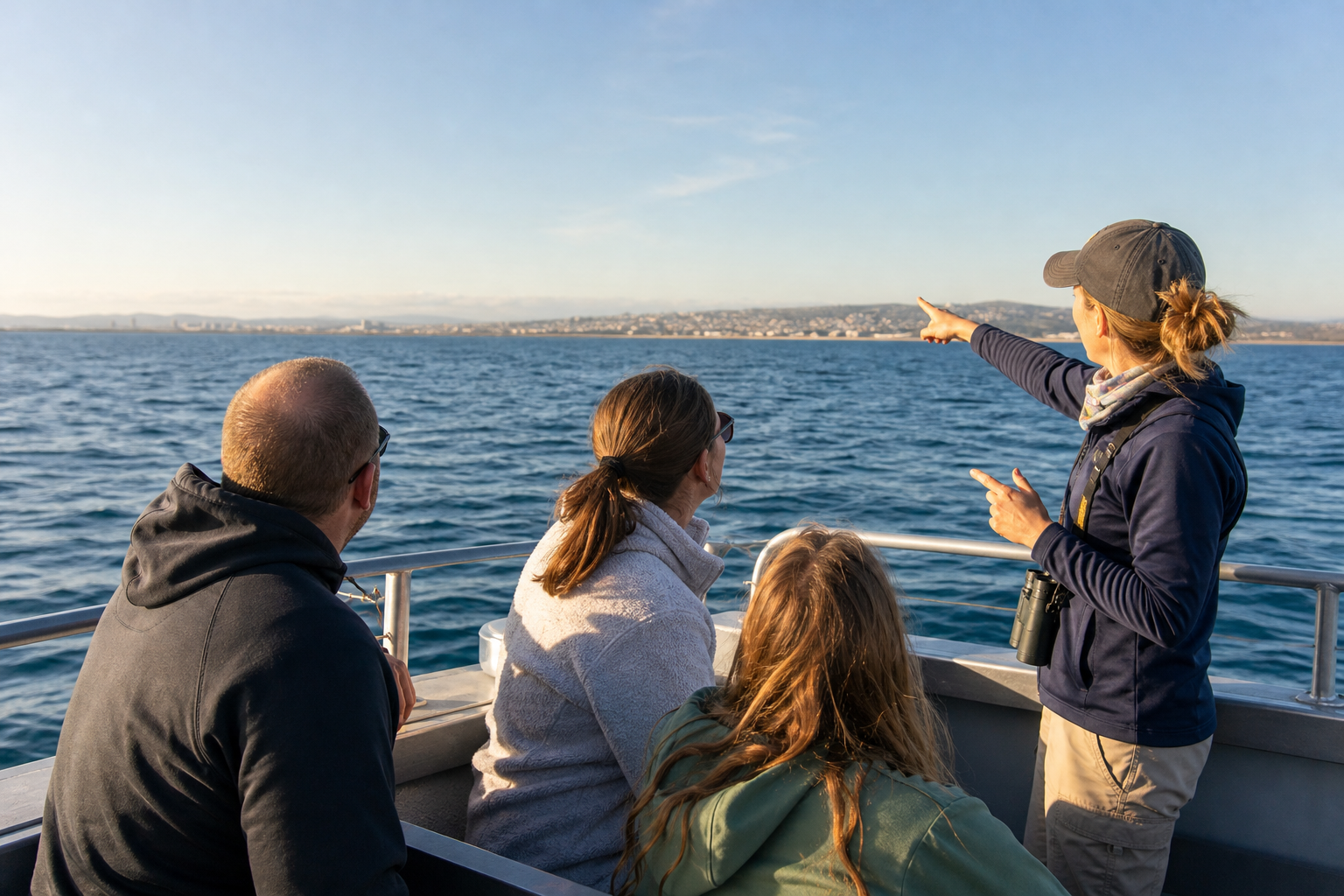
A naturalist-led small group scans the horizon during a San Diego whale watching excursion.
How Marine Biologist Guides Improve the Experience
A trip led by a trained naturalist or marine biologist offers more than narration. Specifically, a guide with background from an institution like Scripps Institution of Oceanography can interpret whale behavior in real time, explaining why a humpback is lunge-feeding, resting, or socializing. This context transforms a simple sighting into an educational experience, which is especially valuable for families with curious kids or for photographers trying to anticipate the next surface or breach.
Additionally, experienced marine mammal observers understand local regulations around approach distances, which helps keep both passengers and wildlife safe. The Wikipedia overview of humpback whale biology notes that these whales communicate using complex vocal patterns, something a knowledgeable guide can point out as it happens on the water.
What Should Photographers and Filmmakers Expect?
Photography- and film-friendly boats differ from standard charter vessels in a few key ways. For instance, stable, low-profile hulls reduce rocking motion that can blur long lens shots, while 360-degree viewing access means photographers aren’t boxed into one side of the boat. Quiet outboard engines also matter, since louder motors can push whales further away before a clean shot is possible.
These features matter enough that platforms supporting documentary crews, including teams associated with BBC Earth, National Geographic, and Discovery Channel productions, often specifically request this kind of setup. If you’re weighing operators for an upcoming shoot or personal photography trip, this comparison of top-rated whale watching tours and charters in San Diego breaks down vessel features side by side.
How to Book Humpback Whale Tours in San Diego
Booking the right trip is easier when you follow a clear process rather than picking the first search result. Use the steps below as a simple checklist.
- Check the seasonal humpback whale migration timeline for San Diego waters before booking, since sightings peak during specific months each year.
- Choose between a private, semi-private, or full-day whale watching expedition based on group size, budget, and how much personalized attention you want from the guide.
- Confirm the vessel offers low-impact, non-chasing wildlife viewing practices and Coast Guard-inspected safety standards before finalizing your reservation.
- Book directly through the operator’s website or by phone, and ask about photography and filmmaking accommodations if you plan to bring professional camera gear.
- Arrive at the marina with sun protection, a camera, and motion-sickness remedies at least twenty minutes before departure to complete check-in smoothly.
For specific trip dates, pricing, and availability out of Seaforth Marina, the San Diego whale watch booking page lists current tour options, or you can review the full range of services at Big Blue Photo Boat directly.
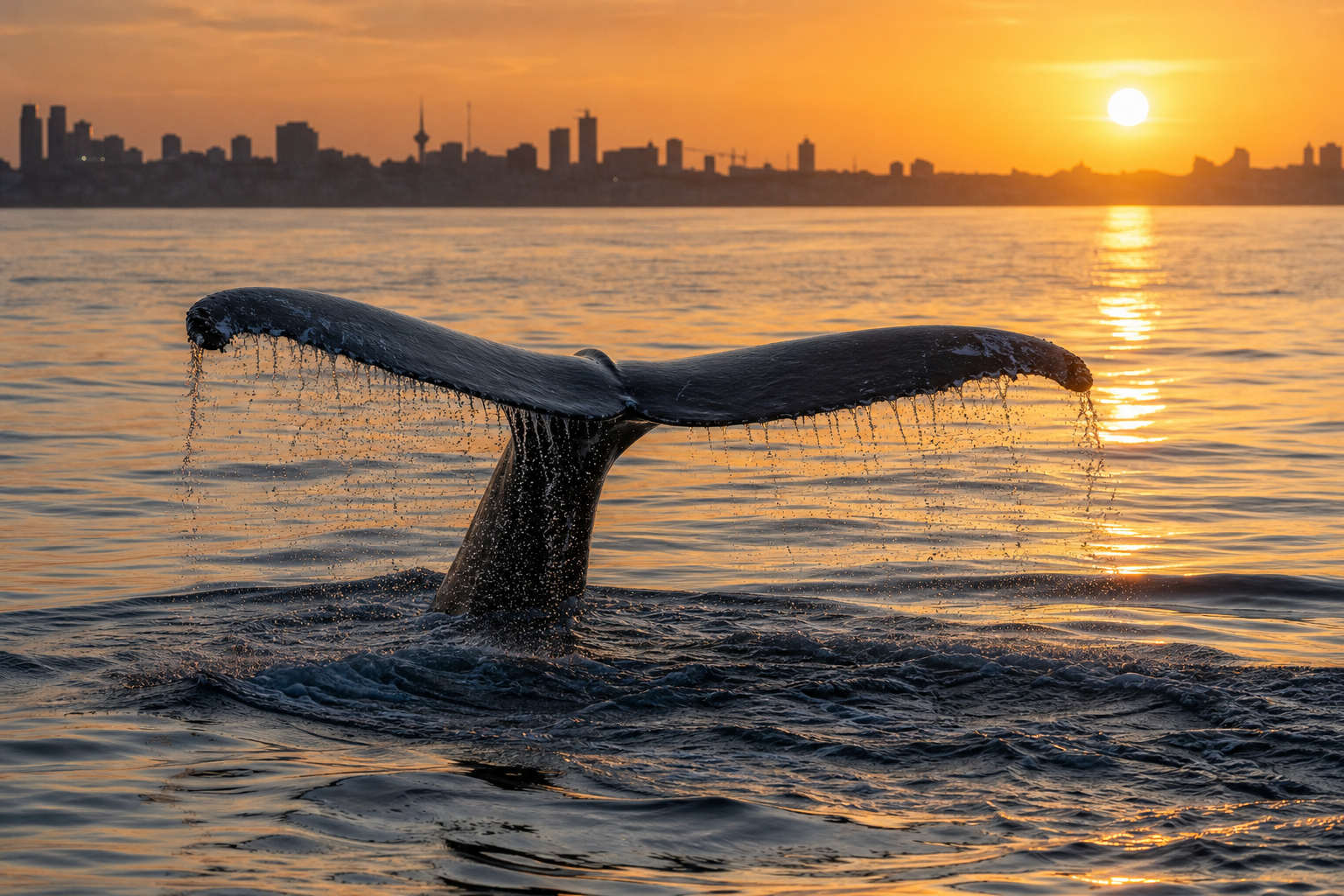
A humpback whale dives at sunset, a common closing sight on evening tours.
Low-Impact Viewing and Why It Matters
Responsible operators avoid chasing or crowding whales, instead positioning the boat quietly and letting animals approach on their own terms. This non-chasing approach is increasingly recognized as best practice because it reduces stress on marine mammals and, somewhat counterintuitively, often leads to closer, calmer encounters than aggressive pursuit. One widely cited estimate from marine mammal researchers suggests that reduced vessel noise and distance can measurably lower stress hormone indicators in nearby whales, reinforcing why slow, patient approaches tend to outperform high-speed chasing in practice.
Therefore, when comparing operators, it’s worth asking directly about their approach distance policies and engine type. Quiet outboard motors paired with patient captains generally produce a better experience for both passengers and the whales themselves.
Planning Your Trip to Seaforth Marina
Seaforth Marina, located at 1677 Quivira Rd in San Diego, serves as the departure point for most local whale watching operators. Because parking and check-in areas can get busy during peak season, arriving with extra time helps avoid a rushed boarding process. In addition, dressing in layers is wise, since ocean temperatures offshore are often noticeably cooler than conditions on land, even in summer.
Finally, travelers combining a whale watch with other ocean activities, such as a summer snorkel excursion featuring kelp paddies and sea lions, should confirm which gear they need to bring themselves, since snorkel equipment is typically not provided and guests are expected to bring their own mask, snorkel, and fins.
Frequently Asked Questions About Humpback Whale Tours San Diego
What is a humpback whale tour in San Diego?
A humpback whale tour in San Diego is a guided boat excursion that takes small groups offshore to observe humpback whales in their natural habitat. Trips are typically led by a trained naturalist or marine biologist who explains humpback behavior and local ocean ecology.
When is the best time for humpback whale tours in San Diego?
Humpback whales are most commonly spotted off San Diego from late spring through fall, with summer months offering some of the most consistent sightings. However, exact timing shifts year to year based on ocean temperature and food availability.
How long do San Diego whale watching tours last?
Most trips out of Seaforth Marina run three to four hours, which is enough time to reach offshore feeding areas and return safely. Full-day expeditions are also offered for travelers wanting extended time on the water.
How much do humpback whale watching tours cost in San Diego?
Pricing varies based on whether you choose a semi-private seat, a private charter, or a full-day trip, since smaller groups and longer excursions typically cost more per person. Contacting the operator directly gives the most accurate current rates for your group size.
Are humpback whales guaranteed on every tour?
No wildlife tour can guarantee sightings, since humpback whales are wild animals that move unpredictably with currents and food sources. Still, crews that track recent sightings and read ocean conditions significantly improve the odds of an encounter.
What’s the difference between humpback whales and blue whales seen off San Diego?
Humpback whales are known for acrobatic breaches and long pectoral fins, while blue whales are the largest animals on Earth and surface more slowly and predictably. Both species pass through San Diego waters, but they tend to appear during somewhat different seasonal windows.
What should I bring on a whale watching tour?
Pack sun protection, layered clothing, a reusable water bottle, and motion-sickness remedies if you’re prone to seasickness. Photographers should also bring extra camera batteries, since cooler offshore air can drain them faster than expected.
Are humpback whale tours safe for young children?
Yes, small-group tours on stable, Coast Guard-inspected vessels are generally safe and family-friendly for children who can sit calmly for a few hours. Parents should still confirm age and weight guidelines with the operator before booking.
Can I bring professional camera equipment on the boat?
Many San Diego whale watching operators welcome photographers and filmmakers and design their boats with low-profile hulls and 360-degree access for better shooting angles. It’s still smart to confirm equipment policies and available space before your trip, especially for tripods or large lenses.
What is a common mistake people make when booking whale watching tours?
One common mistake is booking a large, crowded boat expecting a personal experience, then struggling to get a clear view. Choosing a small-group or private option instead usually produces better sightings and a more educational trip overall.
How close do boats get to humpback whales?
Responsible operators follow low-impact, non-chasing viewing guidelines that maintain a respectful distance and let whales approach on their own terms. This reduces stress on the animals while still allowing strong viewing and photography opportunities.
Do humpback whale tours run in bad weather?
Tours are typically canceled or rescheduled when ocean conditions become unsafe, such as during high wind advisories or significant swell. Most operators offer rebooking or refunds in these cases, so confirming the weather policy at booking is worthwhile.
What other marine life might I see on a humpback whale tour?
Besides humpback whales, San Diego trips frequently encounter common dolphins, sea lions, and seabirds, with occasional sightings of blue whales, gray whales, or orcas depending on season. Summer trips may also spot ocean sunfish near kelp paddies.
How do I book a humpback whale tour in San Diego?
You can book humpback whale tours in San Diego directly through an operator’s website or by phone, selecting a private, semi-private, or full-day option based on your group size. Booking a few weeks ahead during peak season is recommended, since small-group trips fill quickly.
Final Thoughts on Humpback Whale Tours San Diego
In summary, humpback whale tours San Diego travelers choose should balance group size, guide expertise, and vessel design against personal goals, whether that’s family fun, serious photography, or a special-occasion charter. Because sightings depend on moving, unpredictable animals, working with a crew that tracks recent activity and practices low-impact, non-chasing viewing consistently improves the odds of a memorable trip. Ultimately, a small, naturalist-led boat departing from Seaforth Marina offers one of the more reliable ways to witness these massive, acrobatic whales up close while supporting responsible wildlife viewing practices.
