
Filmmaker support whale watching tours san diego give photographers, documentary crews, and content creators a working film platform instead of a standard sightseeing cruise. Because these charters pair stable, low-profile boats with quiet engines and a Scripps-trained marine biologist, crews can capture broadcast-quality footage of blue whales, gray whales, humpbacks, orcas, and dolphins off the Southern California coast. In addition, small groups capped at six passengers — with room for up to twelve on select trips — give filmmakers the space and flexibility that oversized commercial whale watching boats simply cannot match.
Specifically, operators like Big Blue Photo Boat have supported film crews from BBC Earth, National Geographic, and Discovery Channel, which signals an operational track record that matters when a shoot depends on precise timing, positioning, and animal behavior. This guide goes further than a typical tour overview — it explains exactly what these charters include, how vessels are equipped for filming, what regulations apply, what gear to pack, and how to plan a shoot that makes the most of San Diego’s year-round marine wildlife.
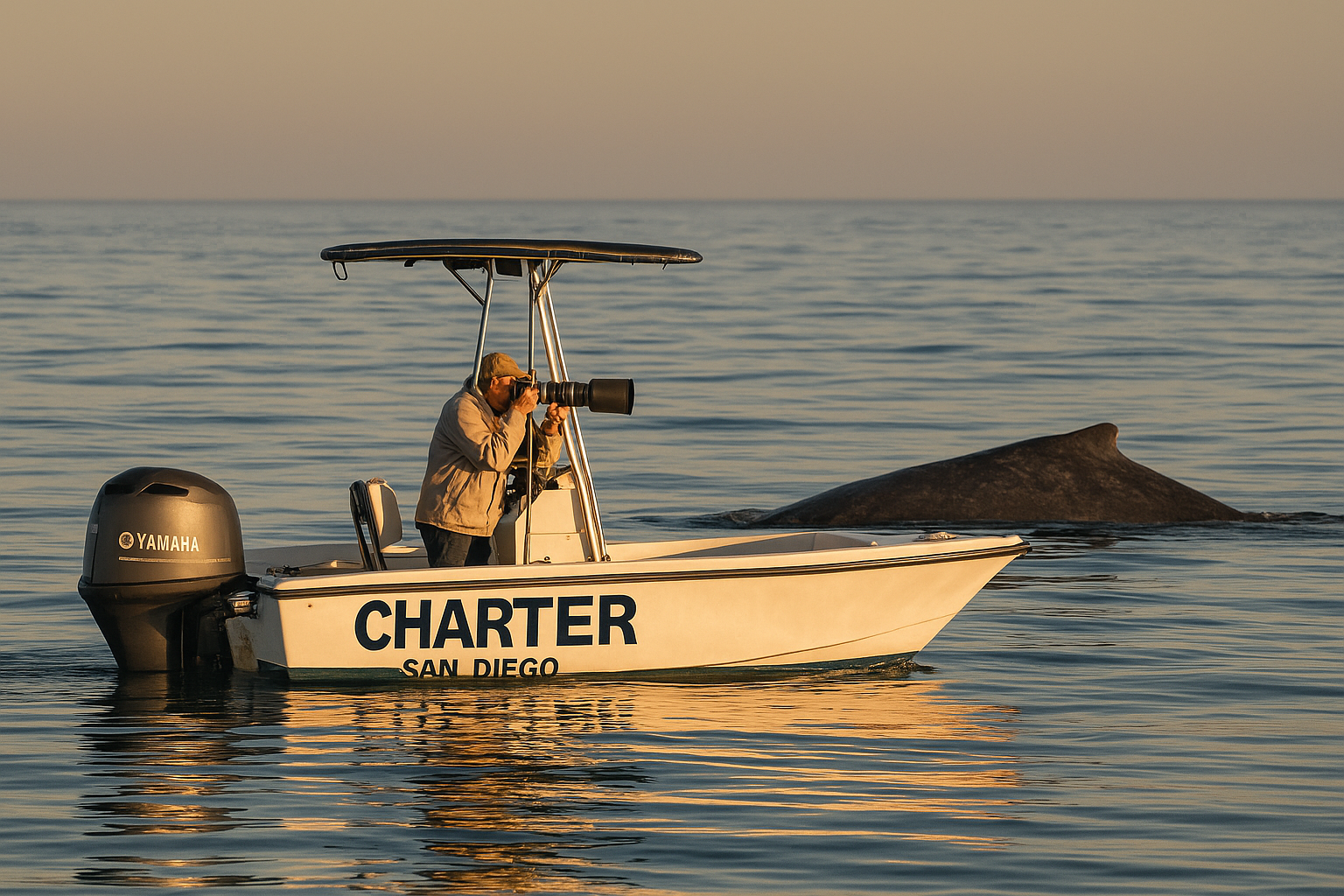
Filmmaker support whale watching tours san diego give crews stable platforms for close, low-vibration shots.
On a typical trip, a captain and a trained naturalist work together to position the boat for light, distance, and animal behavior — rather than simply chasing a sighting. As a result, crews spend less time repositioning gear and more time rolling camera. Trips range from standard three- to four-hour outings to full-day expeditions built for productions that need extended coverage.
Because vessels are Coast Guard-inspected and feature 360-degree viewing access, there is rarely a bad angle on board. Furthermore, quiet outboard engines reduce both audible noise in recorded audio and disturbance to wildlife, which keeps animals calmer and more likely to surface naturally near the boat. In contrast, a crowded standard whale watching cruise rarely offers that kind of controlled, predictable environment.
Filmmaker support whale watching tours are charters specifically equipped and staffed to assist photographers and film crews in capturing high-quality marine wildlife footage. They differ from standard whale watching cruises by prioritizing small groups, stable low-profile hulls, and naturalist expertise over high passenger volume.
A large commercial whale watching boat, however, is optimized for ticket sales and quick sightings, not for sustained, quiet observation. For filmmakers, that difference directly affects shot quality, stability, and the ability to wait patiently for the right moment rather than being rushed back to the dock.
Generic tour operators and filmmaker-focused charters both leave from San Diego waters, yet the on-water experience differs substantially once cameras are involved. Below is a direct comparison that most general whale watching listings never spell out for visiting production teams.
Consequently, filmmakers who book a purpose-built charter typically return with usable footage faster, with far less post-production noise cleanup and far fewer wasted repositioning cuts.
San Diego sits along a migratory corridor used by several whale species, which means film crews can plan shoots around predictable seasonal windows rather than guessing. For example, blue whales and fin whales are commonly sighted offshore between June and September, while gray whales migrate past the coast from December through April.
According to NOAA Fisheries, blue whales are the largest animals known to have ever lived, reaching lengths of up to 100 feet, which makes them a priority subject for many documentary productions working off the California coast. The gray whale’s annual migration, one of the longest of any mammal on Earth, also passes directly along this coastline, which is a detail many general whale watching sites mention only in passing. Additionally, La Jolla Canyon’s proximity to deep water brings pelagic species closer to shore than in many other regions, cutting down on transit time for crews working against daylight.
For a deeper look at how operators structure these trips for visual storytelling, the filmmaker-friendly wildlife tours guide covers additional planning considerations specific to San Diego waters.
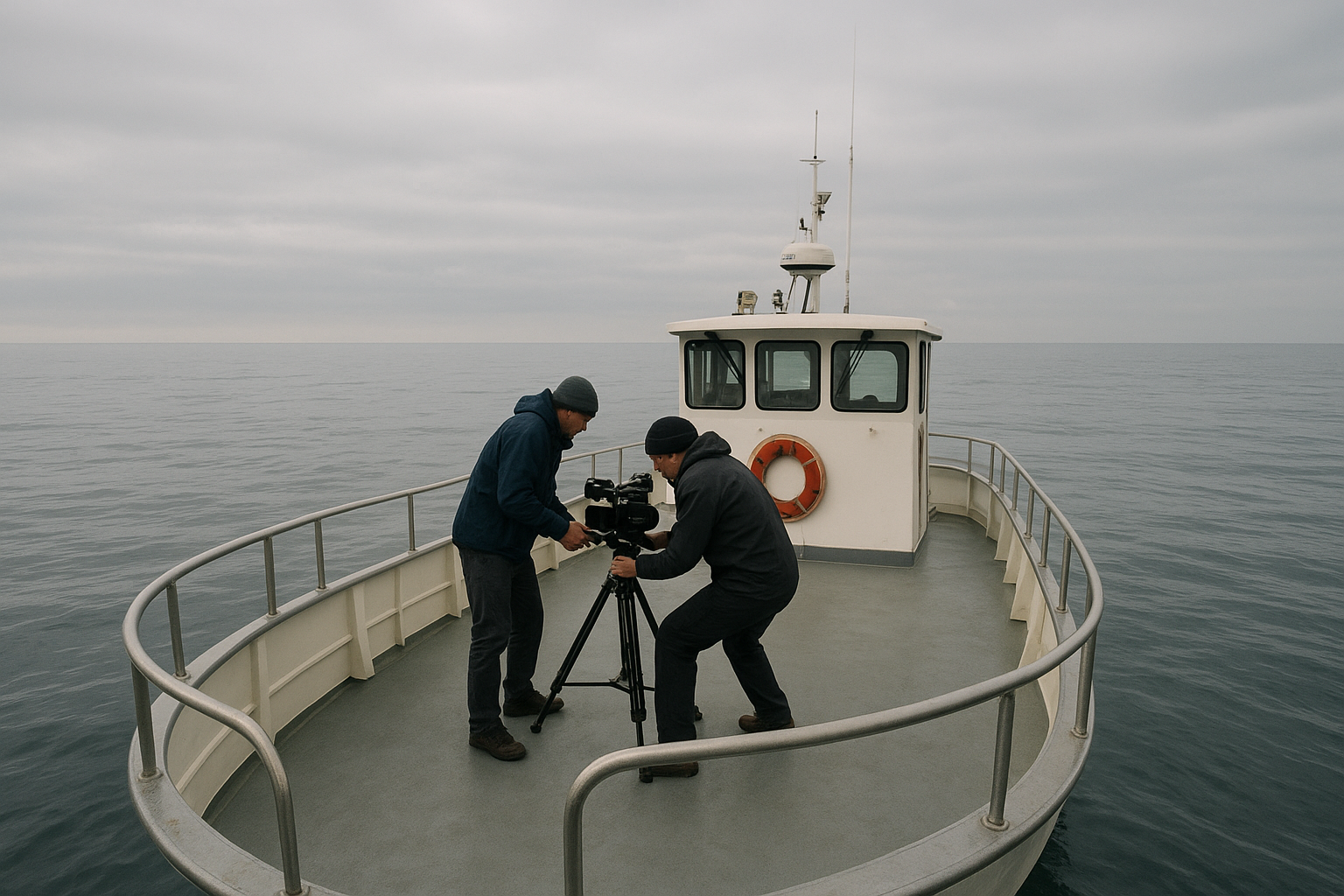
Open, unobstructed decks give crews flexibility to reposition cameras without blocking sightlines.
Several physical features separate a filming-capable boat from a standard tour vessel. Specifically, a low-profile hull reduces rocking motion, which in turn reduces camera shake during handheld or gimbal-mounted shots. Quiet outboard engines also matter, since engine noise can bleed into recorded audio and startle wildlife before a shot is even set up.
Open 360-degree viewing access means a camera operator can move freely to follow a whale’s surface pattern without climbing over seats or other passengers. Above all, this flexibility is what allows crews to capture spouts, fluke-ups, and breaches from multiple angles during a single encounter.
San Diego’s waters offer something to film nearly every month of the year, which is part of why the region attracts repeat documentary productions. Blue whales and fin whales dominate the summer months, while gray whales pass through during their winter and spring migration between Alaska and Baja California.
Humpback whales and pods of common and bottlenose dolphins can appear across multiple seasons, often providing surface activity like breaching and bow-riding that works well for dynamic footage. Meanwhile, summer snorkel and photo trips add underwater filming opportunities around kelp paddies, sea lions, and ocean sunfish, also known as molas.
Crews interested in comparing seasonal patterns across the broader region can review the Southern California offshore whale watching charters guide for additional context on migration timing.
Regulatory questions are one of the biggest gaps left unanswered by most general whale watching websites, yet they matter enormously to visiting crews. Recreational and most editorial filming from a Coast Guard-inspected charter does not require a special permit. However, commercial drone operation must follow Federal Aviation Administration airspace rules, and all vessels must respect the approach distances set out under the Marine Mammal Protection Act (MMPA), a federal law that protects whales, dolphins, and other marine mammals from harassment.
In practice, this means the captain — not the camera operator — ultimately controls how close the boat gets to an animal. Therefore, it is best to disclose your full project scope, including any drone flight plans, before departure so the crew can advise on compliance and avoid last-minute surprises on shoot day.
Booking a filming-focused charter is straightforward, but a little preparation goes a long way toward a productive shoot. The following steps outline a practical process for photographers and crews.
Because open water introduces spray, glare, and motion that studio shoots never have to account for, packing correctly matters just as much as booking the right boat. In particular, the following items consistently make the difference between a wasted trip and a usable sequence.
Responsible filming practices matter just as much as technical setup. Non-chasing viewing approaches, where the boat lets animals set the pace rather than pursuing them, tend to produce calmer, more natural behavior on camera. Consequently, footage captured this way often looks more authentic and is easier to use for conservation-minded or educational projects.
Naturalist-led crews also help interpret behavior in real time, which allows camera operators to anticipate a breach or fluke-up rather than react to it after the fact. For a broader view of how photography-focused trips are structured around these principles, the wildlife photography tours page outlines additional trip formats worth considering.
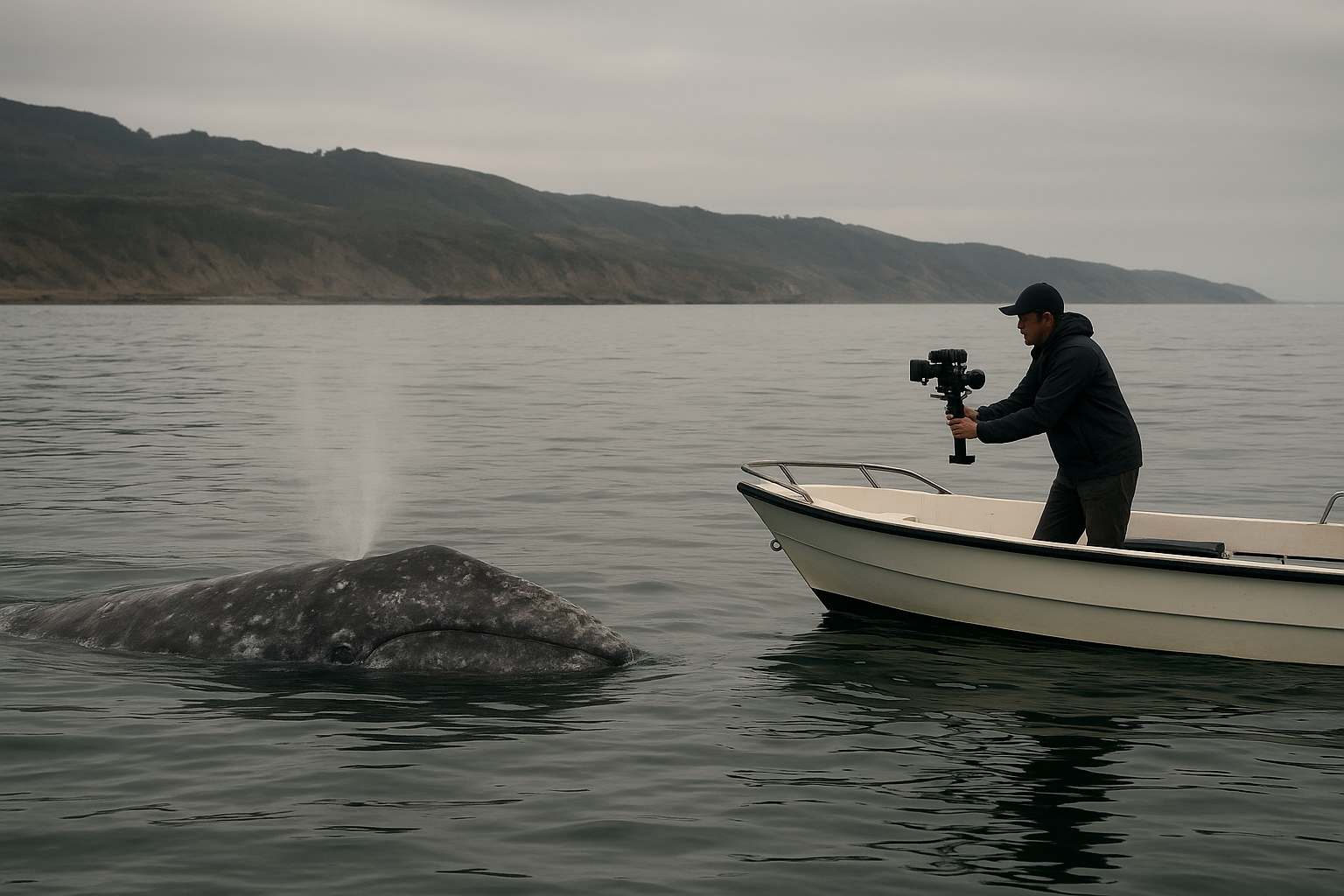
Low-impact, non-chasing approaches keep wildlife calm and footage looking natural.
Unlike a fixed-rate ticket on a large tourist boat, filmmaker charter pricing depends on several variables: trip length, group size, whether the boat is private or semi-private, and any special equipment handling. As a result, private full-day expeditions generally cost more than a standard three-hour outing, but they also buy far more flexibility for chasing the right light or waiting out a slow morning.
Therefore, the most accurate way to budget a shoot is to contact the operator directly with your project details — crew size, gear, desired species, and target dates — rather than relying on a generic published rate that may not reflect a filming-specific trip.
Filmmaker support whale watching tours san diego are small-group charters designed around the needs of photographers and film crews, offering stable low-profile boats, quiet engines, naturalist guidance, and 360-degree access for capturing professional wildlife footage.
Pricing varies by charter type, group size, and trip length, since private and semi-private filming charters are usually quoted based on crew needs and equipment. Contacting the operator directly with your shoot details is the most accurate way to get a quote.
Depending on the season, filmmakers may encounter blue whales, gray whales, humpback whales, fin whales, orcas, and dolphins off the San Diego coast. Blue and fin whales are more common in summer, while gray whales migrate past in winter and spring.
Small-group charters capped at six to twelve passengers give filmmakers unobstructed sightlines and quieter operation than large commercial boats packed with tourists. This reduces vibration, crowd noise, and visual clutter in the frame.
Recreational and most editorial filming from a Coast Guard-inspected charter does not require a special permit, but commercial drone operation and marine mammal approach distances are regulated under federal law. It is best to disclose your project scope when booking so the crew can advise on compliance.
Blue whale sightings off San Diego typically peak between June and September, based on seasonal migration patterns tracked by NOAA Fisheries. Gray whales are better suited to winter filming, from December through April.
Drone-friendly operations are available on select charters, but flight plans must follow FAA regulations and marine wildlife approach guidelines. Coordinating drone use in advance ensures the boat positions correctly without disturbing the animals.
Filmmakers typically bring waterproof camera housings, telephoto lenses, stabilizers, and backup batteries, along with their own snorkel or freedive gear for summer underwater sequences. Dry bags and lens cloths are also recommended given sea spray.
Standard trips run three to four hours, while full-day expeditions extend coverage time for documentary-style shoots that require patience and flexibility. Full-day options are generally recommended for crews targeting specific behaviors or species.
A filmmaker-friendly boat combines a stable, low-profile hull, quiet outboard engines, unobstructed 360-degree viewing, and a crew experienced in positioning for light and wildlife behavior. These features collectively reduce camera shake and missed shots.
Yes, summer snorkel and photo excursions feature encounters with ocean sunfish, kelp paddies, and sea lions, giving filmmakers underwater and surface-level footage opportunities. Guests are expected to bring their own snorkel or freedive equipment, as rental gear is not provided.
A common mistake is booking a single short trip without buffer days, since wildlife sightings depend on weather, season, and animal movement. Building in flexibility or choosing a full-day charter significantly improves the odds of capturing the desired footage.
Booking four to six weeks ahead is advisable for private or semi-private filming charters, especially during peak blue whale season from June through September. Last-minute bookings may still be possible but offer less flexibility on dates and boat customization.
Yes, tours led by a Scripps-trained marine biologist provide real-time species identification and behavioral context that can be recorded for documentary voiceover or educational content. This expert commentary adds scientific credibility to finished footage, and you can learn more about naturalist-led trip formats on the whale watch page.
A standard whale watching tour is built around volume — larger boats, fixed schedules, and general sightseeing narration. A filmmaker support charter, in contrast, is built around small groups, flexible timing, and crew coordination specifically so camera operators can get the shot rather than simply see the animal.
Full-day expeditions do involve more time on open water, so over-the-counter or prescription motion-sickness medication taken the night before is commonly recommended. Staying hydrated and keeping eyes on the horizon between shots also helps most crew members manage longer trips comfortably.
Ultimately, filmmaker support whale watching tours san diego exist to solve a specific problem: standard tourist boats are not built for the patience, positioning, and stability that professional footage requires. By combining small groups, stable low-profile hulls, quiet engines, and naturalist expertise from a Scripps-trained marine biologist, these charters give photographers and documentary crews a genuine working platform rather than just a scenic ride.
Whether the goal is a blue whale sequence for a broadcast documentary or underwater footage of sea lions and ocean sunfish, planning around seasonal migration patterns, understanding permit requirements, and booking well in advance all make a measurable difference. For crews ready to plan a shoot, reviewing current trip options directly at bigbluephotoboat.com is a practical next step toward getting the right boat, crew, and season aligned for the footage the project needs.
