
Eco-friendly whale watching tours in San Diego put the animals first and the photo second. At Big Blue Photo Boat, every outing from Seaforth Marina uses slow approaches, quiet engines, small groups, and a naturalist guide. As a result, guests can see gray whales, blue whales, and dolphins without changing how those animals behave. This guide explains how sustainable trips work, what you can realistically expect to see, and how to pick an operator you can trust.
Quick answer: A genuinely eco-friendly whale watching tour keeps at least 100 yards from whales and 50 yards from dolphins, idles instead of chasing, carries a small group, and has a trained naturalist on board. It also never promises a sighting, because wild animals follow their own schedule.
What Are Eco-Friendly Whale Watching Tours in San Diego?
Eco-friendly whale watching tours San Diego operators offer are trips built around non-chasing, low-speed, respectful-distance protocols. Instead of racing toward a sighting, an eco-conscious captain idles quietly. The animals approach on their own terms, and the crew limits time spent with any single pod. We explain this approach further in our non-chasing wildlife viewing guide.
In particular, these tours follow the marine mammal viewing recommendations from NOAA Fisheries. Animals keep feeding, resting, and socializing with minimal interruption. That is what makes whale watching sustainable over the long term instead of a one-time novelty.
Why Low-Impact Whale Watching Matters in San Diego Waters
San Diego sits directly on a major migratory corridor, so boat traffic adds up quickly in peak season. Consequently, how an operator behaves on the water has a real effect on passing animals. Gray whales, for example, make one of the longest migrations of any mammal on Earth.
According to NOAA Fisheries, gray whales travel roughly 10,000 to 12,000 miles round trip between Alaska and Baja California. Their route runs right through San Diego’s coastal waters. Therefore, repeated close-range harassment could add stress to an already demanding journey. Low-impact practices, like those on our private, naturalist-guided whale watching tours, reduce that burden. Guests still get a close and memorable encounter.
How Sustainable Whale Watching San Diego Trips Work
Sustainable whale watching San Diego trips follow a consistent set of practices from departure to return. Here is the process a responsible crew follows on nearly every outing.
- Maintain legal and respectful distances. Captains keep the boat at least 100 yards from whales and 50 yards from dolphins whenever possible, following NOAA marine mammal viewing guidelines to prevent stress on feeding and resting animals.
- Approach slowly and quietly. Rather than speeding toward a sighting, the crew cuts engine speed early and lets wildlife set the pace. Quiet outboard engines mean whales and dolphins are not startled or forced to change direction.
- Limit viewing time per pod. To avoid prolonged exposure that can interrupt feeding or nursing, the captain limits time with any single group before moving on.
- Brief guests before departure. Every trip starts with a safety and etiquette briefing from the onboard marine biologist. It explains why guests should avoid loud noises, sudden movements, and flash photography near marine mammals.
- Share sightings with research networks. Data from each tour goes to regional marine mammal researchers. This supports long-term population studies.
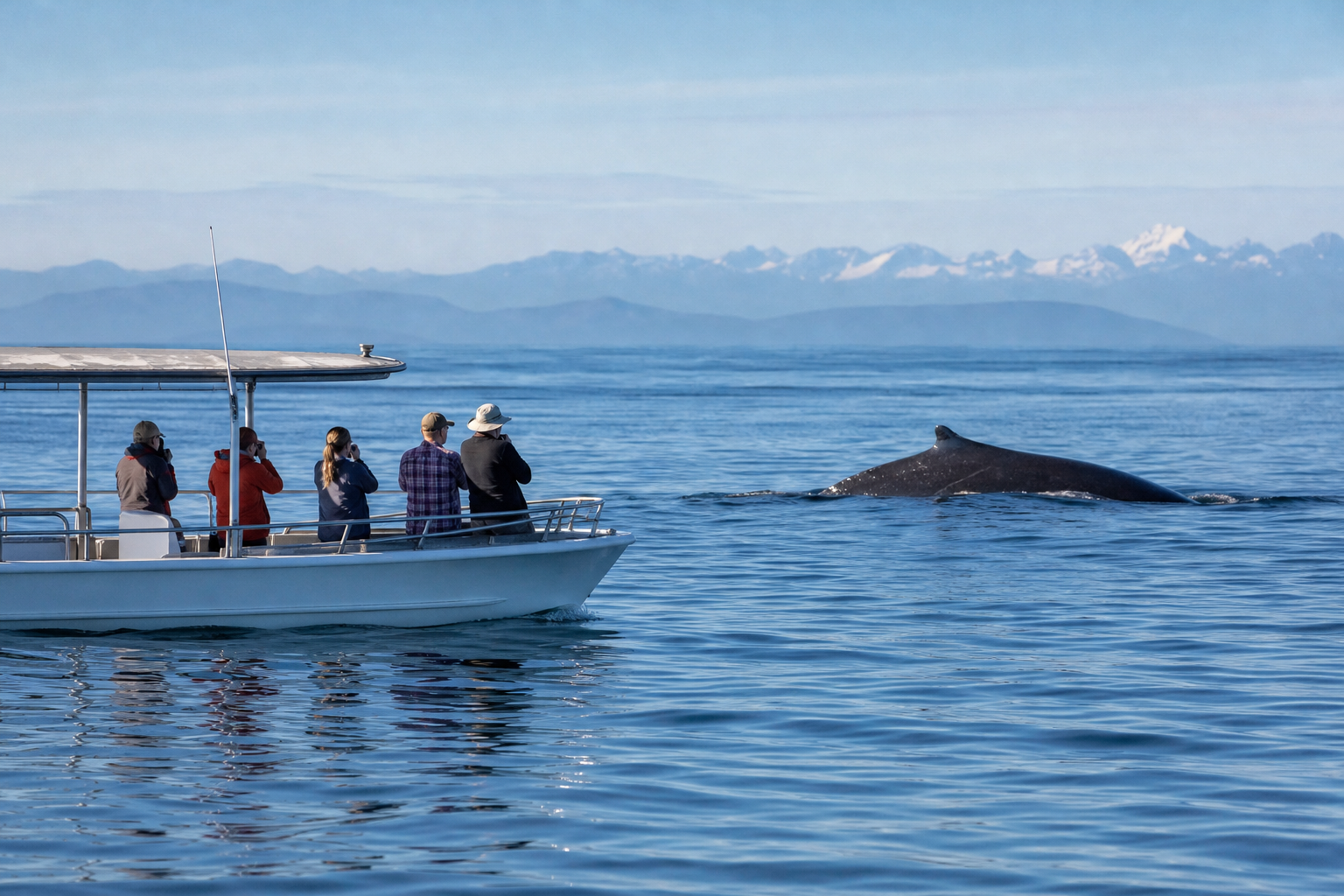
Eco-friendly whale watching tours San Diego rely on slow, quiet approaches that keep whales undisturbed.
What You Might See on an Eco-Friendly Whale Watching Tour
San Diego’s offshore waters support sightings nearly year-round, though the species change with the seasons. In winter and early spring, gray whales dominate the migration route. Summer brings blue whales, fin whales, and sometimes humpbacks.
Dolphins, including common and bottlenose species, appear throughout the year and often ride the bow wake. In addition, summer snorkel trips may reveal ocean sunfish, kelp paddies, and resting sea lions. For a current look at what is being seen, check our current whale watching season updates.
Season-by-Season Sighting Guide
- December to April: gray whales migrate past the coast, often with calves late in the season.
- Summer: blue whales, fin whales, and occasional humpbacks feed offshore.
- All year: common and bottlenose dolphins, sea lions, and seabirds.
Are Whale Sightings Guaranteed?
No, and any operator that promises otherwise deserves caution. Travelers often say as much in reviews of small-boat tours: some days bring humpbacks and hundreds of dolphins, while others bring only sea lions and seabirds. An ethical crew accepts that uncertainty. They would rather give you a calm, honest outing than chase an animal to meet a promise.
What Makes a Whale Watching Boat Truly Green?
A genuinely green whale watching boat goes beyond slogans. Specifically, it combines quiet engines, a low-profile hull that reduces wake, Coast Guard-inspected safety standards, and a trained guide who reads animal behavior. Without that combination, even a well-intentioned operator can crowd or stress wildlife unintentionally.
Small Boat vs. Large Boat: Which Is Better for Wildlife?
Group size is the clearest difference between tour styles. Large vessels can carry 50 or more passengers, and they create more engine noise, more wake, and more crowding around a sighting. Small boats are quieter and can maneuver gently, which is why travelers often describe them as more personal. They also give each guest a clearer view and more time with the guide.
Smaller is not automatically greener, though. A small boat that speeds toward animals still disturbs them. Look at the behavior, not just the boat size.
How to Choose Responsible Whale Watching Tours in San Diego
Not every tour marketed as “eco-friendly” follows low-impact practices. Therefore, use this short checklist before you book.
- Ask about group size. Look for small groups, ideally a dozen guests or fewer, so the boat stays quiet and maneuverable.
- Confirm a trained naturalist is aboard. A marine biologist or experienced observer can read animal behavior and explain proper etiquette.
- Check the approach policy. Ask whether the captain follows NOAA distance guidelines, idles near animals, and never chases or circles them.
- Verify safety credentials. Choose a Coast Guard-inspected vessel with an experienced captain and a pre-departure briefing.
- Read honest reviews and book ahead. Favor reviews that mention respectful behavior, and reserve a few days early in peak whale season.
How Big Blue Photo Boat Meets the Standard
At Big Blue Photo Boat, groups are capped at six passengers for standard trips and up to twelve for special occasions. Every outing is guided by a marine biologist trained by Scripps Institution of Oceanography, with years of experience as a marine mammal observer. For more detail, see which marine biologist-led tours are operating in San Diego. Our stable, quiet vessels have also supported film crews from BBC Earth, National Geographic, and Discovery Channel.
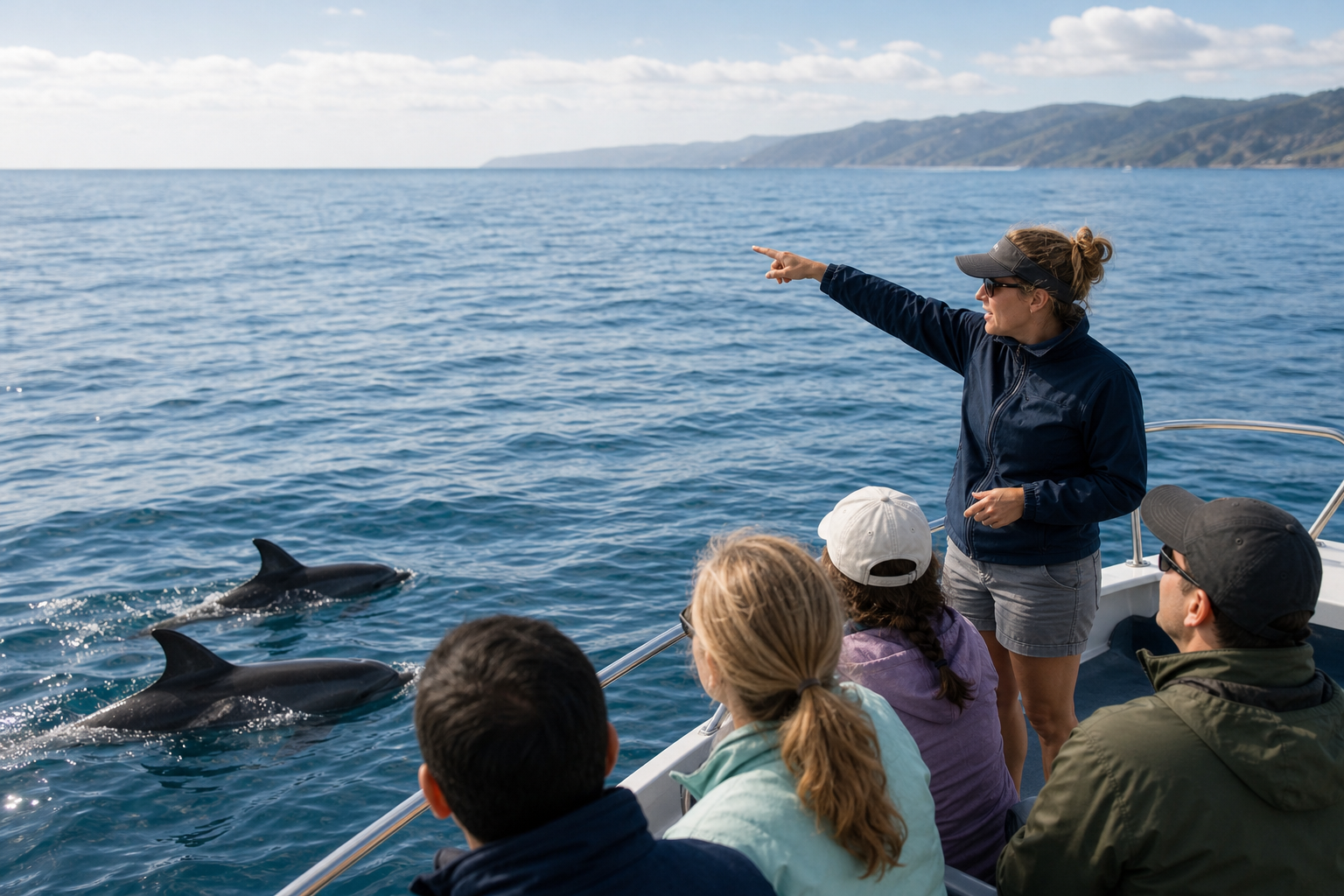
A naturalist guide helps small groups understand dolphin behavior during a low-impact tour.
Private and Semi-Private Options for a Lower-Impact Experience
Smaller groups naturally support quieter, more controlled viewing. As a result, private and semi-private charters align closely with eco-friendly principles, since the captain can adjust course and timing without coordinating dozens of passengers. These trips also suit photographers who want a calmer deck. You can explore options through Big Blue Photo Boat’s small-group tour listings.
Bringing Kids Along
Small, stable boats work well for children, who often enjoy dolphins and sea lions as much as whales. Our family whale watching guide for San Diego covers ages, seating, and what to expect.
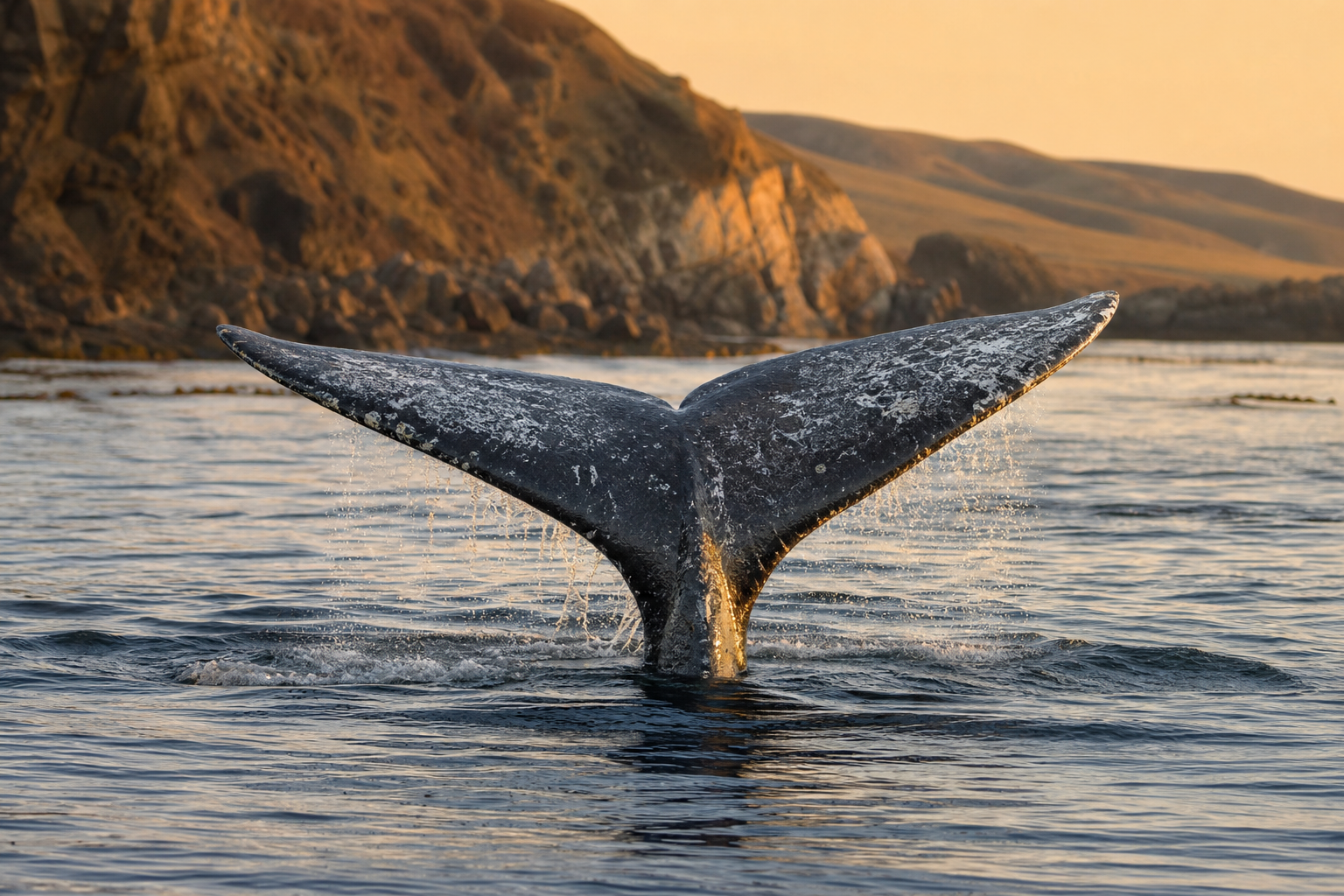
Gray whales pass through San Diego’s coastal waters during their long seasonal migration.
Morning or Sunset: When Should You Go?
Travelers often ask which departure is better. Generally, morning trips tend to offer calmer water and softer wind, and they can feel less crowded. Late-day trips offer warmer light for photos. However, animals do not follow a clock, so neither time guarantees more sightings. Ask your operator which departure suits the current season.
What to Bring and Prepare Before You Board
- Layers: a warm jacket, since the ocean feels cooler than the shore.
- Sun protection: sunscreen and polarized sunglasses.
- Water: a refillable bottle, which also cuts plastic waste.
- Camera: a phone or camera with the flash turned off.
- Restroom stop: use the marina facilities before boarding, since small boats may have limited facilities.
- Luggage: ask the operator in advance if you are arriving straight from a hotel checkout, because deck space is limited.
Frequently Asked Questions About Eco-Friendly Whale Watching Tours San Diego
What are eco-friendly whale watching tours San Diego companies provide?
They are trips that use slow, respectful-distance approaches, quiet engines, and small groups to avoid stressing whales and dolphins. The goal is to observe natural behavior without altering it.
How is eco-friendly whale watching different from a standard tour?
Standard large-boat tours often carry 50 or more passengers and can crowd a sighting. Eco-friendly operators cap groups at around six to twelve guests and avoid chasing or surrounding animals. This reduces noise, wake, and stress.
How close are boats legally allowed to get to whales?
NOAA guidelines generally recommend staying at least 100 yards from large whales and 50 yards from dolphins in U.S. waters. Responsible captains often keep more distance and let animals approach on their own.
Are whale sightings guaranteed on eco-friendly tours?
No. Wild animals cannot be scheduled, and ethical operators will not chase them to meet a promise. Many trips still deliver dolphins, sea lions, and seabirds even on days without whales.
What is the best time of year for whale watching in San Diego?
Sightings occur year-round. Gray whales migrate from December through April, blue and fin whales are common in summer, and dolphins appear nearly every month.
Is a morning or sunset tour better?
Mornings tend to be calmer and quieter, while late-day trips offer warm photo light. Neither guarantees more wildlife, so choose based on comfort and your photography goals.
Are small-group tours better for sustainable whale watching?
Generally yes. Smaller boats make less noise and wake and can maneuver carefully. A naturalist can also give each guest more attention on safety and etiquette.
How much do eco-friendly whale watching tours in San Diego cost?
Pricing varies by group size and trip length. Private and semi-private naturalist-led tours typically cost more per person than large shared boats because they carry fewer passengers. Contact the operator for current rates on your date.
How long do whale watching tours typically last?
Standard tours often run two to three hours. Full-day expeditions can extend to six hours or more, and private charters can be customized.
What should I bring on an eco-friendly whale watching tour?
Bring layers, sunscreen, polarized sunglasses, a refillable water bottle, and a camera. A light jacket helps because the ocean feels cooler than land.
Are eco-friendly whale watching tours safe for kids?
Small, stable, Coast Guard-inspected boats with experienced captains and a safety briefing are generally family-friendly. Check minimum age guidelines with the operator before booking.
Do eco-friendly tours still offer good photography?
Yes. Low-profile boats with quiet engines and patient, non-chasing approaches often produce longer, calmer sightings that are easier to photograph than crowded decks.
Is snorkeling included in eco-friendly whale watching tours?
Snorkeling is typically a separate seasonal trip. Guests booking it should plan to bring their own mask, snorkel, and fins.
How do I book an eco-friendly whale watching tour in San Diego?
Most operators take bookings online, with private, semi-private, or full-day options from marinas such as Seaforth Marina. Booking a few days ahead is wise during peak gray whale and blue whale season.
Final Thoughts
In the end, choosing eco-friendly whale watching tours San Diego visitors can feel good about comes down to a few factors. Look for small groups, slow and respectful approaches, a trained naturalist, and a crew that values the animals over a closer photo. Remember too that no honest operator can guarantee a sighting. Big Blue Photo Boat was built around these principles, operating from Seaforth Marina with Coast Guard-inspected vessels and a Scripps-trained marine biologist on every trip. Whether you are planning a family outing, a photography expedition, or a private charter, a low-impact approach protects wildlife and still delivers an unforgettable day on the water.
