

Bluefin tuna put on one of the most jaw-dropping displays of raw ocean power we have ever witnessed, and it happened just nine miles off the coast of San Diego. For four relentless hours, massive schools of bluefin tuna and their yellowfin cousins tore through bait balls of anchovies while fin whales lunged in alongside them. As a result, the scene was so extraordinary that CBS 8 San Diego sent a news crew to document it, and the story quickly spread across Southern California. Below, we cover exactly what happened on the water, plus everything you need to know about bluefin tuna — from their biology and top speed to their conservation status and the best time to see them yourself.
What Is a Bluefin Tuna?
The Pacific bluefin tuna (Thunnus orientalis) is one of the ocean’s largest and fastest bony fish, capable of growing past 10 feet long and weighing over 1,000 pounds. Unlike most fish, bluefin tuna are partially warm-blooded — a trait called regional endothermy — which lets them keep their muscles and eyes warmer than the surrounding water. Consequently, they can hunt effectively in cold, nutrient-rich waters that would slow down a typical cold-blooded predator.
Bluefin tuna can also swim in short bursts of over 40 miles per hour, thanks to a torpedo-shaped body and retractable fins that reduce drag. In particular, this speed is exactly what makes them such devastating predators of anchovies, sardines, and squid. For a deeper scientific breakdown of the species, Wikipedia’s Pacific bluefin tuna entry is a solid reference point. Their range stretches across the entire Pacific Ocean, from the coasts of Japan to the waters right off San Diego, where they migrate seasonally to feed.
CBS 8 News Story: Our Bluefin Tuna and Fin Whale Encounter

WE MADE THE NEWS! Our bluefin tuna swarm encounter was masterfully reported by Shawn Styles and Jon Stinebaugh of CBS 8. You can check out the full official news story on CBS 8 San Diego. Seeing bluefin tuna and fin whales off San Diego isn’t an everyday occurrence, but that day proved just how dramatically our local waters can erupt into a full-blown marine spectacle.
This fall whale watching season had already brought us orcas, sperm whales, and countless common dolphins. However, nothing prepared us for the sheer number of bluefin and yellowfin tuna swarming right off San Diego’s coast. Our trip actually began as a search for the Eastern Tropical Pacific orcas known for hunting dolphins in these waters. While the orcas had moved out of immediate reach, their presence earlier that morning was still unmistakable.
Not Just Whales, Dolphins, and Orcas on This Trip
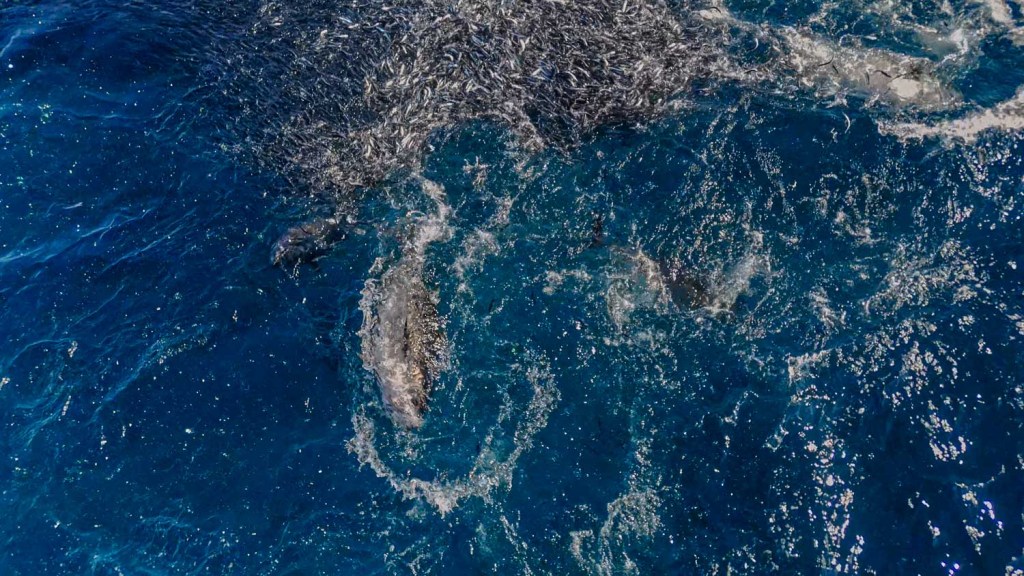
We passed hundreds of dolphins racing north at breakneck speed while we searched for the telltale soaring fins of the orcas. As we approached, however, something else caught our eye entirely — the ocean erupted into foam all around us. Even from a distance, the unmistakable silhouette of massive tuna leaping out of the water drew us straight in.
As we got closer, these apex predators tore through schools of anchovies right off our continental shelf, less than nine miles out of Mission Bay. The hapless prey tried seeking cover under our boat, but to no avail. A shower of scales shimmered around us, leaving a trail of destruction from the tuna’s relentless assault. In the middle of these boiling “foamers” of doomed anchovies, fin whales suddenly appeared alongside our launch, and remarkably, they began lunge feeding right alongside the yellowfin and bluefin tuna.
Massive Tuna Abound and Feed Alongside Fin Whales
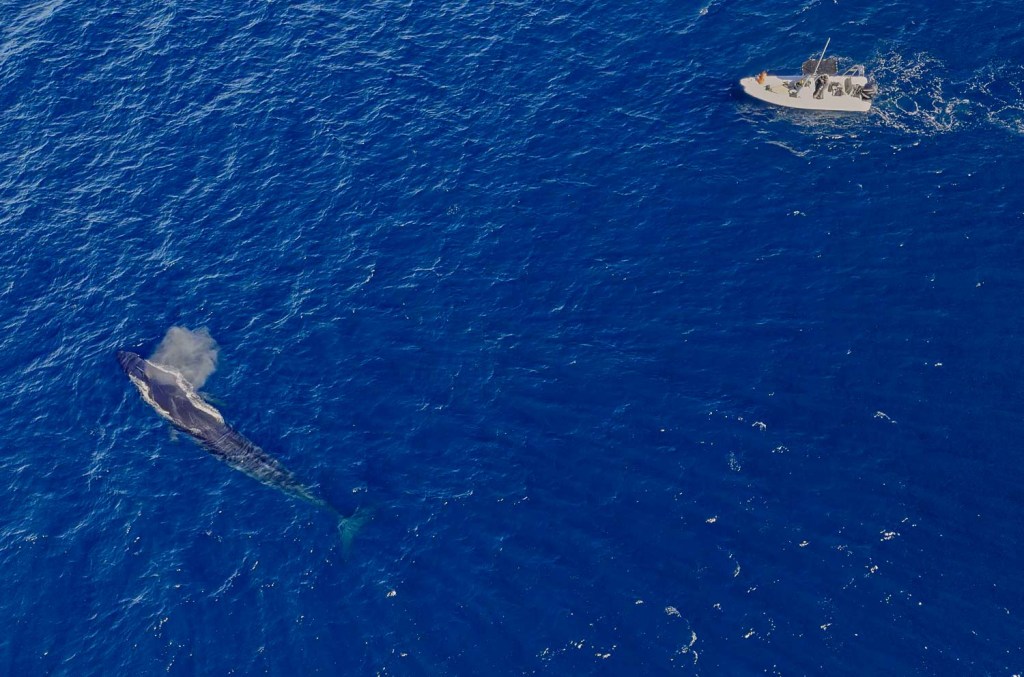
The size and scale of the tuna swarms that surrounded us dwarfed our 26-foot vessel. From above, they formed beautiful, eerie patterns that split the water in half, effectively fanning the small fish to the surface for easy pickings. Some tuna even dwarfed the sea lions that showed up to pick off leftover scraps from the torn-apart fish schools.
It was a mesmerizing display, and it looks like it’s going to continue for a while yet. Above all, it’s heartening to see such an abundance of bluefin and yellowfin tuna right off San Diego, especially given their threatened status due to human activity. Don’t forget to check out the full video on our Facebook page. Seeing these beautiful apex predators in motion was a privilege we hope to share with you.
Pacific Bluefin Biology: Size, Speed, and Superpowers
So what exactly makes a bluefin tuna such an efficient killing machine? First, their muscular, torpedo-shaped bodies minimize drag, letting them cruise at 20 mph and burst past 40 mph when chasing prey. Second, their regional endothermy — essentially an internal “engine” that warms their swimming muscles above the surrounding water temperature — gives them stamina that cold-blooded fish simply cannot match. Meanwhile, their large, oil-rich bodies let them store energy for transoceanic migrations spanning thousands of miles.
In addition, bluefin tuna have exceptional eyesight and a lateral line system that detects vibrations from panicking baitfish from a distance. As a result, a single school of bluefin can coordinate an attack on an anchovy ball with terrifying precision, exactly like the swarm we watched off San Diego. For official life-history data, including migration studies and population assessments, NOAA Fisheries’ Pacific bluefin tuna profile is the definitive government resource.
Giant Tuna vs. Yellowfin: How to Tell Them Apart
During our encounter, bluefin and yellowfin tuna were feeding side by side, which naturally raises the question: how do you tell them apart from a boat? Here are the key differences we look for on the water:
- Body shape: Bluefin tuna are stockier and more torpedo-shaped, while yellowfin have a leaner, more elongated profile.
- Fin color: Yellowfin tuna display bright yellow dorsal and anal fins, whereas bluefin fins are darker, often steel-blue or gray.
- Maximum size: Bluefin tuna can exceed 1,000 pounds, while yellowfin typically top out around 400 pounds.
- Temperature tolerance: Thanks to regional endothermy, bluefin tuna handle colder water far better than yellowfin, which prefer warmer surface layers.
Why Are Bluefin Tuna Swarming Off San Diego’s Coast?
This kind of feeding frenzy doesn’t happen by accident. Specifically, San Diego sits near a narrow continental shelf where deep, nutrient-rich water rises toward the surface in a process called upwelling. Consequently, this fuels massive blooms of plankton, which in turn draw in huge schools of anchovies and sardines. Bluefin tuna, fin whales, sea lions, and seabirds all converge on the same bait balls because the payoff is simply too good to pass up.
Fall is typically peak season for this kind of overlap, which is also why we recently documented an entirely separate humpback whale feeding bonanza in these same productive waters. In contrast to summer months, cooling water temperatures in autumn push bait schools closer to shore, concentrating predators — bluefin tuna included — into a smaller, more visible area. That’s precisely why so many species stack up on top of each other during a single outing.
Conservation Status: Are Bluefin Tuna Endangered?
Yes, and this is worth understanding before you book a trip to see them. Pacific bluefin tuna populations have declined significantly over the past several decades, primarily due to overfishing for the global sushi and sashimi trade. According to the IUCN Red List assessment, Pacific bluefin tuna are currently classified as Near Threatened, with historical stock levels estimated at a small fraction of unfished levels.
Therefore, sightings like the one we captured on video carry extra weight. Every bluefin tuna swarm we witness firsthand is a reminder that conservation measures — including international catch limits — are working, but they still need continued support. In particular, seeing juvenile and adult bluefin tuna thriving together off San Diego is a genuinely encouraging sign for the species’ recovery.
Best Time to Spot Bluefin Tuna Off San Diego
Generally speaking, late summer through early winter — roughly September through December — offers the strongest odds of encountering bluefin tuna off San Diego. During this window, cooling waters push anchovy schools closer to the coast, and predators like fin whales, dolphins, and sea lions follow right behind them. Meanwhile, if you’re organizing a larger outing, our custom corporate ocean charters make it easy to bring a group along for the experience.
Of course, bluefin tuna sightings are never guaranteed — that’s the nature of wildlife watching. Still, on the very same trips where we’ve spotted tuna swarms, we’ve also encountered fascinating oddities like San Diego’s ocean sunfish, or mola mola, drifting near the surface. In short, every trip out has the potential to surprise you.
How to Watch a Tuna Feeding Frenzy Safely
If you’d like to witness a bluefin tuna feeding frenzy for yourself, follow these steps to maximize your chances while respecting the wildlife involved.
- Check the seasonal timing. Plan your trip for the fall migration window between September and December, since bluefin tuna and their prey concentrate much closer to shore during these cooler months.
- Book a licensed whale watching charter early. Reserve your spot on a small, maneuverable boat that can respond quickly to reports of feeding activity, since foamers can appear and vanish within minutes.
- Bring the right gear. Pack polarized sunglasses to cut glare, a camera with a fast shutter speed, and layered clothing, because ocean conditions can shift quickly during a four-hour outing.
- Watch for the telltale signs. Look for diving seabirds, circling sea lions, and patches of churning white water, all of which indicate a bait ball is under attack from below.
- Maintain safe, respectful distances. Let the captain position the boat responsibly around feeding animals, since crowding wildlife can disrupt natural behavior and reduce everyone’s viewing experience.
Book Today – you never know what you may see. Similarly, if you’d rather relive our exact encounter first, you can see the CBS 8 full video on YouTube.
Frequently Asked Questions About Bluefin Tuna
How big can a bluefin tuna get?
A fully grown bluefin tuna can reach up to 10 feet long and weigh over 1,000 pounds, making it one of the largest bony fish in the ocean.
How fast can bluefin tuna swim?
Bluefin tuna typically cruise around 20 mph but can burst past 40 mph in short chases, thanks to their streamlined bodies and warm-blooded muscle system.
Are bluefin tuna endangered?
Pacific bluefin tuna are currently listed as Near Threatened by the IUCN due to decades of overfishing, though international catch limits have helped populations begin to stabilize.
What is a tuna “foamer”?
A “foamer” is the churning, white-water surface disturbance created when tuna or other predators attack a tightly packed school of baitfish from below, forcing it to boil at the surface.
When is the best time to see bluefin tuna off San Diego?
Late summer through early winter, roughly September through December, offers the best chance to see bluefin tuna, since cooler waters push baitfish schools closer to shore.
What’s the difference between bluefin and yellowfin tuna?
Bluefin tuna are stockier, grow much larger, and tolerate colder water better, while yellowfin tuna are leaner, feature bright yellow fins, and generally prefer warmer surface waters.
Can you see bluefin tuna on a whale watching tour?
Yes — bluefin tuna sightings often happen incidentally during whale watching trips, especially in fall when tuna, fin whales, and dolphins converge on the same bait balls off San Diego.
Final Thoughts on This Rare Ocean Spectacle
Ultimately, our four-hour bluefin tuna encounter off San Diego was a powerful reminder of just how alive our local waters really are. From the record-setting size of the swarm to the surprise appearance of fin whales lunge feeding alongside them, this was a genuinely rare convergence of ocean giants. In addition, understanding the biology, migration patterns, and conservation status of bluefin tuna makes moments like this even more meaningful when you witness them firsthand. So, whether you’re drawn by the science or simply the thrill of seeing bluefin tuna in action, there has never been a better time to get out on the water and see it for yourself.