
San Diego stable wildlife viewing boats are purpose-built for calm, low-rocking wildlife encounters, giving photographers, families, and curious travelers a steady platform to watch blue whales, gray whales, dolphins, and sea lions without the queasy bounce of a typical sportfishing boat. At Big Blue Photo Boat, every trip departs from Seaforth Marina in San Diego aboard a Coast Guard-inspected vessel with a low-profile hull and 360-degree viewing access. Furthermore, a Scripps-trained marine biologist narrates each sighting, turning a simple boat ride into a guided ocean science lesson. This guide explains what makes a boat genuinely stable, why it matters, and how to pick the right tour.
Quick answer: San Diego stable wildlife viewing boats are small, low-profile vessels with wide beams, quiet outboard engines, and open rail access that minimize rocking so guests can watch and photograph whales, dolphins, and sea lions comfortably. Operators like Big Blue Photo Boat pair these hulls with naturalist guides and non-chasing viewing practices for a calmer, lower-impact ocean experience.
What Are San Diego Stable Wildlife Viewing Boats?
San Diego stable wildlife viewing boats are vessels engineered specifically to reduce rocking and pitching while cruising offshore, which keeps guests comfortable and keeps cameras steady. Unlike larger charter boats that tower above the waterline, these boats typically sit low and wide, spreading weight evenly across a broader hull. As a result, sudden rolls in choppy water are much less noticeable to passengers standing at the rail.
In addition, many stable viewing boats run quiet outboard engines rather than loud inboard diesels. This matters because noise and wake can push wildlife away before guests ever get a clear look. According to NOAA Fisheries, boaters are encouraged to maintain at least 100 yards from whales and approach slowly to limit disturbance, so a quieter, more controlled vessel naturally supports that guidance.
Open 360-degree rail access is another defining feature. Rather than fixed bench seating facing one direction, guests can move freely around the deck as a whale surfaces on either side. Consequently, nobody misses the moment simply because they were seated on the wrong side of the boat.
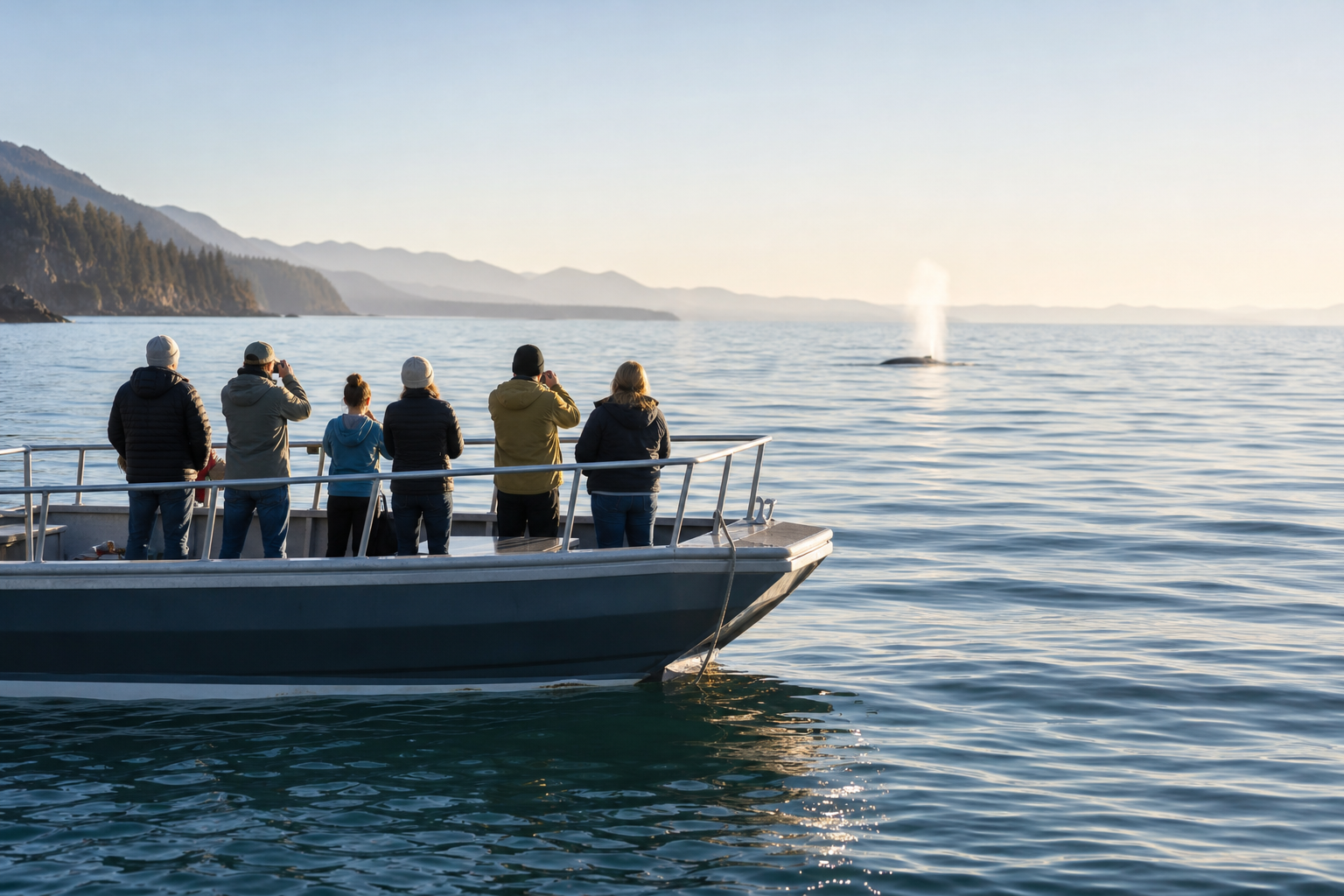
San Diego stable wildlife viewing boats keep the deck level so guests can watch distant spouts without losing their footing.
Why Boat Stability Matters for Whale and Dolphin Watching
Stability affects far more than comfort. A steadier platform helps prevent motion sickness, which is one of the most common reasons guests cut a trip short. Similarly, a level deck gives everyone a better chance to spot a fin, fluke, or blow before it disappears.
For photographers, a stable hull reduces camera shake, which matters most at longer zoom lengths where even small movements blur a shot. Specifically, a low center of gravity absorbs swell instead of transferring every wave directly into the deck. Therefore, a photographer bracing against a rail on a stable boat gets noticeably sharper frames than on a boat that pitches hard with every passing wake.
Families benefit too, since younger passengers and first-time boaters often struggle most with abrupt rocking. A calmer ride means longer time on the water, which in turn means more patience for a slow-surfacing whale or a pod of dolphins riding the bow wave. For a deeper look at how vessel design supports photography specifically, this wildlife photography tour guide breaks down the gear and positioning that pairs well with a stable deck.
Low-Profile, Photographer-Friendly Wildlife Viewing Vessels
Photographers and filmmakers have specific needs that go beyond a comfortable seat. A genuinely photographer-friendly boat offers unobstructed sightlines, minimal engine vibration, and enough deck space to move between angles without climbing over other guests.
Low-profile hulls sit closer to the waterline, which actually improves certain shots by putting the camera nearer eye level with a surfacing whale rather than looking sharply downward from a high deck. Meanwhile, quiet engines reduce the chance of spooking wildlife mid-shot, which is especially important for filmmakers trying to capture extended, uninterrupted footage.
These qualities are exactly why vessels with stable, low-profile designs have supported professional film crews on wildlife documentaries. For readers planning a dedicated shoot, this filmmaker-friendly boat guide covers platform requirements in more depth, while this gear guide for photographer tours walks through lens choices suited to a moving deck.
Choosing the Best Stable Whale Watching Boat in San Diego
Not every whale watching boat is built the same way, so it helps to compare a few specific factors before booking. The following steps outline a practical process for picking a tour that matches your goals, whether that is a relaxed family outing or a focused photography trip.
- Decide on season and target species. Gray whales migrate from December through April, while blue, fin, and humpback whales peak from June through September off the San Diego coast.
- Pick the right group size. Smaller groups capped at six passengers, with room for up to twelve on special occasions, give photographers and families more rail space and quieter encounters.
- Confirm vessel stability features. Ask about hull width, quiet outboard engines, and 360-degree open rail access before booking a trip focused on photography or filming.
- Check inspection and naturalist credentials. Look for Coast Guard inspection and a trained naturalist guide, since a Scripps-trained marine biologist can point out subtle surface behavior most visitors would otherwise miss.
- Book directly and prepare gear. Reserve with the operator, bring your own snorkel or camera equipment, and arrive at the marina early so boarding and safety briefings go smoothly.
For a closer comparison of what separates a strong photography-oriented operator from a standard sightseeing boat, this guide to the best boat tours for wildlife photographers is a useful next read.
Seasonal Wildlife Aboard San Diego’s Stable Charter Boats
San Diego’s offshore waters support a wide range of marine life throughout the year, and stability matters most when the boat sits still to watch an animal for an extended time. The table below summarizes common seasonal sightings.
The blue whale, the largest animal on Earth, is one of the main draws during summer months, and a stable deck gives guests the patience to wait for a surface interval rather than fighting rough chop.
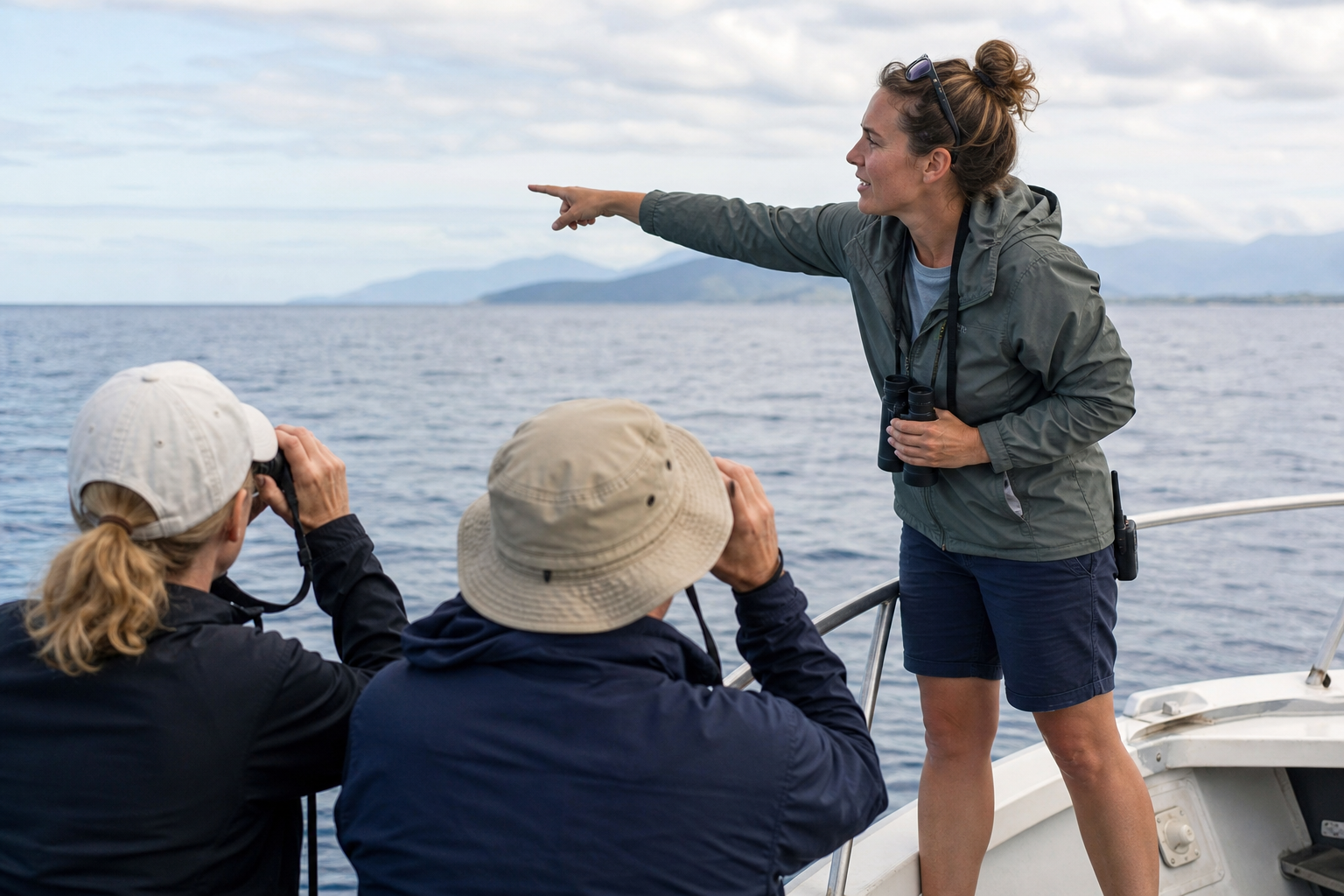
A naturalist guide helps photographers anticipate the next surfacing, even on a moving boat.
Coast Guard-Inspected Safety Standards
Stability is only part of the safety picture. A Coast Guard-inspected vessel has met specific requirements for passenger capacity, safety equipment, and crew licensing, which gives guests an added layer of confidence before heading offshore. This inspection status is worth confirming directly with any operator, since not every boat on the water carries it.
In addition to inspection, low-impact, non-chasing viewing practices reduce stress on wildlife and keep encounters natural rather than forced. Staying at a respectful distance, as recommended by NOAA Fisheries, allows animals to approach the boat on their own terms, which often produces calmer, more extended sightings than an aggressive approach would. For more detail on what inspection standards actually cover, this Coast Guard-inspected whale watching boats guide explains the requirements operators must meet.
Guides trained through institutions such as the Scripps Institution of Oceanography bring research-level knowledge of marine mammal behavior, which helps crews anticipate movement patterns and keep both guests and animals safe during a sighting.
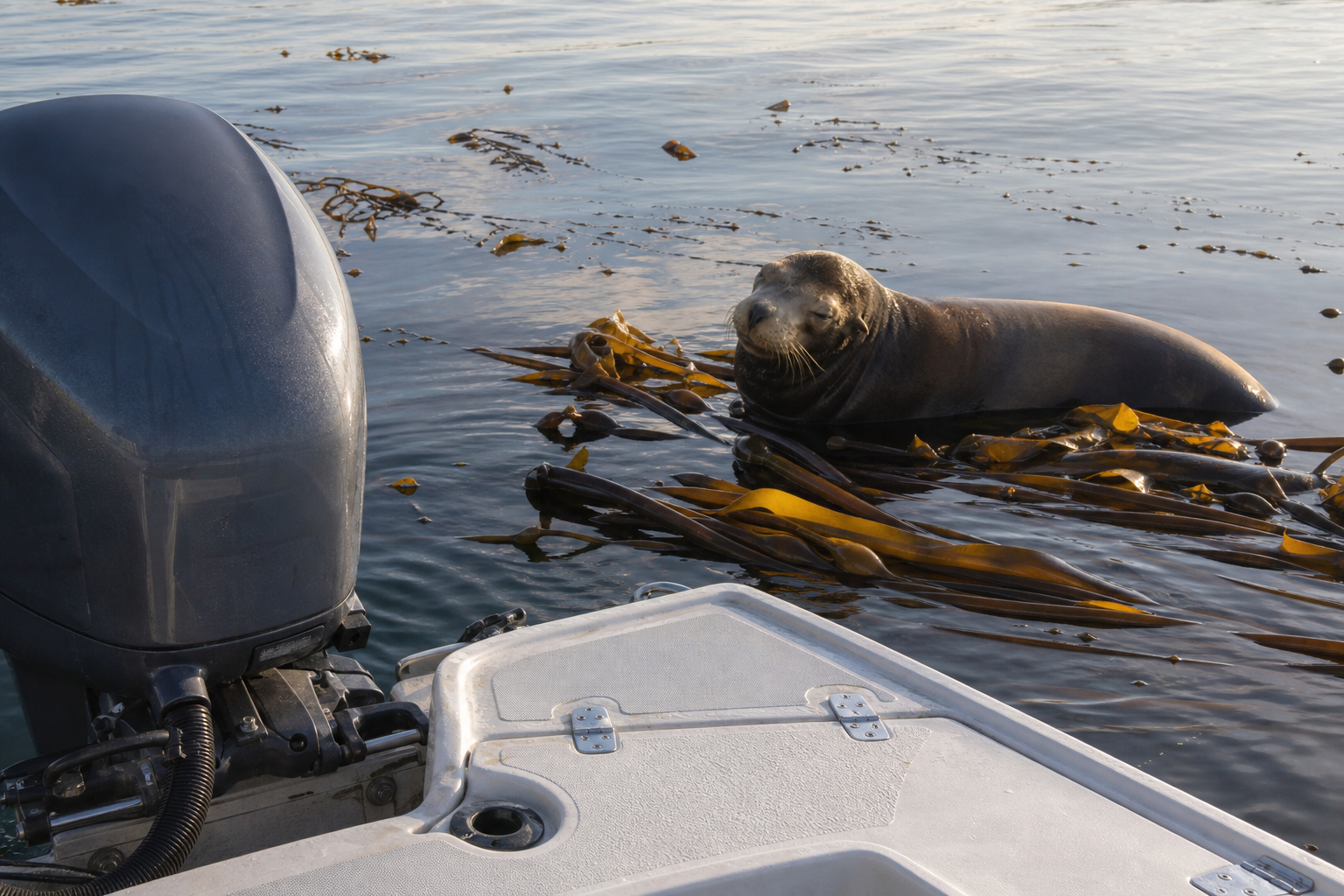
Quiet outboard engines let stable boats approach kelp paddies without disturbing resting sea lions.
Frequently Asked Questions About San Diego Stable Wildlife Viewing Boats
What are San Diego stable wildlife viewing boats?
San Diego stable wildlife viewing boats are low-profile, wide-beam vessels designed to reduce rocking so guests can safely and comfortably watch whales, dolphins, and sea lions. They typically feature quiet outboard engines and open 360-degree rail access for unobstructed photography.
How do stable boats reduce seasickness during whale watching?
A wider hull and lower center of gravity cut down on side-to-side rocking, which is the main cause of motion sickness on the water. Smaller passenger groups also mean the boat sits more evenly in the swell.
Why do photographers prefer low-profile boat hulls?
Low-profile hulls sit closer to the waterline, giving photographers a better angle on surfacing whales and reducing camera shake from excess motion. Quiet engines also limit startling the wildlife before a shot is composed.
What wildlife can you see year-round in San Diego waters?
Common and bottlenose dolphins are present throughout the year, along with sea lions near kelp beds. Whale species shift seasonally, with gray whales in winter and blue, fin, and humpback whales in summer.
How much does a private whale watching charter cost in San Diego?
Pricing varies by group size, trip length, and season, with private and semi-private charters generally costing more per person than large group boats due to limited passenger counts. Operators typically list rates by trip type directly on their booking pages.
How long do whale watching tours last?
Standard trips usually run two to four hours, while full-day expeditions can extend to six hours or more to reach farther offshore. Trip length often depends on where the target species is currently feeding or migrating.
What is the difference between semi-private and private charters?
A semi-private charter is shared with a small capped group, usually six passengers, while a private charter reserves the entire boat for one party. Private charters offer more flexibility over timing, route, and pace on the water.
Are these boats Coast Guard inspected?
Reputable San Diego wildlife viewing operators run Coast Guard-inspected vessels that meet safety standards for passenger capacity, equipment, and crew licensing. Asking about inspection status is a smart step before booking any charter.
What mistakes do beginners make when choosing a wildlife boat tour?
A common mistake is booking a large, crowded boat without checking hull type, which can mean more rocking and less rail access for photos. Beginners also sometimes skip checking whether a trained naturalist is aboard.
Can filmmakers use drones on these tours?
Many photographer- and filmmaker-friendly operators support drone-friendly operations, but rules depend on airspace, wildlife distance regulations, and the specific trip. It is best to confirm drone policies directly with the operator beforehand.
What should I bring on a wildlife viewing boat tour?
Guests should bring layered clothing, sun protection, motion sickness remedies if needed, and their own snorkel or camera gear since rental equipment is typically not provided. A secure camera strap is also a smart addition.
How close do boats get to whales?
NOAA Fisheries recommends vessels stay at least 100 yards from whales to reduce disturbance and stress on the animals. Low-impact, non-chasing operators let whales approach on their own terms rather than closing the distance themselves.
What’s the best season to see blue whales in San Diego?
Blue whales are most commonly spotted off San Diego between June and September, when they feed on dense krill swarms offshore. Fin whales and humpbacks often overlap with this same summer window.
Do stable viewing boats work for snorkeling trips too?
Yes, the same stable, low-profile hulls used for whale watching also support summer snorkel and photo trips around kelp paddies, sea lions, and ocean sunfish. Easy water entry points make these boats practical for both viewing and snorkeling.
How do I book a San Diego stable wildlife viewing boat tour?
Most operators allow direct online booking by selecting a trip type, date, and group size through their website. Contacting the operator ahead of time helps confirm season, target species, and any special requests for photography or filming.
Final Thoughts on Stable Wildlife Viewing in San Diego
Choosing the right vessel changes the entire experience of watching whales and dolphins offshore. In short, San Diego stable wildlife viewing boats give families, photographers, and filmmakers a calmer, quieter, and more respectful way to witness blue whales, gray whales, dolphins, and sea lions in their natural habitat. From low-profile hulls and open rail access to Coast Guard inspection and Scripps-trained naturalist guides, every detail affects how close, how comfortable, and how memorable the encounter becomes. Before booking a trip out of Seaforth Marina, take a moment to confirm the season, group size, and vessel features that matter most to your goals, whether that means a relaxed family outing or a focused photography session with Big Blue Photo Boat.
