
San Diego private wildlife charters give small groups of families, photographers, and ocean adventurers a personal, flexible way to watch whales, dolphins, and other marine life along the Southern California coast. Instead of sharing a crowded deck with dozens of strangers, a private or semi-private charter reserves the boat for your group alone, with a trained guide pointing out wildlife in real time. For travelers who want a quieter, more attentive experience on the water, this style of tour has become one of the most requested options in San Diego’s whale watching industry.
Quick answer: A San Diego private wildlife charter is a small-group boat tour, usually capped at six to twelve passengers, led by a trained naturalist or marine biologist, that departs from marinas such as Seaforth Marina to view whales, dolphins, sea lions, and other marine life without the crowds of a large public tour boat.
San Diego private wildlife charters are reserved boat trips built around a single group rather than a mix of strangers. Typically, the vessel holds six passengers for a standard private or semi-private booking, though some operators allow up to twelve guests for special occasions like proposals or corporate outings. Because the boat isn’t shared with other parties, the route, pace, and focus of the trip can shift based on what your group wants to see.
In addition, many charters pair the small-group format with a trained naturalist or marine biologist on board. This matters because identifying a fin whale from a gray whale, or reading dolphin behavior, takes practice. A trained guide, for example, can explain feeding patterns or migration timing while the boat is positioned for a clear, respectful view. Learn more directly from the operator at bigbluephotoboat.com.
Large whale watching boats can carry well over a hundred passengers, which often means limited rail space and a rushed, one-size-fits-all narration. By contrast, a small-group or private tour lets every guest have an unobstructed view. Consequently, photographers and filmmakers tend to prefer this format, since there’s room to move around a 360-degree deck without fighting for position.
Furthermore, smaller vessels with quiet outboard engines and stable, low-profile hulls tend to disturb wildlife less than large, noisy boats. As a result, low-impact, non-chasing viewing practices are easier to maintain, which benefits both the animals and the quality of the sightings. For a closer look at how these trips are structured, see this guide to private marine wildlife tours in San Diego.
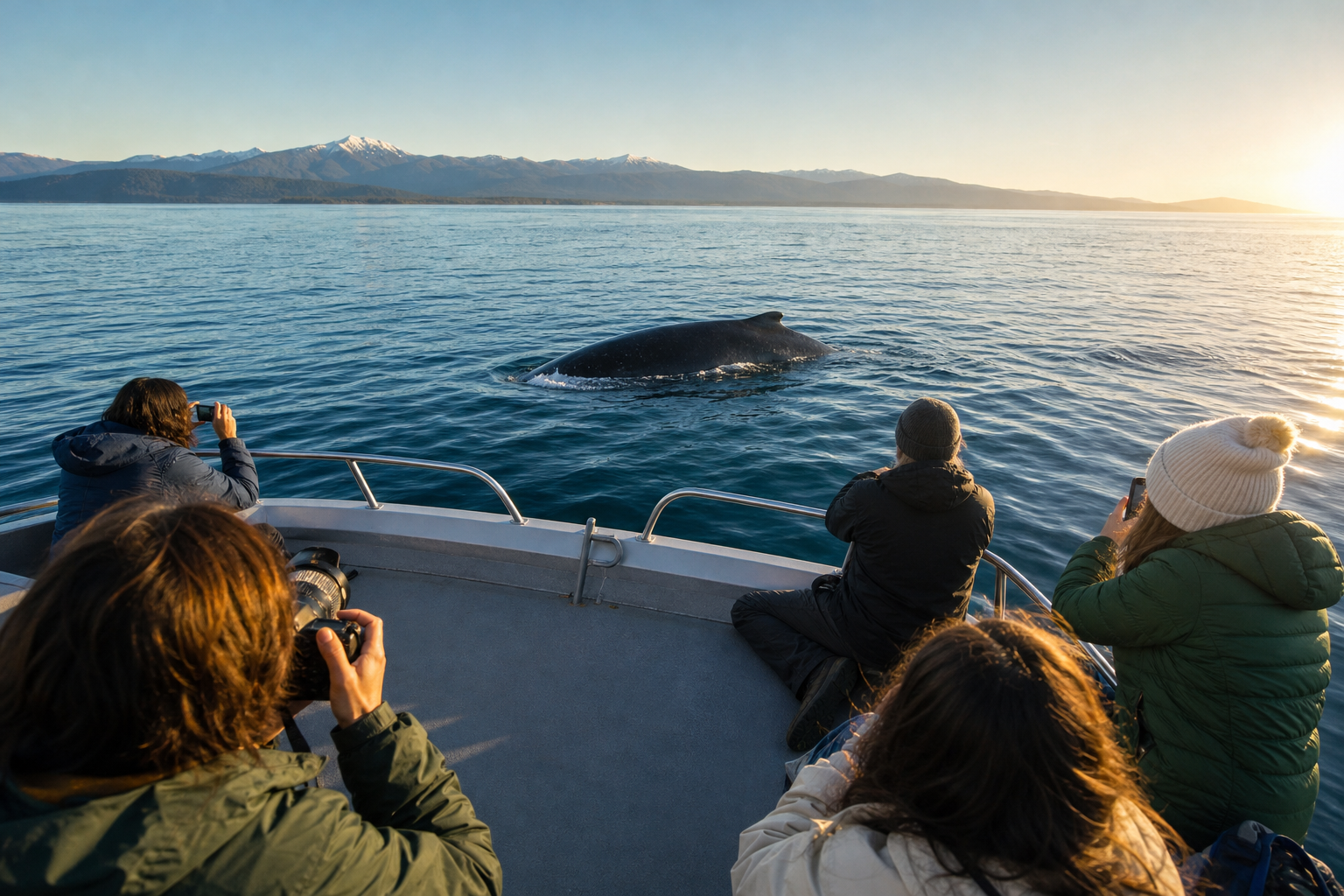
San Diego private wildlife charters keep groups small so every guest gets an unobstructed view of the water.
Semi-private whale watching tours typically cap the group at six guests, which keeps the experience personal while sharing the cost of the trip. Meanwhile, fully private charters reserve the entire boat, giving families, couples, or film crews complete control over timing and route. Some operators also run Blue Water Safari snorkel and photo tours in summer, pairing kelp paddy exploration with sightings of ocean sunfish and curious sea lions.
For special occasions such as birthdays, proposals, or corporate events, custom boat charters can expand to twelve passengers on larger vessels. In particular, these trips often include flexible routing, so the boat can head toward La Jolla Canyon or stay closer to Seaforth Marina depending on conditions. Readers planning a celebration may find this overview of private charters for special occasions helpful when comparing options.
Booking a charter is fairly straightforward once you know what to look for. The steps below outline a simple process that applies to most operators along San Diego Bay.
San Diego’s offshore waters support a wide range of marine mammals throughout the year, though sightings always depend on the season and weather. According to NOAA Fisheries, gray whales migrate along the California coast between December and April, making winter one of the most reliable seasons for whale watching.
| Season | Likely Sightings |
|---|---|
| Winter (Dec–Apr) | Gray whales, dolphins, sea lions |
| Summer (Jun–Sep) | Blue whales, fin whales, ocean sunfish, kelp paddy life |
| Year-round | Common and bottlenose dolphins, occasional orcas |
Because wildlife is unpredictable, no operator can guarantee sightings on any given trip. However, experienced captains who track feeding patterns and local reports tend to improve the odds considerably.
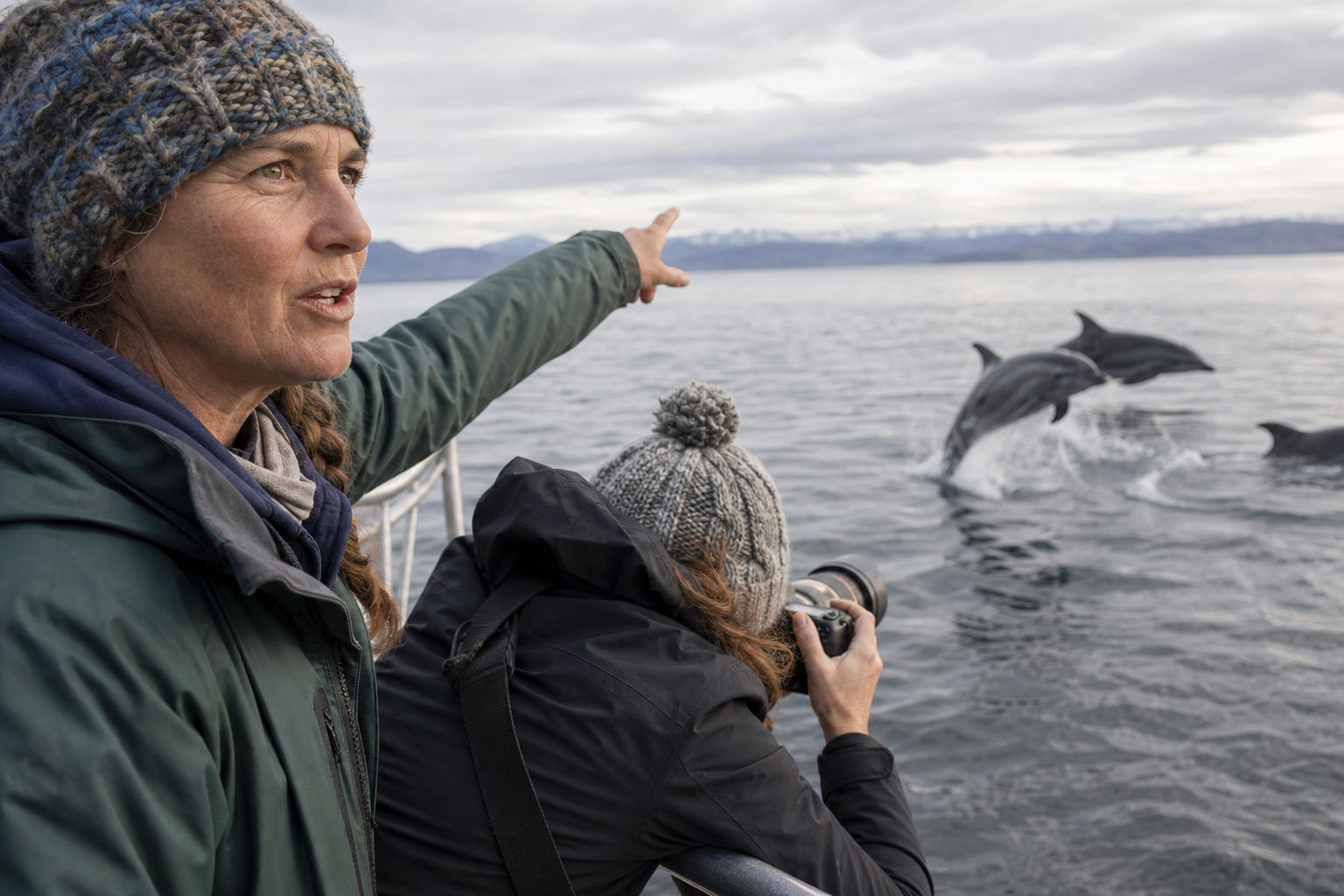
A trained naturalist helps guests spot and understand dolphin behavior during the trip.
A trained marine biologist adds real educational value to a wildlife charter. For instance, a guide with a background from a research institution such as Scripps Institution of Oceanography can explain migration timing, feeding behavior, and species identification in plain language. This context turns a simple boat ride into a more meaningful outing, especially for families with curious kids or photographers who want accurate captions for their shots.
Moreover, naturalists trained as marine mammal observers are often better at predicting animal behavior, which helps the captain position the boat respectfully instead of chasing wildlife. This approach aligns with guidelines similar to those published by NOAA Fisheries’ marine mammal viewing guidelines, which recommend maintaining a respectful distance from whales and dolphins in the wild. To compare naturalist-led options directly, this breakdown of marine biologist-led whale watching tours in San Diego is a useful starting point.
Photographer- and filmmaker-friendly charters typically use coast guard-inspected vessels with low-profile hulls and quiet engines, both of which reduce vibration and disturbance. As a result, boats built this way have supported documentary crews from networks including BBC Earth, National Geographic, and Discovery Channel. Drone-friendly operations and 360-degree deck access also make it easier to track moving subjects like breaching whales or jumping dolphins without losing the shot.
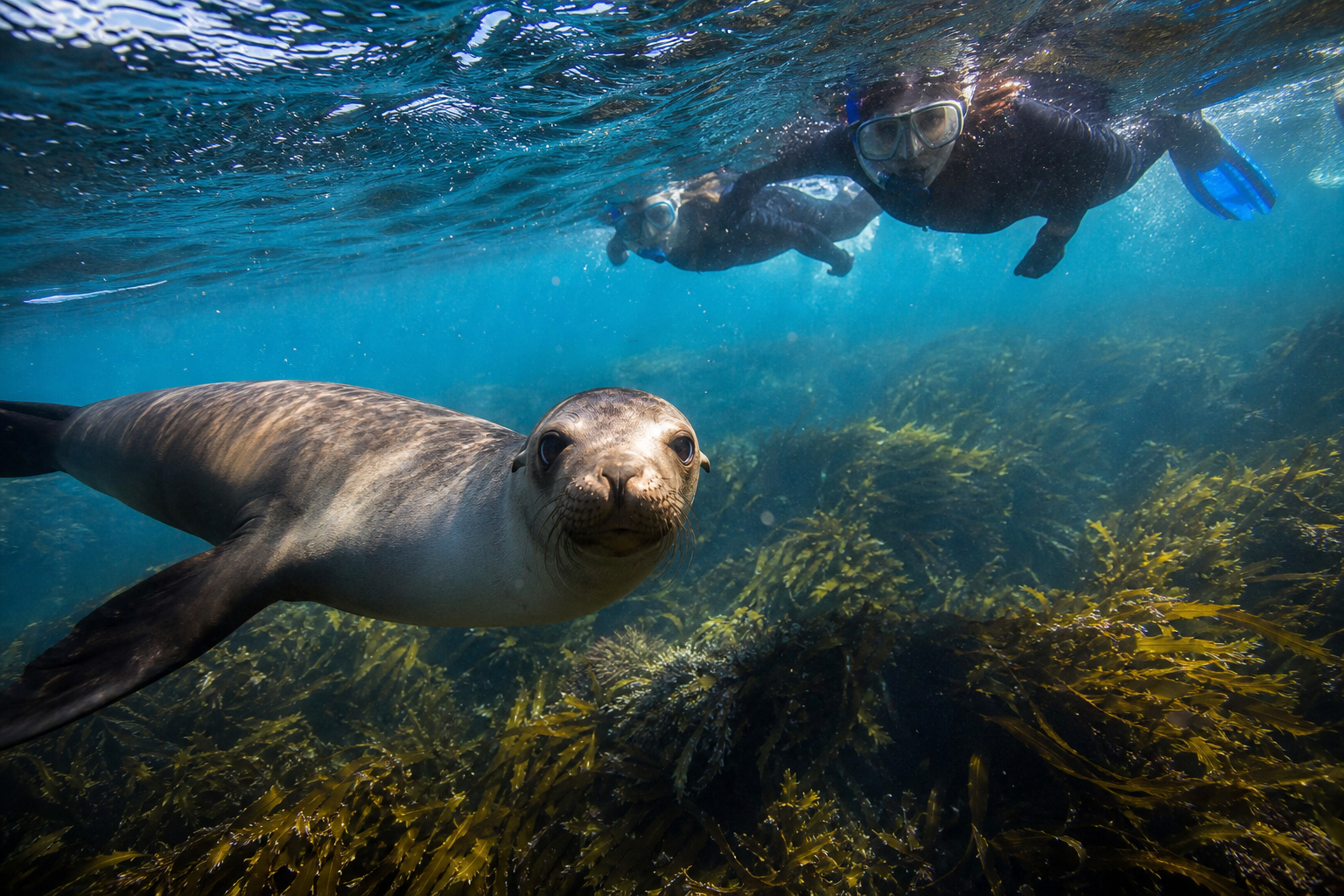
Summer snorkel trips often bring guests close to kelp paddies, sea lions, and ocean sunfish.
Seaforth Marina sits close to open water, which cuts down travel time to prime wildlife viewing areas near La Jolla Canyon. Consequently, trips launching from this marina can spend more time actually watching wildlife rather than motoring to a distant location. Guests booking a private or semi-private charter should plan to arrive about fifteen minutes before departure to allow time for a safety briefing.
Additionally, dressing in layers is wise since ocean temperatures can feel cooler than they look from shore. Snorkel trip guests should bring their own mask, snorkel, and fins, since gear rental isn’t part of the service. For travelers weighing naturalist-guided options side by side, this resource on private whale watching tours with a naturalist guide covers what to expect on board.
Standard private charters generally run three to four hours, which fits comfortably into a morning or afternoon schedule. On the other hand, full-day expeditions push further offshore and allow more time to search for less predictable species like blue whales or orcas. Families with young children often prefer the shorter format, while serious photographers sometimes opt for the longer trip to maximize their chances of a rare sighting. Those planning a group celebration can also review special-occasion charter options on San Diego whale tours for ideas on combining a celebration with wildlife viewing.
San Diego private wildlife charters are small-boat tours booked exclusively for one group, typically six passengers or fewer, to watch whales, dolphins, and other marine life without sharing the vessel with strangers. They differ from large public whale watching boats by offering a guided, flexible, and personal experience on the water.
Pricing varies based on boat size, trip length, and passenger count, since private charters are usually quoted as a flat rate for the whole boat rather than per seat. Contacting the operator directly for a current quote is the most reliable way to budget for your trip.
Most private whale and dolphin watching charters run between three and four hours, while full-day expeditions can extend to six hours or more depending on weather and sightings. Snorkel trips typically follow a similar half-day schedule.
A private tour reserves the entire boat for one group, while a semi-private tour keeps groups small, often capped at six guests, though it may combine passengers from separate bookings. Both formats still offer far more personal attention than a large public tour boat.
Gray whales migrate past San Diego from December through April, while blue whales, fin whales, and humpbacks are more common offshore from June through September. Dolphins and sea lions tend to be present year-round.
Yes, guests on snorkel-focused charters are expected to bring their own snorkel or freedive equipment, since gear rental is not part of the service. It’s worth checking with the operator ahead of time for recommended gear.
Standard private and semi-private charters are usually capped at six passengers to keep the experience intimate. Some operators allow up to twelve guests on larger vessels for special-occasion bookings.
Yes, many charter boats use low-profile, stable hulls, quiet engines, and 360-degree viewing access specifically to support photographers and filmmakers. Some vessels have supported documentary crews from major wildlife television networks.
Depending on the season, guests may see blue whales, gray whales, humpback whales, fin whales, orcas, dolphins, sea lions, and ocean sunfish. Sightings are never guaranteed since these are wild animals in open water.
The strongest charters are guided by a trained marine biologist or naturalist who can identify species and explain behavior in real time. Some guides have research backgrounds tied to institutions such as Scripps Institution of Oceanography.
A common mistake is booking without checking group size, season, and naturalist credentials, which can lead to a crowded boat or a less informative trip. It also helps to confirm cancellation and weather policies before paying a deposit.
Smaller, low-impact charters that follow non-chasing viewing practices generally cause less disturbance to marine mammals than large, crowded vessels. Responsible operators follow guidelines similar to those recommended by NOAA Fisheries for approaching whales and dolphins.
Yes, many operators offer fully customized charters for birthdays, proposals, corporate events, and other celebrations, adjusting the route and duration as needed. These trips often allow larger groups than a standard wildlife tour.
Most charters depart from marinas along San Diego Bay, with Seaforth Marina being a common launch point for trips heading toward La Jolla Canyon and offshore waters. Departure location affects travel time to prime wildlife viewing areas.
In summary, San Diego private wildlife charters offer a more personal, photographer-friendly, and educational way to experience the region’s whales, dolphins, and seasonal marine life compared to large group tour boats. Whether you’re planning a quiet family outing, a filming trip, or a special-occasion celebration, choosing a small-group charter with a trained naturalist guide tends to produce a richer experience on the water. Before booking, it’s worth comparing group size, season, boat features, and guide credentials to find the right fit for your trip.
