
San Diego ocean photography tours put photographers within a few feet of blue whales, humpbacks, dolphins, and sea lions without ever leaving the stability of a Coast Guard–inspected vessel. For visual storytellers chasing that one perfect frame, the right boat and the right guide make the difference between a blurry silhouette and a cover-worthy shot. This guide explains what these tours involve, when to book them, and how to choose a crew that understands both marine wildlife behavior and camera gear.
Quick answer: San Diego ocean photography tours are small-group boat charters, often capped at six to twelve guests, that pair stable camera platforms with naturalist or marine biologist guides to photograph whales, dolphins, and other marine life along the San Diego coastline and nearby La Jolla Canyon.
What Are San Diego Ocean Photography Tours?
San Diego ocean photography tours are chartered boat trips designed specifically around capturing wildlife on camera rather than simply sightseeing. Unlike a large commercial whale watching boat packed with eighty or more passengers, these charters typically keep groups small so every guest has an open sightline and room to move around the deck.
Most trips are led by a naturalist or, in some cases, a marine biologist with formal research training. That expertise matters: knowing how a gray whale behaves before a dive, or where dolphins are likely to surface next, helps photographers anticipate the shot instead of reacting too late. As whale watching has grown as an eco-tourism activity worldwide, San Diego’s position along a major migration corridor has made it one of the most consistent locations in North America for ocean wildlife photography.
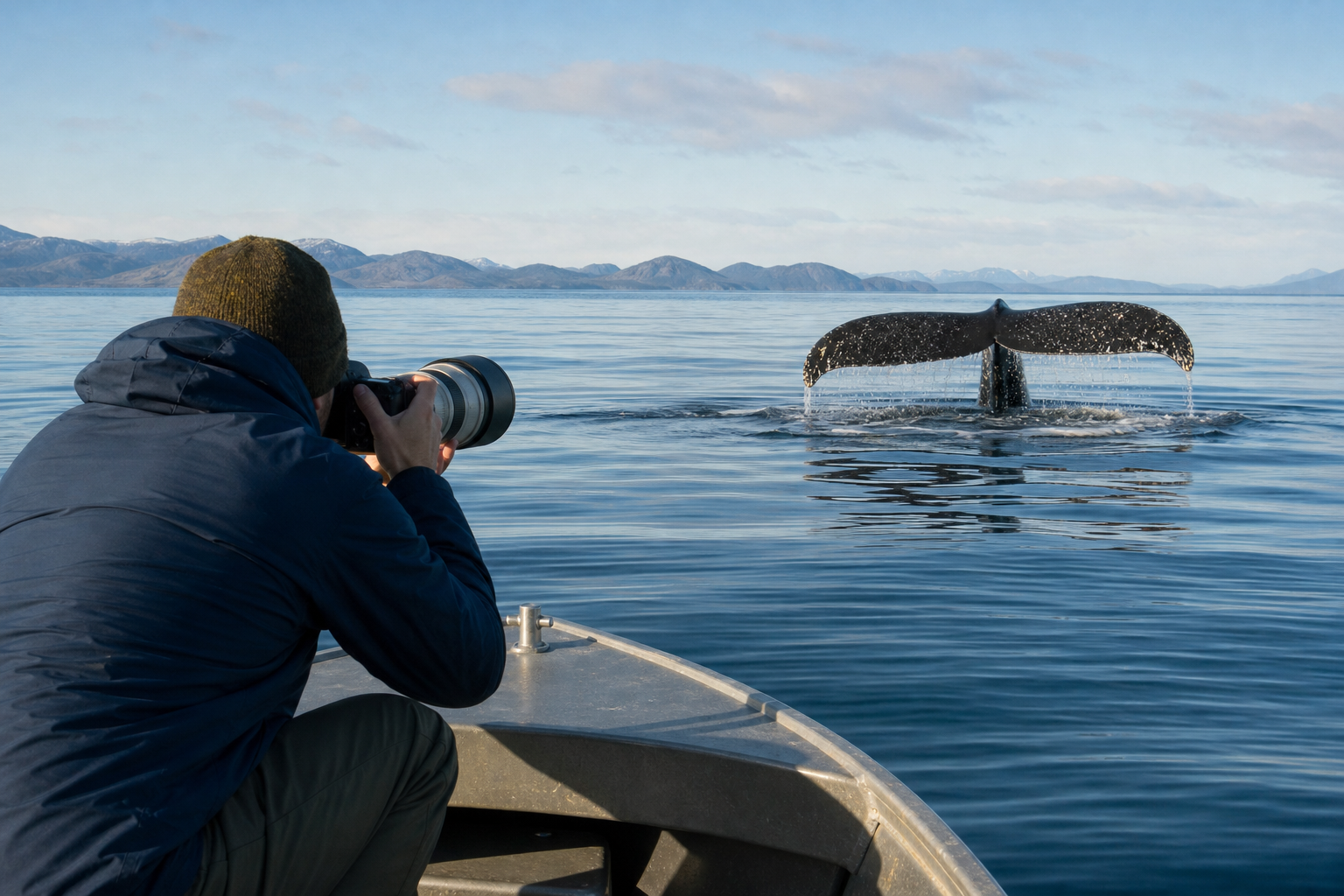
San Diego ocean photography tours give photographers an unobstructed angle on moments like a diving whale fluke.
Why San Diego Waters Attract Wildlife Photographers
San Diego sits along a rich stretch of the Pacific coast where deep offshore canyons, including La Jolla Canyon, push nutrient-dense water close to shore. As a result, the area supports an unusually dense and varied marine food chain throughout the year. In fact, gray whales migrate nearly 12,000 miles round-trip between Arctic feeding grounds and Baja California lagoons every year, one of the longest migrations of any mammal, according to NOAA Fisheries, and much of that route passes directly offshore from San Diego.
Consequently, photographers visiting at the right time can capture blue whales, fin whales, humpbacks, orcas, and multiple dolphin species without traveling far from Seaforth Marina. Researchers trained at institutions such as Scripps Institution of Oceanography have studied these migration patterns for decades, and many local guides draw on that same body of research when briefing guests before a trip.
Best Seasons for Ocean Photography Charters in San Diego
Timing matters more than almost any other factor on a wildlife shoot. Winter through early spring is prime season for gray whale migration photography, as the whales pass close to the coast on their way south, then again heading north with new calves. Summer and early fall, by contrast, bring blue whales, fin whales, and larger dolphin pods farther offshore, along with seasonal snorkel opportunities featuring ocean sunfish and kelp paddy wildlife.
Dolphins and sea lions, meanwhile, are reliably spotted throughout the year, which makes San Diego one of the few West Coast locations offering year-round marine photography charters rather than a narrow seasonal window.
What Makes a Boat Photographer-Friendly?
Not every whale watching boat suits a photographer’s needs. A stable, low-profile hull reduces the rocking that blurs long-exposure shots, while quiet outboard engines limit both vibration and the noise that can startle nearby wildlife. Full 360-degree deck access also matters, since animals rarely surface on cue, and a boat that forces everyone to one rail will cost someone their shot.
| Tour Type | Group Size | Best For |
|---|---|---|
| Private charter | Exclusive, up to 12 | Film crews, special occasions |
| Semi-private tour | Up to 6 passengers | Small photography groups |
| Full-day expedition | Small group | Offshore blue whale season |
How to Book a San Diego Ocean Photography Tour
Booking a photography-focused charter involves a few extra considerations beyond a standard whale watching ticket. The following steps outline a reliable process.
- Define your subject and season. Decide whether blue whales, gray whale migrations, dolphins, or summer snorkel wildlife matter most, since each species has a different peak season off San Diego.
- Choose private, semi-private, or full-day. Pick a charter format based on your group size and budget, weighing exclusive private access against the lower cost of a small semi-private group trip.
- Confirm the boat’s photography features. Ask whether the vessel has a stable, low-profile hull, quiet engines, and 360-degree viewing access, since these details directly affect your image sharpness.
- Pack weatherproof gear. Bring a telephoto lens, extra batteries, memory cards, and a dry bag, because ocean spray and sudden weather changes are common on open water.
- Book early and confirm policies. Reserve your spot well ahead of peak whale season and confirm the cancellation, rescheduling, and weather policy before finalizing payment.
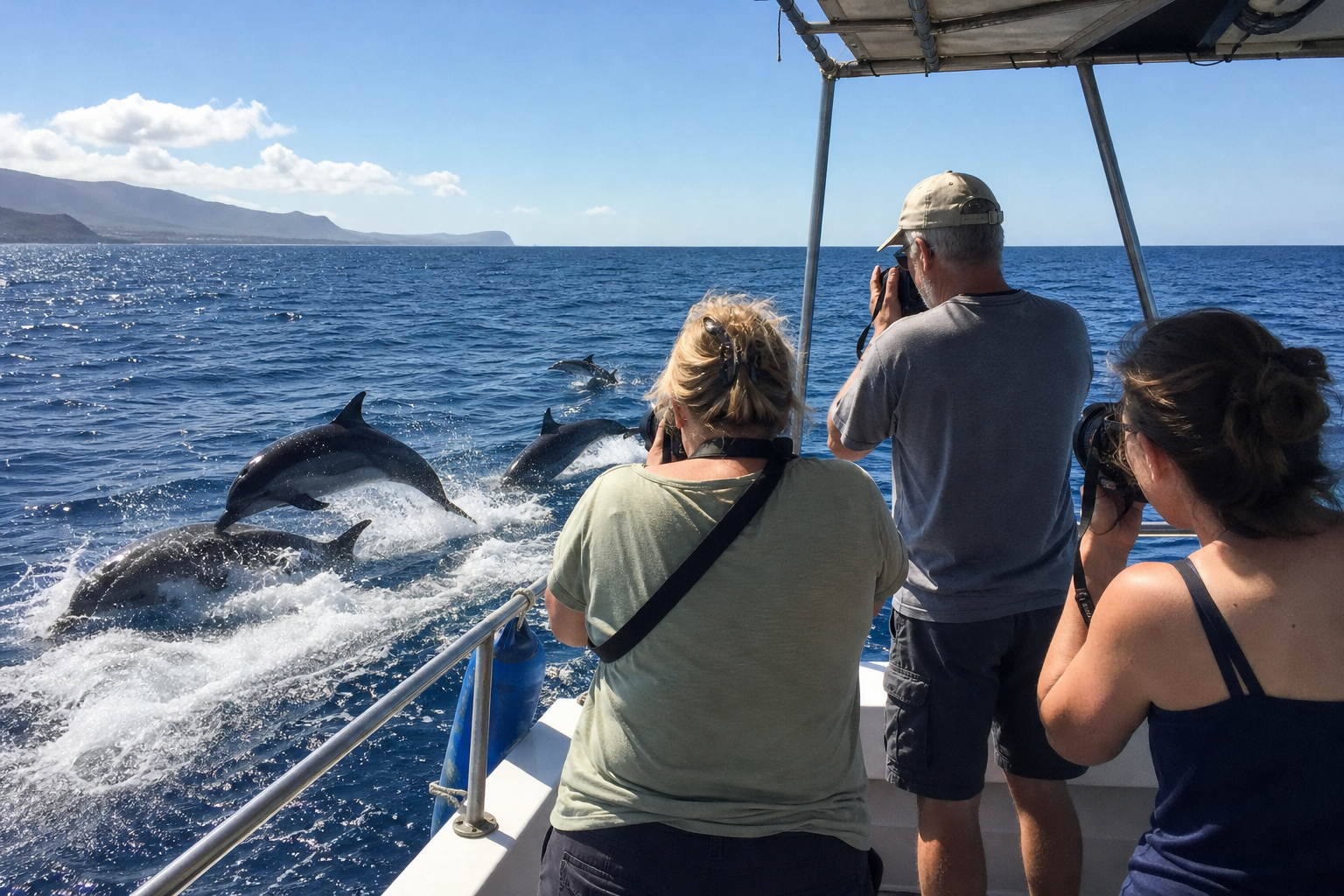
Small groups make it easier for every guest to frame a clean shot during the trip.
Choosing the Right Photography Boat Tour in San Diego
Because gear and group size affect results so directly, it helps to compare a few operators before booking. For example, the best whale watching tours in San Diego for photographers tend to share a few traits: small groups, naturalist-trained guides, and boats built with stable, low-profile hulls rather than tall multi-deck vessels.
Operating out of Seaforth Marina, Big Blue Photo Boat is one example of a family-run charter built around these priorities. Trips are led by a marine biologist trained at Scripps Institution of Oceanography, groups are capped at six passengers for standard trips (up to twelve for special occasions), and the vessels have supported film crews from BBC Earth, National Geographic, and Discovery Channel. The operation also follows low-impact, non-chasing viewing practices rather than crowding or pursuing animals for a closer shot. You can review the full range of wildlife photography tours or read a detailed breakdown of choosing the best boat tour for wildlife photographers in San Diego before deciding which trip format fits your goals.
For those planning a longer offshore trip, it’s also worth reading this offshore whale watching charters guide, which covers routes extending beyond San Diego into Southern California’s broader coastal waters. You can also visit Big Blue Photo Boat directly to check current seasonal availability.
Tips for Capturing Great Marine Wildlife Photos
Good gear helps, but technique matters just as much on a moving boat. A telephoto lens in the 100-400mm range gives enough reach for distant whale sightings while still handling closer dolphin encounters. Shooting in burst mode, which fires several frames per second, increases the odds of catching a breach or fluke at exactly the right instant.
In addition, setting a fast shutter speed, generally 1/1000th of a second or quicker, freezes motion from both the animal and the rocking boat. Polarizing filters can also cut glare off the water’s surface, which otherwise washes out color and detail in bright midday light. Above all, patience matters most; marine wildlife surfaces on its own schedule, not the photographer’s.
Frequently Asked Questions About San Diego Ocean Photography Tours
What are San Diego ocean photography tours?
San Diego ocean photography tours are small-group boat charters built around capturing whales, dolphins, and other marine life on camera, usually with a naturalist or marine biologist guide aboard. They differ from standard whale watching cruises by keeping group sizes low and giving photographers unobstructed, 360-degree access to the water.
How long do San Diego ocean photography tours typically last?
Most charters run three to four hours, though full-day expeditions can extend to seven or eight hours when chasing offshore species like blue whales. Tour length usually depends on the season and how far the captain needs to travel to find active wildlife.
What is the best time of year for whale and dolphin photography near San Diego?
Winter through spring favors gray whale migration shots, while summer and early fall are best for blue whales, fin whales, and dolphin pods. Dolphins and sea lions are commonly photographed year-round off the San Diego coast.
How much do private ocean photography charters cost in San Diego?
Private charters generally cost more per person than large group boats because they cap passenger counts and dedicate the full trip to your group. Pricing varies by trip length, boat size, and season, so it’s best to request a quote directly from the operator.
Do I need to bring my own camera and snorkel gear?
Yes, photographers should bring their own camera bodies, lenses, and weatherproof bags, and snorkelers are expected to bring their own mask, fins, and wetsuit. Charters focused on photography typically do not rent out snorkel or camera equipment.
What’s the difference between a private and semi-private photography tour?
A private tour books the entire boat exclusively for your group, while a semi-private tour shares a small vessel, often capped around six passengers, with other photographers or guests. Both formats keep groups far smaller than typical whale watching boats carrying dozens of passengers.
How close can boats legally get to whales and dolphins?
Federal guidelines generally require vessels to stay at least 100 yards from whales and avoid chasing or cutting off their path, with additional protections for certain species. Responsible operators follow low-impact, non-chasing viewing practices and let the animals set the distance.
What wildlife might I photograph on a San Diego boat tour?
Depending on the season, photographers can capture blue whales, gray whales, humpbacks, fin whales, orcas, common and bottlenose dolphins, sea lions, and even ocean sunfish during summer snorkel trips. Kelp paddies near La Jolla also attract smaller marine life worth photographing.
Are the boats suitable for drone photography?
Many smaller charter boats are drone-friendly thanks to open decks and quiet engines that reduce vibration interference. Always confirm drone policies and current airspace restrictions with the captain before launching.
What should I wear and bring on an ocean photography tour?
Layered, wind-resistant clothing, polarized sunglasses, sunscreen, and a dry bag for gear are essential, since ocean spray and changing weather are common. A lens cloth, extra batteries, and a telephoto lens of at least 200mm will also improve your results.
Can beginners join a wildlife photography boat tour?
Yes, beginners are welcome on most San Diego ocean photography tours, and naturalist guides often help point out wildlife behavior so you can anticipate the shot. Smaller group sizes also mean more one-on-one guidance from the crew.
What happens if weather cancels the trip?
Reputable operators monitor sea conditions closely and will reschedule or refund trips canceled for safety reasons rather than risk guest comfort or image quality. Always ask about the specific cancellation and rebooking policy before paying a deposit.
How far offshore do these tours travel?
Trips can range from a few miles off Point Loma or La Jolla to twenty or more miles offshore when chasing blue whales in deeper water. Full-day expeditions typically cover more open ocean than shorter half-day charters.
Why do film crews choose small charter boats over large whale watching boats?
Small, low-profile boats offer quieter engines, steadier platforms, and unobstructed sightlines that large passenger vessels can’t match. These features are why crews from outlets like BBC Earth, National Geographic, and Discovery Channel often favor smaller charters for wildlife filming.
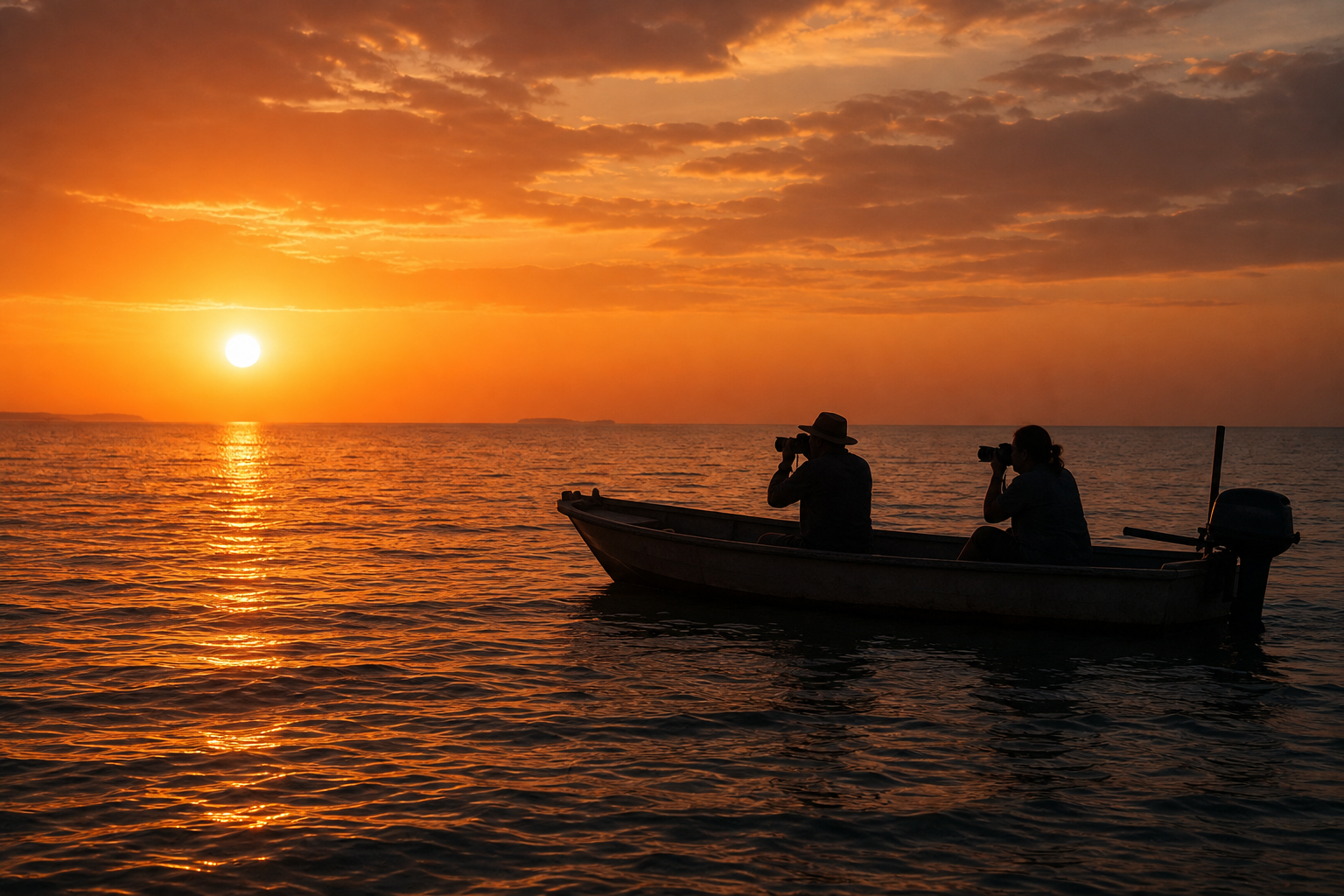
Golden hour light often produces the most striking frames on ocean photography charters.
Final Thoughts on Planning Your Trip
In the end, San Diego ocean photography tours succeed or fail based on three things: the season you choose, the stability and layout of the boat, and the experience of the guide reading the water. Families, photographers, filmmakers, and corporate groups all tend to get better results when they book small, low-impact charters rather than crowded commercial boats. Whether you’re after a single breaching whale shot or a full day of footage for a production, matching your trip to the right season and the right crew makes the difference. With some planning and the tips covered here, your next outing on San Diego’s coastal waters can produce images worth keeping for years.
