
San Diego marine wildlife expeditions give travelers a rare, close-up view of blue whales, gray whales, dolphins, sea lions, and other ocean life that call the Southern California coast home. Unlike crowded tour boats, small-group expeditions let guests watch these animals without the noise and congestion of a large vessel. As a result, more families, photographers, and filmmakers are seeking out intimate, naturalist-led trips instead of standard sightseeing cruises.
This guide explains what these tours involve, when to go, and how to choose a reputable operator in San Diego. In particular, we will look at why a marine biologist guide, a stable low-profile boat, and low-impact viewing practices matter more than most people realize before booking.
What Are San Diego Marine Wildlife Expeditions?
San Diego marine wildlife expeditions are guided boat tours, often led by a trained naturalist or marine biologist, that take small groups into coastal and offshore waters to observe whales, dolphins, and other marine life in their natural habitat. These trips emphasize education, safety, and non-disruptive viewing rather than simply chasing after sightings.
Unlike generic whale watching cruises, an expedition-style tour usually caps the group at six to twelve passengers. Therefore, guests get closer views, better photo angles, and direct access to a guide who can explain behavior in real time. Many operators, including crews trained at Scripps Institution of Oceanography, combine years of field research with practical boat handling experience.
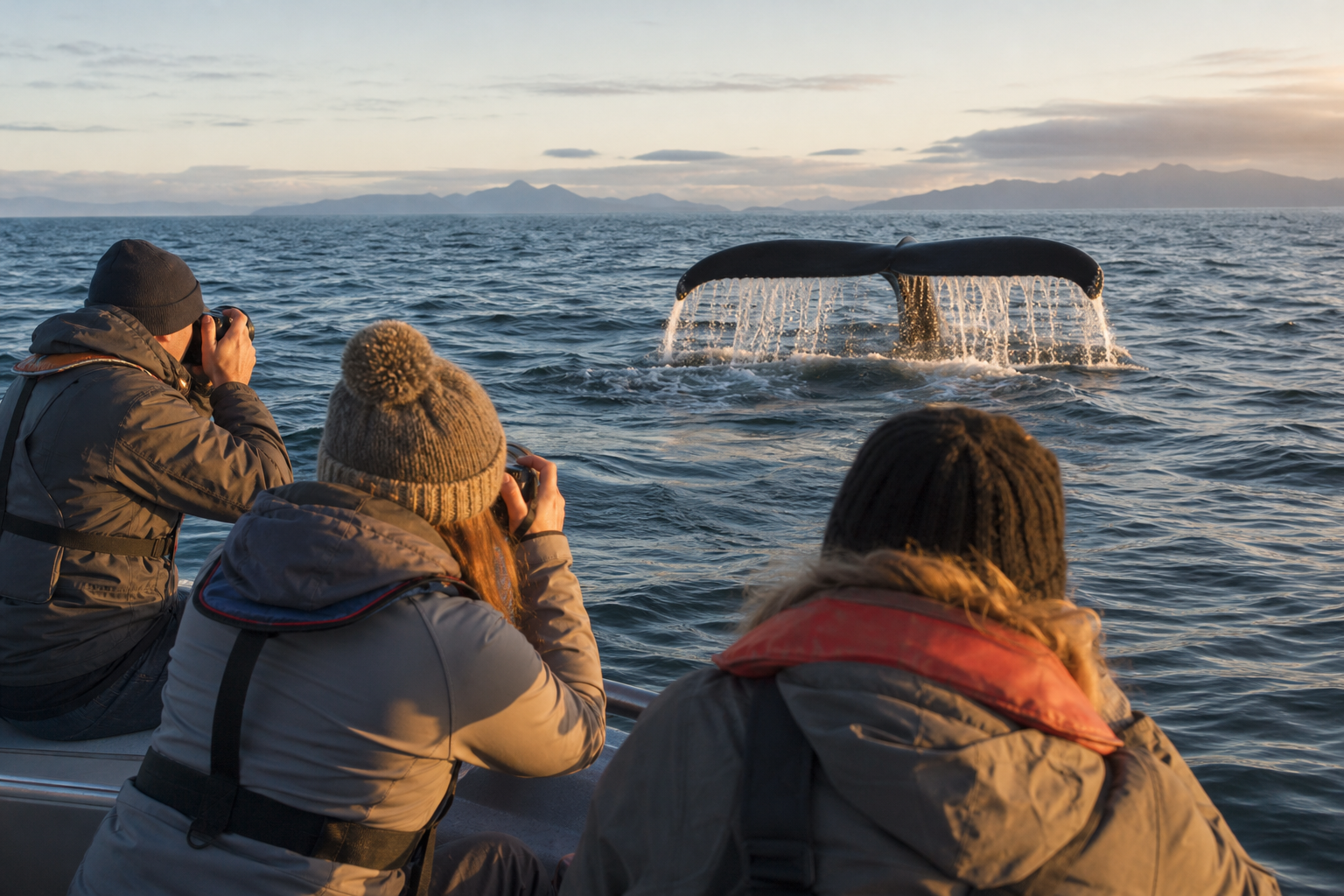
Close, quiet encounters define most San Diego marine wildlife expeditions.
Why San Diego Is a Hotspot for Ocean Wildlife Tours
San Diego sits along a migratory corridor that brings an unusually wide range of marine mammals close to shore. Specifically, cold nutrient-rich waters near La Jolla Canyon attract feeding whales, dolphins, and sea lions for much of the year. According to NOAA Fisheries, the eastern North Pacific gray whale population migrates roughly 10,000 miles round trip between Alaska and Mexico, passing directly along this coastline twice annually.
In addition, blue whales, the largest animals ever known to have lived, feed off the Southern California coast each summer. NOAA estimates that roughly 2,000 blue whales forage along the U.S. West Coast during peak season. Consequently, San Diego has become one of the most reliable places in the world to see this endangered species from a small boat.
Best Seasons for Whale and Dolphin Tours
Timing matters more than most first-time visitors expect. Gray whales typically migrate past San Diego from December through April, making winter the most popular season for whale watching. Meanwhile, blue whales and fin whales are most frequently sighted from June through September, when offshore feeding grounds are active.
Dolphins and sea lions, however, are present year-round, which means there is rarely a “bad” month to go. Summer also brings snorkel-friendly conditions, including kelp paddies, ocean sunfish known as molas, and curious sea lions. For a closer look at seasonal snorkel options, see this guide to San Diego snorkel excursions led by a marine biologist.
A Quick Seasonal Reference
| Season | Likely Sightings |
|---|---|
| Winter (Dec–Apr) | Gray whales, dolphins, sea lions |
| Summer (Jun–Sep) | Blue whales, fin whales, molas, kelp paddy life |
| Year-round | Common dolphins, sea lions, occasional orcas |
What to Expect on a San Diego Wildlife Boat Tour
Most trips depart from Seaforth Marina, a working harbor with easy access to open water. Upon boarding, guests typically receive a short safety briefing before heading out toward known feeding areas or recent sighting locations. Because boats are small, there is no need to compete for rail space or camera angles.
Throughout the trip, a naturalist or marine biologist narrates behavior, points out distant blows, and explains why animals surface the way they do. Furthermore, quiet outboard engines and low-profile hulls mean less engine noise and a steadier platform, which matters for both comfort and photography. For guests planning a special outing, this private charter guide for special occasions outlines how to customize timing and group size.
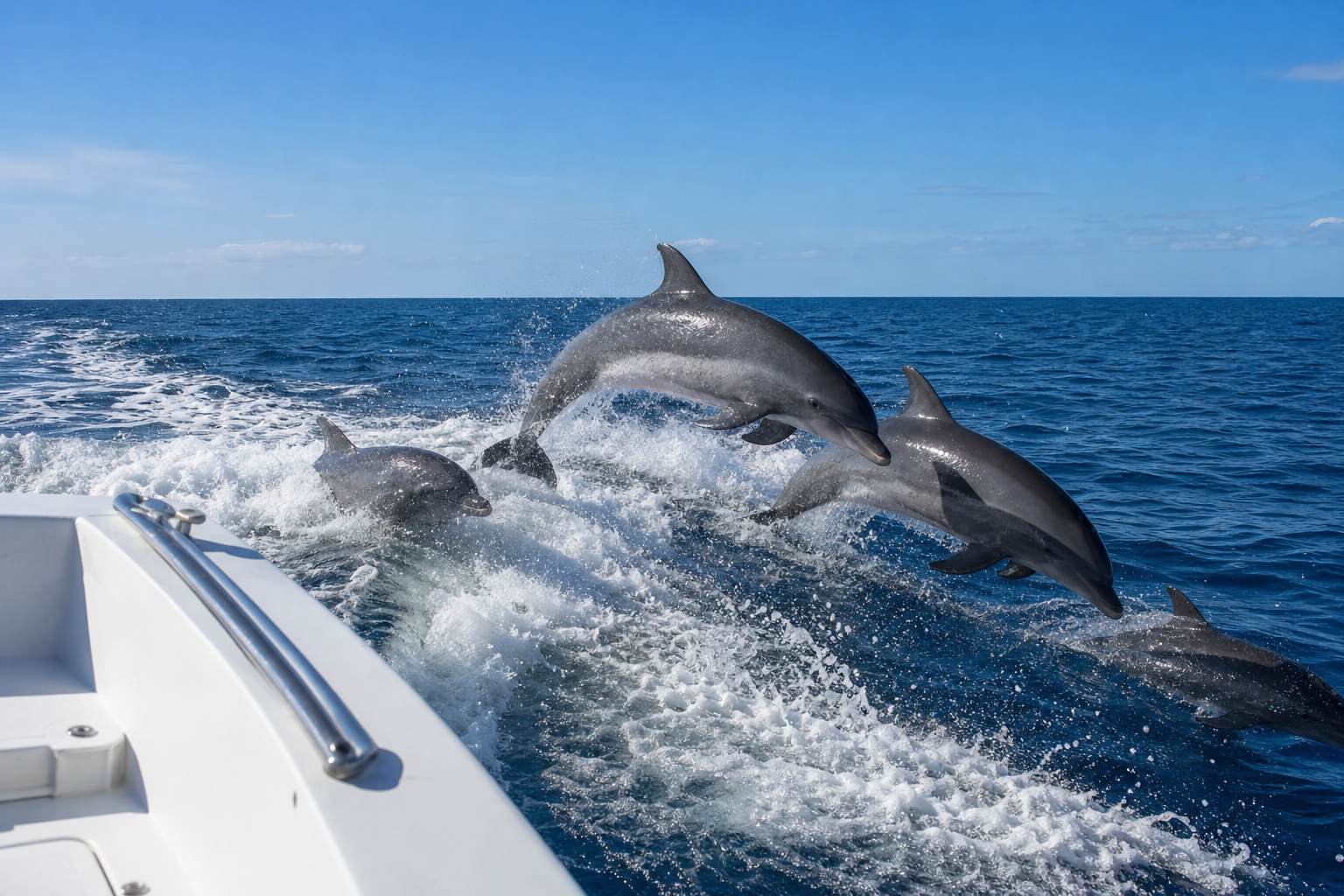
Dolphins often ride the bow wake, offering close views without any chasing involved.
How to Choose the Right San Diego Marine Wildlife Expedition
Not every boat tour offers the same level of expertise or comfort. First, check whether the guide has formal marine biology training, since this affects both safety and the depth of information shared on board. Second, confirm the maximum group size, because a boat limited to six or twelve passengers behaves very differently than one carrying forty people.
Third, ask about the vessel itself. Stable, low-profile hulls with 360-degree viewing are especially important for photographers and filmmakers who need unobstructed angles. Those comparing options locally may find it useful to review which marine biologist-led whale watching tours operate in San Diego before booking.
Step-by-Step: Booking Your Expedition
Booking a small-group tour is straightforward when approached in order. The following steps outline a reliable process from research to departure day.
- Check the seasonal wildlife calendar to match your travel dates with the species you most want to see.
- Choose the right tour type, such as a private charter, semi-private group, full-day expedition, or snorkel excursion.
- Confirm group size and share any photography, filming, or accessibility requests with the operator ahead of time.
- Book directly with the operator, since peak gray whale and blue whale seasons fill quickly.
- Prepare your gear, arrive at Seaforth Marina early, and attend the pre-departure safety briefing.
Photography and Filmmaking on the Water
San Diego’s combination of calm nearshore waters and reliable sightings has made it a working location for documentary crews. Boats built for stability and quiet operation have supported film projects for networks such as BBC Earth, National Geographic, and Discovery Channel. In particular, low engine noise reduces the chance of startling animals, which helps crews capture natural behavior rather than fleeing reactions.
For independent photographers, a 360-degree viewing platform means no fighting for position when a whale surfaces unexpectedly on the opposite side of the boat. Drone-friendly operations also allow aerial footage when conditions and regulations permit. If photography is the main goal, this guide to the best private marine wildlife tours in San Diego covers additional considerations for image-focused trips.
Low-Impact Wildlife Viewing Practices
Responsible operators follow federal marine mammal viewing guidelines, which discourage chasing, crowding, or rapidly approaching animals. Instead, boats approach slowly, maintain a safe distance, and let whales or dolphins dictate how close an encounter becomes. This approach protects animals from stress while still producing memorable, close sightings.
Non-chasing practices also tend to produce better wildlife behavior for both observers and researchers. As a result, guests often witness natural feeding, breaching, or social behavior rather than a stressed animal fleeing the boat. Travelers who want to compare guided options can review which tours in San Diego feature marine biologist guides committed to these standards.
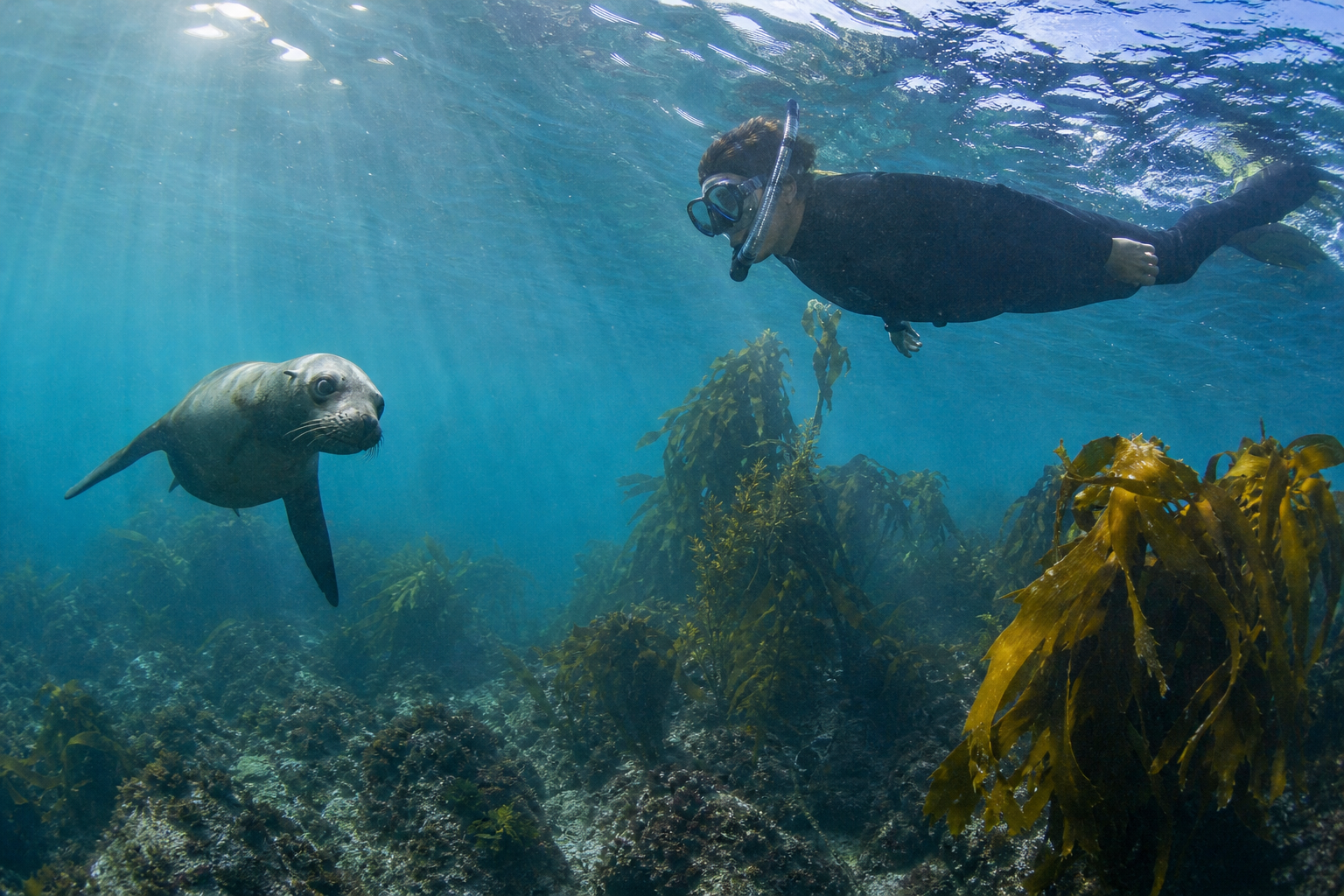
Summer snorkel trips often bring guests face to face with curious sea lions near kelp paddies.
Planning Your Own San Diego Marine Wildlife Expedition
Ultimately, the best trip depends on group size, season, and whether photography or education is the priority. Families may prefer a shorter semi-private tour, while photographers often choose full-day expeditions to reach offshore feeding grounds. Corporate groups and special occasions, on the other hand, usually call for a fully customized private charter departing from Seaforth Marina.
Before booking, it helps to visit the operator’s own site directly, such as bigbluephotoboat.com, to confirm current availability, vessel details, and guide credentials. Because small boats have limited seating, early booking during peak whale season is strongly recommended.
Frequently Asked Questions About San Diego Marine Wildlife Expeditions
What are San Diego marine wildlife expeditions?
San Diego marine wildlife expeditions are guided small-boat tours that take passengers into coastal and offshore waters to observe whales, dolphins, and other marine animals. They are typically led by trained naturalists or marine biologists who explain animal behavior while keeping a respectful distance.
What is the best time of year for whale watching in San Diego?
Gray whales migrate past San Diego from roughly December through April, while blue whales and fin whales are most common from June through September. Dolphins and sea lions can be spotted year-round along the coast.
How much do private whale watching charters cost in San Diego?
Private and semi-private charters typically cost more per person than large public boats because the group size is much smaller, often capped at six to twelve guests. Pricing varies by trip length, season, and whether the tour includes a marine biologist guide.
How long does a typical marine wildlife tour last?
Standard tours usually run two to three hours, while full-day expeditions can last six hours or more to reach offshore feeding grounds. Trip length depends on target species, weather, and how far the animals are sighted from Seaforth Marina.
Do I need snorkeling or diving certification to join a tour?
No certification is required for snorkel excursions since snorkeling does not involve scuba training. Guests should bring their own snorkel or freedive gear, as rental equipment is not provided on these trips.
What animals can I expect to see on a San Diego boat tour?
Depending on the season, common sightings include gray whales, blue whales, humpback whales, fin whales, orcas, common dolphins, sea lions, and ocean sunfish known as molas. Kelp paddies near the coast also attract a variety of smaller marine life.
Why choose a small-group boat over a large whale watching vessel?
Small boats with a six to twelve passenger limit offer closer, quieter encounters and unobstructed 360-degree viewing, which larger vessels cannot match. This setup is especially valued by photographers and filmmakers who need stable, low-profile platforms for clear shots.
Are the boats safe and suitable for photography or filming?
Yes, Coast Guard-inspected vessels with stable, low-profile hulls and quiet outboard engines are designed for both safety and clean footage. These platforms have supported professional film crews, including documentary teams covering ocean wildlife.
What is low-impact wildlife viewing and why does it matter?
Low-impact viewing means approaching animals slowly, avoiding chasing or crowding them, and following federal marine mammal viewing guidelines. This practice reduces stress on whales and dolphins while still allowing close, memorable observation.
Can corporate groups or special events book a private charter?
Yes, fully customized charters are available for corporate events, celebrations, and personalized ocean adventures departing from Seaforth Marina. Groups can tailor the itinerary, duration, and focus of the trip, such as whale watching or scenic cruising.
What should I bring on a marine wildlife expedition?
Guests should pack layered clothing, sun protection, motion sickness remedies if needed, and a camera with a zoom lens for distant sightings. Snorkel trips require guests to bring their own snorkel or freedive equipment since rentals are not offered.
What common mistakes do first-time whale watchers make?
First-time guests often underestimate how cool and windy the ocean can feel, arrive without sun protection, or expect guaranteed sightings on every trip. Booking with an experienced crew that tracks recent sightings improves the odds significantly.
Is a marine biologist guide really different from a standard tour guide?
A marine biologist trained at an institution like Scripps brings firsthand research experience, which allows for more accurate behavior interpretation and species identification. This expertise turns a sightseeing trip into an educational encounter grounded in real scientific observation.
Final Thoughts
San Diego marine wildlife expeditions stand out because they combine small-group comfort, scientific expertise, and respectful viewing practices in one trip. Whether the goal is a winter gray whale sighting, a summer blue whale encounter, or a quiet snorkel among kelp paddies, choosing a Scripps-trained marine biologist and a stable, low-profile boat makes a measurable difference. For further reading on sources such as NOAA Fisheries (fisheries.noaa.gov) and Scripps Institution of Oceanography (scripps.ucsd.edu), travelers can better understand the science behind these remarkable migrations before booking their own San Diego marine wildlife expedition.
