
San Diego marine mammal watching tours are guided boat trips that take you to see whales, dolphins, sea lions and other ocean mammals in the wild. Because the coast sits on a major migration route, there is a good chance of an encounter in any month. This guide explains what you can see, when to go, and how to pick a tour that fits you.
Quick answer: Gray whales pass from roughly December to April, while blue, fin and humpback whales are often seen in warmer months. Dolphins appear year-round. A small-group, naturalist-led trip gives the best views and the most learning.
What Are San Diego Marine Mammal Watching Tours?
They are boat excursions built around spotting marine mammals safely and respectfully. Most depart from marinas around Point Loma and Shelter Island, and head into coastal waters or offshore. A good trip combines sightings with commentary on behavior, biology and conservation.
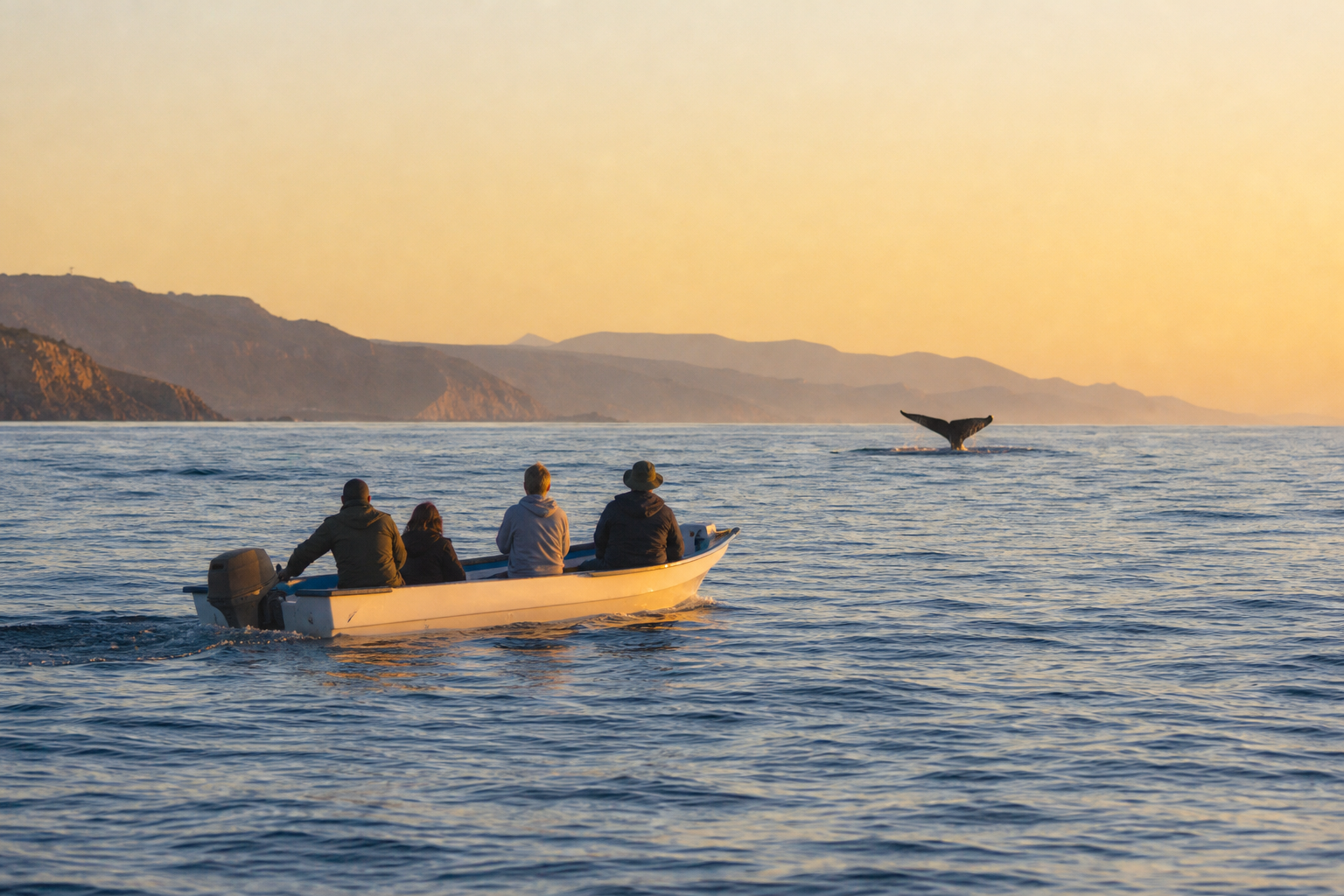
A small boat keeps a respectful distance on a San Diego marine mammal watching tour.
Which Animals Can You See Off San Diego?
The region is known for variety. In addition, deep water near La Jolla Canyon brings animals close to shore. According to NOAA Fisheries, all marine mammals in U.S. waters are protected by federal law.
- Gray whales: Seen on their winter migration between Alaska and Baja California.
- Blue whales: The largest animals on Earth, often seen in summer and early fall.
- Humpback and fin whales: Regular visitors, with timing that varies by year.
- Orcas: Rare but possible, so they are a bonus rather than a promise.
- Dolphins and sea lions: Common in every season, often in large, lively groups.
Best Season for Whale and Dolphin Watching in San Diego
Winter favors gray whales. Summer favors blue whales and other large baleen whales. Even so, sightings change with ocean conditions and food supply. Therefore, treat any calendar as a guide, not a guarantee.
| Season | Typical highlights |
|---|---|
| Winter (Dec–Feb) | Gray whales, dolphins |
| Spring (Mar–May) | Late gray whales, dolphins, early humpbacks |
| Summer (Jun–Aug) | Blue whales, dolphins, sea lions, ocean sunfish |
| Fall (Sep–Nov) | Blue, fin and humpback whales, dolphins |
Private vs. Semi-Private vs. Large-Boat Trips
Group size shapes the whole experience. Large vessels carry many passengers and can feel crowded at the rail. In contrast, a small boat offers open views and a more personal talk from the guide.
For details on the options, see this overview of private and semi-private whale watching tours in San Diego. If group size is your main concern, this page on the best small-group whale watching tour in San Diego is a useful next read.
Why a Marine Biologist Guide Matters
A trained guide turns a sighting into a story. They can explain why a whale is lunging, how dolphins hunt, or what a fluke print means. Moreover, researchers such as those at Scripps Institution of Oceanography have studied this coast for generations.
You can compare options through these guides to marine biologist-led whale watching tours and tours featuring marine biologist guides.
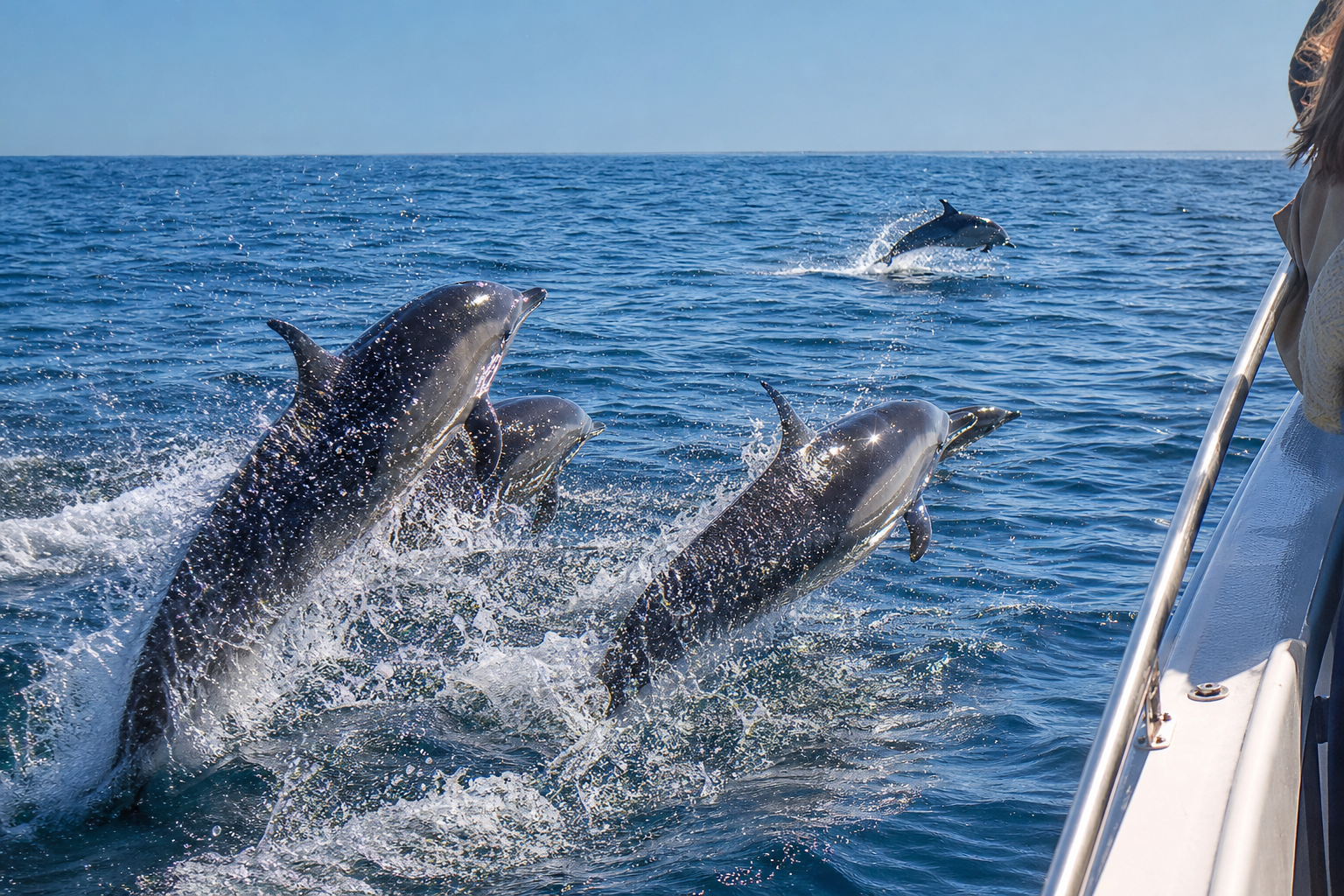
Dolphins are a year-round highlight for guests on San Diego coastal tours.
How to Choose a Marine Mammal Tour: 5 Steps
- Pick your season based on the animals you most want to see.
- Choose a group size: private, semi-private, or a larger boat.
- Check the guide’s training and that the vessel is Coast Guard-inspected.
- Ask how the crew approaches animals. Responsible operators do not chase.
- Book your date, pack layers and sun protection, and arrive early.
A Local Option: Big Blue Photo Boat
Big Blue Photo Boat runs private and semi-private trips from Seaforth Marina in San Diego. Groups are capped at six passengers, or up to twelve for special occasions. Every trip is guided by a Scripps-trained marine biologist, and the family-owned team follows a low-impact, non-chasing approach.
The boats are Coast Guard-inspected, with stable low-profile hulls, quiet outboard engines and 360° viewing, which suits photographers and filmmakers. Offerings also include full-day expeditions, summer snorkel trips (guests bring their own gear) and custom charters. You can see everything on the Big Blue Photo Boat website.
Frequently Asked Questions
What are San Diego marine mammal watching tours?
They are guided boat trips off San Diego that look for whales, dolphins, sea lions and other marine mammals in their natural habitat. Many are led by naturalists who explain what you see.
When is the best time to see whales in San Diego?
Gray whales are most common from roughly December through April. Blue, fin and humpback whales are often seen in the warmer months, though sightings vary by year.
Can I see dolphins year-round?
Yes, dolphins are commonly seen off San Diego in every season. Large pods of common dolphins are a frequent highlight.
Are sightings guaranteed?
No. These are wild animals, so no honest operator can guarantee a particular species. Choosing an experienced captain and guide improves your odds.
How long does a typical tour last?
Most trips run a few hours, while full-day expeditions go farther offshore. Check the exact length with the operator when you book.
What is the difference between private and semi-private tours?
A private tour is reserved for your own party. A semi-private tour is a small shared group, which usually costs less per person.
Why choose a small-group tour?
Smaller boats give each guest more room, clearer views and more time with the guide. They are also easier for photographers.
What should I bring on a whale watching trip?
Bring layers, sunscreen, sunglasses, a hat, water and a camera. Motion-sickness remedies are worth taking in advance if you are prone to seasickness.
Is it safe for children?
Generally yes on a Coast Guard-inspected vessel with a professional crew. Ask the operator about age guidance and life jacket sizes.
How do responsible operators treat the animals?
They keep a respectful distance, avoid chasing and let animals set the pace. In the U.S., marine mammals are protected under the Marine Mammal Protection Act.
What are common mistakes when booking a tour?
Common mistakes include booking without checking the season, ignoring group size, and skipping questions about guides and wildlife practices.
Can I take photos or video?
Yes, and a stable, low-profile boat with 360-degree viewing helps. Tell the operator in advance if you need extra space for gear.
Conclusion
San Diego marine mammal watching tours offer year-round chances to see whales, dolphins and sea lions. Match your dates to the season, choose a small group, and look for a trained guide and low-impact practices. With those pieces in place, you are set for a memorable and responsible day on the water.
