

A private whale watching tour gives your group the whole boat, a flexible schedule, and a marine biologist who explains every sighting. Our San Diego trips carry six guests, or up to twelve for special occasions. As a result, you get a close and respectful view of blue whales, gray whales, humpbacks and dolphins without the crowds of a big commercial boat.
Quick answer: A private whale watching tour is a small-boat charter reserved for your group only. A Scripps-trained naturalist identifies species, explains behavior, and keeps a low-impact distance from wildlife. Sightings are never guaranteed, but patient, non-chasing viewing gives you the best odds.
What Is a Private Whale Watching Tour?
A private whale watching tour means the boat is reserved for you, your family or your team. You choose the guest list, and you share the deck with no strangers. In contrast, a standard public trip seats dozens or even more than 100 passengers.
Our trips also include a trained naturalist instead of a generic deckhand. Therefore, you hear real-time context about migration routes, feeding behavior and species identification. Questions about whale biology or conservation get accurate answers, which matters to families, students and serious photographers.
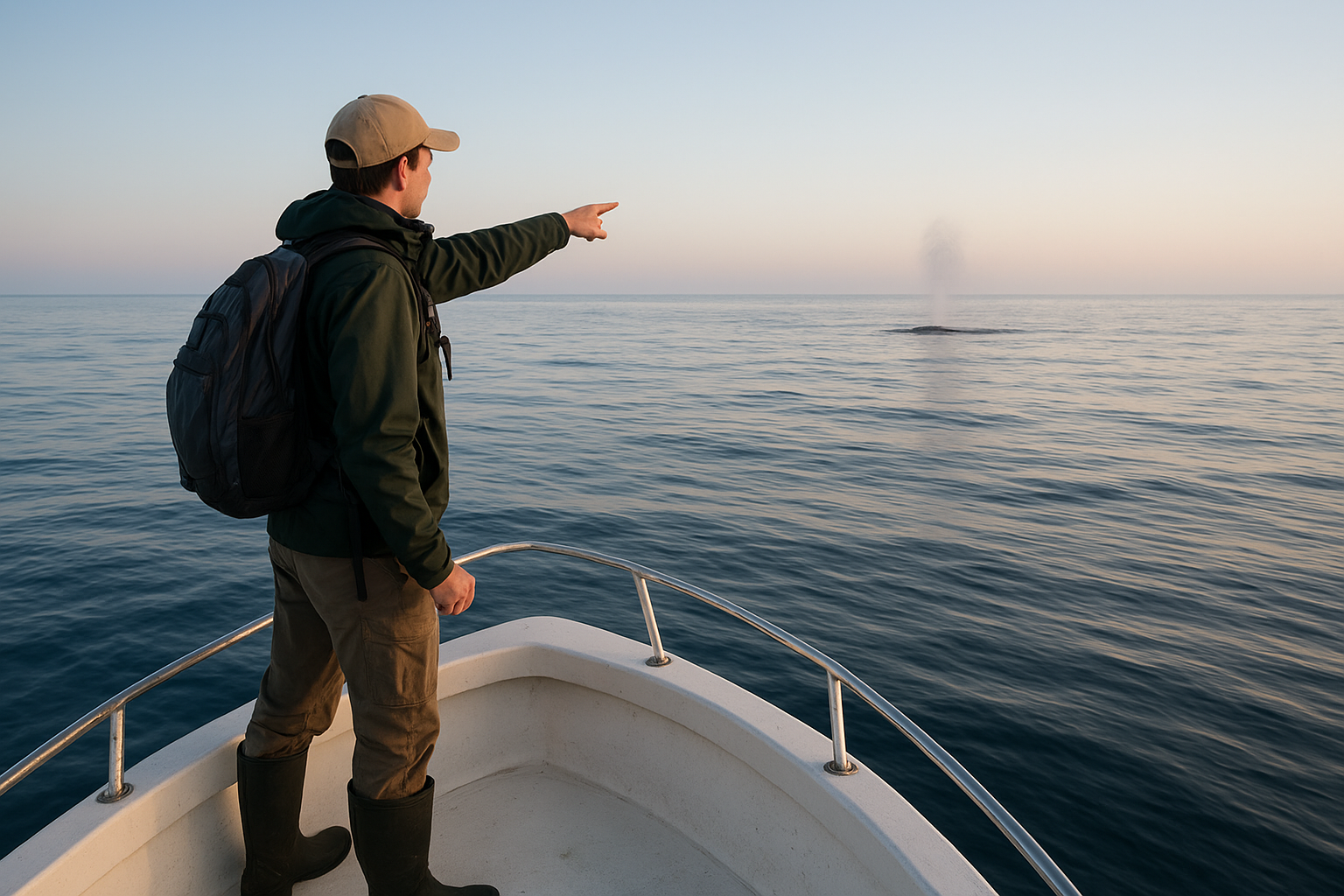
A naturalist guide identifies a distant whale spout during a private whale watching tour off the San Diego coast.
At a Glance: Private Whale Watching Tour Details
Here are the basics most travelers want before they compare options.
- Group size: six guests as standard, up to twelve for special occasions.
- Guide: a Scripps Institution of Oceanography-trained marine biologist, with an English-speaking live narrator.
- Typical length: three to four hours, with full-day expeditions available.
- Departure point: Seaforth Marina in San Diego.
- Fitness level: light activity only. You mostly sit or stand on a stable deck.
- Sightings: never guaranteed, because these are wild animals.
Why Choose a Naturalist-Led Private Charter
Choosing a private charter changes the tone of the day. Rather than competing for rail space, guests move freely around a small vessel built for open viewing. Above all, a trained biologist turns each sighting into a teaching moment.
Meet Your Scripps-Trained Marine Biologist
Each trip is led by a naturalist trained through Scripps Institution of Oceanography, a leading center for ocean research. For example, guides can explain why blue whales gather off San Diego in summer, or how gray whales complete a 10,000-mile migration. You can read more about the value these experts add in our guide to educational benefits of naturalist-guided whale tours.
Small Groups for Intimate Wildlife Encounters
Small groups make a real difference. With six guests, everyone has a spot near the rail and direct access to the naturalist. To see how capacity affects the experience, compare formats in our rundown of the best small-group whale watching tours in San Diego.
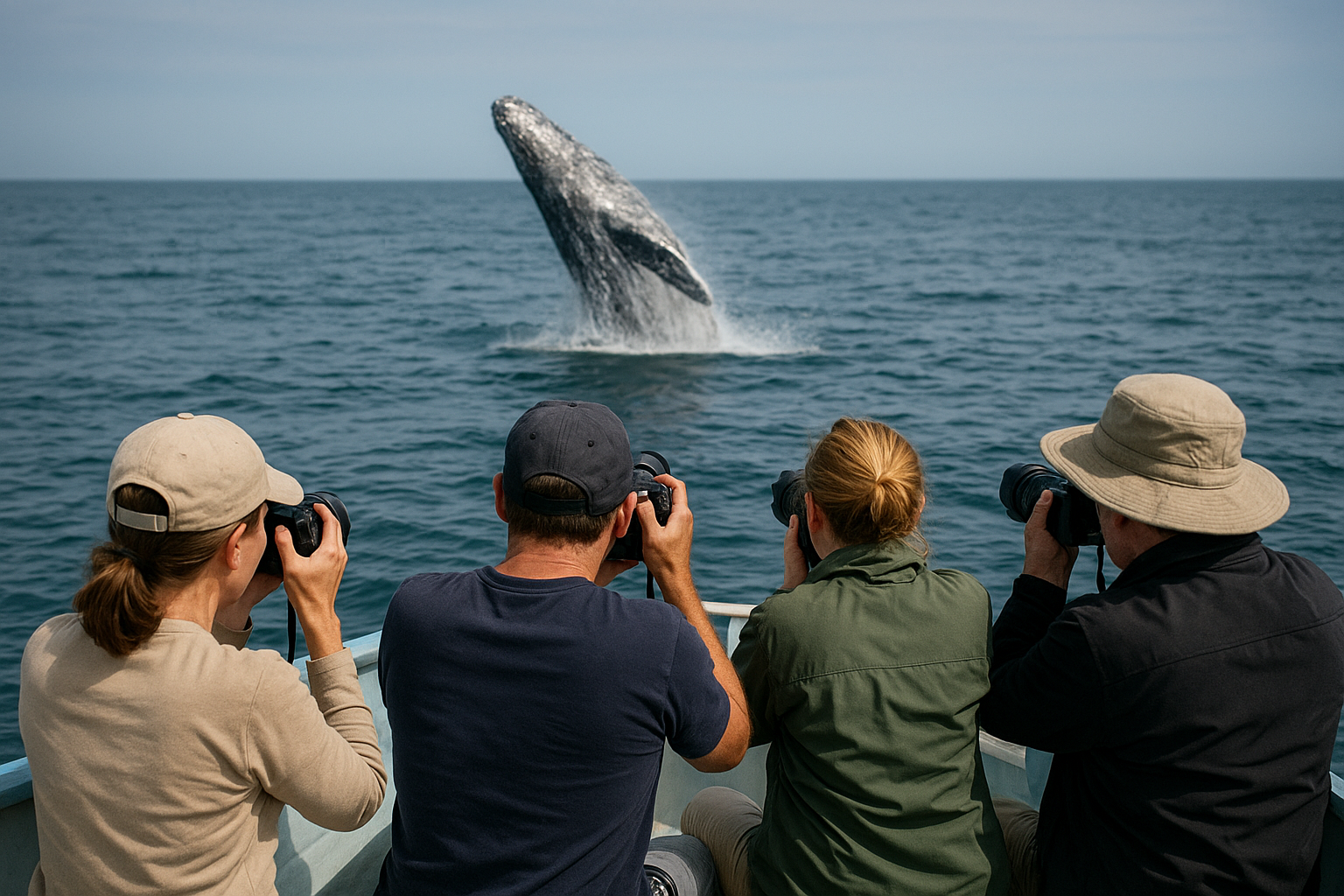
A small group photographs a breaching whale from the open deck of a private charter boat.
Private Whale Watching Tour vs. Big Boat: What Is Different?
Large commercial boats can carry well over 100 passengers. That limits movement and often pushes guests toward one viewing side. In contrast, a private charter uses a low-profile vessel with quiet outboard engines that avoid startling wildlife.
Vessels like ours have supported film crews from BBC Earth, National Geographic and Discovery Channel. Additionally, Coast Guard-inspected hulls give a safety baseline that serious operators maintain year-round. Therefore, families and professional crews can both trust the platform.
Best Season for a Private Whale Watching Tour in San Diego
San Diego sits along a major migratory corridor, so sightings change through the year. According to NOAA Fisheries, blue whales can reach 100 feet and weigh up to 200 tons, making them the largest animals known to have lived. (NOAA Fisheries) These giants typically feed off San Diego from late June to September.
In winter, gray whales pass closer to shore on their coastal migration between Alaska and Baja California, a route described in Wikipedia’s gray whale migration overview. Meanwhile, dolphins, sea lions and seasonal mola sightings round out the Blue Water Safari snorkel trips offered in summer. For more on blue whale frequency, see San Diego blue whale watching tours for small groups.
Month-by-Month Wildlife Guide
- December to April: gray whales are most reliable on their coastal migration.
- Late June to September: blue whales feed on dense krill patches offshore, and humpbacks may join them.
- Year-round: dolphins, sea lions, and occasional fin whales or orcas.
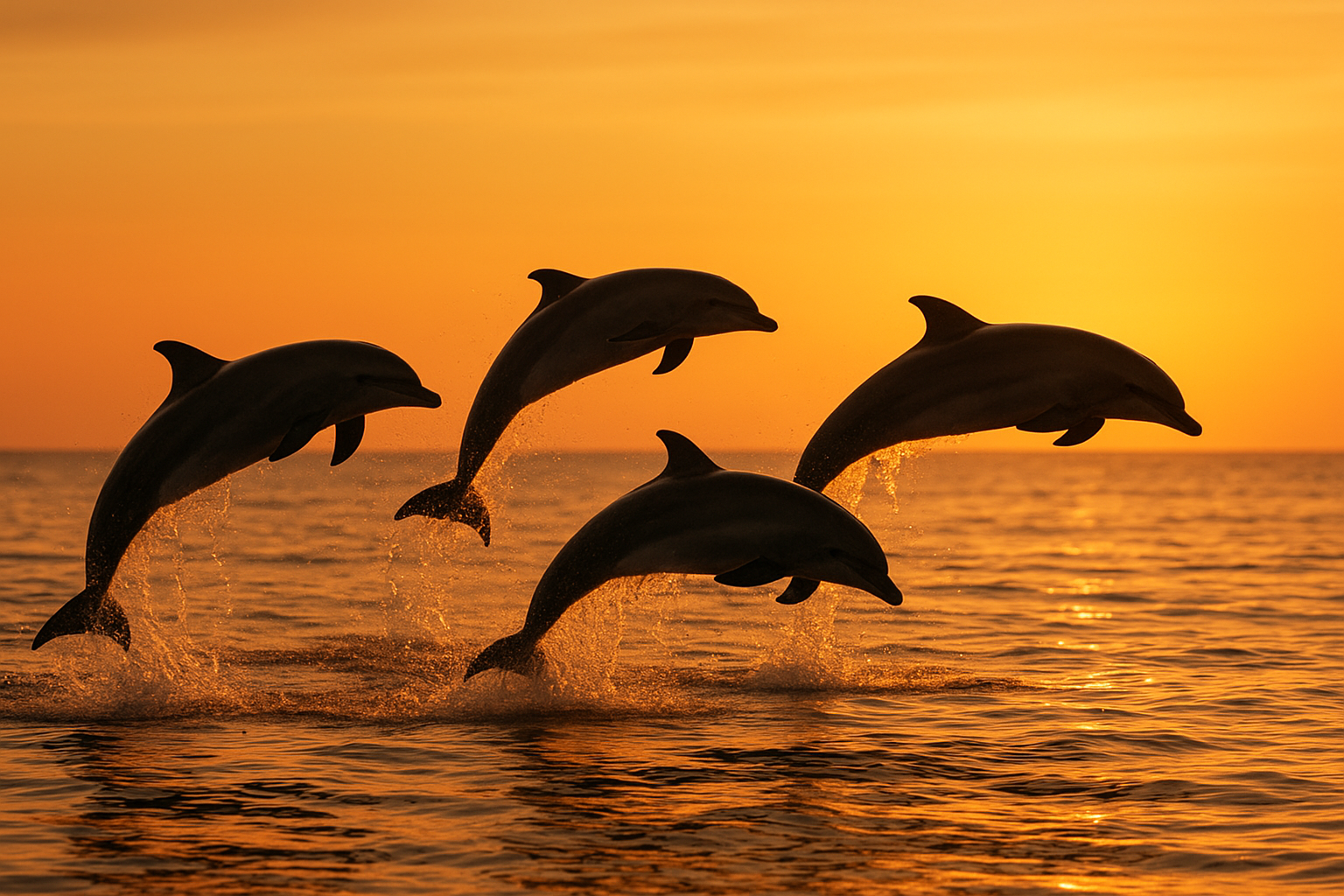
Dolphins often join sightings alongside whales during San Diego boat tours.
How to Book Your Private Whale Watching Tour
Booking is simple once you know what to decide first. These steps cover the process from first idea to departure day. For a deeper walkthrough, read how to book a private whale watching charter in San Diego.
- Choose your tour type: Decide between a fully private charter, a semi-private small-group trip, or a seasonal snorkel excursion based on group size and goals.
- Pick a season for your target wildlife: Align travel dates with blue whale summer feeding or gray whale winter migration for the best odds.
- Check availability and request a date: Contact the operator to confirm boat and naturalist scheduling, including any special-occasion extras.
- Confirm details and prepare gear: Review the departure time, then pack layered clothing, sun protection and camera equipment.
- Arrive at the marina early: Reach Seaforth Marina about fifteen minutes before departure for the safety briefing.
Private, Semi-Private and Custom Charter Options
Not every trip needs to be fully private. Semi-private tours keep groups small while sharing the cost among a few unrelated guests, which suits solo travelers and couples. On the other hand, custom charters suit birthdays, proposals and corporate outings where the whole boat is reserved. Our page on private whale watching charters for special occasions explains how to tailor a milestone trip.
Likewise, you can compare all formats in the overview of small-group wildlife adventures in San Diego. For a side-by-side look, our post on private and semi-private whale watching tours in San Diego covers pacing and price. You can also read more ideas in our blog on private charters for special occasions.
What to Bring and How to Prepare
The ocean is cooler and breezier than the shore. Therefore, a little planning makes the trip far more comfortable.
- Layered clothing and a windproof jacket.
- Sunscreen, a hat and polarized sunglasses.
- A camera with a zoom lens, or binoculars.
- Motion sickness remedies, taken before departure if you are prone to seasickness.
Low-Impact, Responsible Wildlife Viewing
Whales and dolphins come to us; we don’t chase. Non-chasing protocols let animals set the pace of every encounter. As a result, marine mammals feel less stress, and sightings often last longer because the animals stay curious.
Similarly, quiet engines and a respectful distance reflect guidance from research institutions such as Scripps Institution of Oceanography, which studies how vessel noise affects cetaceans. For a broader primer, Wikipedia’s overview of whale watching covers the history and ethics of the activity. You can meet the crew at Big Blue Photo Boat.
Please note: While we will do our best to give you a photo-worthy encounter, we can’t guarantee a close whale approach.
Frequently Asked Questions About Private Whale Watching Tours
What is a private whale watching tour?
A private whale watching tour is a small-group boat excursion reserved for your party, typically capped at six guests. A trained marine biologist explains whale behavior in real time while the captain follows low-impact viewing guidelines.
How many passengers can join a private whale watching tour?
Standard private and semi-private tours are limited to six passengers. Groups can expand to twelve guests for special occasions such as birthdays or corporate outings.
Why book a private tour instead of a large public whale watching boat?
Large public boats often carry 50 or more passengers, which limits viewing space and time with a guide. A private charter offers 360-degree access, quieter engines and direct conversation with a marine biologist.
What whales can you see in San Diego throughout the year?
San Diego waters host blue whales and humpbacks in summer and gray whales in winter. Fin whales, orcas and dolphins appear at various points year-round, so naturalists track current migration patterns before each trip.
How much does a private whale watching tour cost?
Pricing for a private whale watching tour varies by group size, trip length and season. Semi-private trips generally cost less per person than fully private charters, so contact the operator for a quote for your date.
How long does a private whale watching charter last?
Most charters run three to four hours, which is enough time to reach offshore feeding grounds and watch wildlife patiently. Full-day expeditions are also available.
What is the difference between private and semi-private tours?
A private tour reserves the entire boat for one group. A semi-private tour combines a few unrelated guests on the same small vessel. Both stay far smaller than a commercial whale watching boat.
What should I bring on a whale watching tour?
Bring layered clothing, sunscreen, polarized sunglasses and a camera or binoculars. If you are prone to seasickness, take a motion sickness remedy beforehand, since offshore conditions can shift quickly.
Are the boats safe and Coast Guard inspected?
Yes, reputable operators run Coast Guard-inspected vessels with stable, low-profile hulls. Experienced captains and naturalists monitor sea conditions and wildlife distance at all times.
Can photographers and filmmakers bring professional gear aboard?
Yes. Many small charter boats have quiet outboard engines and open 360-degree access for tripods and long lenses. Vessels like these have supported film crews from major wildlife documentaries.
What common mistakes do people make when booking?
A frequent mistake is booking a large public boat and expecting a personal experience. Another is ignoring migration timing, which lowers the odds of seeing a specific species such as blue whales.
Do naturalist guides follow low-impact wildlife viewing practices?
Yes. Trained naturalists follow non-chasing protocols, keep a respectful distance and let whales approach on their own terms. This reduces stress on marine mammals while still allowing memorable encounters.
What is the best time of year to see blue whales in San Diego?
Blue whales are most commonly sighted between late June and September, when they feed on dense krill patches. Gray whales are more reliable from December to April.
Is a whale sighting guaranteed on a private whale watching tour?
No operator can guarantee a sighting, because whales are wild and free-roaming. However, expert knowledge, current sighting reports and patient, non-chasing viewing give you strong odds, and we can’t guarantee a close whale approach.
Plan Your Private Whale Watching Tour Today
In the end, a private whale watching tour offers what a crowded public boat cannot: expert knowledge, a quiet platform for photography, and a small group that keeps every sighting personal. Whether you plan a family outing, a milestone celebration or a film shoot, San Diego’s year-round migrations make it one of the West Coast’s most reliable regions for whale encounters. Next, review trip formats and availability in our overview of San Diego whale tour small-group wildlife adventures before you book.
