
Private dolphin watching tours San Diego cost is usually one of the first questions families, photographers, and ocean adventurers ask before they book a small-boat charter. Unlike large public tour boats that pack dozens of passengers onto one deck, a private or semi-private trip keeps the group small, which changes both the experience and the price. In this guide, we break down what drives pricing, how private charters compare to semi-private options, and what you should expect to pay for a memorable trip off the San Diego coast.
Private dolphin watching tours San Diego cost typically ranges from a few hundred dollars for a short semi-private trip up to well over a thousand dollars for an exclusive, full-boat private charter. The exact rate depends on trip length, boat size, season, and whether the tour includes extras like extended photography time or a dedicated marine biologist guide.
Because small operators run boats capped at six passengers, as a rule, pricing structures differ sharply from the large, public excursion boats that carry 50 or more guests. Consequently, comparing a $40 ticket on a big public boat to a private charter rate is not quite apples to apples. In particular, you are paying for exclusivity, a closer viewing distance, and often a trained naturalist rather than just a seat on a crowded vessel.
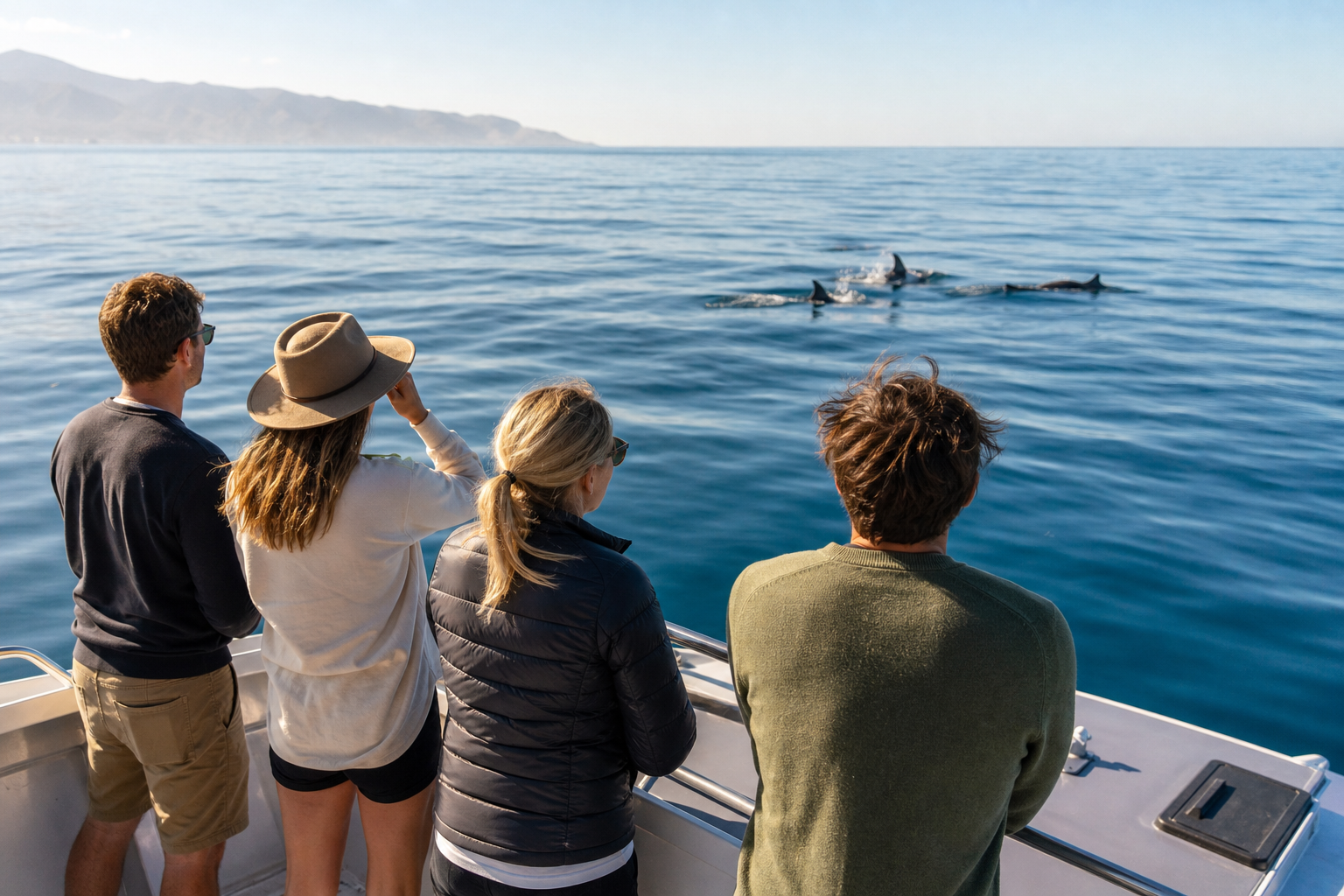
A small, exclusive group enjoys close dolphin sightings aboard a private charter.
Several variables shape private dolphin tour pricing, and understanding them helps you compare quotes fairly. For instance, a two-hour sunset dolphin trip will almost always cost less than a six-hour full-day whale and dolphin expedition, simply because of fuel, crew time, and distance traveled offshore.
In addition, the season matters. Summer and early fall often bring calmer water and peak dolphin and sunfish activity, which can increase demand. Meanwhile, winter and early spring overlap with gray whale migration, drawing a different kind of traveler who wants a combined whale and dolphin sighting trip.
Finally, specialized services raise the rate. A marine biologist guide trained at an institution like Scripps Institution of Oceanography adds educational value beyond a standard captain-only trip. Likewise, photographer- and filmmaker-friendly platforms with 360-degree access and drone-friendly operations often command a premium because of the added planning and quiet-engine equipment involved.
Choosing between private and semi-private formats is largely about budget versus exclusivity. Semi-private tours, for example, split the boat’s operating cost among a small group of unrelated guests, usually capped at six people, which lowers the price per person. In contrast, a fully private charter reserves the entire vessel for your group alone, so the total price is higher, but you gain total control over the itinerary, viewing angles, and pace of the trip.
| Tour Type | Typical Group Size | Typical Duration | General Price Range |
|---|---|---|---|
| Semi-Private Dolphin & Whale Tour | Up to 6 guests (shared) | 2–3 hours | Lower per-person rate |
| Private Dolphin Watching Charter | Up to 6 guests (exclusive) | 2–3 hours | Higher total, full boat |
| Full-Day Private Expedition | Up to 6 guests | 6–8 hours | Highest, extended charter |
| Special Occasion Charter | Up to 12 guests | Custom | Varies by customization |
Exact rates vary by operator, date, and add-ons, so it is always best to request a current quote directly rather than rely on last season’s pricing.
A well-run private charter usually includes more than just a boat ride. Typically, you get a Coast Guard-inspected vessel, a knowledgeable crew, and access to the full deck for photos. Many operators also follow low-impact, non-chasing wildlife viewing practices, which means the boat approaches dolphins and whales slowly and respects distance guidelines rather than speeding alongside them.
Big Blue Photo Boat, for example, operates small, stable, low-profile boats out of Seaforth Marina with quiet outboard engines and 360-degree viewing access, which is why film crews from outlets like BBC Earth, National Geographic, and Discovery Channel have used similar setups for wildlife filming. Every trip is guided by a marine biologist trained at Scripps Institution of Oceanography, adding an educational layer that a standard sightseeing boat typically does not offer.
If you want to learn more about how respectful, non-chasing approaches work in practice, this guide on non-chasing wildlife viewing tours in San Diego breaks down the methods used by responsible operators.
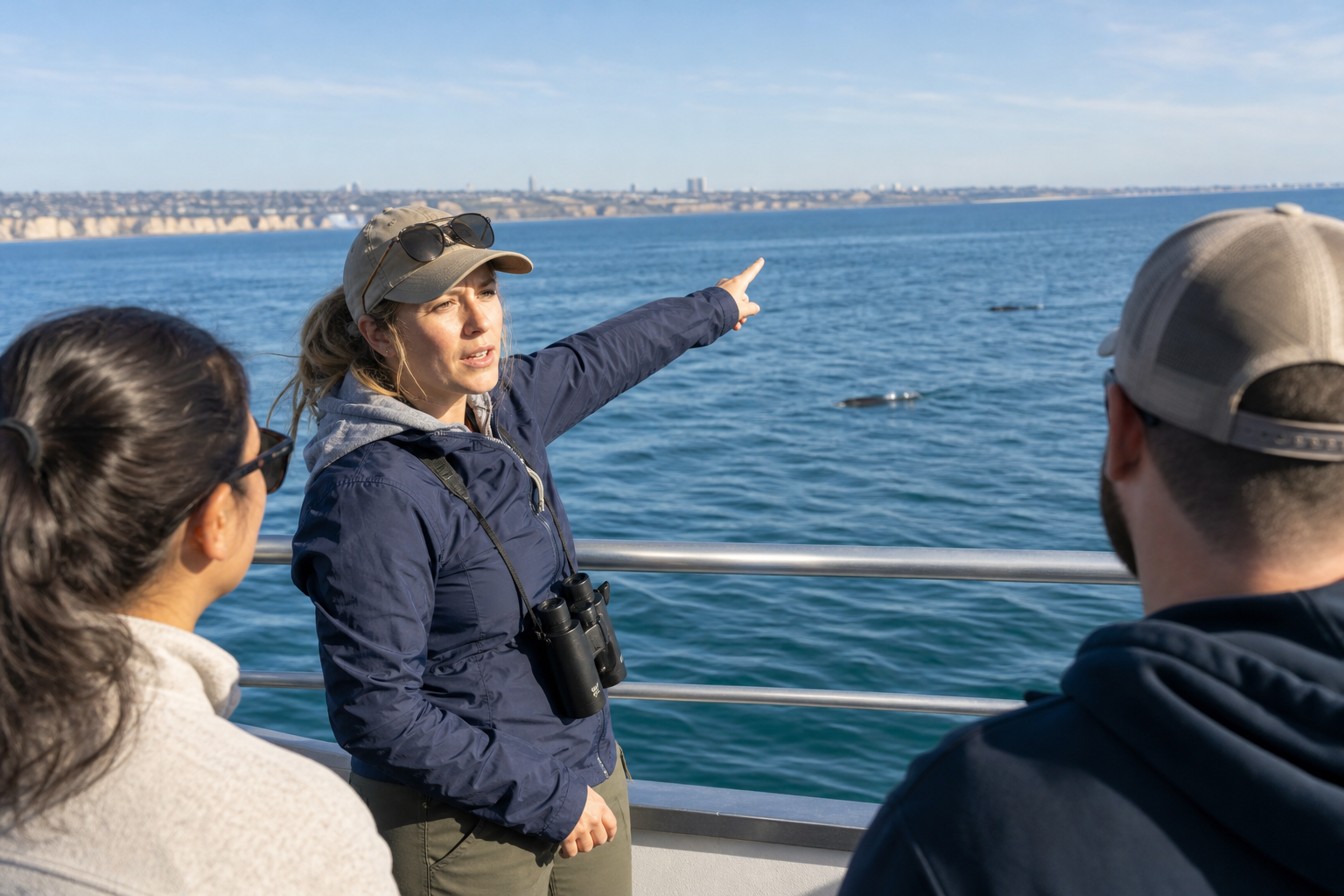
A trained marine biologist adds educational context to every private dolphin watching trip.
Booking a small-group charter is straightforward once you know what to check. Follow these steps to get an accurate quote and a smooth day on the water.
For a deeper look at seasonal sightings and trip planning, the San Diego whale and dolphin watching adventure guide covers what to expect month by month, while the dolphins of San Diego overview explains which species you are most likely to encounter.
Above all, book early. Small operators with boats capped at six passengers sell out quickly during peak summer weekends and holiday periods, so last-minute shoppers often end up with fewer date options. Similarly, asking about group discounts or filling all available seats on a private charter can lower the effective per-person rate.
Furthermore, consider timing your trip around known wildlife patterns. According to NOAA Fisheries, blue whales, the largest animals known to have ever lived, migrate through Southern California waters seasonally, and trips timed around these migrations often increase the odds of multi-species sightings in a single outing.
If you are weighing whale-focused trips against dolphin-focused trips, this comparison of private and semi-private whale watching tours in San Diego can help you decide which format fits your group’s goals and budget.
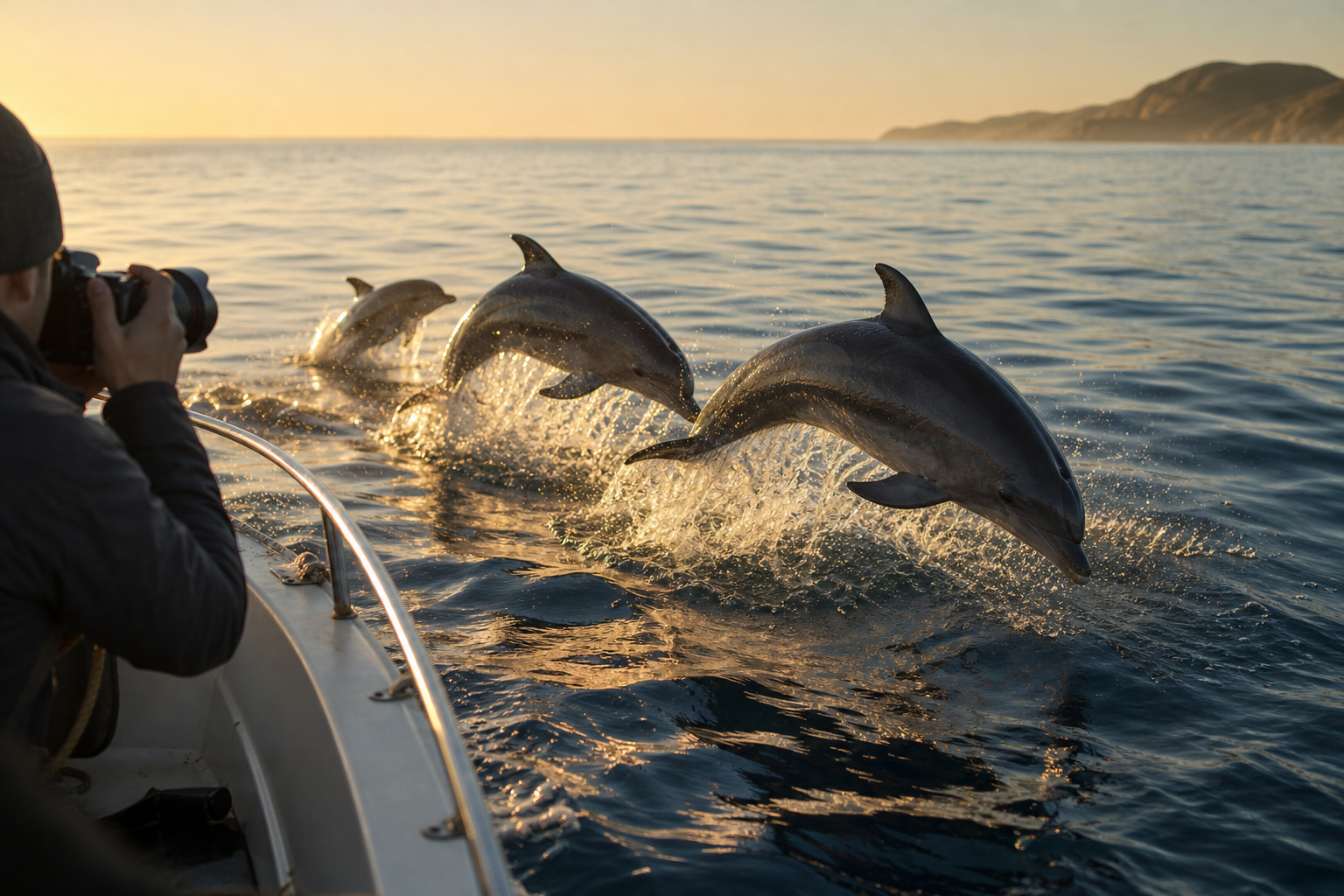
Close, respectful encounters are a highlight of private dolphin watching tours.
Private dolphin watching tours San Diego cost generally falls between a few hundred dollars and over a thousand dollars per trip, depending on boat size, trip length, and the season. Small, exclusive charters with a marine biologist guide tend to sit at the higher end of that range because the whole boat is reserved for one group.
Semi-private tours usually cost less per person because the price is split among a small group of unrelated guests, often capped around six passengers. Private charters cost more overall since you reserve the entire boat, but the per-person price can be similar when a family or group fills all the seats.
Trip length, boat size, time of year, and add-ons like extended photography time or full-day expeditions all influence price. Fuel costs, crew experience, and whether a trained marine biologist guides the trip can also factor into the final rate.
Yes, most San Diego whale watching tours also include dolphin sightings since common and bottlenose dolphins are present in local waters year-round. Many operators highlight dolphins as a near-guaranteed sighting even during slower whale seasons.
Standard private dolphin watching tours typically run two to three hours, giving enough time to reach offshore waters and observe pods respectfully. Full-day expeditions, which run six to eight hours, are also available for guests who want extended time on the water.
Dolphins are present in San Diego’s coastal waters throughout the year, making almost any month a good time to book. However, late spring through fall often brings calmer seas, which can improve visibility and comfort during the trip.
Some operators offer seasonal snorkel add-ons, often in summer, that can be combined with a dolphin or whale watching trip. Guests are typically expected to bring their own snorkel or freedive gear, since rental equipment is not usually provided.
A private tour reserves the entire boat exclusively for one party, while a semi-private tour shares the boat with a small number of other guests to lower the per-person cost. Both formats on small vessels still keep group sizes limited for a comfortable, close-up experience.
Most small private charters in San Diego cap group size around six passengers to maintain stability, comfort, and clear viewing angles. Some operators allow up to twelve guests for special occasions like birthdays or proposals when a larger vessel is used.
Guests should bring layered clothing, sunscreen, polarized sunglasses, and a camera or phone for photos. If a snorkel add-on is included, bring your own mask, snorkel, and fins since rental gear is typically not supplied.
For families, photographers, and groups who want a quiet, uncrowded boat with flexible timing, the private format is often worth the higher price. A dedicated marine biologist guide and exclusive use of the vessel can make the experience feel more personal than a large public boat tour.
A common mistake is booking the largest, cheapest public boat without checking group size, which can mean fighting for a viewing spot. Another is waiting until the last minute, since small-group charters have limited seats and sell out quickly during peak season.
Yes, many small operators cater specifically to photographers and filmmakers by offering stable, low-profile boats with 360-degree viewing access. It’s best to mention camera equipment and drone plans when booking so the captain can plan the route accordingly.
In the end, private dolphin watching tours San Diego cost comes down to the balance between group size, trip length, and the level of personal attention you want on the water. Semi-private trips offer a lower per-person rate, while fully private charters deliver exclusive use of the boat, a dedicated guide, and more flexibility for photography or special occasions. Whichever format you choose, comparing a few quotes and asking about what’s included, from marine biologist guidance to Coast Guard-inspected safety standards, will help you find the right fit for your budget and your group.
To see current trip options, small-group availability, and seasonal sightings firsthand, visit Big Blue Photo Boat directly for the most up-to-date details.
Sources referenced: NOAA Fisheries marine wildlife viewing guidelines, Wikipedia: common bottlenose dolphin, and Scripps Institution of Oceanography.
