
Private boat charters for filmmakers San Diego give photographers, documentary crews, and independent creators a stable, flexible platform to capture whales, dolphins, and coastal wildlife without fighting for space on a crowded tour boat. Unlike large group excursions, a private charter is built around your shooting schedule, your gear, and your creative vision. For filmmakers, that distinction matters because lighting windows close fast and a packed deck can ruin a shot. In San Diego, where blue whales, gray whales, humpbacks, and dolphin pods move through coastal waters for much of the year, a dedicated filming charter can mean the difference between a missed moment and a frame that ends up in a finished film.
Quick answer: Private boat charters for filmmakers San Diego are small-group, custom-guided trips reserved exclusively for one production or crew, run on stable, quiet, low-profile boats with 360° viewing and naturalist narration, so you control the route, timing, and camera angles.
What Are Private Boat Charters for Filmmakers in San Diego?
Private boat charters for filmmakers San Diego are custom-guided boat trips reserved exclusively for one group, typically six passengers or fewer, that prioritize camera-friendly vessel positioning, quiet engines, and naturalist narration over standard sightseeing stops. Unlike public whale watching boats, there’s no competing with strangers for rail space or camera angles. Every stop, route adjustment, and pause can be made with filming in mind.
Because the vessels are Coast Guard-inspected and built with low-profile hulls, they sit close to the waterline, which helps when framing shots that include both sky and sea. Additionally, the boats follow low-impact, non-chasing wildlife viewing practices, so animals behave more naturally on camera rather than fleeing from an approaching hull.
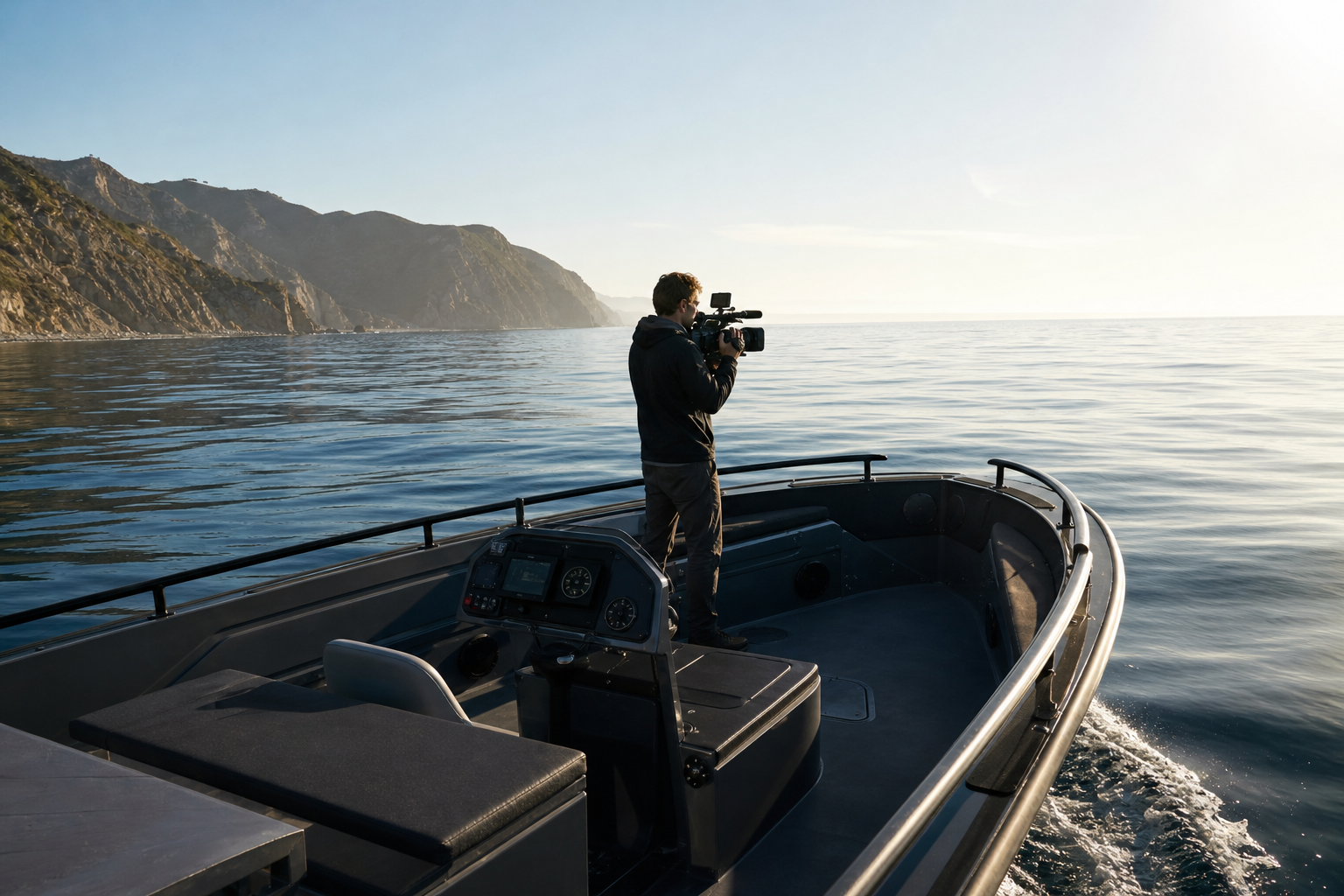
A stable, low-profile deck makes private boat charters for filmmakers San Diego easier to shoot from than crowded tour boats.
Why Choose a Private Filmmaker Charter Over Group Tours
Standard whale watching boats carry dozens of passengers, which means filmmakers often end up shooting around strangers, railings, and shadows cast by other guests. In contrast, a custom charter for film crews keeps the deck open and predictable. For example, a documentary team filming a specific behavior sequence can ask the captain to hold position longer, something that simply isn’t possible on a scheduled public tour.
Furthermore, private charters allow for flexible departure times, which matters when chasing golden-hour light or a specific tide. As a result, many filmmakers find that filmmaker-friendly wildlife tours built around their schedule produce far more usable footage than a one-size-fits-all trip. Corporate productions and brand shoots also benefit from this flexibility, and operators offering corporate boat charters can usually scale group size for larger crews when needed.
Vessel Features Built for Photography and Film Crews
Not every boat is suited to filming. A vessel designed for photography and film crews needs a stable, low-profile hull so handheld shots don’t bounce excessively, along with quiet outboard engines that keep both engine noise and vibration out of audio tracks. Equally important is 360° viewing access, which lets a camera operator move freely instead of shooting through a single fixed window.
These details are not cosmetic. In fact, vessels built this way have supported film crews from BBC Earth, National Geographic, and Discovery Channel, which gives a practical benchmark for what “filmmaker-friendly” actually means on the water. For a closer look at how these features translate into production value, see this guide on filmmaker support on whale watching tours.
Marine Biologist Guidance for Documentary-Quality Footage
A Scripps-trained marine biologist adds something a standard captain cannot: trained behavioral prediction. Because the guide has worked as a marine mammal observer and researcher, they can often anticipate surfacing patterns or feeding behavior before it happens, giving a camera operator a few extra seconds to prepare.
This matters for both storytelling and compliance. According to NOAA Fisheries, federal guidelines recommend keeping a safe, respectful distance from whales and dolphins in U.S. waters to avoid disturbing natural behavior. A trained naturalist helps a crew stay within those guidelines while still positioning the boat for a strong shot. Those interested in the research background behind this approach can review the work of the Scripps Institution of Oceanography, and filmmakers planning a dedicated shoot may also want to browse these wildlife photography tours for trip formats built specifically around camera work.
Best Seasons for Filming Whales and Dolphins in San Diego
Timing has a direct effect on what a camera can capture. Blue whales, which can reach roughly 100 feet long according to the Wikipedia entry on blue whales, are most commonly seen off San Diego between June and September. Meanwhile, gray whales migrate along the coast from December through April, often traveling close to shore where they’re easier to frame against the coastline.
Dolphins, on the other hand, are present year-round, which makes them a reliable subject regardless of season. Summer also brings Blue Water Safari snorkel trips, where filmmakers may encounter ocean sunfish, kelp paddies, and sea lions. Because conditions shift throughout the year, booking a custom private boat charter that matches your target species to the right season is one of the simplest ways to improve your odds on the water.
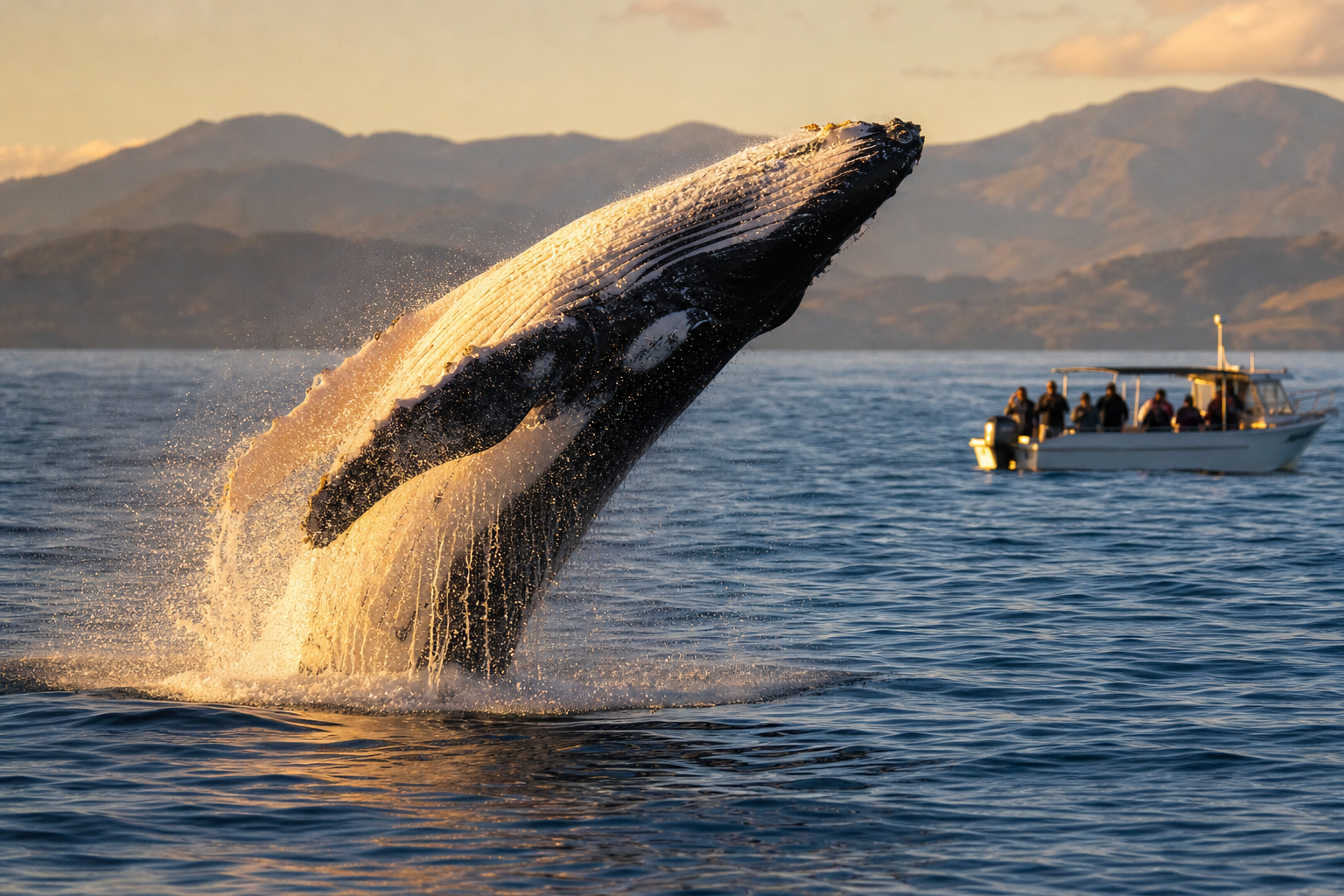
Seasonal migration patterns off San Diego shape which species filmmakers are likely to encounter.
How to Book Your Private Film Charter in San Diego
Booking a filming-focused charter is straightforward once you know what to ask for. The following steps outline a practical process for planning a production day on the water.
- Define your filming goals. Decide whether a fully private charter or a semi-private trip fits your project, and list the species or shots you need before reaching out.
- Choose your season and target species. Match your shoot dates to peak sighting windows, such as summer for blue whales or winter and spring for gray whale migration.
- Confirm vessel specs and permissions. Ask about hull stability, engine noise, 360° access, and drone policies so your equipment and flight plans line up with the boat.
- Book the charter and prepare gear. Reserve your date and trip length, then pack weatherproof cases and backup batteries, since snorkel and dive gear are not provided.
- Attend the pre-trip briefing. Arrive early for the safety and wildlife behavior briefing, which often shapes how you plan your shots before leaving the dock.
For custom packages, including special-occasion filming or corporate video shoots, visit bigbluephotoboat.com directly to discuss departure times and group size.
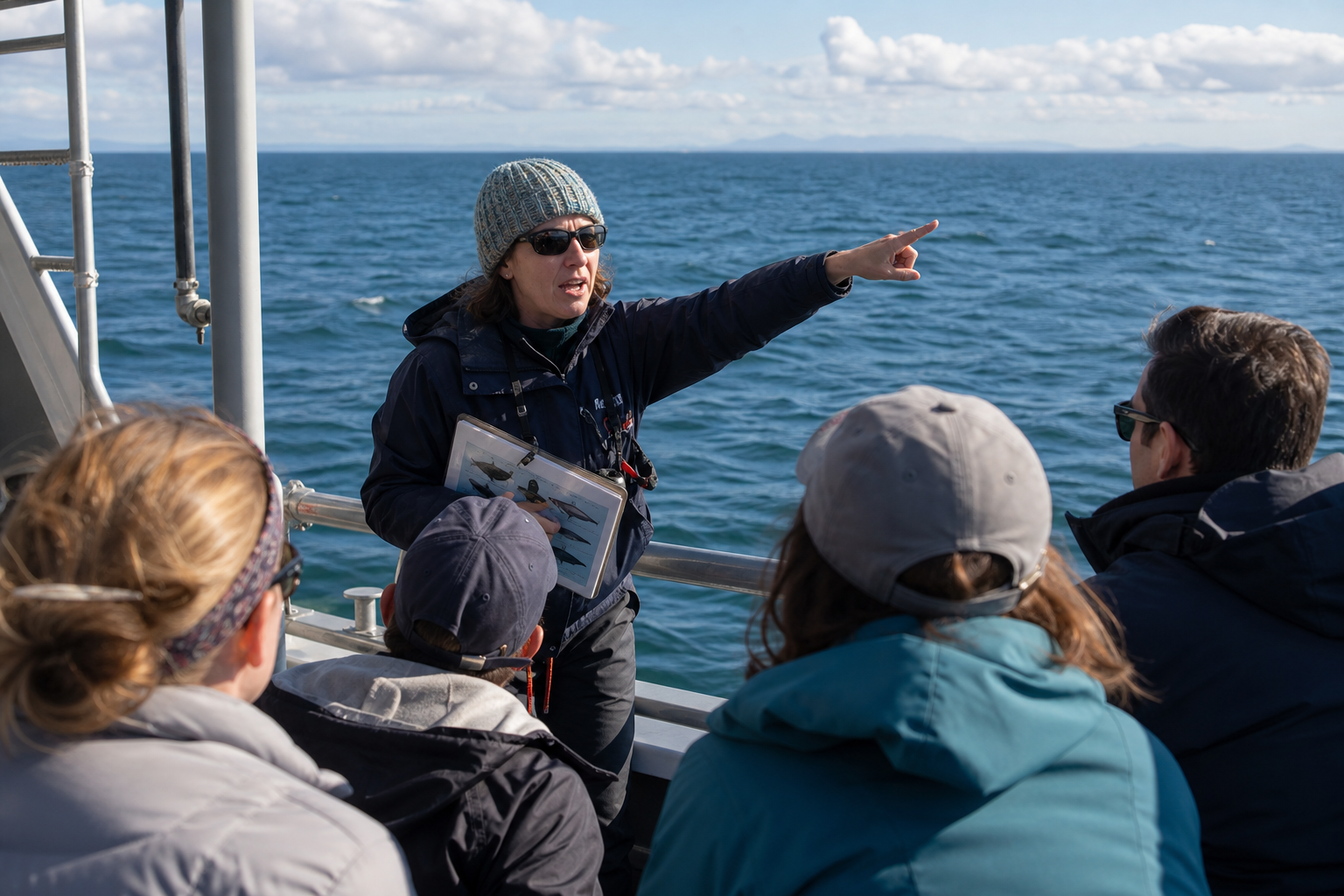
A naturalist briefing helps crews plan shots around expected wildlife behavior.
Frequently Asked Questions About Private Boat Charters for Filmmakers San Diego
What are private boat charters for filmmakers San Diego?
Private boat charters for filmmakers San Diego are exclusive, small-group boat trips designed around filming needs rather than standard sightseeing stops. They prioritize stable camera positioning, quiet engines, and naturalist narration guests can use for context or voiceover.
How much does a private filming charter cost in San Diego?
Pricing varies by trip length, group size, and season, with half-day and full-day expedition options available. Because every charter is custom, it’s best to contact the operator directly for a quote based on your shot list and schedule.
How long do filmmaker charters typically last?
Most filming charters run three to six hours, though full-day expeditions are available for crews chasing specific light or wildlife behavior. Trip length can usually be adjusted to match a production schedule.
What is the difference between private and semi-private charters?
A private charter reserves the entire boat for one group, while a semi-private charter is capped at a small number of passengers, typically six. Filmmakers who need full control over positioning and noise usually choose a private booking.
Can drones be used during a private boat charter?
Drone-friendly operations are available on request, though flights must follow FAA rules and any applicable wildlife-protection regulations. It’s best to confirm your drone plans with the crew before the trip.
What wildlife can filmmakers expect to capture in San Diego?
Depending on the season, crews may encounter blue whales, gray whales, humpbacks, fin whales, orcas, and dolphin pods. Summer trips can also include ocean sunfish, kelp paddies, and sea lions.
Do I need to bring my own camera equipment?
Yes, filmmakers are expected to bring their own cameras, lenses, and stabilization gear. The vessel provides the stable platform and 360° access, but all filming equipment remains the crew’s responsibility.
What makes a boat “filmmaker-friendly”?
A filmmaker-friendly boat has a low-profile, stable hull, quiet outboard engines that reduce vibration and noise, and open 360° viewing so there’s no obstructed angle. These features matter for both handheld shots and clean audio recording.
When is the best season to film whales in San Diego?
Blue whale sightings generally peak between June and September, while gray whale migration runs from December through April. Dolphins are present year-round, giving filmmakers consistent subjects regardless of season.
Are these charters suitable for professional film crews?
Yes, vessels used for private boat charters for filmmakers San Diego have supported crews from BBC Earth, National Geographic, and Discovery Channel. Coast Guard-inspected boats and experienced captains make them suitable for professional productions.
What common mistakes should filmmakers avoid when booking?
A common mistake is booking a group tour expecting full creative control, which isn’t possible with other passengers aboard. Another is skipping the pre-trip briefing, which usually includes helpful guidance on wildlife behavior and positioning.
How many people can join a private charter?
Standard private and semi-private charters are capped at six passengers to keep the deck uncrowded for filming. Groups of up to twelve can be accommodated for special occasions or larger productions.
Do charters follow wildlife viewing regulations?
Yes, operators follow low-impact, non-chasing practices and federal marine mammal viewing distance guidelines. This approach protects wildlife while still allowing close, ethical filming opportunities.
How far in advance should filmmakers book a charter?
Booking two to four weeks ahead is recommended, especially during peak blue whale or gray whale migration months. Last-minute availability can be limited for exclusive private bookings.
Can charters be customized for documentary or corporate video projects?
Yes, custom charter packages can be built around documentary shoot lists, corporate video needs, or special-occasion filming. Captains can also adjust routes toward specific sightings reported earlier in the day.
Final Thoughts on Filming From San Diego Waters
Ultimately, private boat charters for filmmakers San Diego remove the guesswork from shooting on open water. With a stable, quiet vessel, a Scripps-trained marine biologist, and a schedule built around your production rather than a fixed tour, there’s far less standing between you and the shot you came for. Whether you’re filming a short documentary segment, a corporate brand video, or personal footage for a larger project, matching the right charter to the right season makes a measurable difference in results. Above all, a well-planned private charter turns unpredictable ocean conditions into workable, repeatable filming opportunities throughout the year.
