
In short, a marine wildlife education tour San Diego visitors can book is a guided boat trip that teaches you about whales, dolphins, and the ocean they live in. Additionally, instead of just spotting animals, you learn why they are here and how they live. Overall, this guide explains what to expect, what you may see, and how to choose a trip.
Quick answer: The best education-focused trips are small, led by a trained marine biologist, and run with low-impact, non-chasing practices. Pick your season, confirm the guide’s credentials, and bring layers and curiosity.
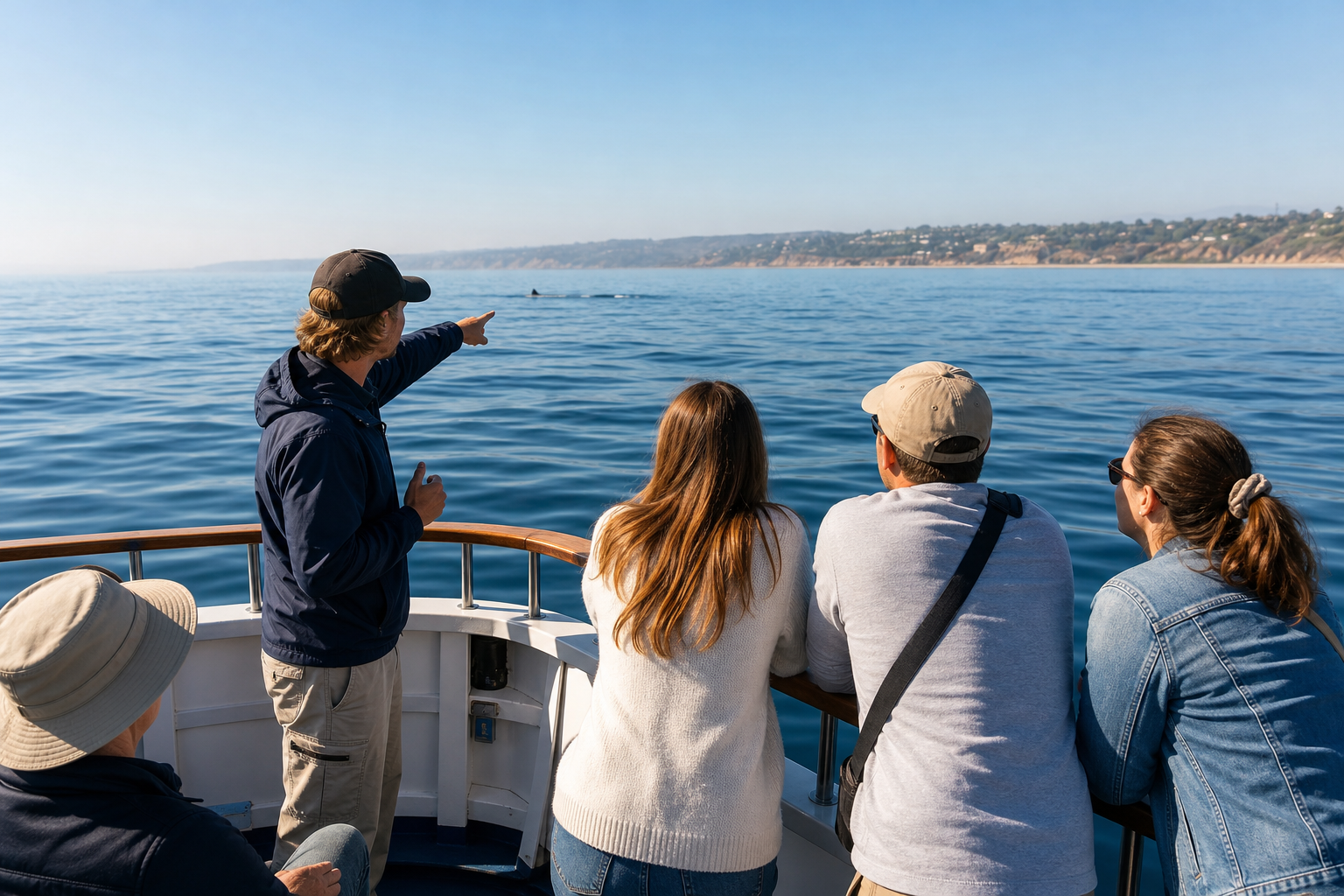
A small-group marine wildlife education tour in San Diego puts guests close to the guide and the view.
What Is a Marine Wildlife Education Tour in San Diego?
It is a naturalist-led trip that blends wildlife viewing with real science. The guide explains behavior, migration, feeding, and ocean conditions as they unfold. As a result, guests leave with knowledge, not only photos.
San Diego is a strong place for this. Deep water, including the La Jolla Canyon, sits close to shore. In addition, the region is home to the renowned Scripps Institution of Oceanography, which has shaped ocean research for over a century.
What You Can Learn on the Water
A good guide turns each sighting into a lesson. For example, a surfacing whale can lead to a talk about breathing, diving, and feeding. Likewise, a pod of dolphins can show how social groups move and hunt.
To see how this teaching works in practice, read about the educational benefits of naturalist-guided whale tours.
Which Animals Appear by Season?
Sightings change through the year. The table below shows general patterns, but wildlife is unpredictable and nothing is guaranteed.
| Season | Common sightings |
|---|---|
| Winter | Migrating gray whales, dolphins |
| Spring | Gray whales heading north, dolphins, possible humpbacks |
| Summer | Blue, fin, and humpback whales, ocean sunfish, sea lions |
| Fall | Large whales lingering, dolphins, occasional orcas |
For a deeper look at the region, see this complete guide to San Diego marine wildlife expeditions.
Why Guide Credentials and Group Size Matter
Education depends on the person leading it. A trained marine biologist can explain what you are seeing accurately and answer follow-up questions. That is why it helps to compare San Diego tours with marine biologist guides.
Group size matters too. With fewer guests, everyone hears the guide and gets a rail view. Moreover, quieter boats disturb wildlife less.
An Example Local Option
bigbluephotoboat.com is a family-owned operator at Seaforth Marina that runs private and semi-private whale and dolphin tours. Groups are capped at six passengers, or up to twelve for special occasions. Each trip is led by a Scripps-trained marine biologist, and the Coast Guard-inspected boats have quiet outboards and 360° viewing. You can also explore marine biologist-led whale watching tours in San Diego.
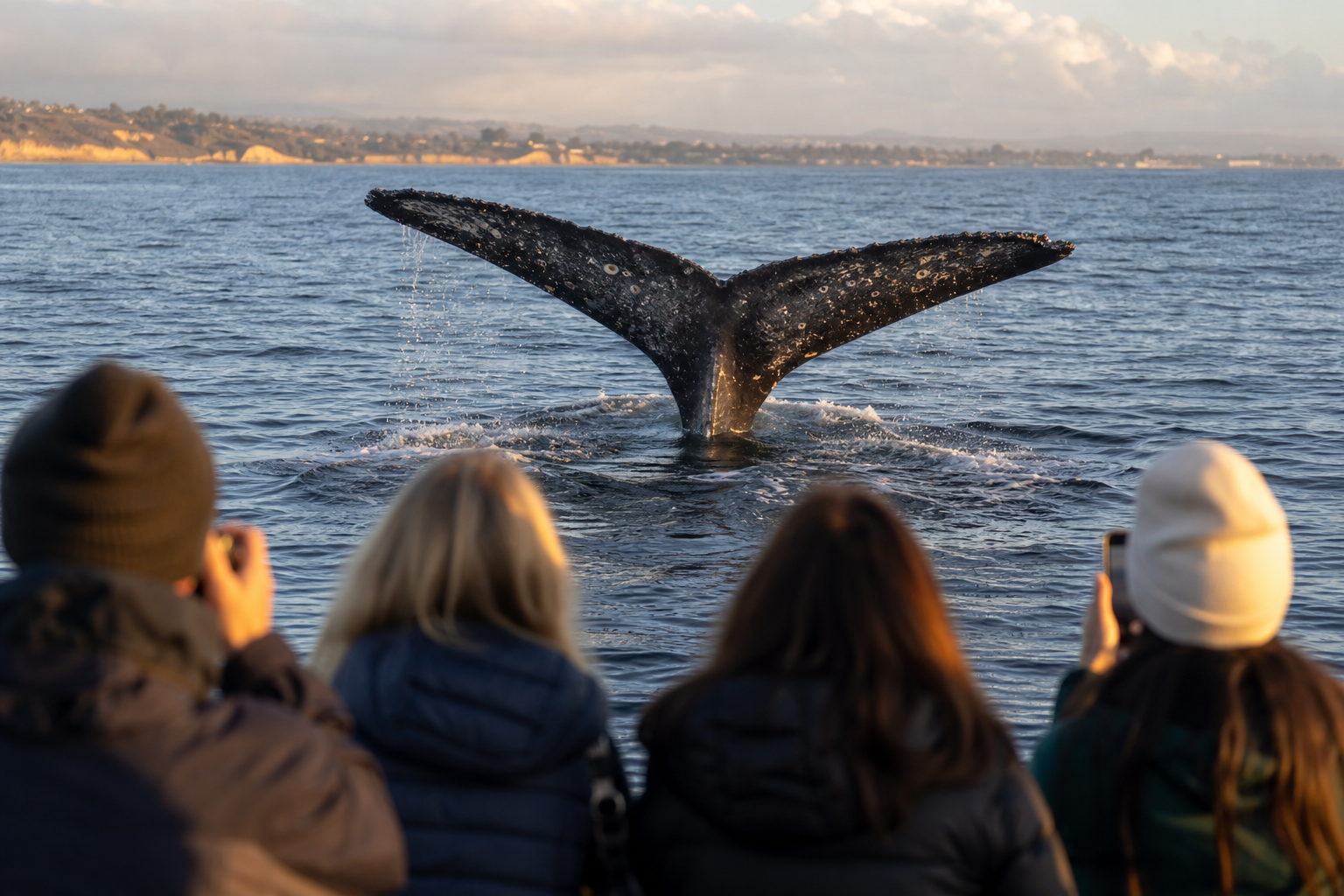
Low-impact viewing lets wildlife set the pace of every encounter.
Responsible Wildlife Viewing
Ethical tours do not chase animals. They keep a respectful distance and follow federal guidelines such as those promoted by NOAA Fisheries. In turn, calm animals behave more naturally, which means better learning for you.
Snorkel and Photo Learning Trips
Some education tours add a summer snorkel. Guests may see ocean sunfish, kelp paddies, and sea lions up close. Note that guests bring their own snorkel equipment. Learn more about unique wildlife on San Diego snorkel and photo tours.
How to Prepare for Your Tour
- Choose your season. Match your dates to the animals you most want to see.
- Pick a small-group format. Private or semi-private trips give you more time with the guide.
- Confirm credentials. Ask about the guide’s training and the operator’s viewing practices.
- Pack for the ocean. Bring layers, sun protection, water, and a camera or binoculars.
- Bring questions. Write a few down so you use the guide’s expertise.
Frequently Asked Questions
What is a marine wildlife education tour in San Diego?
It is a guided boat trip where a naturalist or marine biologist explains the animals, behavior, and ocean ecosystem you see. The focus is learning as well as sightseeing.
What animals can I see on a San Diego wildlife tour?
Depending on the season, tours may encounter blue, gray, humpback, and fin whales, orcas, dolphins, sea lions, and ocean sunfish. Sightings are never guaranteed because the animals are wild.
When is the best time for whale watching in San Diego?
Gray whales are typically seen in winter during their migration. Blue and other large whales are often seen in summer, and dolphins can appear year-round.
Why choose a small-group tour?
Small groups give every guest a clear view and more time with the guide. They also tend to be quieter and less disruptive to wildlife.
How is a naturalist-guided tour different from a standard whale watch?
A naturalist-guided trip emphasizes interpretation, such as why animals behave as they do and how the ecosystem works. A standard trip may focus mainly on locating animals.
Is a marine wildlife education tour suitable for children?
Yes, many families bring children, and guides can adjust explanations to their age. Check minimum age and life-jacket policies when booking.
How long does a tour last?
Tour length varies by trip type, from a few hours to full-day expeditions. Confirm the exact duration with the operator when you book.
What should I bring?
Bring warm layers, sunscreen, a hat, sunglasses, water, and a camera or binoculars. Snorkel trips require you to bring your own snorkel gear.
Do operators chase wildlife?
Responsible operators do not chase animals. They keep a respectful distance and let wildlife choose whether to approach.
Can I take photos or fly a drone?
Photography is welcome on most tours, and stable boats help. Drone use should be arranged in advance and follow local rules and wildlife-protection laws.
How much does a private tour cost?
Pricing depends on group size, trip length, and trip type. Contact the operator directly for current rates.
What mistakes should I avoid when booking a marine wildlife education tour San Diego offers?
Avoid booking on price alone, ignoring group size, and skipping the guide’s credentials. Also avoid expecting guaranteed sightings.
Conclusion
A marine wildlife education tour San Diego offers turns a boat ride into a lesson in ocean life. Choose a season, favor small groups and credentialed guides, and look for low-impact viewing. With those steps, you will see more, learn more, and treat the wildlife with care. To plan a trip, visit Big Blue Photo Boat.
