
Typically, drone friendly marine tours San Diego are boat trips where the crew welcomes licensed pilots and plans flights around wildlife safety. Specifically, they suit photographers and filmmakers who want aerial views of whales, dolphins, and kelp beds. However, success depends on the right boat, the right rules, and a captain who respects the animals.
What Are Drone Friendly Marine Tours in San Diego?
A drone friendly tour is a wildlife or charter trip that explicitly allows drone launches from the vessel. The operator sets clear limits on altitude, timing, and distance from animals. As a result, you get aerial footage without stressing the wildlife.
San Diego is a strong location. Gray whales pass the coast in winter. Blue whales, fin whales, and humpbacks appear in other seasons. Dolphins are around year-round. For a deeper look at charters built for this work, see this drone-friendly whale watching charter guide.
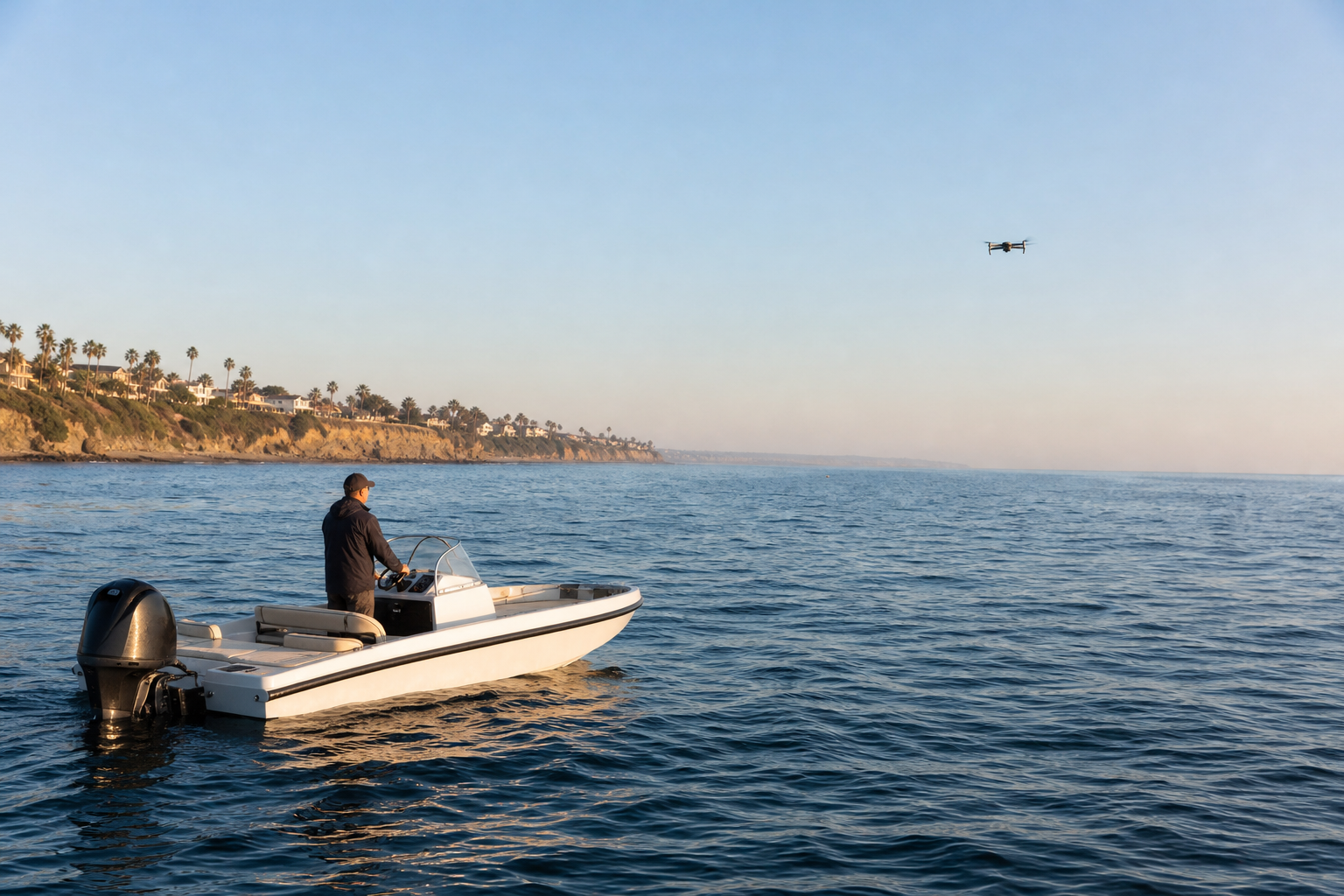
A drone hovers near a small boat on a calm morning, typical of drone friendly marine tours San Diego photographers seek.
Why the Boat Matters for Aerial Work
Launching and landing a drone from a moving boat is hard. Therefore, hull design matters. A stable, low-profile boat gives you a steadier platform and easier hand-catching. Quiet outboard engines also help you hear the crew and the animals.
Open 360° deck access is equally useful. It lets you track a drone in any direction without climbing past other guests. Our related piece on stable wildlife viewing boats in San Diego explains what to look for.
Rules for Flying Near Marine Mammals
Whales and dolphins are protected by the Marine Mammal Protection Act. Harassment, including disturbing natural behavior, is prohibited. In addition, NOAA Fisheries recommends staying at least 100 yards from most whales and avoiding any chasing.
Pilots must also follow aviation rules. The FAA requires recreational flyers to pass the TRUST test. Commercial shoots need a Part 107 certificate. Most drones at or above 0.55 pounds must be registered.
- Keep the drone high enough that animals do not react.
- Land at once if behavior changes.
- Never fly directly over mothers with calves.
- Follow the captain’s call on every launch.
How to Plan Your Drone Tour Step by Step
- Confirm the operator’s drone policy before you book.
- Check that your FAA registration and pilot credentials are current.
- Charge extra batteries and pack spare propellers.
- Brief with the captain on takeoff timing and altitude limits.
- Fly only when approved, then review footage afterward.
Private vs. Shared Trips for Drone Pilots
Group size shapes your day. On a crowded boat, launch space and quiet are limited. In contrast, a private or semi-private trip lets everyone agree on a plan. Small groups also mean more room for cases and batteries.
| Trip type | Best for |
|---|---|
| Private charter | Film crews, custom flight plans |
| Semi-private (up to 6) | Photographers sharing costs |
| Full-day expedition | Offshore sightings, more flight windows |
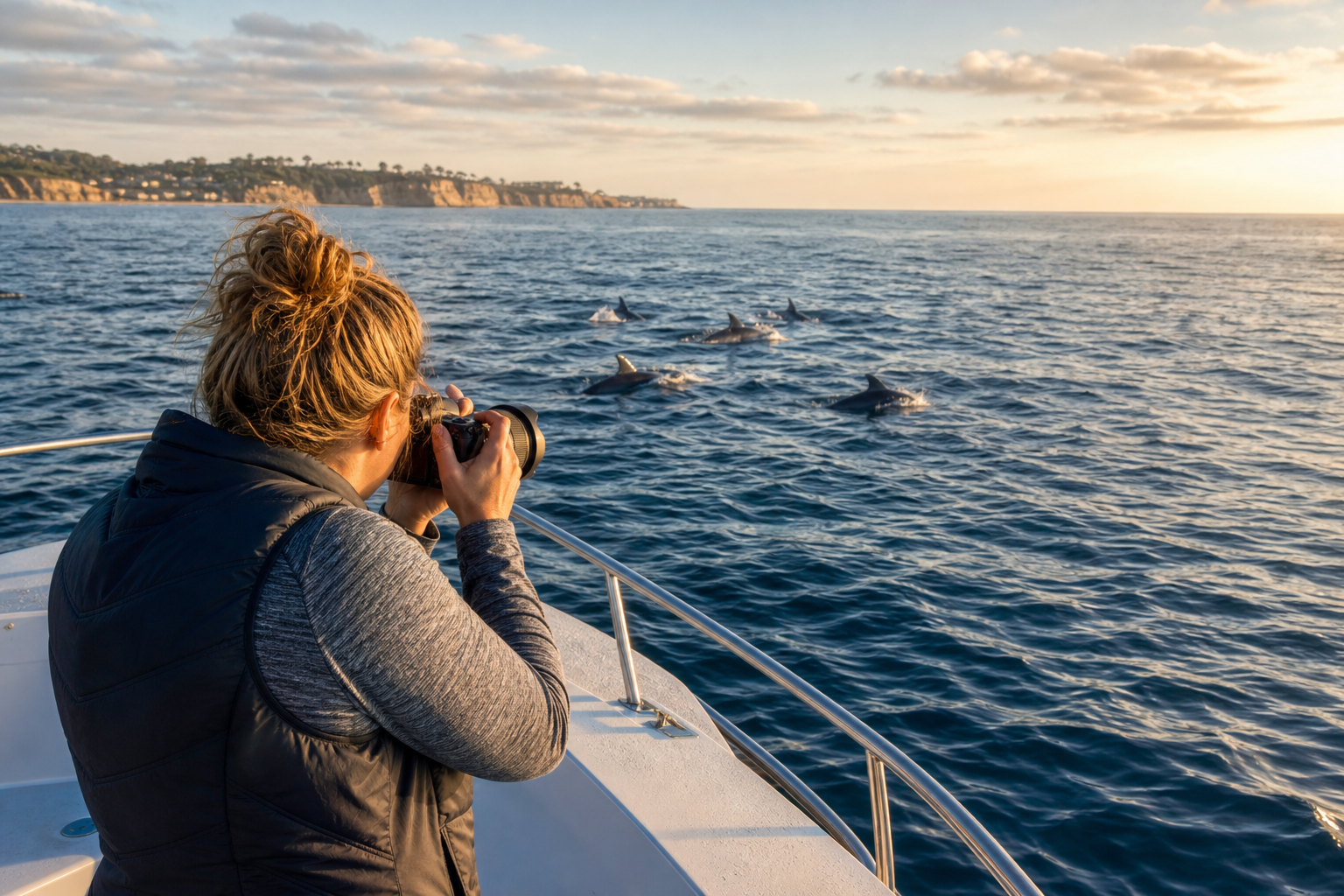
Open deck space helps photographers and pilots work safely around wildlife.
Choosing an Operator in San Diego
Big Blue Photo Boat runs private and semi-private tours from Seaforth Marina. Groups are capped at six guests, or twelve for special occasions. Trips are led by a Scripps-trained marine biologist, and the Coast Guard-inspected boats have supported crews from BBC Earth, National Geographic, and Discovery Channel.
Look for a similar mix when you compare options: small groups, expert guides, and a non-chasing approach. You can also read about filmmaker-friendly wildlife tours and marine wildlife photography tours. For a broader view, see this private marine wildlife tours guide.
Seasons and Sightings
Timing affects your footage. Gray whales are common in winter. Blue whales are often seen in summer and fall. Summer also brings ocean sunfish and kelp paddies. Therefore, tell your operator what subject you want so they can suggest the best window.
Frequently Asked Questions
What are drone friendly marine tours San Diego operators offer?
They are boat trips where the crew allows licensed pilots to launch and land a drone under agreed safety and wildlife rules. Drone friendly marine tours San Diego guests book usually run on small, stable boats.
Can I fly a drone near whales in San Diego?
Not freely. Federal law protects marine mammals from harassment, so flights must not disturb the animals. Follow NOAA guidance and your captain’s instructions.
Do I need an FAA license to fly a drone from a boat?
Recreational pilots must pass the FAA TRUST test and carry proof. Commercial work needs a Part 107 remote pilot certificate.
Do I need to register my drone?
Most drones weighing 0.55 pounds or more must be registered with the FAA. Lighter recreational drones generally do not need registration.
Why does boat stability matter for drone use?
A stable, low-profile hull gives you a safer launch and landing. It also helps with hand-catching and with keeping camera gear secure.
How close can a boat approach marine mammals?
NOAA advises staying at least 100 yards from most whales and avoiding chasing or cutting off animals. Good operators use a slow, non-chasing approach.
What is the best time of year for aerial footage?
Gray whales are commonly seen in winter, while blue whales are often seen in summer and fall. Dolphins can be seen year-round.
How many people join a private tour?
Small-group trips with Big Blue Photo Boat are capped at six passengers, and up to twelve for special occasions. Fewer guests means more room for gear.
Is a private charter better than a shared trip for drone work?
Usually yes. A private charter lets the whole group agree on flight plans and timing, with no other guests to consider.
What weather stops drone flights?
High wind, heavy fog, and rough seas can ground a drone. Your captain makes the final call.
What common mistakes should I avoid?
Do not launch without permission, fly too low over animals, or bring too few batteries. Also avoid landing on a moving deck without a plan.
How do I book a drone friendly trip?
Contact the operator, state your drone model and goals, and ask about charter options. Confirm the policy in writing before the trip.
Conclusion
Drone friendly marine tours San Diego offer a rare way to capture whales, dolphins, and kelp beds from above. To succeed, pick a small, stable boat, confirm the drone policy early, keep your FAA paperwork current, and put wildlife first. With a skilled captain and a clear plan, you can return with striking footage and no impact on the animals.
